REVIEW · HO CHI MINH CITY
Historical Walking Tour of Saigon
Book on Viator →Operated by Viup Travel · Bookable on Viator
Saigon tells its story on foot. This historical walking tour of Ho Chi Minh City strings together major sights with real context, from Independence Palace to French-built landmarks—and it’s designed as a calm, guided stroll rather than a rushed checklist. Two things I love: the small group vibe (max 10) and the chance to stop for Vietnam’s egg coffee while you watch life near the Saigon River.
One thing to plan for: this is still walking in real Saigon weather. The itinerary is timed by tour choice (morning, afternoon, evening), and the tour needs good weather, so wear comfortable shoes and bring sun/water depending on your departure time.
In This Review
- Key highlights worth your attention
- A Saigon walking tour that actually makes sense with your time
- Independence Palace: how “history” comes alive when you’re outside the gates
- The Central Post Office: French design you can spot fast
- Saigon Notre Dame Cathedral: photos are easy, meaning takes a minute
- Saigon Opera House: entertainment and empire, in one building style
- People’s Committee Building: Western architecture meets local authority
- Ba Son Bridge and the skyline moment you’ll want to catch
- Nguyen Hue Street: the social heart where the city feels alive
- Egg coffee break: 3T Cà Phê Trứng is an included win
- Where the tour starts and ends: easy to plug into a day
- Price and value: what $36 gets you in practice
- Choosing the right departure time for your comfort
- How to get the most from the walk (without turning it into a chore)
- Should you book this Historical Walking Tour of Saigon?
- FAQ
- How long is the Historical Walking Tour of Saigon?
- How much does the tour cost?
- How many people are in a group?
- What time options are available?
- What is included in the tour?
- Are admission tickets required for the stops?
- Where does the tour start and end?
- What is the cancellation policy?
- What happens if the weather is bad?
Key highlights worth your attention
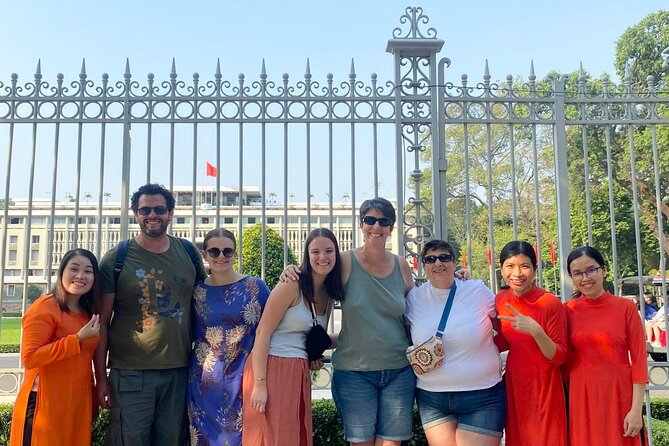
- A smart loop of must-see icons in one outing, without bouncing between neighborhoods all day
- French-era architecture explained in plain language, not just photo stops
- Real “Vietnam War” perspective outside Independence Palace, with guide-led context
- Ba Son Bridge + Nguyen Hue Street viewpoints, perfect for quick photos and a breather
- Egg coffee included, so you don’t have to hunt for it on your own
- Thanh Thanh (Andy) style of guiding gets praise for being friendly and professional
A Saigon walking tour that actually makes sense with your time
If Saigon feels like a lot at once, this tour is built to reduce the mental load. You get a tight, walkable route that hits big visual anchors—places you’d probably want to see anyway—then you layer on context while you’re still in the neighborhood, not a week later in a museum.
What I like most is the “work in the same day” logic. You’re not picking between “old Saigon” and “modern Saigon,” because you walk through both. The route starts with a government-and-war setting, moves through French-influenced architecture, then ends with newer city energy near Ba Son Bridge and Nguyen Hue Street.
Another practical win: you can choose your departure time—7:00 AM, 2:30 PM, or 6:00 PM—so you can match it to your hotel location and your preferred pace. Morning is usually easiest if you want fewer crowds and more comfortable walking. Afternoon can be a warm test. Evening is great if you like street life and cooler temperatures.
You can also read our reviews of more walking tours in Ho Chi Minh City



Independence Palace: how “history” comes alive when you’re outside the gates
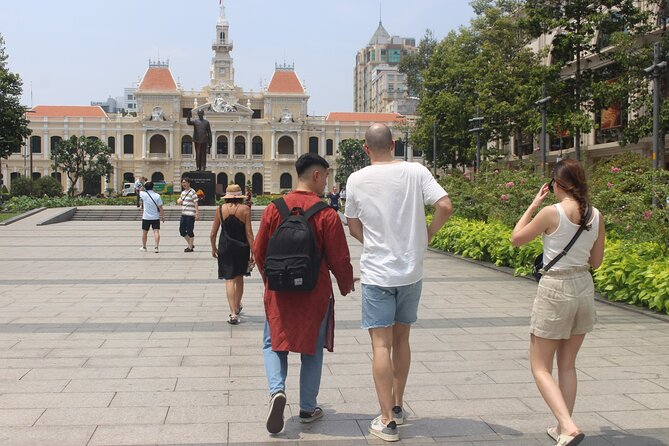
You’ll start at Independence Palace, and the tour keeps it grounded by focusing on what the site witnessed—“ups and downs” of Vietnamese history and the Vietnam War. Even without going inside (the tour notes time spent outside), standing in the area gives you a sense of place. You’re not just learning dates; you’re connecting events to an actual location.
Here’s what makes this stop work for your brain: the guide’s storytelling ties the setting to larger national shifts, so the next buildings you see don’t feel random. You’ll also be able to take photos, but the real value is the explanation that helps you understand why this building matters beyond a postcard.
If you’re the type who hates long lectures, don’t worry. This portion is timed (about 20 minutes) and designed to keep momentum. It’s long enough to get the narrative, short enough to avoid boredom.
The Central Post Office: French design you can spot fast
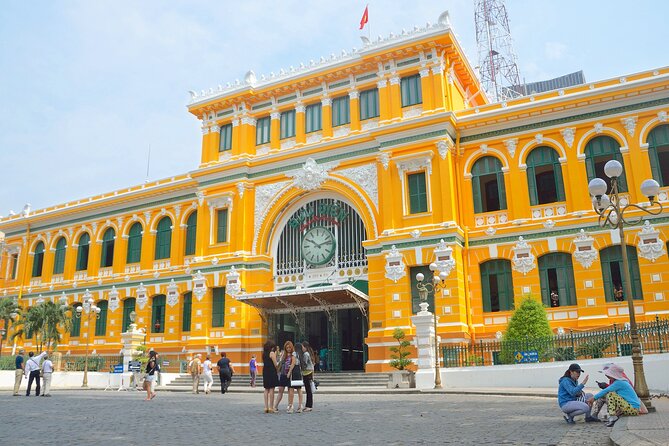
Next up is the Central Post Office, a standout French-designed building. It’s one of those places where you can look around and instantly see why it earned attention: the architecture feels structured and formal compared with the surrounding streets.
The tour treats it like more than a pretty facade. You’ll learn how the French built in Vietnam during their rule, and why that architectural footprint is still visible today. That context matters because it changes the way you view the building. Instead of “a cool old station,” you start seeing it as a physical reminder of how power, trade, and administration worked in that era.
This is also a relief if you want a break from the biggest war-related stop. The post office stop is lighter, more visual, and often easier to enjoy for all types of travelers—even if history isn’t usually your thing.
Saigon Notre Dame Cathedral: photos are easy, meaning takes a minute
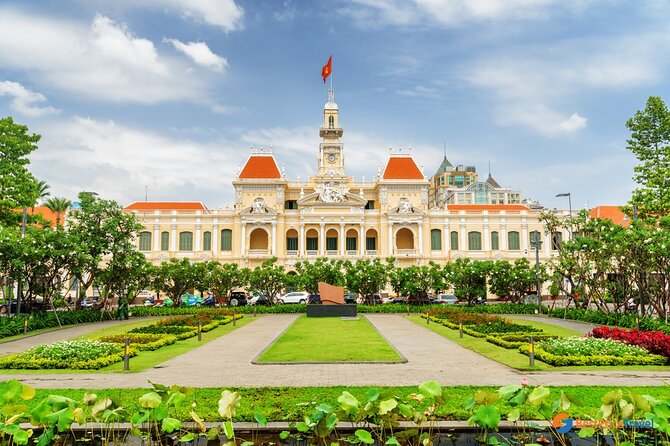
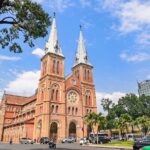
The Notre Dame Cathedral stop is short (about 15 minutes), but it’s useful. The tour highlights that it’s one of the oldest churches in the city, with over 100 years behind it. You’ll get time to take photos in front and check in your camera roll.
What makes it more than a quick snapshot is the guide connection to nearby old houses opposite the cathedral. That’s where you can start noticing how French-era religious architecture sits inside the fabric of the city—and how the streets around it tell their own story.
If you’re sensitive to crowds or want perfect, empty-photo angles, aim to keep your expectations realistic. This area is popular, and your best strategy is to be quick and flexible: snap first, listen second, and don’t overthink it.
Saigon Opera House: entertainment and empire, in one building style
The Saigon Opera House (Ho Chi Minh Municipal Theater) adds another layer of French-era influence. You’ll spend about 10 minutes here, with the emphasis on how the French ruled and how they entertained people in the past.
This stop is short, so it’s important to pay attention to the “why” while you’re standing there. Opera houses and theaters aren’t only about culture. They also reflect who had access, who had leisure time, and how public life was shaped. Even if you don’t care about opera, the building helps you understand the city’s colonial-era priorities.
It’s also a good mental reset before you shift from European-influenced landmarks to modern government symbolism.
You can also read our reviews of more historical tours in Ho Chi Minh City




People’s Committee Building: Western architecture meets local authority
Then you’ll reach the People’s Committee Building, which the tour frames as a major symbol of Ho Chi Minh City and a government workplace. The key detail here is the architectural style: the tour points out the unique Western architecture, which makes the building feel both official and foreign in its design language.
You’ll also walk along Nguyen Hue walking street and take pictures with a statue as part of the stop rhythm. This is the point where your tour starts moving from “historic buildings” into “current-day Saigon.” Nguyen Hue is an easy place to feel the city’s daily pulse.
If you like your city views framed by architecture, this is a strong segment. If you prefer quiet corners, it may feel slightly busier—but the tour time is controlled, so you’re not stuck there for long.
Ba Son Bridge and the skyline moment you’ll want to catch
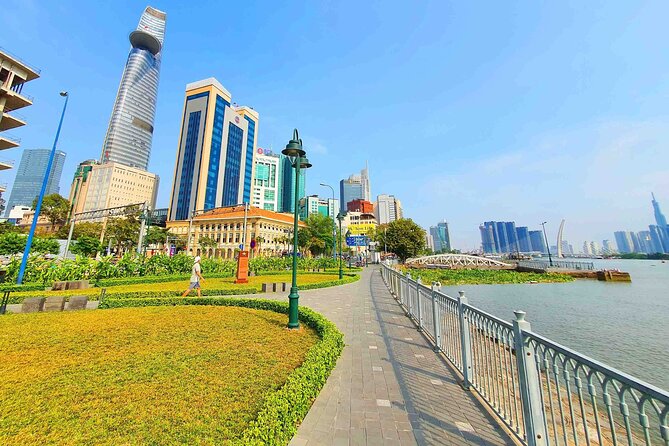
After the downtown walking street segment, you’ll head to Cau Ba Son (Ba Son Bridge). This is one of the newer symbols of Ho Chi Minh City, and the payoff is the skyline moment. The tour notes that you get views of two of the city’s tallest buildings and that you can see the city from above.
Even if the view doesn’t blow your socks off, it’s still a smart tour ingredient: it gives your feet a mini “rest with purpose.” You’re standing in one place for about 15 minutes, looking out over the city, letting the story you just heard connect to the modern skyline.
Practical tip: if you’re doing a daytime departure, watch the light. Bright sun can flatten building details. If you’re doing evening, you’ll probably get more dramatic contrast, but you may need to deal with street activity.
Nguyen Hue Street: the social heart where the city feels alive

Nguyen Hue Street is described as the most beautiful walking square in the city, and the tour doesn’t treat it like a bland promenade. It’s where attractions of the younger generation happen, which helps you understand it as living public space—not just a background for your photos.
In a tour built around history, this stop is actually important. It shows you the city continuing to write its own chapter. You’re not walking only through the past; you’re moving into the “today” part of Saigon.
I like using this segment to re-check your bearings. After Independence Palace and French-built landmarks, you sometimes feel like you’ve walked through separate eras. Nguyen Hue acts like the connector between those eras in how the city is experienced.
Egg coffee break: 3T Cà Phê Trứng is an included win
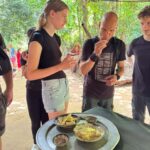
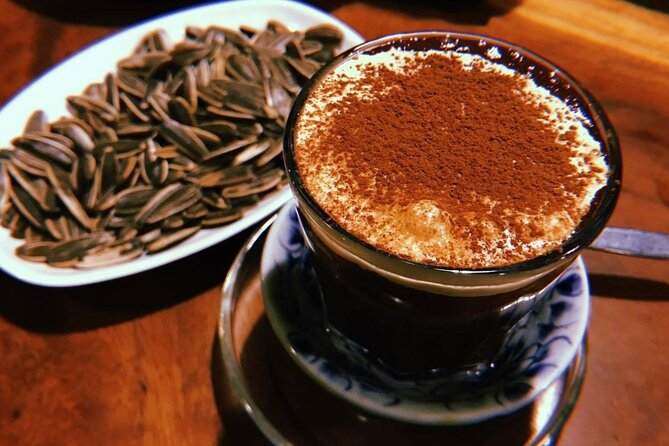
One of the best parts of the tour is the built-in pause for 3T Cà Phê Trứng, where you can try Vietnamese egg coffee. The tour includes this drink, and the stop is timed at about 25 minutes—long enough to relax, sip, and not feel rushed.
Egg coffee is one of those “only in Vietnam” tastes, and having it included removes the usual friction: you don’t need to decide where to go, negotiate prices, or worry you’ll pick the wrong spot. You just join the rhythm and enjoy it.
What I’d do with your time here: order, take a few minutes to watch the street activity nearby (the tour specifically mentions enjoying the streets near the Saigon River), and let the coffee reset your energy before the final stretch toward the end point.
Where the tour starts and ends: easy to plug into a day
The start point is on 179 Đ. Nam Kỳ Khởi Nghĩa, Phường Bến Thành, Quận 1. The tour ends in front of Le Méridien Saigon at 3C Đ. Tôn Đức Thắng, Bến Nghé, Quận 1.
That ending matters. Ending near a major hotel area can make it easier to keep your evening (or next part of the day) moving. You’re not stranded in an awkward dead end far from transit or food options.
Also note the tour format: it’s a mobile ticket, so you’re not juggling paper. That’s small, but in a place where you’re walking a lot, fewer things to manage feels better.
Price and value: what $36 gets you in practice
At $36 per person, this isn’t a bargain-tour price—but it also isn’t priced like a luxury experience. The value comes from three practical things working together:
First, you’re getting a guided route through major sights without needing to build a transportation plan between them. Second, the tour includes coffee and/or tea, plus egg coffee as part of the experience. Third, the tour notes that admission tickets for the listed stops are free, which removes a common travel tax that can creep up on self-guided days.
The small group size (maximum of 10 travelers) is the other big value factor. In a city where crowds can make sightseeing feel like a conveyor belt, a smaller group helps you hear the guide and keep the pace comfortable.
If you’re the kind of visitor who enjoys context while you walk, $36 feels fair. If you already know all the architectural and war-history basics and you mainly want photo time, you might decide you’d rather do self-guided. But if you want the “why” behind what you’re seeing, this price is much easier to justify.
Choosing the right departure time for your comfort
You’ve got three departure options: 7:00 AM, 2:30 PM, and 6:00 PM. Here’s how to think about the tradeoffs:
- Morning: best if you want calmer walking and less sun pressure.
- Afternoon: great for daytime visibility, but plan for heat and intensity.
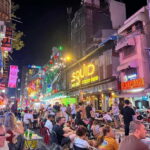
- Evening: often feels more relaxed for street atmosphere, but you’ll be leaning into the city’s night rhythm.
The tour also requires good weather. If rain rolls in, you’ll want to be flexible with dates.
How to get the most from the walk (without turning it into a chore)
This tour calls for moderate physical fitness. That’s your clue: you’re not doing a marathon, but it’s also not a “sit-and-stare” sightseeing stroll. To make it pleasant, do three things.
First, wear comfortable walking shoes. You’ll be moving between landmarks and standing for photo stops and explanations. Second, bring water and sun protection, especially if you choose afternoon. Third, keep your camera ready but don’t let it hijack the entire stop. Save big photo moments for the transitions where the guide gives you a clear spot and time window.
If you’re sensitive to crowds, the short stops help. You’re never stuck for long, and you can always step back and let the group flow. And if you’re traveling solo, the group size makes it easier to feel guided without feeling crowded.
One last detail I appreciate: the tour is designed so you can see the city’s highlights in a single outing. That’s great for first-timers, but it also works if you only have a limited number of hours in Ho Chi Minh City.
Should you book this Historical Walking Tour of Saigon?
I’d book it if you want an efficient way to understand Saigon beyond the obvious photos. The route covers major landmarks, the explanations are tied to the architecture and the Vietnam War context, and the egg coffee stop gives you a genuinely enjoyable break that’s part of the plan.
Skip it (or at least think hard) if you prefer total independence, and you don’t care about historical framing. Also, if you know you hate heat or you’re arriving during poor weather, be ready to adjust plans.
If you’re on the fence, here’s my simple test: do you want someone to help you connect what you’re seeing—French buildings, government symbolism, and newer skyline views—into one story? If yes, this tour is a solid use of time.
FAQ
How long is the Historical Walking Tour of Saigon?
It runs for about 2 hours 30 minutes to 3 hours.
How much does the tour cost?
The price is $36.00 per person.
How many people are in a group?
The tour has a maximum of 10 travelers.
What time options are available?
There are three options: morning starting at 7:00 AM, afternoon starting at 2:30 PM, and evening starting at 6:00 PM.
What is included in the tour?
Coffee and/or tea is included, and egg coffee at 3T Cà Phê Trứng is included on the tour.
Are admission tickets required for the stops?
The stops listed on the tour include free admission.
Where does the tour start and end?
It starts at 179 Đ. Nam Kỳ Khởi Nghĩa, Phường Bến Thành, Quận 1, and ends in front of Le Méridien Saigon at 3C Đ. Tôn Đức Thắng, Bến Nghé, Quận 1.
What is the cancellation policy?
You can cancel for a full refund up to 24 hours in advance. If you cancel less than 24 hours before the start time, the amount paid is not refunded.
What happens if the weather is bad?
The tour requires good weather. If it is canceled due to poor weather, you’ll be offered a different date or a full refund.