REVIEW · HO CHI MINH CITY
Saigon On 2 Wheels
Book on Viator →Operated by Ho Chi Minh Scooter Tour · Bookable on Viator
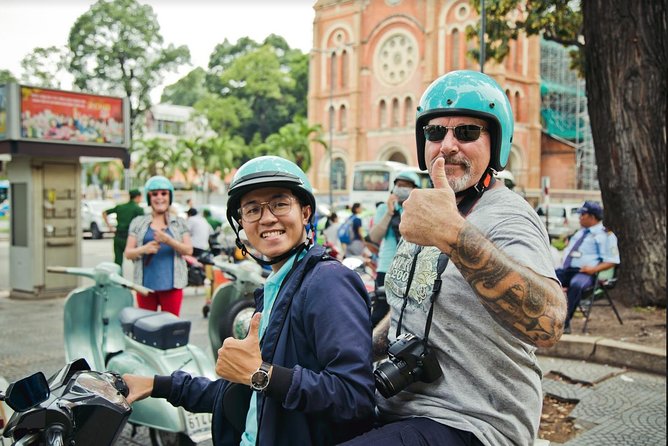
Saigon moves fast, but this ride keeps up. This Ho Chi Minh City scooter tour is a smart way to see a lot in 3 to 4 hours, with stops that mix French colonial icons, Saigon’s religious life, and Chinatown culture. I like that the route is tight and efficient, and I also like that you get an English-speaking guide explaining what you’re looking at while you’re still in the thick of it.
One thing to consider: a scooter tour means you’ll be comfortable with traffic flow and road noise, and there can be hiccups with pickup communication if your hotel pickup is involved.
In This Review
- Quick, Worth-Know Highlights
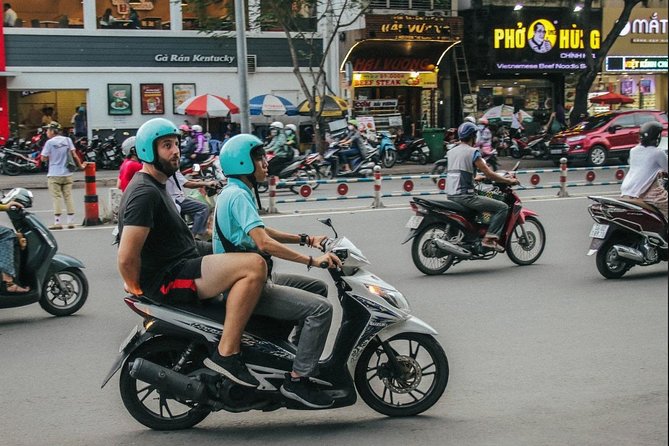
- Why a Scooter Tour Works So Well in Ho Chi Minh City
- First Stop: Thich Quang Duc Monument and a Protest That Shocked the World
- Ho Thi Ky Flower Market: Seeing Life Beyond the Guidebook Faces
- Ba Thien Hau Temple in Cholon: Mazu’s Boat-Ride Spirituality in Plain Sight
- Notre-Dame Cathedral Basilica: French Colonial Style and Saigon’s Scale
- Central Post Office: French Design With Vietnam’s Own Message
- Independence Palace: Where the Vietnam War’s End Became Visible
- Saigon Opera House and the French-Style Finish
- Ben Thanh Market or Back Where You Started: Choosing Your Ending
- Price and Logistics: What $15 Actually Buys You
- Your Guide Makes the Difference: Yang, Paul, Binh, and Ninh
- Who This Tour Fits Best (and Who Might Want Something Else)
- Should You Book Saigon On 2 Wheels?
- FAQ
- How long is the scooter tour?
- How much does the tour cost?
- Is hotel pickup included?
- What’s included in the tour price?
- Is lunch included?
- Do I need to pay admission fees at the stops?
- Where does the tour start and end?
- How big is the group?
- What weather conditions are required?
Quick, Worth-Know Highlights
- Small group (max 10) means you’re less likely to get lost in the shuffle when traffic forces quick adjustments.
- English-speaking guides bring the stops to life with practical context, not just dates.
- Short stop times keep the pace doable, but you’ll want to have photos ready since many stops are around 10–15 minutes.
- District-friendly routing blends central landmarks with a Chinatown-style detour without turning it into an all-day plan.
- Helmet and scooter provided so you’re not scrambling to rent or borrow gear.
- Entrance costs are selective (notably Independence Palace), so check what you’ll pay separately.
Why a Scooter Tour Works So Well in Ho Chi Minh City
Ho Chi Minh City is one of those places where walking alone can feel slow. Roads are busy, crosswalks can be chaotic, and you don’t always know which side street is worth the detour. On a scooter tour, you get speed plus guidance, which is the combo you want when you only have a half-day.
This one is built for momentum. You’re out for roughly 3 to 4 hours, and the stops are spaced so you can actually look around at each place instead of just driving past it. The route also mixes visual big names with smaller cultural moments, so you don’t end up with a list of monuments and nothing else.
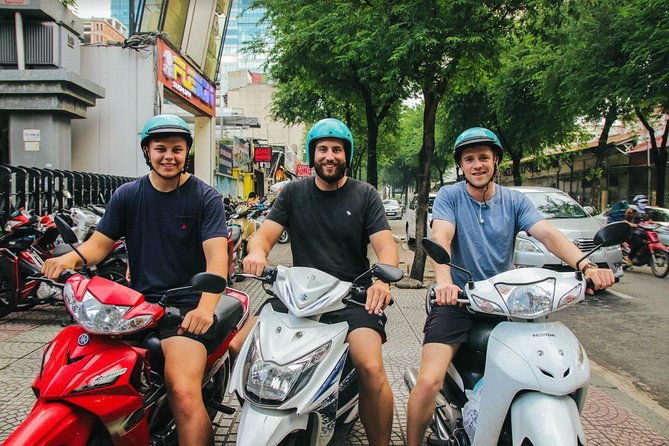
Another plus: the tour includes a high-quality helmet and a scooter, so you’re not dealing with gear headaches. At the end, you return to where you started, with an option to finish near Ben Thanh Market or at your hotel depending on your message to the operator.
You can also read our reviews of more tours and experiences in Ho Chi Minh City.


First Stop: Thich Quang Duc Monument and a Protest That Shocked the World
You’ll start at a memorial tied to one of the most emotionally powerful moments in Vietnam’s modern history. The Thich Quang Duc Monument honors the monk who set himself on fire in protest of the persecution of Buddhists. It’s not a casual stop—this is the kind of place where a short visit still lands.
What makes it worth your time is the way the guide frames it in plain language: this wasn’t a random act, it was a political and religious protest that drew international attention. Even with a brief stop (about 15 minutes), you can read the memorial context and understand why this location matters.
Practical tip: dress respectfully and take a moment before photos. The atmosphere here calls for quiet attention, even if the traffic is loud outside.
Ho Thi Ky Flower Market: Seeing Life Beyond the Guidebook Faces
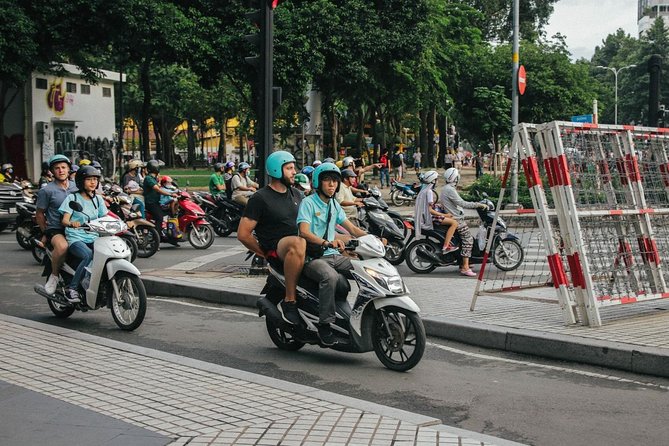
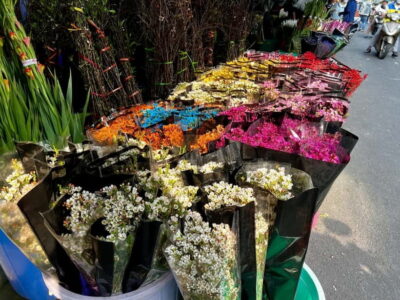
Next you shift gears to something that feels very “Saigon right now.” Ho Thi Ky Flower Market is where flowers and supplies move in volume—everything from chrysanthemums and marigolds to orchids and roses. Flowers aren’t the only thing sold; you can also spot materials and garment tools, which hints at how closely markets connect daily life and business.
This stop is about texture and noticing details. You’ll see a working market, not a stage set. And you’ll probably appreciate how far the city’s supply chains reach, since flowers can come from places like Dalat, Hanoi, and even international sources mentioned as part of the market’s inventory.
It’s a short stop (around 15 minutes), so I treat this like a photo-and-sense checkpoint. If you’re thinking of bringing something home, this is the moment to ask what’s easy to pack.
Ba Thien Hau Temple in Cholon: Mazu’s Boat-Ride Spirituality in Plain Sight
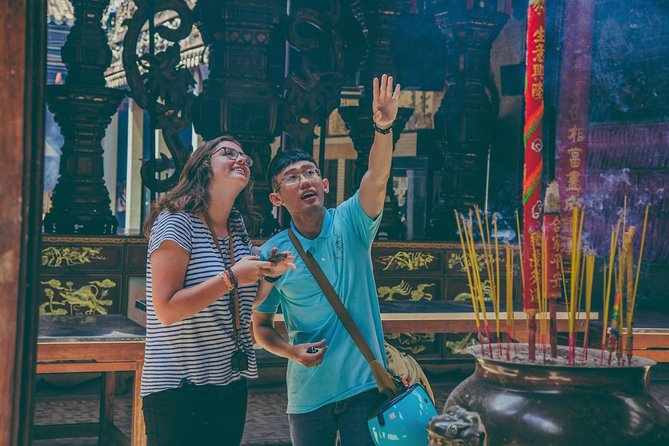
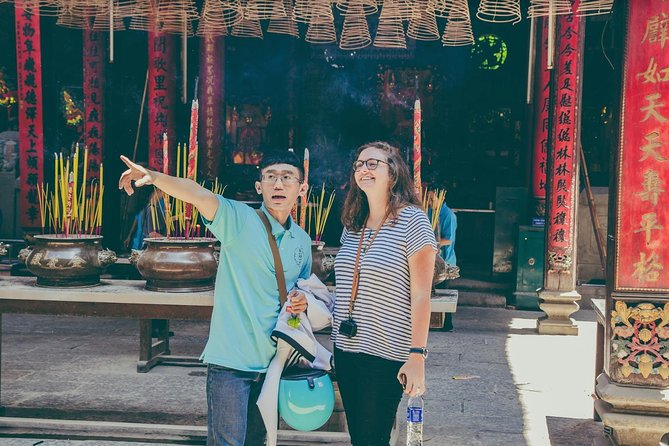
Then you head to Cholon (Chinatown) for Ba Thien Hau Temple, dedicated to Mazu, the Chinese sea goddess. The belief centers on protection and rescue at sea—Mazu is imagined as traveling to help people when danger strikes. The way the guide explains it can help you notice how this faith overlaps with Taoism and Buddhism traditions.
This is one of those stops where people usually expect only an exterior photo. Instead, you’ll get more from the symbolism inside—how the temple’s identity connects to the lives of people who depended on waterways and maritime trade. It’s also a strong contrast to the French colonial architecture you see later.
You’ll have about 15 minutes here. Use it to look slowly at the altar area and take in how worship looks in practice, not just in theory.
Notre-Dame Cathedral Basilica: French Colonial Style and Saigon’s Scale
Next comes one of Vietnam’s most famous French-era structures: Saigon Notre-Dame Cathedral. Built between 1863 and 1880 by French colonists, it’s modeled on Notre-Dame de Paris, using materials shipped from France. This also isn’t just architecture-for-architecture’s-sake; it’s described as the religious center for Vietnam’s Catholic community.
Even if you’re not religious, the cathedral is worth a stop because it shows how the city layers identities. In the span of a few hours, you’ll be seeing French colonial stonework, Chinese-influenced temple worship, and Vietnam’s modern memorial history—all without leaving central Saigon.
The stop time is about 15 minutes, which means you won’t be touring for ages. If you want a good photo, position yourself early before the flow of motorbikes and pedestrian traffic thickens.



Central Post Office: French Design With Vietnam’s Own Message
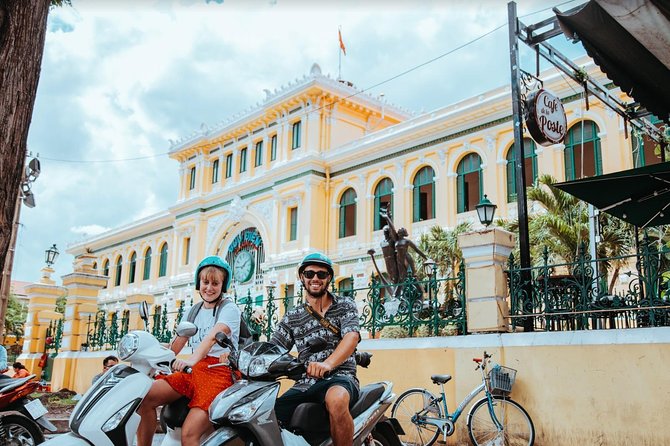
The Central Post Office is a surprisingly good “pause” during a fast scooter day. Built between 1886 and 1891, it’s known for looping arches, marble flooring, and old-style details like telephone boxes. It feels French in structure, but the viewpoint is unmistakably Vietnam—especially with Ho Chi Minh’s portrait high above.
The coolest part is what you learn to look for. Overhead maps show the region and also telegraph lines across Vietnam and Cambodia. The guide’s explanation helps you connect the building to how communication once worked—before email, before mobile phones, before everyone assumed instant message delivery.
You’ll have about 15 minutes, which is enough time to walk in, take a few photos, and understand why the building mattered. If you’re the type who likes architecture but also wants meaning, this stop delivers.
Independence Palace: Where the Vietnam War’s End Became Visible
The big wartime landmark is Independence Palace, built on the site of the former Norodom Palace. Designed by Ngô Viết Thụ, it served as the home and workplace of South Vietnam’s president during the Vietnam War. The key event associated with it is the end of the Vietnam War on 30 April 1975, when a North Vietnamese tank crashed through the gates.
This stop is shorter (around 10 minutes) and the most important cost detail: the Independence Palace entrance isn’t included. That means you may want to be ready to pay the admission fee separately so you’re not caught off guard when you’re standing at the entrance.
Since your time here is limited, don’t try to read everything. Instead, focus on the main rooms and the sense of turning points. This is one of those places where the atmosphere does a lot of the storytelling.
Saigon Opera House and the French-Style Finish
After the palace, the route shifts back into “classic Saigon photo stops.” You’ll visit the Saigon Opera House (Ho Chi Minh Municipal Theater), another example of French Colonial architecture. Even if you don’t know much about opera, the building itself is a good signal: colonial influence didn’t just shape churches and government offices—it shaped public culture too.
This stop is about 10 minutes. That’s enough to capture exterior details and get a quick explanation of its place in the city. If you’re walking away with one takeaway from this section, let it be how architecture acts like a time machine, even when the streets stay modern and loud.
Ben Thanh Market or Back Where You Started: Choosing Your Ending
You get to finish either at Ben Thanh Market or back at your hotel, if you message ahead to arrange it. Ben Thanh is one of the city’s best-known market zones, and it’s a natural place to stretch your legs after you’ve been moving by scooter.
At minimum, even a short stop helps you transition from “tour mode” into “I’m exploring now” mode. If you end back at the meeting point instead, you’ll still have the mental map from the earlier landmarks, so finding your next meal is easier.
Price and Logistics: What $15 Actually Buys You
At $15 per person, this tour is priced like a value-focused city tour. What you’re paying for isn’t just transport—it’s a guide, a scooter, and a helmet, plus structured access to key sights spread across central Saigon and Chinatown.
Here’s where the value equation gets real: most stops have free admission, which keeps your total cost predictable. The one notable exception is Independence Palace, where entry is not included. So your final spending depends on whether you pay that gate fee.
Pickup is included only for hotels in District 1 and District 3. If your hotel is outside those areas, there’s an extra $3–$5. In a city like this, that detail matters, because scooter tours live or die by good coordination.
Your Guide Makes the Difference: Yang, Paul, Binh, and Ninh
This tour stands or falls on the human piece, and there’s good evidence of that. One set of guides—Yang and Paul—is described as highly informative, flexible, funny, and easygoing, with a focus on both history and practical context. Another pairing—Binh and Ninh—is praised for humor, extensive knowledge, and making time for alleyway stories you’d never find alone.
Even the most famous sights benefit from a guide who can explain what you’re seeing in street-level language. That’s what I’d want if I were in your seat: not a lecture, but a running guide to help you understand why each stop belongs in the same half-day.
Who This Tour Fits Best (and Who Might Want Something Else)
This works especially well if you want a quick, organized route and you like learning while moving. It’s also a strong choice for people who find Ho Chi Minh City overwhelming on foot and want help navigating the pace.
It may be less ideal if you’re prone to motion discomfort or you really dislike riding in heavy traffic. Also, keep in mind that one person reported a missed pickup and trouble reaching staff by phone, so if you’re depending on hotel pickup, treat it like a critical plan: confirm details and stay reachable the day of.
Should You Book Saigon On 2 Wheels?
I’d book it if you want a half-day that mixes major landmarks with culture stops, without spending hours planning routes. For $15, you’re getting transport, safety gear, an English guide, and mostly free-entry stops, which is the kind of value that makes sense in a first visit.
I’d hesitate only if you’re the type who needs total certainty on pickup timing or you’re uncomfortable with scooters. If you’re flexible, expect a fast but meaningful sweep through Saigon’s past and present, and use Ben Thanh as your fun last stop.
FAQ
How long is the scooter tour?
It lasts about 3 to 4 hours.
How much does the tour cost?
The price is $15.00 per person.
Is hotel pickup included?
Free pickup and drop-off is included only for hotels in District 1 and District 3. For other areas, there’s an extra $3–$5.
What’s included in the tour price?
You get a friendly English-speaking guide, a motorbike/scooter, and a high quality helmet.
Is lunch included?
No. Lunch/dinner is not included.
Do I need to pay admission fees at the stops?
Most stops are listed as free admission, but Independence Palace admission is not included.
Where does the tour start and end?
It starts at the War Remnants Museum area in Phường 6, Quận 3, and ends back at the meeting point. You can also request finishing at Ben Thanh Market or your hotel by messaging.
How big is the group?
The tour has a maximum of 10 travelers.
What weather conditions are required?
The experience requires good weather. If it’s canceled due to poor weather, you’ll be offered another date or a full refund.