REVIEW · HO CHI MINH CITY
Saigon Historical City Tour
Book on Viator →Operated by AN Tours · Bookable on Viator
History hits differently from the back of a scooter. I love the hotel pickup by scooter and the street-level storytelling that connects famous sites to the city’s bigger story. One drawback: you’ll be riding in real traffic, so comfort with scooters and moderate fitness matters.
This half-day format is built for first-timers who want more than postcard facts. Guides like Henry and Chris (both called out for clear English and calm driving) help you move fast without feeling rushed, and you get safety support in the moment. You’ll wear an open-face helmet, which helps, but it still won’t feel like a quiet bus tour.
If your hotel sits outside districts 1, 3, and 4, there’s an extra $5 per person charge. Book early if you’re set on a specific day—this one gets scheduled out about a month in advance on average.
In This Review
- Key takeaways before you go
- Why a motorbike historical tour works in Ho Chi Minh City
- Notre Dame Cathedral and the Saigon Post Office: French-era landmarks
- Thich Quang Duc and the story of Buddhist protest
- Weapon-concealing bunkers and Saigon’s war scars
- What the $45 price buys you (and what can cost extra)
- Comfort, safety, and who this half-day tour fits best
- Should you book the Saigon Historical City Tour?
- FAQ
- How long is the Saigon Historical City Tour?
- What is included in the tour price?
- Is hotel pickup included?
- Do I need to buy admission tickets?
- What landmarks will we visit?
- Is it a private tour?
- What if my hotel is outside districts 1, 3, and 4?
- What fitness level do I need?
- Will I get a mobile ticket?
- What is the cancellation window?
Key takeaways before you go
- Scooter pickup and a true street-level viewpoint so you see Ho Chi Minh City at human speed
- French-era landmarks paired with the stories that explain why they look the way they do
- A powerful Buddhist protest story centered on Thich Quang Duc and persecution of Buddhists
- War-era sites explained in plain language, including weapon-concealing bunkers
- Drinks included (bottled water plus coffee and/or tea) to keep the ride comfortable
- Private tour for your group, not a mixed crowd
Why a motorbike historical tour works in Ho Chi Minh City

In Ho Chi Minh City, the history isn’t just on monuments. It’s in the flow of traffic, the street corners, and how neighborhoods changed over time. That’s why I like this tour style: you cover distance without losing the feel of the city.
The setup is simple. Your guide picks you up at your accommodation by motorbike, and you ride as a passenger. You also get a high-quality open-face helmet, plus bottled water, and coffee and/or tea to keep you steady for the full ~4 hours.
The best part is how the guide links what you’re seeing to what it meant. Instead of you trying to map routes and guess context, the guide does the connecting work—often the difference between reading about a place and actually understanding why it mattered.
The one thing to be honest about: scooter riding is the whole point. If you’re anxious in traffic or you struggle with balance, this can feel like a lot, even with calm guides and helmets. Also note the tour asks for moderate physical fitness level, which usually means you’ll want to be comfortable mounting/dismounting and sitting for stretches of time.
You can also read our reviews of more city tours in Ho Chi Minh City

Notre Dame Cathedral and the Saigon Post Office: French-era landmarks
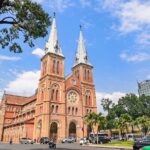
The tour’s early move is classic for a reason. You’ll head to two of the most recognizable French-era landmarks: Notre Dame Cathedral and the Saigon Post Office. Seeing them as a pair helps, because they show the French colonial influence in architecture and city planning.
At Notre Dame Cathedral, focus on the details that make it feel less Southeast Asian than the streets around it. The point of the stop isn’t just photos—it’s understanding what this style represented when it was built, and why it still sits in the city’s present-day layout.
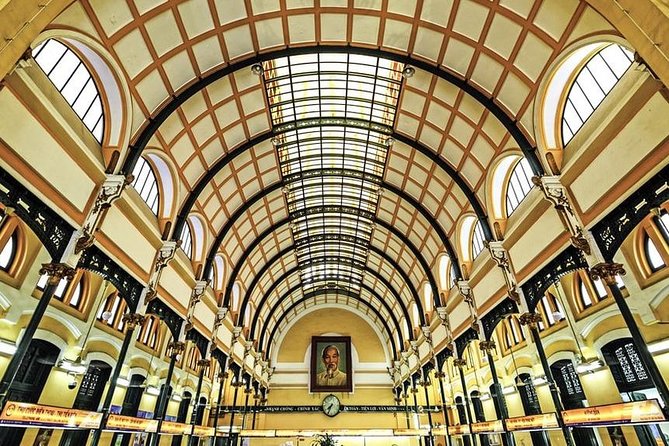
Then you’ll shift to the Saigon Post Office, often called out as the oldest post office. Again, the guide’s job is to translate the building into story form: why it became a landmark, and how the French-era presence left visible marks on everyday life.
What I like here is the pacing. You get a quick but meaningful walk-through, then you’re back in motion on the motorbike. For first-time visitors, this saves you from spending your whole day trying to figure out where each site is and how they connect.
A practical tip: bring patience for crowding. These are top sights, so expect people. Your guide helps you make the most of the time you have at each spot.
Thich Quang Duc and the story of Buddhist protest
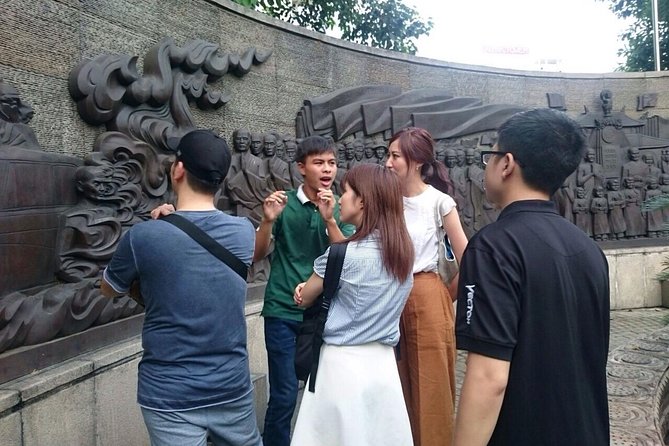
After the big-name sights, the tour turns more human and more intense. You’ll visit a story tied to a Vietnamese Mahayana Buddhist monk who burned himself to protest the persecution of Buddhists by the South Vietnamese government.
In the tour context, this isn’t presented as a random tragedy. It’s framed as part of the political pressure Buddhists faced at the time, and why acts like this became global symbols. If you’ve read fragments before, this is where the pieces feel connected.
This stop works well on a half-day because it gives the tour emotional weight. It reminds you that history in HCMC isn’t only about buildings and dates—it’s also about belief, persecution, and public protest.
I also appreciate that the tour handles it in a guided way. The subject is heavy, so you want someone who can explain the background without turning it into a lecture. The guides on this tour are repeatedly praised for bringing these locations to life, especially when it comes to clarity and perspective.
Small note for your comfort: if graphic topics are difficult for you, be ready for this part of the tour to be emotionally intense. It’s the kind of stop that stays with you.
Weapon-concealing bunkers and Saigon’s war scars
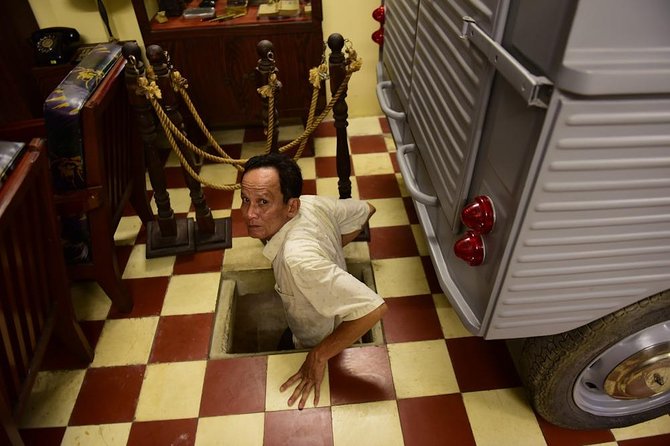
Then comes the more underground side of the city’s past: weapon-concealing bunkers. The description you get is specific in theme—this was a place used to hide nearly three tonnes of stored material—and that matters because it shows how much effort went into survival and secrecy.
This is where street-level history feels different. Instead of only seeing what’s above ground, you get a sense of what people built out of sight. Even when you can’t fully picture operations from one visit, the guide helps you understand why hiding weapons was so important during periods of conflict.
What to look for during the stop is less about guessing every detail and more about listening for the practical explanation. How these spaces were used, why they were designed the way they were, and what kind of risk people faced if they were discovered—those are the points that make the visit worth it.
This section is a good balance to the French architecture and the protest story. It shifts the tour from symbols to survival.
What the $45 price buys you (and what can cost extra)

At $45 per person for about 4 hours, the value is mostly in the included transport and guidance. You’re not just paying for a walking tour. You’re paying for motorbike transportation with fuel included, plus a guide who handles routing and context.
The tour also includes bottled water and coffee and/or tea, which is a real help when you’re out riding in the city. And you’ll have an open-face helmet provided, which adds to both comfort and safety.
Admission is listed as free for the tour’s stops, which further tightens the cost equation. You should still expect to spend time and energy, but you aren’t paying entrance fees on top of the tour price based on what’s provided.
The main extra cost to watch is location. If your accommodation is out of district 1, 3, and 4, there’s a $5 per person charge. If you’re staying farther out, it can make more sense to either confirm pickup feasibility early or plan for that add-on.
Also, because it’s a private tour/activity, you’re usually paying for your group’s experience rather than splitting time with strangers. That matters if you want more tailored explanations or you’re traveling with a partner and prefer one consistent guide.
You can also read our reviews of more historical tours in Ho Chi Minh City




Comfort, safety, and who this half-day tour fits best
This tour is best for people who want momentum. You’ll cover several key sights without the mental load of navigating on your own in heavy traffic. The scooter format is repeatedly praised as the way to see Saigon at street level—faster than walking, and closer to everyday life than a vehicle where you mostly stare out the window.
Safety is a big theme in the feedback. Guides such as Jessie and Henry are highlighted for driving safely and for being reassuring—especially by couples where one traveler was older. That’s an important signal. It suggests the guides don’t treat the traffic like a stunt. They treat it like a skill.
That said, you still need to be comfortable being a passenger. The tour is rated for moderate physical fitness level, which likely means you should be able to sit upright, manage short transfers on and off the bike, and handle a few stretches of riding without major discomfort.
This tour fits well if:
- you’re a first-time visitor who wants an overview you can build on later
- you like history but don’t want museum-style pacing
- you want a local-feeling street ride, not only standing in lines
It may not fit as well if:
- you don’t feel good in traffic or hate scooter riding
- you have mobility limits that make getting on/off vehicles difficult
- you want a quiet, low-stimulation day
One more practical point: the tour uses mobile tickets. So if you like having everything on your phone, that’s convenient.
Should you book the Saigon Historical City Tour?
If your goal is a fast, guided introduction to Ho Chi Minh City’s layered past, I think this is an easy yes. The mix of French-era landmarks, the Thich Quang Duc protest story, and weapon-concealing bunkers gives you a fuller picture of what shaped Saigon than most half-day plans.
You should book if you like two things: learning from a guide in the moment, and seeing the city through the street-level experience that scooters make possible. The repeated praise for safe driving and clear explanation from guides like Chris and Henry is exactly what you want when the setting is traffic-heavy.
You might pass if scooter riding makes you nervous. In that case, you could prefer a vehicle-based option that keeps you out of the street-level motion. But if you’re okay with helmets and the ride itself, this tour is a strong value for $45, because you’re buying transportation, drinks, and context in one package.
FAQ
How long is the Saigon Historical City Tour?
It’s about 4 hours.
What is included in the tour price?
You get bottled water, coffee and/or tea, motorbike transportation (including fuel), and a high-quality open-face helmet. A guide and the stops are also included.
Is hotel pickup included?
Yes. Pickup is offered from your accommodation by motorbike.
Do I need to buy admission tickets?
The tour info lists admission ticket as free.
What landmarks will we visit?
The tour includes stops such as Notre Dame Cathedral and the Saigon Post Office, plus a story connected to Thich Quang Duc and a visit to weapon-concealing bunkers.
Is it a private tour?
Yes, it’s private. Only your group participates.
What if my hotel is outside districts 1, 3, and 4?
If your accommodation is out of district 1, 3, and 4, there is a $5 per person charge.
What fitness level do I need?
The tour lists a requirement of moderate physical fitness level.
Will I get a mobile ticket?
Yes, a mobile ticket is included.
What is the cancellation window?
Free cancellation is available up to 24 hours in advance for a full refund. If you cancel less than 24 hours before start time, the amount paid is not refunded.