REVIEW · HO CHI MINH CITY
HCM: Cu Chi Tunnels-Tapioca Small Group Tour Morning or Afternoon
Book on Viator →Operated by KIM TRAVEL · Bookable on Viator
Cu Chi Tunnels goes underground fast. This small-group tour from Ho Chi Minh City makes the Vietnam War feel close-up, with war relic displays above ground and a real tunnel crawl option below. I like the included pickup/drop-off from Districts 1, 3, and 4, and I also like how the guide connects what you see—traps, bunkers, daily life—to how the network worked. The main drawback is simple: the tunnels are tight, so the optional crawl is not for everyone.
You get a full half-day style visit that still leaves room for context, with a mix of films, exhibits, and time moving through the maze at your own pace. It runs about 7 hours total, which includes the ride from the city to Cu Chi and back, plus the on-site stops.
If you’re trying to fit Vietnam War history into a busy Ho Chi Minh City schedule, this tour is built for that. Just go in expecting a hands-on, practical experience that comes with heat, dust, and narrow passageways.
In This Review
- Key things that make this Cu Chi Tunnels tour worth your time
- Getting to Cu Chi from Ho Chi Minh City: pickup, ride time, and what to expect
- Above ground first: films and war relics that set the stage
- Inside the Cu Chi tunnels: the maze, hidden entrances, and how life worked
- The crawl option: choosing comfort in a space built for smaller bodies
- Forest stop and documentary timing: history with a breather built in
- Cassava and tea: the snack stop that actually matches the story
- The guides: why names like Bao, Khanh, Tommy, Phong, and Luna show up so often
- Price and value: what $14.90 covers on a long day trip
- Who should book this Cu Chi Tunnels small-group tour
- Should you book: my practical take before you commit
- FAQ
- How long is the Cu Chi Tunnels tour from Ho Chi Minh City?
- Does the tour include hotel pickup and drop-off?
- What is the group size limit?
- Is an English-speaking guide included?
- What’s included at Cu Chi besides the tunnels?
- Is the 3D movie included?
- Can I choose whether to crawl through the tunnels?
- Is there a child age requirement?
- What’s the cancellation policy?
- Is the tour weather-dependent?
Key things that make this Cu Chi Tunnels tour worth your time
- Easy pickup and AC minivan ride from HCMC Districts 1, 3, and 4 to save you time and hassle
- War exhibits plus films (including an on-site documentary screening) so you don’t miss the big picture
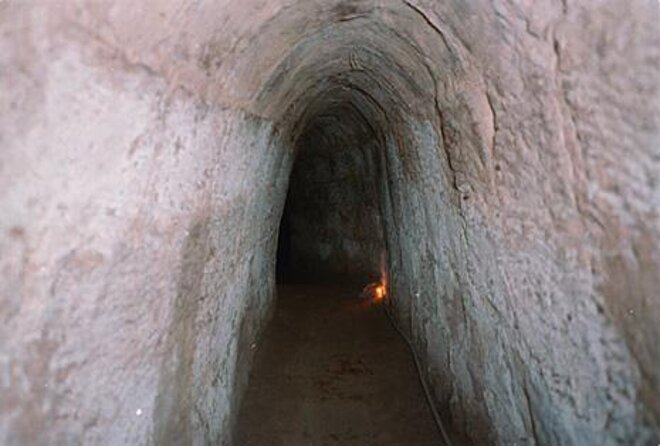
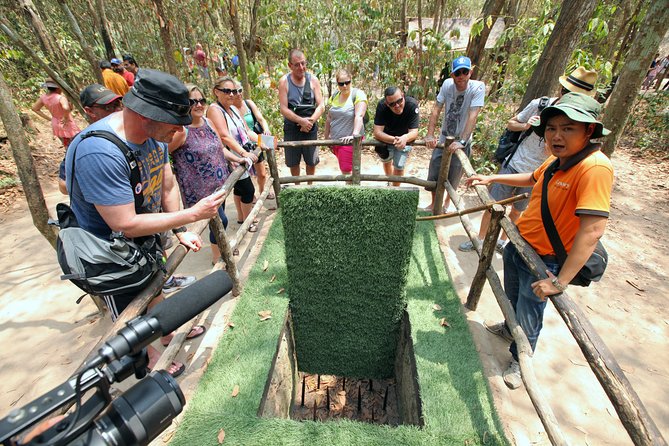
- Tunnel access and guidance through a maze with trap doors, storage spaces, command centers, and more
- Optional crawling through the tunnels, so you can choose your comfort level
- Wartime-style food included: cassava (and also tapioca) plus Vietnamese hot tea
- Small group size (max 25), which usually means less waiting and easier listening
Getting to Cu Chi from Ho Chi Minh City: pickup, ride time, and what to expect
This is the kind of tour that starts by solving the hardest part: getting out to Cu Chi without wrestling with buses and taxis. Pickup is offered from hotels in District 1, 3, and 4, using an AC minivan. You’ll then be dropped back in District 1 when the tour ends.
Timing is the first thing to plan around. Cu Chi is about 60 km from Ho Chi Minh City, and road time can realistically run 1.5 to 2.5 hours depending on traffic and conditions. That’s why the tour feels like a “full morning/afternoon outing” even though Cu Chi itself doesn’t take all day.
One practical tip: wear something that works in heat and sun. Even if you’re mostly in shaded areas, you’ll still spend time outdoors on the way in, while exploring the grounds, and around the forest-documentary stop.
You can also read our reviews of more tours and experiences in Ho Chi Minh City



Above ground first: films and war relics that set the stage
A big reason Cu Chi works as an experience is that you see the system from multiple angles. You start with films and exhibits before you go into the tunnel area, which helps you understand what you’re looking at.
On-site, you’ll watch a 3D film about the largest American ground operation in Vietnam, then you’ll move into the Cu Chi Tunnels War Exhibits area. Expect war relics and artifacts you can connect to real battlefield functions: you’ll see things like bunkers, guns, and traps. The goal is not just “cool items,” but how the network helped soldiers survive, move, and fight while staying hidden.
I like this approach because it builds context while you’re still fresh. If you go straight into the tunnel without a framing film, it’s easy to treat everything as random weird holes. With the films and exhibits first, the tunnel tour reads more like a plan than a stunt.
Inside the Cu Chi tunnels: the maze, hidden entrances, and how life worked
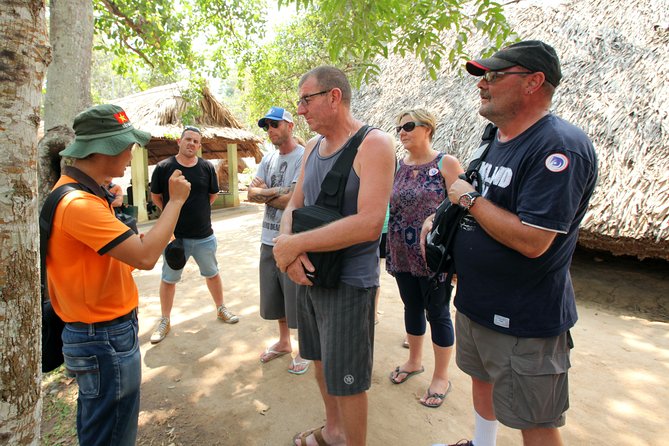
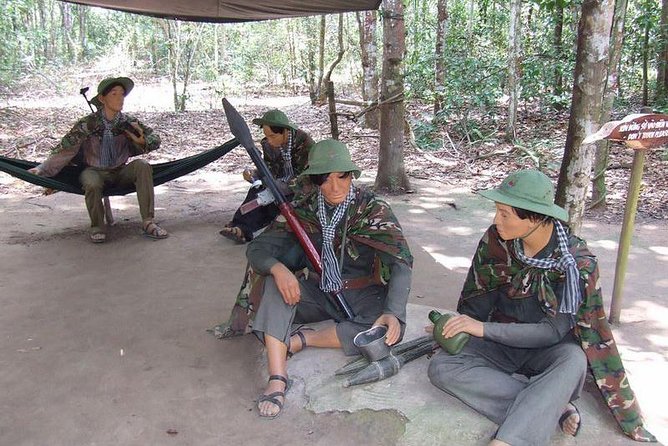
Then comes the part most people talk about: the tunnel network itself. You’ll learn how the Viet Cong used a complex underground system between 1961 and 1972, and you’ll get an “in-the-room” look at what life underground meant—storage areas, field hospitals, command centers, kitchens, and more.
You also get hands-on moments designed for understanding. There’s a chance to try a tiny hiding entrance and see how locals moved through openings built for concealment. As you explore, you’ll encounter features with an obvious purpose:
- trap doors that change what you can safely approach
- storage spaces that support long stays
- field hospital areas tied to survival
The tunnel experience is designed to be interactive even without being extreme. You’ll have time to move around the maze and understand it visually, then you’ll reach the part where you can choose to crawl.
The crawl option: choosing comfort in a space built for smaller bodies
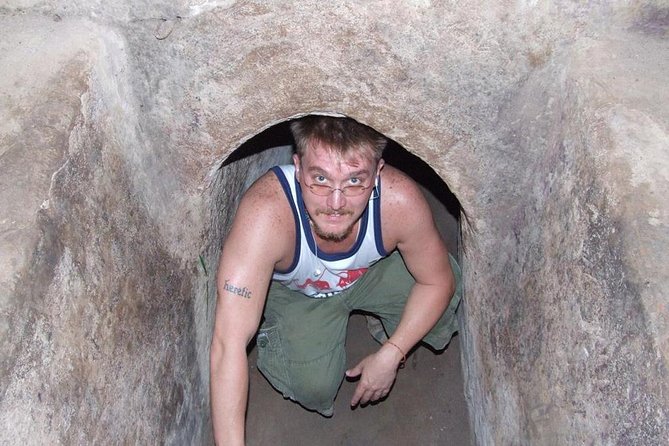
The tour includes an optional experience: crawling through the Cu Chi Tunnels. That’s the moment you decide how you want to experience the history—walk it, or go closer to what being inside meant.
Keep expectations realistic. The tunnels today are built to be safer for visitors, and that means passages are widened and simplified compared with how they originally functioned. Historically, the system had three levels and could reach up to 10 meters deep, but modern visitors generally need a setup that’s less punishing.
If you’re claustrophobic, or you have mobility issues, you may prefer to stay with the longer route and the above-ground understanding. Even guides who run a smooth tour can’t change tunnel dimensions. This is the one part where your body size and comfort matter more than your curiosity.
Forest stop and documentary timing: history with a breather built in
Not every minute is underground. After the tunnel area exploration, you’ll spend time in the forest area, and you’ll watch a documentary about the strategic system of the Cu Chi Tunnels.
This stop does two useful things. First, it breaks up the tunnel time so you’re not stuck inside your own head for the full visit. Second, it reinforces the idea that the tunnels weren’t just hiding places—they were a connected system for movement, logistics, and survival.
If you tend to get tour-fatigued, this pacing helps. It gives you a structured explanation after you’ve already seen the physical features.




Cassava and tea: the snack stop that actually matches the story
You’ll be fed, and it’s not just a token cookie. At the Cu Chi experience, there’s a focus on wartime rations: cassava is highlighted as the most popular food during war days at Cu Chi tunnels.
On top of that, the tour includes tapioca and Vietnamese hot tea, plus bottled water and wet tissues. There’s also wheat cake included. It’s a small set of items, but it matters because Cu Chi is tiring in heat—being able to cool down and reset without finding food on your own is part of the value.
This is one of those details that makes a difference on a 60 km day trip. You’re less likely to feel that you’re constantly searching for the next practical solution.
The guides: why names like Bao, Khanh, Tommy, Phong, and Luna show up so often
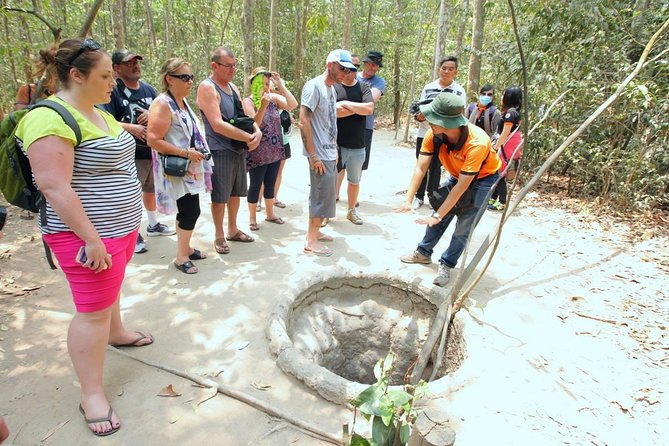
A tour like this rises or falls on the guide’s flow. The best Cu Chi guides don’t just list facts; they connect what you’re standing in front of to what it meant for people who lived and fought there.
Guides such as Mr. Bao, Khanh, Tommy, Phong, Lao, Luna, Martin, and Ben have been singled out for clear explanations and an engaging style. The big pattern: when the guide tells you what you’re looking at before you see it, the tunnels stop feeling like random crawl spaces and start feeling like a living strategy.
You may also notice how guides manage time and group movement. In small groups up to 25 people, a guide counting heads and shaping when you enter tighter spaces can make you feel safer and keep you from lagging behind.
If you prefer a tour that feels friendly and organized rather than rushed, this one is built for that kind of rhythm.
Price and value: what $14.90 covers on a long day trip
At $14.90 per person, the value is mostly about what’s included. This isn’t just a basic ticket to a site. You get:
- hotel pickup in Districts 1, 3, and 4
- an English-speaking guide
- an AC minivan
- entrance fees
- on-site film/documentary screenings
- tapioca, Vietnamese hot tea, cassava, plus water and small snack items
- travel insurance
- tissues and wheat cake, which sounds minor until you’re in the heat
You’re also paying for the structure that prevents the most common Cu Chi headaches: finding transportation, coordinating admission timing, and translating what you see. That’s a lot to get for a price that stays in the budget range.
Yes, there’s optional content depending on what you choose on the day (like crawling). But the core experience is already packaged.
Who should book this Cu Chi Tunnels small-group tour
Book it if you want:
- a guided Vietnam War experience that explains daily life underground, not just war photography
- a small-group format that keeps logistics manageable
- an itinerary with films, exhibits, and tunnel time in one place
- a day trip that includes real food like cassava instead of leaving you to hunt for snacks
You might skip it (or plan alternatives) if:
- you strongly dislike tight spaces and don’t want to risk the optional crawl
- you expect a highly detailed, scholarly museum experience for every stop
- you get annoyed by tours that include a shopping/workshop stop (there is mention of a handicraft/Agent Orange awareness workshop stop in some versions, but it’s voluntary and not required)
Should you book: my practical take before you commit
I think this tour is a smart choice when you’re in Ho Chi Minh City with limited time and you want Cu Chi to feel understandable fast. The pickup, the guide, the films, and the included food make it low-stress, and the tunnel access option helps you tailor the intensity.
My main “check first” advice is personal comfort. If you’re okay with the idea of narrow passages, the experience can be memorable. If you know you’ll hate confined spaces, aim for the parts above ground and treat the crawl option as optional rather than assumed.
If you want a solid, budget-friendly way to see one of southern Vietnam’s top sites, this small-group format is worth booking.
FAQ
How long is the Cu Chi Tunnels tour from Ho Chi Minh City?
The tour duration is listed as about 7 hours (approx.), including travel time and time on-site.
Does the tour include hotel pickup and drop-off?
Yes. Pickup is offered from hotels in District 1, 3, and 4, and the tour includes drop-off back in District 1.
What is the group size limit?
This activity has a maximum of 25 travelers.
Is an English-speaking guide included?
Yes, the tour includes an experienced English speaking guide.
What’s included at Cu Chi besides the tunnels?
Included elements include the Cu Chi Tunnels War Exhibits area, entrance fees, watching the Cu Chi Tunnels documentary film, plus snacks and drinks such as tapioca, hot tea, cassava, wheat cake, bottled water, and wet tissues.
Is the 3D movie included?
A 3D movie is listed as part of the tour experience, and an included documentary screening is also part of the itinerary. If a 3D upgrade is offered separately, it may be paid as an add-on depending on what’s being screened.
Can I choose whether to crawl through the tunnels?
Yes. Crawling through the tunnels is listed as an optional experience.
Is there a child age requirement?
Children must be accompanied by an adult.
What’s the cancellation policy?
Free cancellation is available up to 24 hours in advance for a full refund.
Is the tour weather-dependent?
Yes. This experience requires good weather, and if it’s canceled due to poor weather, you’ll be offered a different date or a full refund.