REVIEW · HO CHI MINH CITY
Saigon Afternoon City Historical Scooter Tour |Opt: Ao Dai Riders
Book on Viator →Operated by Saigon On Motorbike · Bookable on Viator
Four hours, seven history stops, one motorbike. This Saigon afternoon scooter tour is built for people who want big sights without getting stuck in traffic or inside a stuffy bus. You’ll move through the French Quarter zone, then cut to wartime landmarks and temples, with your guide steering the story while you stay in the flow of the city.
What I like most is the setup: hotel pickup means you don’t waste time hunting meeting points, and the ride feels efficient without feeling rushed. I also like the mix of stops that are all meaningful on their own, from War Remnants Museum to Notre-Dame Cathedral, plus a walking break on Nguyen Hue Street.
One consideration: the pacing is tight. Many stops are around 20 minutes, so if you want lots of time to linger inside buildings, you may feel a bit limited—especially at the museum. (If you’re eyeing the Ao Dai rider option, plan ahead too, since female rider requests need extra lead time.)
In This Review
- Key Things to Know Before You Ride
- Why a Saigon Scooter Tour Works So Well for a Tight Schedule
- Price and Value: What $25 Buys You (and Why It’s Not Just a Ride)
- Hotel Pickup, Mobile Ticket, and the Simple Start You Want
- Stop-by-Stop: War Remnants Museum to the French-Quarter Classics
- War Remnants Museum (about 20 minutes, admission included)
- Notre-Dame Cathedral Basilica of Saigon (about 20 minutes, admission included)
- Central Post Office (about 20 minutes, admission included)
- Saigon Opera House (Ho Chi Minh Municipal Theater) (about 20 minutes, admission included)
- Nguyen Hue Street: Walking for Atmosphere, Not for Exercise
- Emperor Jade Pagoda: A Temple Stop with Cantonese Roots
- 287/70 Nguyễn Đình Chiểu: The Hidden Weapons Basement Stop
- What the Guides Add: Minh and Ai, Billy, Justin, Jus, Navin
- Ao Dai Rider Option: How to Get the Female Rider Request Right
- Who Should Book This Scooter Tour (and Who Might Skip It)
- Should You Book This Afternoon Saigon Scooter Circuit?
- FAQ
- How long is the Saigon Afternoon City Historical Scooter Tour?
- What’s the price per person?
- Is hotel pickup included?
- Are admission tickets included?
- What’s included for the scooter ride?
- Is this tour private?
- Is there a vegetarian option?
- What if I want a female Ao Dai rider?
- Can I cancel and get a full refund?
Key Things to Know Before You Ride

- Hotel pickup to start the ride stress-free
- Open-faced helmet, rain poncho (if needed), fuel, and accident insurance included
- Admissions included for several major sights
- French Quarter icons + wartime sites in one afternoon route
- A short walking stretch on Nguyen Hue Street for a change of pace
- 287/70 Nguyen Dinh Chieu secret basement visit with extra context
Why a Saigon Scooter Tour Works So Well for a Tight Schedule
Saigon moves fast, and not just on the roads. Even if you love big cities, there’s a real cost to time: long walks in heat, lines, and waiting around for buses. This afternoon format makes sense because it uses a motorbike to compress a lot of ground into about 4 hours without turning your day into a logistics problem.
The route also follows a logic that’s easy to appreciate. You start with some of the most intense context in the city, then shift into French-colonial landmarks, and finish with religious and wartime “under-the-surface” stories. Instead of collecting random photos, you get a clearer sense of how Saigon’s buildings, street corners, and public spaces connect to its past.
Because it’s set up as a private tour for just your group, the pace is less chaotic than large group tours. Your guide can adjust in real time to your questions and comfort level on the bike.
You can also read our reviews of more city tours in Ho Chi Minh City



Price and Value: What $25 Buys You (and Why It’s Not Just a Ride)

At $25 per person, this isn’t a splurge tour. It is, however, more than a simple “sit on a scooter and look around.” For one thing, you get practical riding gear and basic safety coverage included:
- High-quality open-faced helmet
- Motorbike fuel
- Rain poncho (if needed)
- Accident insurance
Then there’s the sightseeing value. Several stops include admissions, so you’re not paying extra for entry at each location. The tour also includes a friendly, professional guide and includes transfer support by meeting you at your hotel.
If you’re traveling with limited time, this matters. You’re buying the ability to hit multiple major places in one afternoon, with transportation solved for you. That’s hard to replicate when you’re trying to self-navigate in traffic and on a schedule.
Hotel Pickup, Mobile Ticket, and the Simple Start You Want

This tour is designed to reduce the annoying parts of sightseeing. You’ll get pickup offered, and you meet your driver at your hotel, so you’re not standing on a sidewalk trying to figure out which corner matches the map.
You’ll also use a mobile ticket, which tends to make arrival smoother (no printing, no lost paper).
Once you’re ready to ride, you’ll have the helmet and you’ll be offered a rain poncho if conditions call for it. Even if you’ve never ridden in Vietnam before, having these basics handled takes the pressure off. Your guide controls the movement of the route, so you don’t have to constantly scan for directions or street changes.
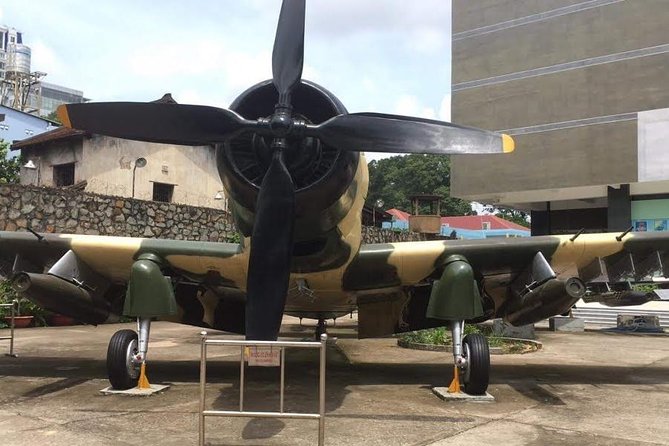
Stop-by-Stop: War Remnants Museum to the French-Quarter Classics
Most of your ride time is spent moving efficiently between major sights, with short guided stops that keep you moving without feeling like a drive-by tour.
War Remnants Museum (about 20 minutes, admission included)
This is your first real context stop: the War Remnants Museum was operated by the Vietnamese government and established in 1975. The exhibits cover the Vietnam War and also the first Indochina War.
A 20-minute visit won’t turn you into a historian, but it can do something more useful: it gives you enough framing to understand what you’ll see in later stops—especially when the city’s colonial buildings and religious spaces sit right beside wartime stories.
If you prefer quiet time, don’t be afraid to ask your guide for a slower walkthrough. And if you’re sensitive to difficult material, give yourself permission to focus on what you can handle without forcing a full “everything in one sitting” mindset.
You can also read our reviews of more historical tours in Ho Chi Minh City






Notre-Dame Cathedral Basilica of Saigon (about 20 minutes, admission included)
After the museum’s heavy tone, this cathedral feels like a reset. The Notre-Dame Cathedral Basilica of Saigon was established by French colonists and originally named Cathédrale Notre-Dame de Saïgon.
You’ll see it as part of the downtown French Quarter area, where architecture and street life create that distinctive Saigon contrast: old stone and history alongside the pace of modern life.
Because the stop is around 20 minutes, treat it like a photo-and-stroll window—enough to take in the exterior details and get a feel for the square-like setting, not enough for a long, slow worship visit.
Central Post Office (about 20 minutes, admission included)
Next up is one of the most famous buildings in downtown: the Saigon Central Post Office. It was built in the 1880s based on the design of Gustave Eiffel.
Even if you’re not “into post offices,” this stop is worth it because it lets you see colonial-era design thinking made practical for daily city life. There’s a strong chance you’ll end up looking at details longer than you planned—because the inside tends to reward curiosity.
Saigon Opera House (Ho Chi Minh Municipal Theater) (about 20 minutes, admission included)
The Saigon Opera House was custom built in 1897 by French architect Eugene Ferret. It’s often mentioned as a top venue in Vietnam to listen to opera and classical music.
Here’s the practical angle: even if you don’t attend a performance, a short stop gives you the architectural payoff and a sense of how French colonial culture shaped entertainment spaces in Saigon.
If the idea of opera doesn’t draw you, that’s okay. Use this time to read the building’s purpose as a cultural statement, not just a venue.
Nguyen Hue Street: Walking for Atmosphere, Not for Exercise

You get a breather here with a short walk on Nguyen Hue Street, described as Saigon’s first walking street.
This is your rhythm change. On the bike, you’re in motion and the guide is pointing out landmarks as you pass. On Nguyen Hue, you can slow down, look at streetfront architecture, and absorb the energy of downtown without constantly scanning the road.
The stop is about 20 minutes, so treat it as a quick reset and not a full neighborhood exploration. If you’re shopping-focused, you might want to plan a separate block of time later.
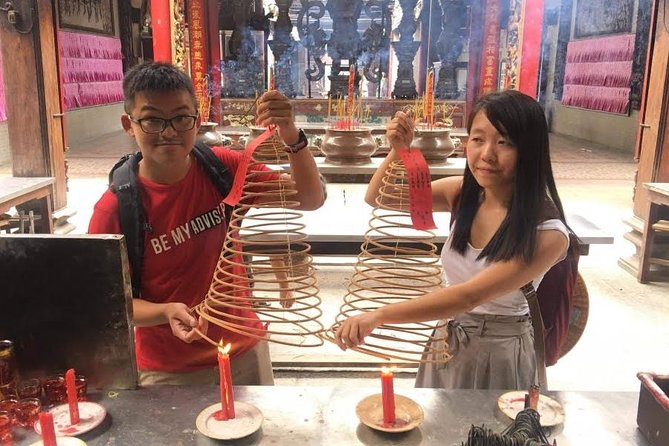
Emperor Jade Pagoda: A Temple Stop with Cantonese Roots
Then you shift from city center buildings into a temple that connects Saigon to Chinese Cantonese heritage.
The Emperor Jade Pagoda is about 100 years old, built by the local Chinese Cantonese community. It’s also a major draw because it was visited by former President Obama in 2016.
This is one of those stops where the short time limit matters. A 20-minute visit can still help you understand the place’s importance, but you won’t get hours of quiet reflection. If you want a respectful look without rushing, focus on the main areas you can see quickly and let your guide explain what matters in the layout.
Also, since this is a temple setting, keep your movements calm and your photos mindful.
287/70 Nguyễn Đình Chiểu: The Hidden Weapons Basement Stop
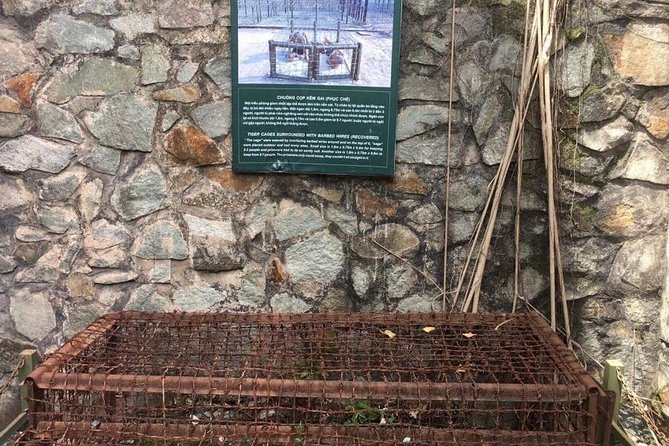
Your final major stop is a story that sounds almost unbelievable until you hear the details: the location at 287/70 Nguyễn Đình Chiểu has a secret basement beneath the house.
This place once hid more than 2 tons of weapons connected to the Saigon Rangers during the war. It’s a longer stop at about 40 minutes, and it’s listed as free.
That extra time is important. This isn’t just a landmark photo. It’s a site that benefits from explanation—what was hidden, what it meant, and how the city remembers it. Because you have more time here than earlier stops, you’ll likely get a clearer understanding of why this basement matters in the larger Saigon story.
If you’re into history that shows up in physical spaces—rather than just words—this part is the payoff.
What the Guides Add: Minh and Ai, Billy, Justin, Jus, Navin

The tour lives or dies by the guide, and this one gets consistently praised for how the ride feels both fun and structured. Names that come up include Minh and Ai, Billy, Justin, and other guide pairings like Jus and Navin.
What stands out is the way guides handle the balance between speed and safety. Riders often mention feeling well cared for in Saigon’s traffic, which is the biggest fear for people trying a motorbike tour for the first time.
You’ll also notice that good guides don’t just list facts. They explain how the places connect, and they give you enough time at the museum so you don’t feel like you’re just being herded through.
If you’re the type who asks lots of questions, this private setup is a plus. You can steer the conversation without derailing the whole group.
Ao Dai Rider Option: How to Get the Female Rider Request Right
If you’re choosing the Ao Dai Riders option, here’s the key rule you should plan around:
- Female Ao Dai riders require 6 hours in advance
- Later booking (or very crowded days) may result in rider gender being random
So if Ao Dai photos matter to you, don’t treat this like a last-minute add-on. Put it in early and confirm the option during booking.
Even outside Ao Dai planning, the tour includes comfort items like the helmet and rain poncho, so you can focus on enjoying the route instead of worrying about basic gear.
Who Should Book This Scooter Tour (and Who Might Skip It)
This tour is a great fit if:
- you want to see major Saigon landmarks in a single afternoon
- you like the idea of motorbikes as a practical way to beat traffic
- you enjoy history that’s tied to real buildings and street corners
- you want your questions answered without fighting a big group
It might not be ideal if:
- you hate motorbikes or feel uneasy riding in dense city traffic
- you want long museum time and deep reading sessions at each stop
- you prefer a slower, longer-walk day rather than a compressed route
It’s also a strong choice right after landing. The structure helps you get your bearings fast, without turning your first day into a map battle.
Should You Book This Afternoon Saigon Scooter Circuit?
If you want one efficient afternoon in Ho Chi Minh City that covers both colonial landmarks and wartime context, I think this is an easy yes. The value is in the combination: transportation handled, admissions included for key stops, and a private guide who keeps the ride moving while giving you time where it matters.
Book it if you’re excited by the idea of getting around the city on a scooter and you’re comfortable with a guided route that’s built around short stops. Consider skipping or switching to a slower tour if you know you’ll be frustrated by capped time inside museums and buildings.
FAQ
How long is the Saigon Afternoon City Historical Scooter Tour?
It runs for about 4 hours.
What’s the price per person?
The price is $25.00 per person.
Is hotel pickup included?
Yes. Pickup is offered, and you meet your driver at your hotel.
Are admission tickets included?
Admission tickets are included for the War Remnants Museum, Notre Dame Cathedral, Central Post Office, Saigon Opera House, Nguyen Hue Street, and Emperor Jade Pagoda.
What’s included for the scooter ride?
You get a high-quality open-faced helmet, motorbike fuel, and a rain poncho if needed. The tour also includes accident insurance.
Is this tour private?
Yes. It’s a private tour/activity, so only your group participates.
Is there a vegetarian option?
Yes. A vegetarian option is available.
What if I want a female Ao Dai rider?
Female Ao Dai riders require 6 hours in advance. If you book later or it’s a crowded day, rider gender may be random.
Can I cancel and get a full refund?
Yes. You can cancel for free up to 24 hours in advance for a full refund. If you cancel less than 24 hours before the start time, you won’t get a refund.