REVIEW · HO CHI MINH CITY
City Tour By Motorbike w/ War Museum & Reunification Palace
Book on GetYourGuide →Operated by Saigon Adventure Travel · Bookable on GetYourGuide
Saigon’s traffic is intense, but the story is clear. This 4-hour motorbike city tour mixes big sights with the kind of local context you don’t get from a guidebook—plus you’ll hop past key areas fast. I like how the ride itself keeps things moving, and how the stop list hits both French-colonial architecture and the Vietnam War era. You’ll come away with a smarter sense of how this city got to where it is today.
My favorite part is pairing the War Remnants Museum with the Reunification Palace, because they connect the same era from different angles. I also like that you’ll see the classics like Saigon Notre-Dame Basilica and the Saigon Central Post Office without wasting your day on transit. One consideration: you’ll be on a scooter, and you need to follow the dress rules for temples and pagodas (shoulders and knees covered), so plan your outfit accordingly.
In This Review
- Key things I’d mark on your map
- Riding Saigon like a local (without guessing where to go)
- French-colonial Saigon: Notre-Dame, Central Post Office, Opera House
- Saigon Notre-Dame Basilica (Cathedral Notre-Dame)
- Saigon Central Post Office
- Opera House and City Hall area
- Reunification Palace: the war’s end, in one building
- War Remnants Museum: powerful images, clear explanations
- Jade Emperor Pagoda and the “everyday Saigon” stop: Ben Thanh Market
- Jade Emperor Pagoda
- Ben Thanh Market
- Nguyen Hue Walking Street and the “real” city pace
- How the timing and scooter ride shape your experience
- What to wear (so you don’t lose time)
- Price and value: $28 for major sites plus transportation
- Who should book this tour (and who might skip it)
- Should you book? My practical take
- FAQ
- How long is the tour?
- What does the $28 price include?
- Which key sites are included?
- Do I get hotel pickup?
- What should I wear for temples and pagodas?
- What language is the guide?
- Is there a refund if my plans change?
Key things I’d mark on your map
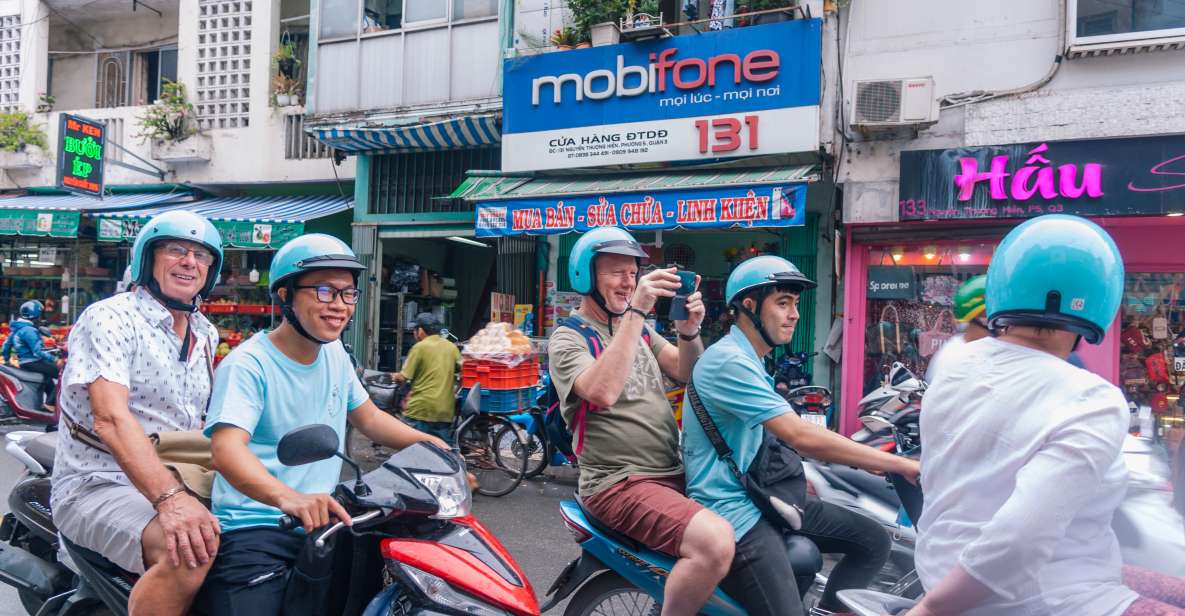
- Scooter rides that cut through the chaos with a driver who’s careful and confident
- French architecture on multiple streets, not just one photo stop
- War Remnants Museum + Reunification Palace together for better context
- Stops spread across major neighborhoods, including Ben Thanh Market and Nguyen Hue Walking Street
- Temple/pagoda etiquette built in, so you’re not scrambling at the entrance
- Included entrance fees for the two biggest ticket sights plus Kumquat juice
Riding Saigon like a local (without guessing where to go)
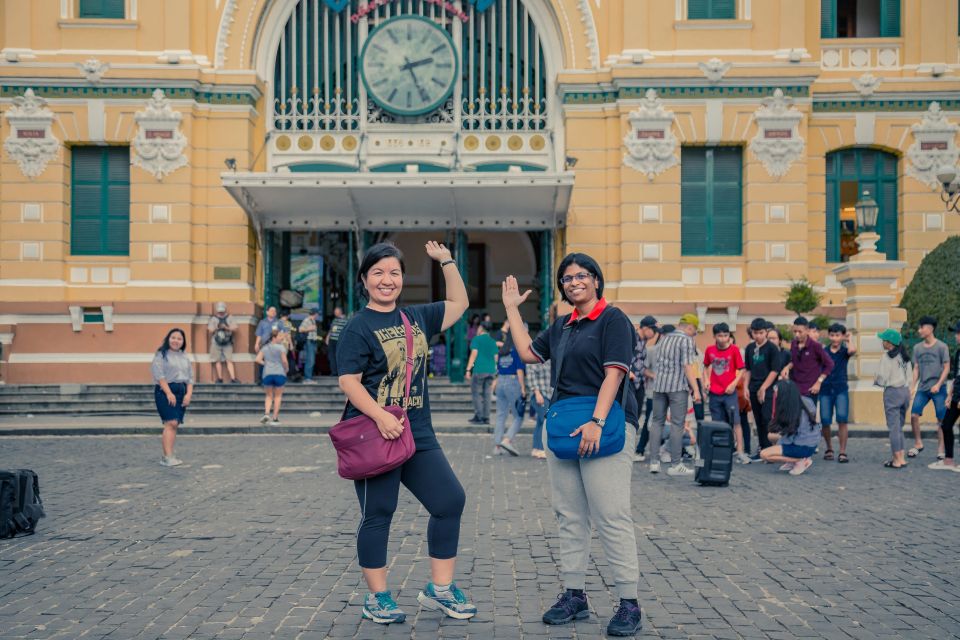
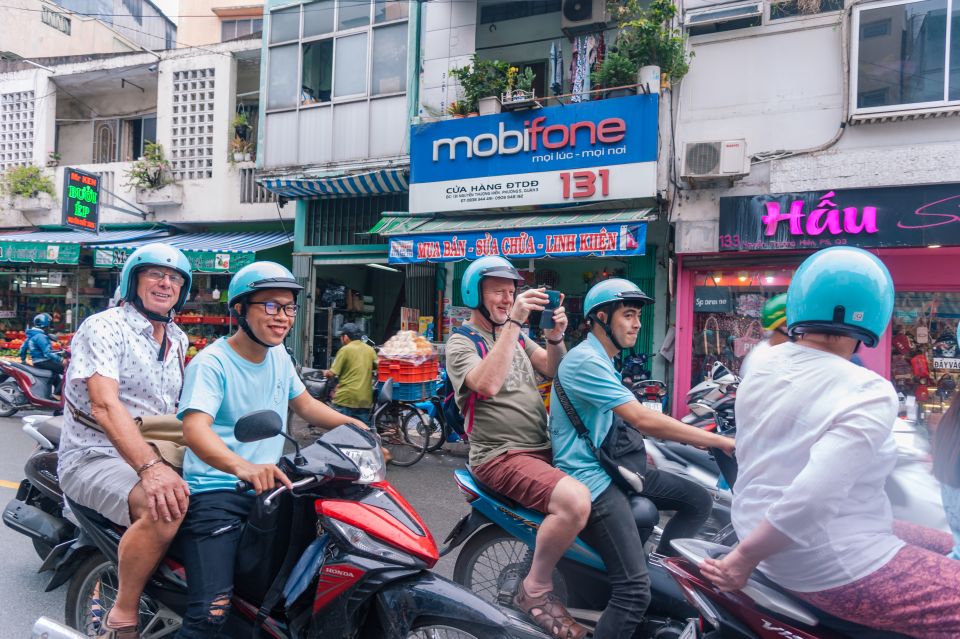
Ho Chi Minh City can feel like one big motion blur—motorbikes everywhere, crossings that look impossible, and lanes that don’t behave. The point of this tour is simple: you get a scooter with a driver, and you spend your brainpower on history and details, not on directions.
That matters for value. At $28 per person for about 4 hours, you’re paying for transportation plus an English-speaking guide plus entrance fees for the big sites (War Remnants Museum and Reunification Palace). Add in Kumquat juice and you’re not just sightseeing on an empty stomach. It’s the kind of plan that works well when you have limited time but want the “greatest hits” of Saigon with context.
Also, the human factor really shows. In real-life experience, guides like Brandon and Johnny were praised for being on time and friendly, and for explaining the country in a way that sticks. Others—like Tris, Tony, Nhi, and Zayne—were repeatedly described as great at answering questions and talking through what you’re seeing, not just reciting facts.
You can also read our reviews of more city tours in Ho Chi Minh City


French-colonial Saigon: Notre-Dame, Central Post Office, Opera House
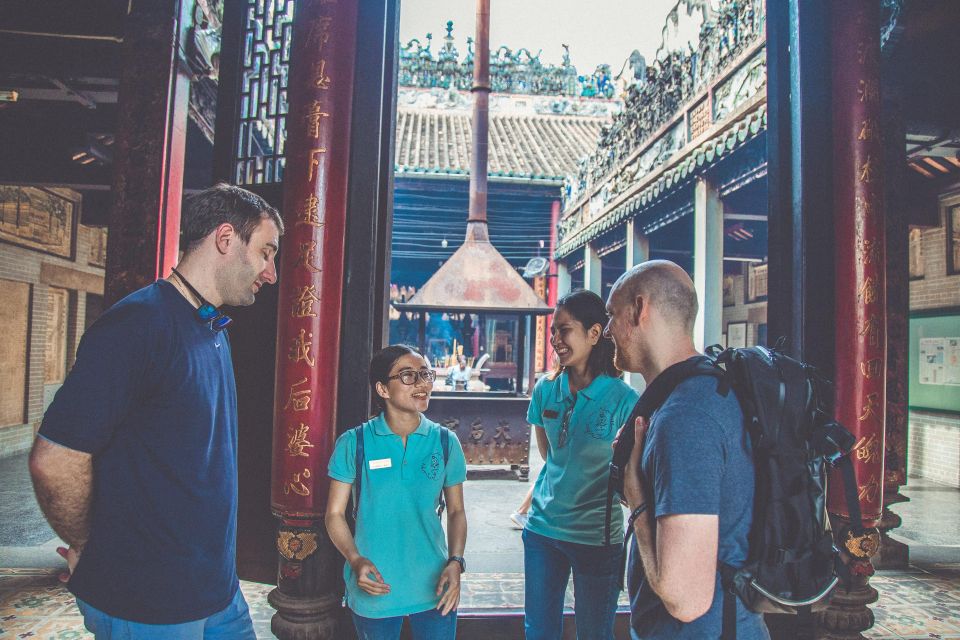
One of the tour’s strongest pulls is how many French-era buildings you pass in a short time. Even if you’ve only seen a few of these from photos, being there in person feels different. You’ll notice the shapes, the symmetry, and the way the architecture contrasts with modern Saigon traffic.
Here’s what you can expect, and why it’s worth your camera time:
Saigon Notre-Dame Basilica (Cathedral Notre-Dame)
This cathedral was established by French colonists and built between 1863 and 1880. The big reason I’d include it: it’s not just a pretty building. It’s a physical reminder of the period when Saigon was shaped by colonial power, and that theme repeats around town.
Saigon Central Post Office
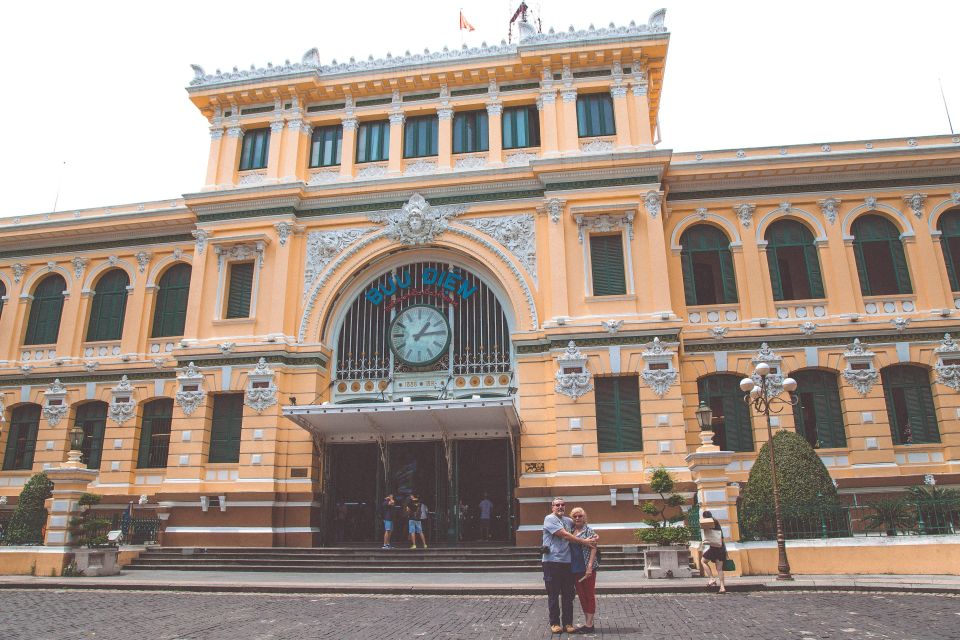
The Central Post Office (built from 1886 to 1891) is described as mixing Gothic, Renaissance, and French colonial design elements. It’s the kind of stop that helps you connect dots: Saigon wasn’t only a trading city; it was also a place where the colonial administration tried to build order, systems, and symbols.
Opera House and City Hall area
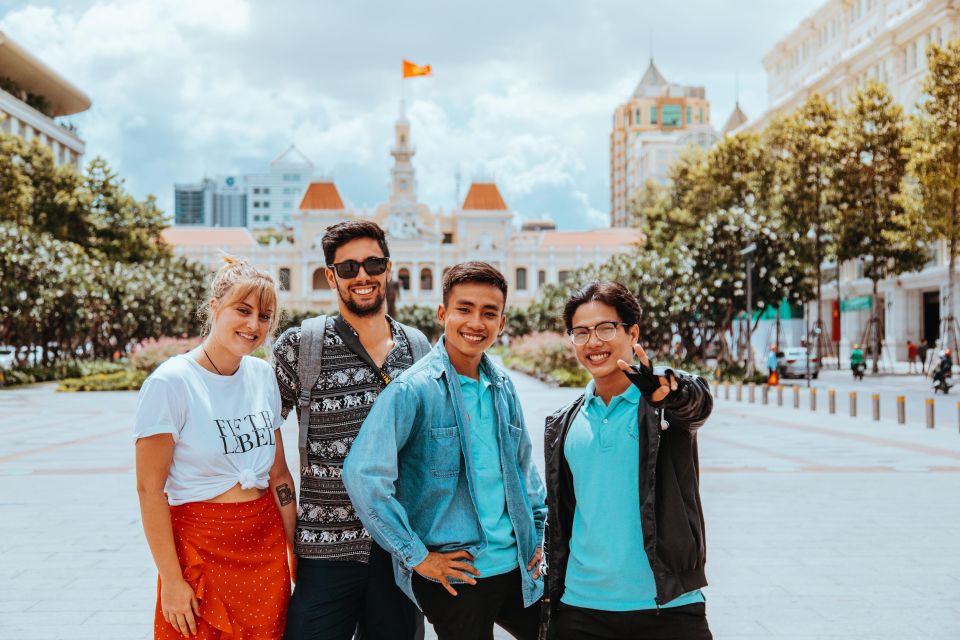
You’ll also see the Opera House and the Ho Chi Minh City People’s Committee (City Hall). These aren’t the type of landmarks you study in-depth like a museum. They work as context anchors. When you watch daily life flow around buildings from another era, the contrasts tell their own story.
Practical note: even outside churches, you’ll often be standing for photos. Comfortable shoes help.
You can also read our reviews of more museum experiences in Ho Chi Minh City


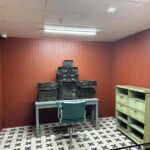


Reunification Palace: the war’s end, in one building
If there’s a single stop that gives the tour its emotional center, it’s Reunification Palace. It was the residence of the President of the Republic of Vietnam until April 30, 1975. The date matters because it marks the moment people commonly point to when the war’s major chapter shifted.
Why it’s such a good pairing on this tour: the layout and preserved spaces make the history feel physical, not abstract. And since the entrance fee is included, you don’t have to decide on the spot if it’s worth paying extra.
What I like about doing Reunification Palace on a motorbike tour is timing. You’re not lingering in transit. You go from one major site to the next with less waiting around, which keeps the afternoon from turning into museum fatigue.
War Remnants Museum: powerful images, clear explanations
Next comes the War Remnants Museum, and I’ll be straight with you: this stop can be emotionally heavy. It includes artifacts, photographs, and pictures documenting the second Indochina war. That means you’re not only learning dates; you’re looking at evidence and consequences.
The value here is context from a local guide. Multiple guides were praised for turning explanations into something you can ask questions about—people called out how they answered lots of questions and made the history easier to understand. When you’re walking through an exhibit like this, that kind of guidance helps you connect what you see to what it meant.
I also like how the tour doesn’t treat the war era like one distant chapter. You’ll connect the museum’s documentation with what you just saw at Reunification Palace. Same story, different angle: one is about what happened and what’s shown through historical material; the other is about a place tied to the political end point.
Jade Emperor Pagoda and the “everyday Saigon” stop: Ben Thanh Market
After the big war-history anchors, you shift gears. That’s smart. Otherwise the afternoon can feel like nonstop heaviness.
Jade Emperor Pagoda
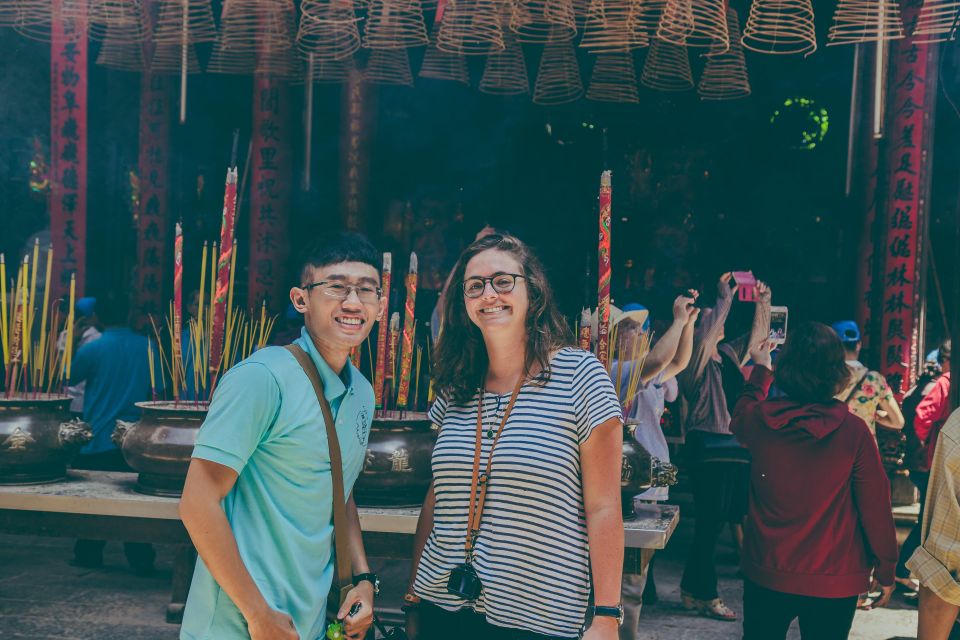
You’ll visit Jade Emperor Pagoda. This is where practical preparation pays off. The tour sets expectations clearly: guests must cover knees and shoulders to enter temples and pagodas. Shorts, short skirts, and sleeveless shirts aren’t allowed.
If you show up dressed right, you spend more time looking and less time adjusting. If you forget, you might waste minutes at an entrance where your day should be moving.
Ben Thanh Market
Then you’ll hit Ben Thanh Market, one of the oldest markets in Ho Chi Minh City. It appeared before the French invaded Saigon, built at the beginning of the 17th century for small traders to exchange goods on Ben Nghe River’s bank near Gia Dinh Citadel.
Even if you’re not shopping hard, the market helps you understand how trade and everyday life have shaped Saigon for a long time. It’s also a great contrast to the museums: you’re seeing the city as a living system, not only as a historical exhibit.
Nguyen Hue Walking Street and the “real” city pace
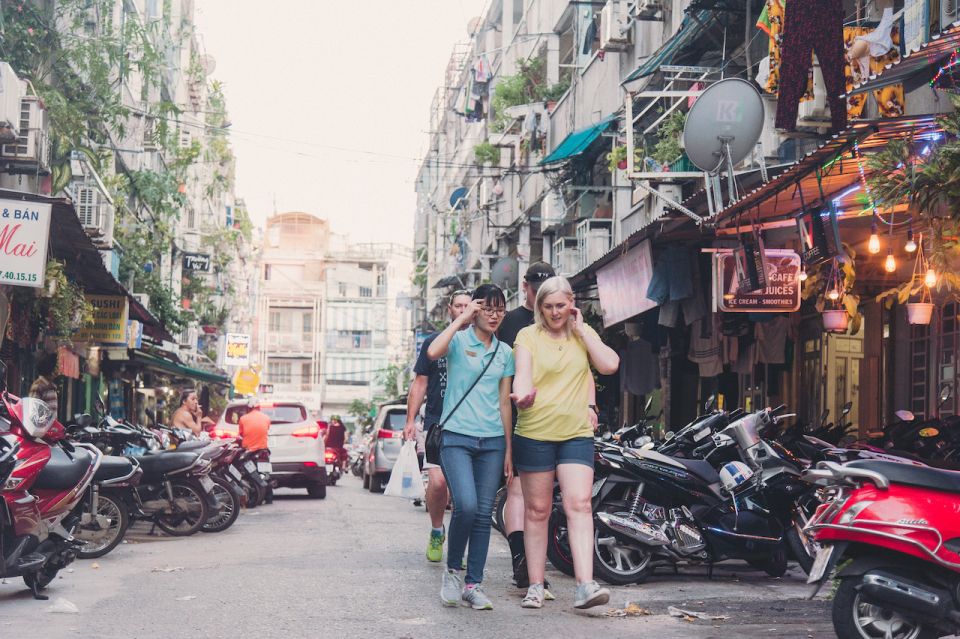
You’ll also visit Nguyen Hue Walking Street. This helps you reset your senses after the museum and palace stops. It’s a good area to get a sense of modern Ho Chi Minh City rhythms—where people spend time, walk around, and move between landmarks.
If you’re the kind of traveler who likes a mix of meanings (old power, war era, daily life), this slot is important. It keeps the tour from feeling like a history-only parade.
How the timing and scooter ride shape your experience
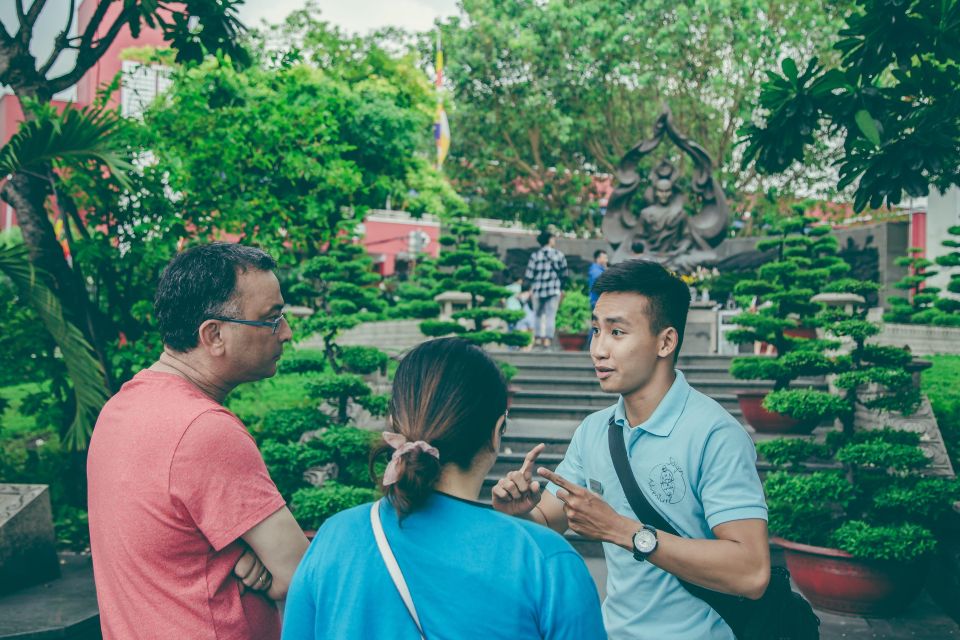
This is a half-day plan: 4 hours total. That duration is tight enough to keep energy up, but long enough for real learning at major stops.
The transport score is also a big deal. It’s described as highly rated, with 91% of reviewers giving a perfect score. In plain terms, you should feel safe and supported on the bike.
You’ll also get the tour structure that helps with comfort:
- You’ll have an English-speaking guide.
- You’ll travel by scooter with a driver.
- You’ll end with the driver taking you back to your hotel.
Pickup is optional, but there’s a practical limitation: pickup is noted for District 1 and 3. If you’re outside those districts, there’s an extra charge, or you’ll meet at Cyclo Resto (133 Nguyễn Du, Phường Bến Thành, Quận 1). If you want the simplest start, plan to meet at the listed location.
What to wear (so you don’t lose time)
Bring comfortable shoes and comfortable clothes. For temples and pagodas, cover knees and shoulders. If you’re traveling in hot weather, go for breathable fabric that still covers.
This matters more than people expect. A good day tour is about flow. When you’re dressed correctly, every stop stays on schedule.
Price and value: $28 for major sites plus transportation
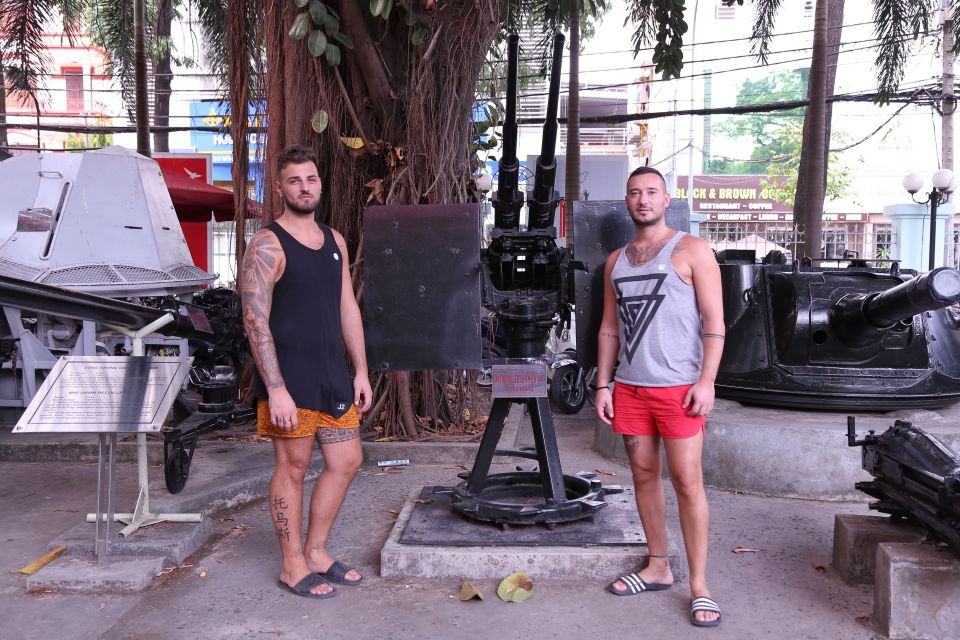
Let’s talk money in a useful way. At $28 per person, you’re not just paying for a guide. You’re getting:
- An English-speaking guide
- Scooter transport with a driver
- Entrance fees included for War Remnants Museum and Reunification Palace
- Kumquat juice
- Access to multiple top landmarks like Notre-Dame Basilica, the Central Post Office, Opera House/City Hall, Jade Emperor Pagoda, and Ben Thanh Market
The value is strongest if you would otherwise pay separately for the museum/palace entries and still need transport across town. This itinerary is built to reduce your “cost of effort,” meaning less time figuring out logistics and more time learning while you travel.
Also, private tour options exist, which is worth noting if you’re traveling with friends, want more pace control, or prefer extra conversation time without group dynamics.
Who should book this tour (and who might skip it)
I’d point you to this tour if:
- You want a fast, guided overview of Ho Chi Minh City’s headline sights
- You like history that connects buildings to events (palace to museum)
- You’re comfortable on a scooter and can follow a simple dress code
- You want local perspective on Vietnam War context, not only dates
You might consider another plan if:
- You don’t want to handle temple dress rules
- You’re uncomfortable with scooters in busy traffic
- You want slow, museum-style pacing with long breaks at each site (this is structured, not meandering)
One more thought: many guides were praised for taking extra time when traffic allowed. Brandon’s tour, for example, included extra stops because conditions made it possible. That’s not guaranteed, but it’s a sign the guides aim to make the day feel flexible.
Should you book? My practical take
Book this motorbike city tour if you want the best Saigon highlights in one half-day, with French-colonial architecture and war-era sites handled in a way that makes sense. The combination of War Remnants Museum plus Reunification Palace is the main reason, and it’s strengthened by a guide who explains and answers questions (names like Tris, Tony, Nhi, and Zayne came up for good reason).
If you can dress for temples, tolerate a scooter ride, and keep expectations realistic for a 4-hour loop, you’ll get a lot of meaning per hour. In my view, that’s the whole point of paying for a tour like this: not just to see, but to understand quickly, without wasting time.
FAQ
How long is the tour?
The tour lasts about 4 hours.
What does the $28 price include?
It includes an English-speaking tour guide, scooter with driver, entrance fees (War Museum and Reunification Palace), and Kumquat juice.
Which key sites are included?
You’ll visit Reunification Palace, War Remnants Museum, and several major landmarks including Saigon Notre-Dame Basilica, Saigon Central Post Office, City Hall, the Opera House, Jade Emperor Pagoda, and Ben Thanh Market. Nguyen Hue Walking Street is also included.
Do I get hotel pickup?
Pickup is optional, and it notes pickup in District 1 and 3. Other districts have an extra charge, or you can meet at Cyclo Resto in District 1.
What should I wear for temples and pagodas?
You must cover your knees and shoulders to enter temples and pagodas. Shorts, short skirts, and sleeveless shirts are not allowed.
What language is the guide?
The live tour guide is available in English and Vietnamese.
Is there a refund if my plans change?
Free cancellation is offered up to 24 hours in advance for a full refund.