REVIEW · HO CHI MINH CITY
The River’s Edge Photo Tour
Book on Viator →Operated by Vietnam in Focus - Day Tours · Bookable on Viator
A sunrise camera walk makes Saigon feel personal. This 4-hour river-edge photo tour in District 7 turns everyday scenes into a clear picture story, with a professional photographer guide showing you how to frame architecture, people, and city views along the water.
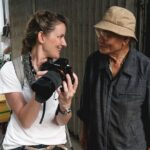
I like two things a lot: first, you get real working river life to photograph, from tugboats hauling cargo to chatty floating-village owners. Second, you receive on-the-spot photo feedback from guides such as William and Paul Green, with help that can improve your images fast. The main consideration is the timing: you start at 5:30 am, and the experience depends on decent weather.
In This Review
- Key highlights worth your morning
- A 5:30 am photo story along Saigon’s river edge
- Price and value: what $119 buys you (and what it doesn’t)
- District 7 canal-side wander: tugboats, cargo, and working life
- What to shoot here
- How to make the photos stronger
- A quick consideration
- Buddhist temple atmosphere and the route toward the water
- Photo tips that fit this stop
- Floating village houseboats: portraits on rickety anchors
- Why this stop is so praised
- What to shoot on the houseboats
- A realistic consideration
- Saigon’s skyline over the river and how to frame the contrast
- How to shoot the skyline moment
- Traditional market light for people photography
- What makes this a good learning moment
- How the instruction helps you build a photo narrative (not just take pictures)
- Practical ways you can apply this right away
- Who should book the River’s Edge Photo Tour
- Should you book it? My take
- FAQ
- What time does the tour start?
- How long is the River’s Edge Photo Tour?
- Where does the tour take place?
- How much does it cost?
- Is pickup available?
- How many people are in the group?
- What’s included in the tour price?
- What if the weather is bad?
- Can I get a refund if I cancel?
Key highlights worth your morning
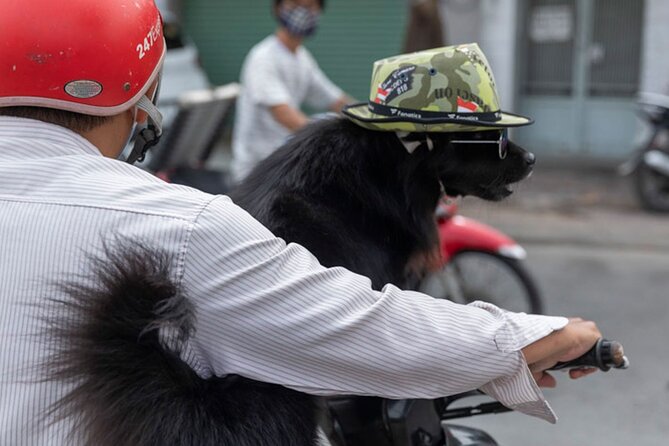
- Small group size (max 6) for tighter guidance and faster feedback.
- District 7 canal-side scenes with tugboats delivering goods, plus everyday street-level moments.
- Floating village portraits on houseboats where owners often come out to talk and be photographed.
- Architecture + people + cityscape in one loop, so you practice multiple styles in a single session.
- Saigon skyline views over the river, giving you a strong “before/after modern city” contrast.
- Traditional market light for people photography, ideal for learning how to work with natural illumination.
A 5:30 am photo story along Saigon’s river edge

If you’ve ever tried to photograph a city in the middle of the day, you know what happens: harsh shadows, flat light, and the feeling that everyone else has the same idea as you. Starting at 5:30 am changes the whole vibe. The river air feels cooler, the light is gentler, and people are often more relaxed before the day gets loud.
This tour is built for making a set of photos, not just collecting a few great shots. The walk mixes canal life, temple/river-side atmosphere, floating village views, a modern skyline moment, and then a traditional market. You’ll be guided to think about composition and storytelling as you go, so your final images feel connected.
You also get real logistical advantages. Pickup is offered, and you’ll receive a mobile ticket. With a maximum of 6 people, you’re not fighting your way around a packed group to ask questions or get help with framing.
You can also read our reviews of more photography tours in Ho Chi Minh City
Price and value: what $119 buys you (and what it doesn’t)
At $119 per person for about 4 hours, you’re not just paying to “see places.” You’re paying for a professional photographer guide who can give practical instruction while you’re standing in front of the scene.
Here’s where the value shows up:
- You get feedback in motion. The tour isn’t a lecture first and photos later. You shoot, adjust, and shoot again.
- You practice multiple photo types back-to-back. Architecture, people portraits, river scenes, and cityscape views are all part of the same route.
- Small group coaching matters. With a max group size of 6, you spend more time getting answers to your questions instead of waiting your turn.
What it doesn’t automatically include: personal equipment. Bring your camera/phone, any basic accessories you like (even just a small cloth for wiping lenses if you’re out by water), and comfortable shoes. The tour is photography-focused, not a full sightseeing bus tour with a long list of “must-see” landmarks.
Also worth noting: admission ticket is free (per the tour info). So the price mostly covers the guide and the photo-guided route, not entrance fees.
District 7 canal-side wander: tugboats, cargo, and working life
The heart of the experience starts with a canal-side walk in District 7. This is where you’ll find the kind of photos that feel honest because they come from daily work, not staged set pieces.
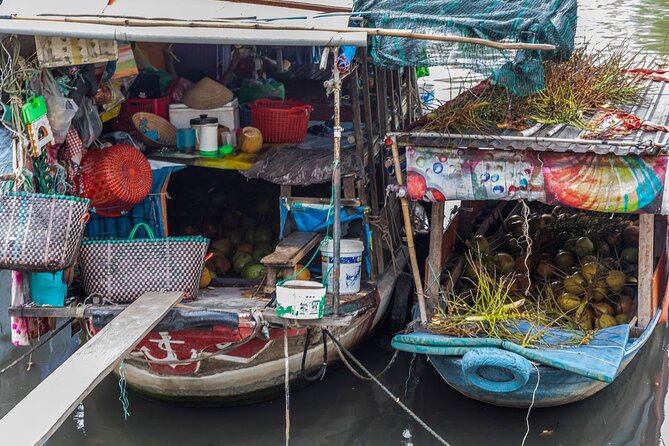
A key scene: tugboats arriving carrying coconuts and other goods from the Mekong. It’s the sort of subject that naturally gives you motion and texture—useful for photographs that don’t look static.
What to shoot here
- Working details: hands, deliveries, cargo, ropes, and the river edge itself.
- People in context: portraits or candid shots that show what people are doing, not just what they look like.
- Canal lines and framing: paths and edges that guide your eye toward the boat arrivals.
How to make the photos stronger
Your guide will help you practice composition for this type of scene. Even without changing locations, you can level up quickly by:
- Choosing one “main subject” (like a tugboat or a person) and letting everything else support it.
- Using the river edge as a leading line so your photo has direction.
- Shooting a mix of wide establishing images and close details, then deciding later which ones belong in your story.
One subtle benefit of a guided morning walk: you don’t waste time guessing where the action will be. You walk the route with intention, and the photos come from being at the right place at the right moment.



A quick consideration
Because you’re photographing real working life, expect that moments can be brief. Being ready—camera up, settings thought through, and your focus ready—helps you capture what you came for.
Buddhist temple atmosphere and the route toward the water
Between the canal start and the floating village area, the walk passes a Buddhist temple and moves toward the river world that comes next. This part matters because it shifts the visual mood.
Instead of only chasing motion (boats, activity, movement), you also get architecture and quieter details to work with—good for practicing shape, symmetry, and how to frame “spiritual” or traditional elements alongside everyday life.
Photo tips that fit this stop
- Look for strong geometry: edges, corners, and repeated lines.
- Try a portrait angle that includes part of the temple environment as context.
- If the light is uneven, use it deliberately. Dark areas can make bright highlights pop, especially in morning light.
This isn’t a long stop where you sit and wait. It’s a natural transition, and you can treat it like a practice round for slowing down your shooting pace.
Floating village houseboats: portraits on rickety anchors
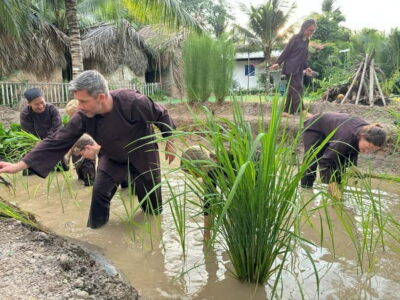
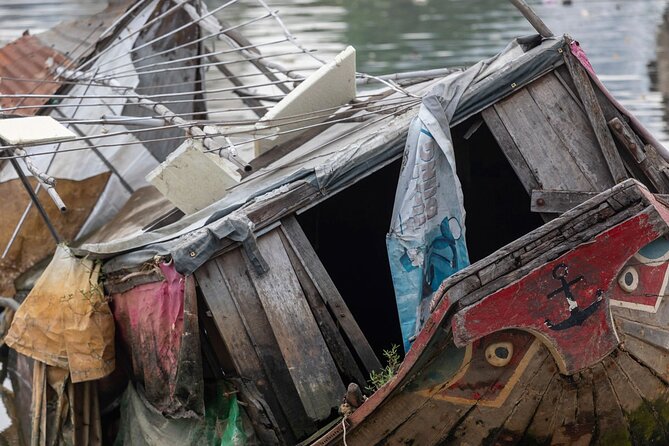
Next comes the floating village area, with rickety houseboats anchored along the path. This is one of the tour’s biggest draws because it gives you access to people and places that are hard to find on your own without guidance.
The owners often come out to chat, which means you’re not only photographing scenery—you’re photographing individuals with personality. That’s where portraits can go from “face photo” to “story photo.”
Why this stop is so praised
In past tour experiences, participants highlighted two things: the warmth of the interactions and the guide’s people approach. One guide, Paul Green, was specifically described as effective at approaching people even without speaking Vietnamese—so the guidance here is practical, not awkward.
A good portrait moment often comes down to permission and comfort. Your guide helps with that rhythm: when to ask, how to position your camera, and how to make the scene feel respectful.
What to shoot on the houseboats
- Portraits with context: include a bit of the environment so the photo explains itself.
- Work and play: if owners are active, shoot at the pace of their actions, not yours.
- Boat textures: wood, ropes, railings, and the river’s surface reflections.
Even if you’re not chasing technical “perfect,” this section rewards consistency. Shoot a short sequence: one close portrait, one mid shot, and one detail photo. Later, you’ll have options for building the narrative.
A realistic consideration
These are anchored houseboats along a path. Wear shoes that handle uneven ground, and keep your balance. Floating village areas can be charming, but you still want safe footing so you can focus on photography.
Saigon’s skyline over the river and how to frame the contrast
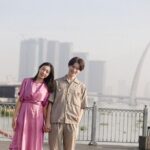
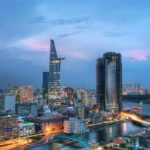
After the floating village area, you get a dramatic view of Saigon’s 21st-century skyline over the river. This is a smart inclusion because it creates visual contrast: traditional river life in the foreground, modern towers in the distance.
That contrast is a photographer’s friend. It turns your images from “pretty scenes” into meaningful sequences, especially if you’re trying to tell a story about change, time, and daily life in the same frame.
How to shoot the skyline moment
- Try layering: foreground river/boat/people + midground water + background towers.
- Frame from an angle where the river edge gives you depth.
- If the light is bright, use your exposure so buildings don’t turn into featureless silhouettes.
This part also helps you learn a practical skill: pacing. You’ll likely want a few wider shots here to reset the viewer before you go back into people-focused images.
Traditional market light for people photography
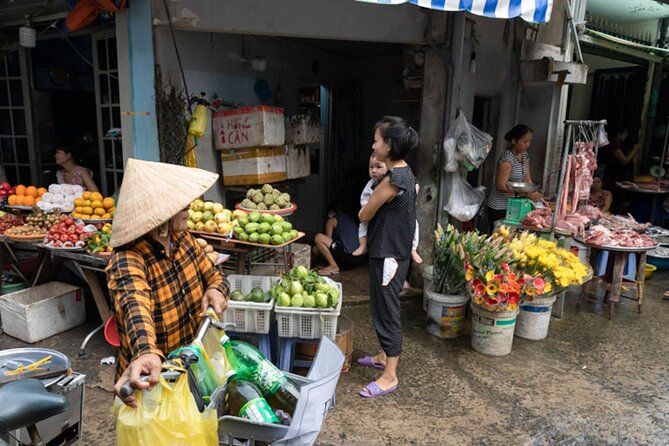
The tour ends with a walk through a traditional market where you’ll find beautiful light for people photography. Markets are tricky by yourself: too many subjects, too many distractions, and the feeling that your frame is always crowded.
With a guide, you can narrow your focus and practice what works:
- Choose one small story: a vendor, a customer interaction, or a group moment.
- Frame with care so the background supports the subject rather than competes.
- Work with available light instead of fighting it.
What makes this a good learning moment
Market light teaches you faster than any tutorial. Morning light can create flattering shadows, and the mix of indoor/outdoor areas often gives you natural contrast. You’ll practice photographing people in real situations without forcing it.
Also, since this is still within a single continuous tour, your market photos can connect to earlier images. Your final set can show the full river-to-city-to-community arc.
How the instruction helps you build a photo narrative (not just take pictures)
One of the most useful parts of this tour is the way it’s structured around a photographic story. The guide isn’t only pointing out where to stand. You’re also learning how to pace a sequence of images: composition for different scene types, how to use different settings, and how to organize your photos into something that reads like a coherent set.
Practical ways you can apply this right away
As you shoot, think in three beats:
- Establish: one or two wide images that tell me where I am and what kind of world this is.
- Explain: medium shots with the main action—boats, interactions, temple details, daily tasks.
- Personalize: close portraits or details that give emotion and individuality.
You’ll also get feedback fast. The strongest praise in the tour experiences centered on quick, actionable suggestions that help you improve your photos quickly. That matters because most people don’t need more theory—they need correction for the next shot.
If you like to review images later (and who doesn’t), this tour’s pacing makes selection easier. Your photos already have a path, so culling feels less random.
Who should book the River’s Edge Photo Tour
This tour fits best if you want:
- A photo-focused morning with real subjects and practical coaching.
- A route that mixes architecture, people, and city views without feeling like random wandering.
- Access to areas you might not find alone, especially around the river and floating village world.
It’s also a good fit for beginners who want structure, as the tour info says most people can participate. That said, you should be comfortable walking for about 4 hours and paying attention to your footing in the river-edge areas.
If you’re looking for a history lecture only, this isn’t that. The goal is a camera-led experience: shoot, learn, adjust.
Should you book it? My take
I’d book this tour if you care about photos that feel like a story, not a checklist. The strongest reason is the combo of authentic river life plus a guide who helps you improve quickly. You get scenes that naturally work for different photo styles—boats and cargo for motion and context, floating village interactions for portraits, and market light for people photography.
The main reason to pause is the early start and the weather dependency. If you’re allergic to mornings, or your schedule can’t handle a 5:30 am start, you may feel rushed. If weather is poor, the tour may be canceled and you’ll be offered another date or a refund.
For many people, though, that early start is the point. You’ll get light, access, and guidance in a small group format that makes it easier to come away with photos you’re actually excited to share.
FAQ
What time does the tour start?
The start time is 5:30 am.
How long is the River’s Edge Photo Tour?
It runs for about 4 hours.
Where does the tour take place?
It’s in Ho Chi Minh City, with the walk beginning in District 7.
How much does it cost?
The price is $119.00 per person.
Is pickup available?
Pickup is offered.
How many people are in the group?
The tour has a maximum of 6 travelers.
What’s included in the tour price?
A professional photographer guide is included. The tour also notes that the admission ticket is free.
What if the weather is bad?
The experience requires good weather. If it’s canceled due to poor weather, you’ll be offered a different date or a full refund.
Can I get a refund if I cancel?
Yes. You can cancel up to 24 hours in advance for a full refund. If you cancel less than 24 hours before the start time, the amount paid won’t be refunded.