REVIEW · HO CHI MINH CITY
Saigon Street Photography Experience
Book on Viator →Operated by Secret Experiences · Bookable on Viator
Saigon turns your camera into a passport. This Saigon street photography morning walk is led by pro photographers like Frederik Wissink or Kevin Lee, and it’s built around real street scenes, not photo ops behind ropes. I like that you start with coffee or tea, then get practical ways to see, frame, and approach people while exploring downtown Saigon on foot.
I also like the balance of teaching and wandering: you’ll cover French colonial and war-era apartment buildings, a local hardware market, and a Buddhist temple, with time to work the alleyways and daily life along the way. One drawback to consider: it’s a 2.5-hour walking experience through tight streets, so comfortable shoes matter, and you’ll want good weather since the tour requires it.
In This Review
- Key highlights
- Why this Saigon street photo walk feels different
- Your morning baseline: Cafe Linh77 at 7:00 am
- Fred Wissink or Kevin Lee: real-world photo coaching
- The route through downtown Saigon: buildings, market textures, temple calm
- French colonial and war-era apartment buildings
- A local hardware market
- A Buddhist temple and the surrounding streets
- Alleyways and real daily life (the secret sauce)
- The photo skills you’ll actually use: approach, angles, light, and composition
- How much walking is it, really? (And when you’ll get the best shots)
- Price and value: $73 for a pro-taught morning
- Who should book this Saigon street photography experience?
- Should you book it? My practical take
- FAQ
- FAQ
- What is the duration of the Saigon Street Photography Experience?
- How much does it cost?
- What time does the tour start, and where do I meet?
- Who hosts the tour?
- How many people are in a group?
- What locations are included on the walk?
- Is this tour suitable for beginners?
- Does the tour require good weather?
- What’s the ticket format?
- Is there free cancellation?
Key highlights
- Morning start with coffee or tea and immediate coaching before you shoot a single frame
- Pro street-photo instruction from Frederik Wissink or Kevin Lee (commercial and editorial experience)
- A focused route through French colonial/war-era apartment buildings, a local hardware market, and a Buddhist temple
- Small group size (max 10) for easier questions and more personal feedback
- Designed for all levels, including beginners and phone cameras
- Non-touristy details in alleyways and everyday life, guided by locals and professionals
Why this Saigon street photo walk feels different
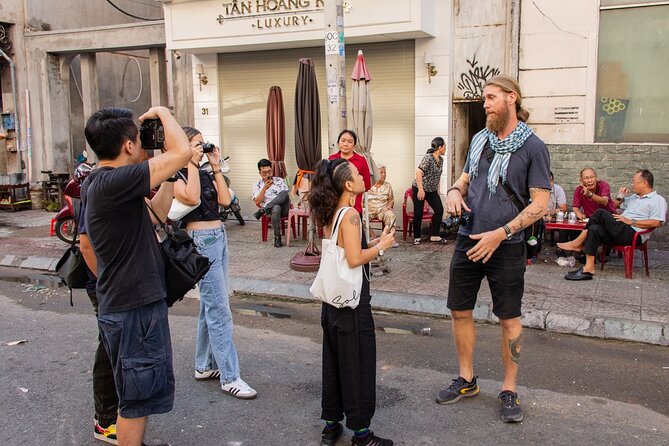
If you’ve ever felt stuck on a city photo trip—standing there with your camera, waiting for something to happen—this tour helps you change your habits fast. The whole point is to train your eye for the small, human, everyday details that make Ho Chi Minh City feel like itself.
The best part is that the guidance is practical. You’re not just shown where to stand; you’re taught how to look for subjects and how to work with what’s already happening around you. That matters in Saigon, where street life moves quickly and light changes fast in the morning.
And because the hosts are working photographers, you’re getting instruction rooted in real assignments—commercial shoots for global brands and editorial work for major outlets—rather than generic “street photography” talk. I love that the experience is built to work for both aspiring photographers and people who just want better pictures without overthinking it.
You can also read our reviews of more photography tours in Ho Chi Minh City
Your morning baseline: Cafe Linh77 at 7:00 am
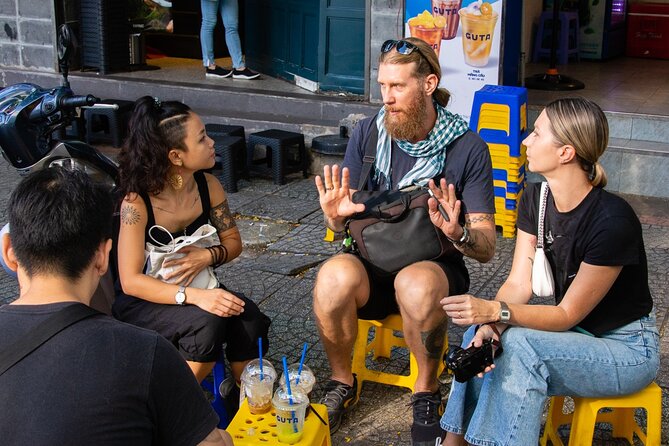
The meeting point is Cafe Linh77 Hàm Nghi in Quận 1, starting at 7:00 am. Going early helps because the city is active, but you’re not fighting the worst heat and churn. It also sets a calmer pace for learning—especially when you’re trying to talk to people or think about composition while walking.
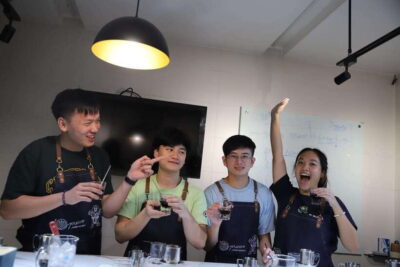
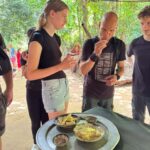
You’ll begin with coffee or tea while your host shares street-photo tips and practical ideas for getting good results without being intrusive. This start matters more than it sounds. It’s where you learn the mental “rules of the road” for shooting people respectfully and finding photo details on purpose.
One small bonus I noticed from a guest report: some versions of the walk also end with lemonade. Don’t assume it’s guaranteed every time, but it fits the friendly, human rhythm of the morning.
Fred Wissink or Kevin Lee: real-world photo coaching
This experience was created with Frederik Wissink, and your host may be him or Kevin Lee. Fred is Canadian-born and has lived in Vietnam for 17 years. He’s done commercial work for big names like Accor, Hyatt, and Four Seasons, plus corporate assignments for Google and Samsung. His editorial credits include publications such as The New York Times, The Guardian, USA Today, and Discovery Channel, and his photos have appeared on covers for Conde Nast Traveller and Car & Driver.
Kevin brings a different strength: he specializes in commercial photography and also takes on a producer role. He’s hosted street photography meetups and walks in Singapore, and he’s used that experience to shape tours that feel organized but still flexible enough for candid street moments.
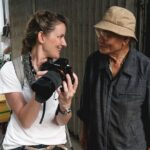
What you feel on the walk is that both hosts think like photographers who have to deliver results under real conditions. The tips you get tend to be about angles, light, and how to frame moments quickly—not just theory. In one review, the emphasis was on shooting with a phone too (someone even called out getting tips for an iPhone camera). If you’re traveling light, you won’t feel like you brought the wrong tool.
The route through downtown Saigon: buildings, market textures, temple calm
The tour runs about 2 hours 30 minutes and includes several stops that aren’t scattered across the city. The locations you’ll visit are chosen for what they visually teach you and what they reveal about everyday life.
Here’s how the day typically unfolds:
French colonial and war-era apartment buildings
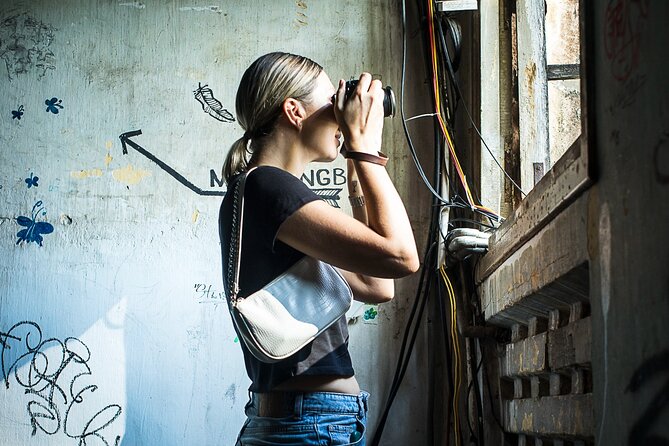
You’ll spend time around French colonial and war-era apartment buildings. These areas are more than pretty facades. They give you strong architectural lines, older textures, and layering that makes street photos look more lived-in. You also learn how to work with structure—doorways, balconies, corridors, and windows—so your images don’t all look like the same wide street scene.



A local hardware market
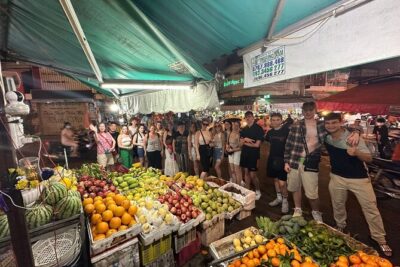
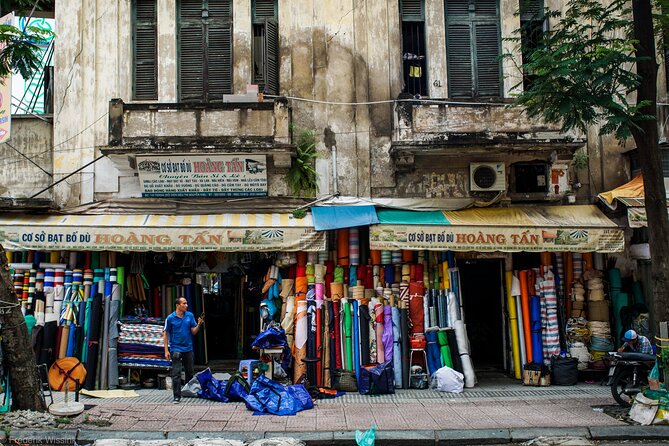
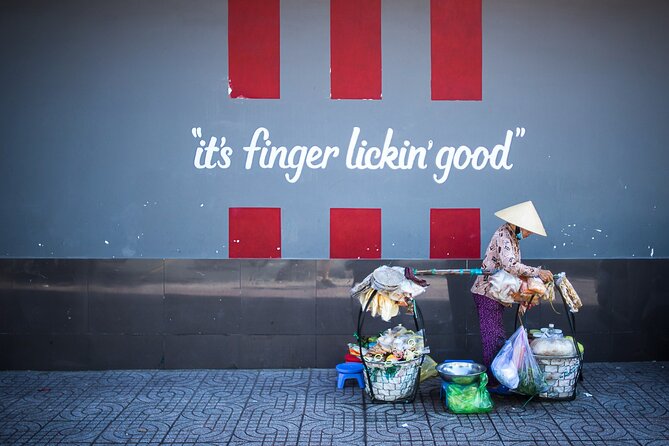
Next comes a local hardware market. Markets are visual workshops: you’ll find repeating patterns, stacked items, hands at work, and a lot of small stories compressed into one space. It’s also an excellent place to practice timing, because people are moving and interacting continuously.
One practical consideration: markets can be busy and loud. If you’re new to street photography, focus on simpler tasks first—like capturing hands, faces, or product details—before trying bigger “scene” shots.
A Buddhist temple and the surrounding streets
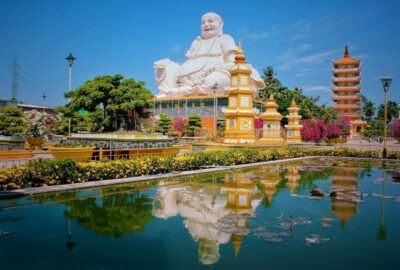
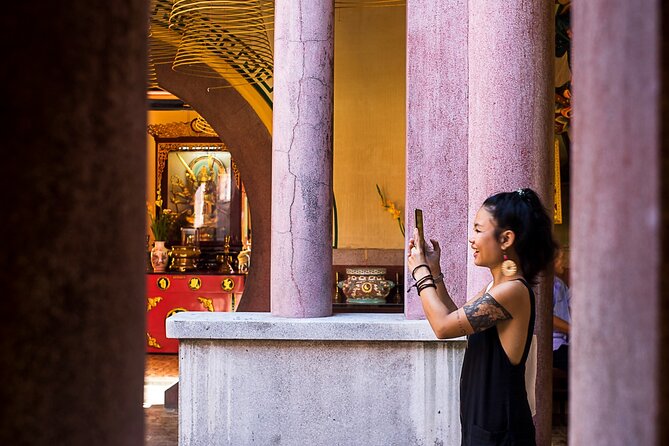
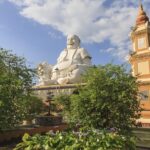
The walk also includes a beautiful Buddhist temple. This stop adds a different mood and photo opportunities beyond street chaos. Temples tend to frame scenes naturally—curves, entrances, religious details, and quiet corners where you can slow down and think about light and composition.
It’s also a good contrast point. After market textures and apartment-block street life, you’ll have a chance to work with calmer visuals and more respectful distance.
Alleyways and real daily life (the secret sauce)
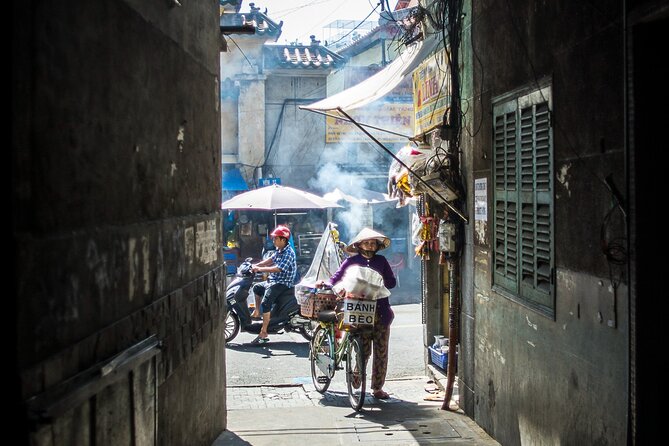
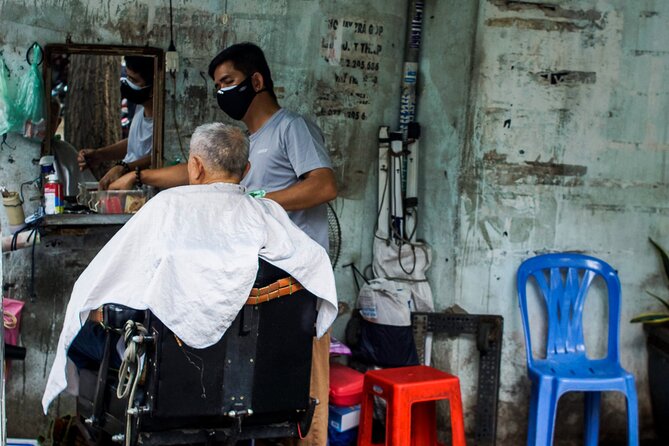
A big theme in this tour is the intricate network of alleyways and the way families live their daily routines in between the major streets. This is where your photos start to look more personal and less “generic travel snapshots.”
Your host helps you notice things you might otherwise miss: small moments of everyday routine, how people move through narrow spaces, and how light hits walls and gates at different times. You’re not just photographing Saigon—you’re learning how to read it.
The photo skills you’ll actually use: approach, angles, light, and composition
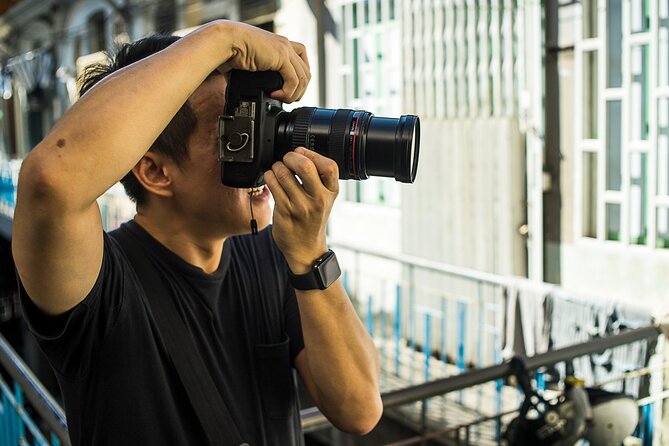
Street photography is not only about luck. This walk is built around teaching you what to look for and how to respond when something interesting happens.
From the way the coaching is described and from multiple feedback notes, the emphasis is usually on:
- How to approach people and stay respectful
- What details to look for so you’re not aimlessly shooting
- Angles and light, so you’re not always shooting from eye level
- Composition choices, so your photos feel intentional
In one review, a guest said they learned how to compose differently, shifting from “point and shoot” into more deliberate framing. Another guest highlighted patience and cultural context, which is a big deal in Vietnam—people respond better when you understand what you’re seeing and why you’re there.
If you’re a beginner, you’ll likely appreciate that the instruction stays usable. You’re not asked to master a camera in one morning. You get enough structure to leave with new habits that work instantly back home.
If you already shoot a lot, you’ll still benefit. It’s easy to get stuck in your personal default style. This tour gives prompts that nudge you into different angles, exposure decisions, and scene choices.
How much walking is it, really? (And when you’ll get the best shots)
You’re out for roughly 2 hours 30 minutes, visiting several locations that are close enough to keep the pace comfortable. One review specifically mentioned that the places aren’t too far apart and the walking isn’t bad.
That said, you are in downtown Saigon. Streets can be uneven, alleyways can feel narrow, and market areas can slow you down. Bring sturdy, comfy shoes and expect to move a lot even if you’re not doing long-distance hiking.
Timing matters too. One guest recommended doing the tour on the weekend because it can be easier to get nice photos with less traffic congestion. If you can choose dates, that’s a smart tip to follow.
Finally, the experience requires good weather. If it’s rainy or conditions are poor, the tour can be canceled or you’ll be offered a different date or a refund. In practice, this matters because street photography lives and dies by light and visibility.
Price and value: $73 for a pro-taught morning
At $73 per person, this isn’t a bargain-basement walking tour, but it also doesn’t feel like you’re paying only for transportation. You’re paying for two things that usually cost extra if you buy them separately: professional photo coaching and a carefully chosen route through photo-worthy neighborhoods.
The value gets stronger when you look at who’s running it. Frederik Wissink’s background includes high-end hospitality clients like Hyatt and Four Seasons, major global tech brands, and major media outlets. Kevin Lee also brings a commercial/prod producer mindset. That typically shows up as a tour that helps you make pictures, not just see sights.
Plus, the group is limited to 10 travelers. A small group matters when you want feedback or when you’re learning how to approach people and adjust your shooting in real time.
If you want street photography improvement, not just a morning walk, this price starts to make sense quickly.
Who should book this Saigon street photography experience?
This tour fits a wide range of travelers:
- Beginners who want a structured way to start and build confidence
- Aspiring photographers who want practical street skills fast
- Experienced shooters who want fresh prompts, new angles, and different subject matter
- Phone-camera users who want better results without carrying heavy gear
It’s also a good fit if you enjoy learning about how a city works through everyday life. You’ll get both photo instruction and historic/cultural context tied to downtown architecture and street scenes.
If you only want big-ticket landmarks and you’re not interested in people-centered scenes, you might find it less aligned with your expectations. But if you want photos that feel like Saigon, this is the kind of experience that builds that.
Should you book it? My practical take
Yes, I think you should book—especially if you want better street photos and you like the idea of learning from a working photographer. The route gives you a mix of architecture, market texture, and a temple setting, which helps you train multiple “modes” of shooting in one morning.
I’d book it even if you’re brand new. The instruction focus on what to look for and how to work with light and angles is exactly what beginners need. And if you already shoot, the small-group format plus the emphasis on approach and composition can nudge your style without wasting your time.
Just go in with the right expectations: it’s a hands-on photo walk, not a sightseeing bus tour. Bring comfortable shoes, expect to walk, and plan to use the tips while you’re out there.
FAQ
FAQ
What is the duration of the Saigon Street Photography Experience?
The experience lasts about 2 hours 30 minutes (approx.).
How much does it cost?
It costs $73.00 per person.
What time does the tour start, and where do I meet?
It starts at 7:00 am at Cafe Linh77 Hàm Nghi, Phường Nguyễn Thái Bình, Quận 1, Thành phố Hồ Chí Minh, Vietnam.
Who hosts the tour?
The experience is created with Frederik Wissink, and it’s hosted either by Frederik Wissink or Kevin Lee.
How many people are in a group?
The tour has a maximum group size of 10 travelers.
What locations are included on the walk?
You’ll visit several stops, including French colonial and war-era apartment buildings, a local hardware market, and a Buddhist temple.
Is this tour suitable for beginners?
Yes. It’s suitable for aspiring and professional photographers of any level, including beginners.
Does the tour require good weather?
Yes. The experience requires good weather, and if it’s canceled due to poor weather, you’ll be offered a different date or a full refund.
What’s the ticket format?
It uses a mobile ticket.
Is there free cancellation?
Yes. You can cancel for a full refund if you cancel at least 24 hours before the experience start time.
If you want, tell me what camera you’re using (DSLR, mirrorless, or phone) and which dates you’re considering, and I’ll suggest a simple packing checklist and a shooting plan for the morning.