REVIEW · HO CHI MINH CITY
Private Sunrise Photography Tour – Down in Chinatown
Book on Viator →Operated by Saigon Photography Tours · Bookable on Viator
Early morning makes Chinatown easier to photograph.
On this private sunrise photo walk in Ho Chi Minh City’s Cho Lon, I love how Adrien tailors the session to your photography level and actually gives you feedback as you shoot, and I love the photo settings you get at places like Quan Am Pagoda and Ba Thien Hau Temple, where the light changes fast. The one drawback is the 6:00 a.m. start, so plan for an early wake-up.
You’ll get a streamlined experience with hotel pickup/drop-off and a mobile ticket, and the stops use free admission tickets. The tour runs about 3 hours 30 minutes, and it’s private, so you won’t be squeezed into someone else’s pace.
In This Review
- Key points at a glance
- Why the 6:00 a.m. start works for photography in Cho Lon
- Meeting, pickup, and how the private format changes the whole shoot
- Stop 1: Quan Am Pagoda and the street settings you can actually use
- Stop 2: Phố Tau Sai Gon (Chợ Lớn, Quận 5) for alleyway storytelling
- Stop 3: Ba Thien Hau Temple and practicing composition with diffuse light
- Guidance from Adrien: feedback that matches your goals
- What you’ll likely be doing during the 3.5 hours
- Price and logistics: how $89 turns into real value
- Who should book this sunrise Chinatown photo tour
- Small preparation ideas (so your photos improve fast)
- Should you book this sunrise Chinatown photography tour?
- FAQ
- What time does the tour start?
- How long is the Private Sunrise Photography Tour – Down in Chinatown?
- What does the $89 price include?
- Is this tour private or shared?
- Can the guide help both beginners and experienced photographers?
- Is the tour dependent on weather?
- What is the cancellation policy?
Key points at a glance
- Guidance matched to your level: Adrien adjusts instruction for beginners or more experienced shooters.
- Street-photo technique time before you start: You talk camera settings and street approaches right away.
- Cho Lon photography that feels local: Markets, temples, and alleyways in District 11 and Chinatown districts.
- Temple light practice at Ba Thien Hau: Diffuse light from the ceiling helps you practice composition.
- Private, not a crowd stampede: Only your group participates, so you can ask questions.
Why the 6:00 a.m. start works for photography in Cho Lon
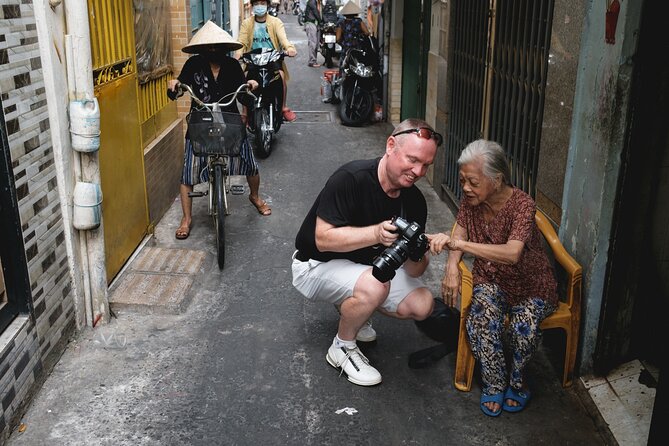
A sunrise tour sounds like a slogan. It’s not. It matters. At 6:00 a.m., the city hasn’t fully turned into traffic, noise, and “everyone take the same photo” energy. You still get street life, but it’s calmer, and that helps you slow down long enough to make photos that look intentional.
This route is built for that early window. You’re moving through markets and temple spaces while the light is soft and the scene is more forgiving for exposure. If you’ve ever struggled with harsh contrast at mid-morning, this timing is your shortcut.
You can also read our reviews of more private tours in Ho Chi Minh City


Meeting, pickup, and how the private format changes the whole shoot
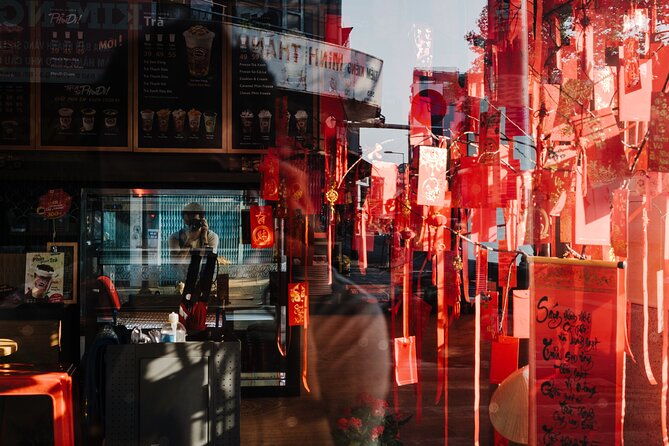
This is private, so the experience is designed around your group’s rhythm rather than the average speed of a tour bus. That affects everything: how long you linger with a subject, how often you ask questions, and how quickly you move from “I’m trying stuff” to “that worked.”
Expect hotel pickup and drop-off, plus a mobile ticket so you aren’t wasting time on paperwork. The tour is about 3 hours 30 minutes, and the activity notes say you should have moderate physical fitness—think walking and standing, not a hike, but also not a sit-down museum visit.
Also, this is an easy one to take casually in terms of effort and still get a lot out of it. Morning light plus a focused guide tends to beat wandering alone for hours.
Stop 1: Quan Am Pagoda and the street settings you can actually use
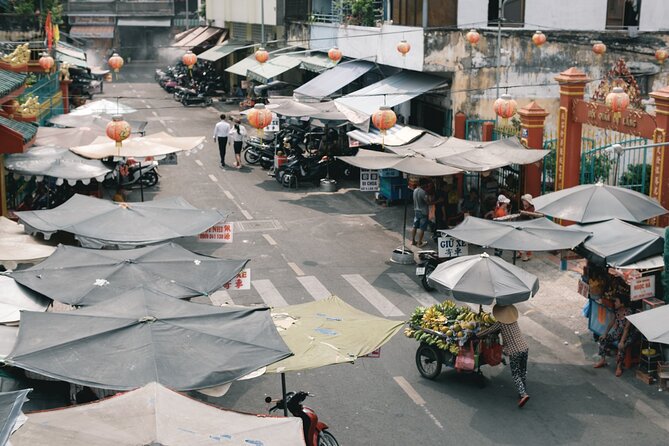
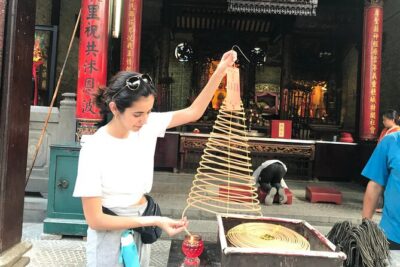
Stop one is Quan Am Pagoda (about 1 hour, admission free). Before you head into the lanes and the market atmosphere, you get a tour intro plus a photography discussion aimed at street photography—specifically camera techniques and settings.
This is the part I’d pay attention to even if you think you already know your gear. Street photography often breaks down into two problems: you don’t know what setting to trust quickly, or you’re waiting too long to react. Getting the conversation up front helps you make decisions faster once you’re among people.
Then you move into the surrounding market environment. The goal isn’t to pose strangers like it’s a photo shoot. It’s to blend into the crowd and capture portraits. If you’re new, this kind of direction keeps you from freezing. If you’re more advanced, it gives you a framework for testing your choices—exposure, focus behavior, and composition—without guessing from scratch.
Photo tip you can use immediately: watch for faces and small gestures. In markets, the best portraits often come from timing, not from waiting for someone to look perfect.
Stop 2: Phố Tau Sai Gon (Chợ Lớn, Quận 5) for alleyway storytelling
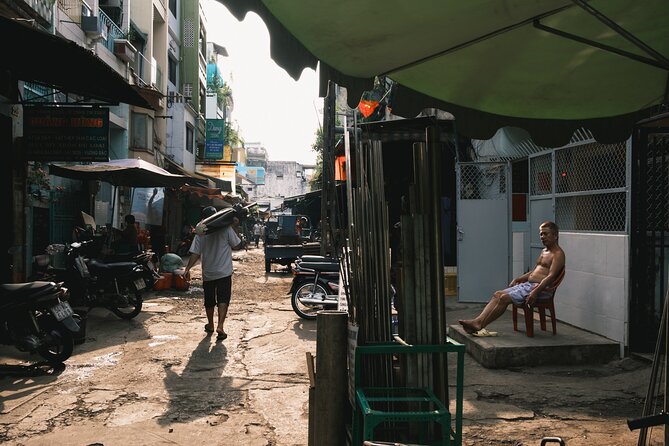
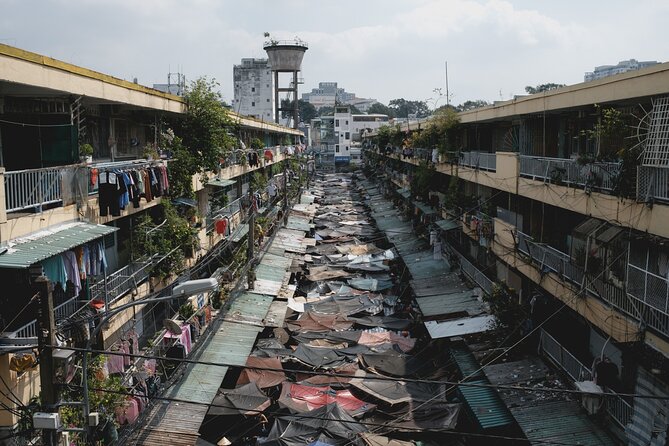
Your second stop is Phố Tau Sai Gon in Chợ Lớn, Quận 5 (about 1 hour 30 minutes, admission free). This is where the tour leans into the off-the-radar feel of Chinatown in Saigon—chaotic boulevards and spider-web alleyways, with lots of visual lines to work with.
The value here is direction. If you’ve ever wandered Chinatown areas on your own, you know how easy it is to end up taking the same wide shot from the same corner. With a guide, you’re getting a route through the neighborhood that supports storytelling: narrow passages for texture, wider streets for context, and subject-to-background contrast that makes your frame feel alive.
A second win: you’re not just being shown places. You’re also being told the neighborhood’s story—why it looks and feels the way it does, and how it retained its character over time. That background matters for photography because it gives your images meaning beyond decoration.
Possible drawback to consider: Chợ Lớn can feel busy in ways that aren’t always “tourist friendly.” If you dislike crowds or close quarters, plan your pace and lean on your guide to find calmer angles.
Stop 3: Ba Thien Hau Temple and practicing composition with diffuse light
Stop three is Ba Thien Hau Temple (about 1 hour, admission free). This is the composition-and-light checkpoint of the tour.
You’ll work in a space where diffuse light slips through the ceiling and spreads across the scenes. That kind of lighting is a gift. It reduces harsh shadows and helps you build images that feel balanced instead of blown out or too contrasty.
This stop also emphasizes composition and framing. So even if your street photos are strong, this is where you can polish the “how do I place the subject?” side of your photography. Think about how you use architecture, how you keep busy backgrounds from stealing the focus, and how you take your time with a frame rather than shooting everything quickly.
What I like about this structure: the tour moves from street technique (Stop 1) to environment storytelling (Stop 2) to controlled practice (Stop 3). It’s a logical arc for improving your photos, not just collecting more photos.
You can also read our reviews of more photography tours in Ho Chi Minh City
Guidance from Adrien: feedback that matches your goals
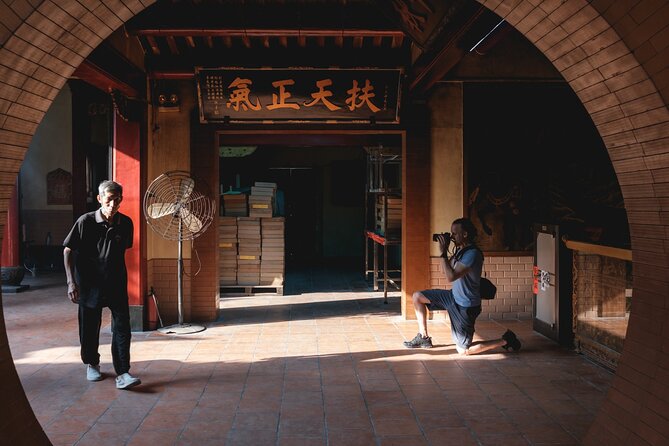
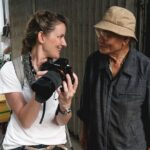
One of the most praised parts of this tour is the attention Adrien gives to your photography aspirations and technical level. That shows up as real-time coaching, not generic tips.
If you’re a beginner, you’ll get help that keeps you moving—how to think about street settings, how to approach portraits, and how to stop feeling lost when the scene changes every second. If you’re more advanced, you’ll still benefit because the guidance can be more specific and goal-oriented: you can test an idea, then get feedback to refine it.
This is also a big reason people rate it so highly. When the guide understands what you want from photography, you stop collecting random shots and start working toward images that match your style—whether that’s candid street moments, temple scenes, or neighborhood atmosphere.
There’s another practical bonus: you’ll likely visit areas in District 11 and Cholon that are harder to find on your own, especially at the right time of day. Sunrise turns “interesting places” into “photographable places.”
What you’ll likely be doing during the 3.5 hours
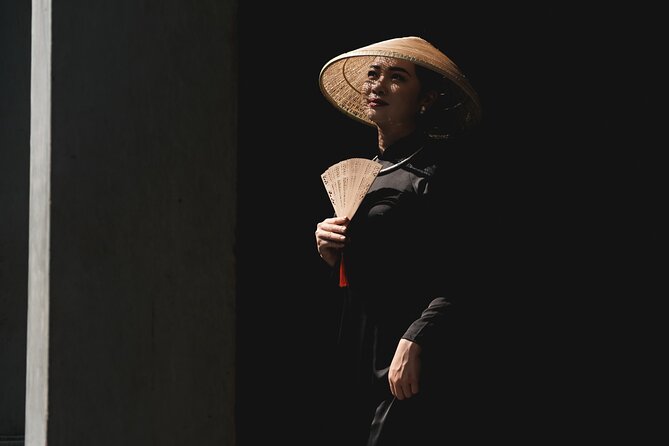
Even without staring at a checklist, you can expect a clear flow:
1) Quick intro and street photography settings talk
2) Photo time in market zones with guidance while you shoot
3) Longer neighborhood walk where you practice visual storytelling
4) Temple stop focused on composition and framing in soft light
Because it’s private, you can ask questions during the walk instead of saving them for the end. If you’re the type who wants to learn by doing, this format is ideal.
Also, the tour notes say you can be accommodated whether you’re newer or more experienced. That means the guide isn’t assuming you know how to manage exposure in changing light conditions or that you need to start from absolute basics.
Price and logistics: how $89 turns into real value
At $89 per person, the big question is whether this is just “a guided walk” or something that improves your photography.
Here’s the value equation I’d use:
- Private guide + tailored feedback: instruction included, not tacked on.
- Hotel pickup and drop-off: you’re not spending your morning negotiating rides.
- Free admission at each stop: you aren’t paying extra to enter the places you’re photographing.
- 3.5 hours at sunrise: the timing is doing work for you, not just the route.
Also, this tour is booked far in advance on average, which usually signals people value the experience enough to lock it in. When the timing is early and the format is private, demand tends to stay high.
If you split this cost across two people, it can feel especially fair for a session where you’re actively learning rather than just looking around.
Who should book this sunrise Chinatown photo tour
This tour fits best if you:
- Want street photography guidance in real locations, not classroom advice
- Are a beginner who wants help choosing settings and approaching portraits
- Are an intermediate or advanced shooter who wants feedback tied to your technical level
- Care about authenticity and prefer Chợ Lớn over the most obvious tourist circuits
It may be a harder fit if you:
- Hate early mornings and don’t do well before coffee
- Don’t like crowded market spaces or close-by street scenes
- Prefer a slow, sightseeing-only vibe instead of active shooting
If you’re unsure, think about your main goal. This is built for photography improvement and usable feedback, not just “cool places to stand and look.”
Small preparation ideas (so your photos improve fast)
The tour is designed to be beginner-friendly, but your results depend on what you can confidently use in motion. Bring what you know how to operate quickly. If you use interchangeable lenses, consider carrying only what you’ll actually shoot with—morning time slips by fast.
Wear comfortable shoes. You’ll be walking and standing for long stretches across markets, alleys, and temple areas. And since this runs early, you’ll want to dress for the morning air and keep water nearby.
One more thing: arrive ready to ask questions. The most helpful part of this tour is when the guide understands your goals and then adjusts coaching as you go.
Should you book this sunrise Chinatown photography tour?
I’d book it if you want your Ho Chi Minh City photos to look like you planned them, not like you pressed the shutter all day. The pairing of sunrise timing with personalized feedback from Adrien is the standout combination here. Add in the three-stop structure—market portraits, Chinatown alley storytelling, and temple composition in soft diffuse light—and you get a session that feels built for improvement.
Skip it only if the early wake-up is a dealbreaker for you, or if you’d rather spend your morning casually sightseeing than actively shooting and adjusting on the fly.
FAQ
What time does the tour start?
The tour starts at 6:00 a.m.
How long is the Private Sunrise Photography Tour – Down in Chinatown?
It runs for approximately 3 hours 30 minutes.
What does the $89 price include?
The price is listed as $89.00 per person and the tour includes pickup offered and drop-off, a private format, and a mobile ticket. The stops use free admission tickets.
Is this tour private or shared?
This is a private tour/activity. Only your group will participate.
Can the guide help both beginners and experienced photographers?
Yes. The guide can accommodate the class for beginner or advanced photographers and provide personalized feedback and guidance.
Is the tour dependent on weather?
Yes. The experience requires good weather. If it’s canceled due to poor weather, you’ll be offered a different date or a full refund.
What is the cancellation policy?
Free cancellation is available up to 24 hours in advance for a full refund. If you cancel less than 24 hours before the experience’s start time, the amount paid will not be refunded.