REVIEW · HO CHI MINH CITY
Ho Chi Minh: Historical City Scooter Tour
Book on GetYourGuide →Operated by AN Tours Vietnam · Bookable on GetYourGuide
Saigon clicks into focus on a scooter. This private four-hour loop mixes the headline sights with lesser-seen street scenes across about 8 districts, and your driver-gude explains what you’re looking at as you go. One caveat: scooter riding is not for everyone, especially if you have back, mobility, or heart issues, and the traffic can feel intense at first.
Pickup is from your hotel lobby at either 8:00AM or 1:00PM. You’ll get a helmet and raincoat, and the day’s flow stays flexible enough that you can decide where to spend a little extra time once you’ve covered the main landmarks, with guides such as Halsey, Henry and Hannah, Son, and Midori noted for keeping things calm and safe.
In This Review
- Key points to know before you roll
- How a 4-hour scooter tour covers Saigon essentials across 8 districts
- Cathedral, post office, and the France connection in central Saigon
- War Remnants Museum and Thich Quang Duc: history with context, not noise
- An old apartment shaped by war, and what “home” looks like now
- Hoa flower market: Da Lat blooms and a near-24-hour energy
- A 75-year-old Vietnamese coffee shop and the method that few use
- Chinatown with a 300-year-old Thien Hau temple and market life
- What “private” means in real life: guides, safety, and pacing
- Price and logistics: why $49 can make sense (and when it might not)
- What to bring and how to stay comfortable on the ride
- Who should book this tour, and who should skip
- Should you book the Ho Chi Minh historical scooter tour?
- FAQ
- How long is the Ho Chi Minh historical city scooter tour?
- What time does pickup happen?
- Is this tour private?
- What language will the guide speak?
- What’s included in the price?
- What should I bring?
- Is the tour suitable for people with mobility or health issues?
Key points to know before you roll
- Private scooter tour with an English-speaking driver so you aren’t stuck waiting on a big group.
- A tightly packed 4-hour route that still manages to include local areas, not just postcard stops.
- Helmet and raincoat included for those sudden Saigon showers.
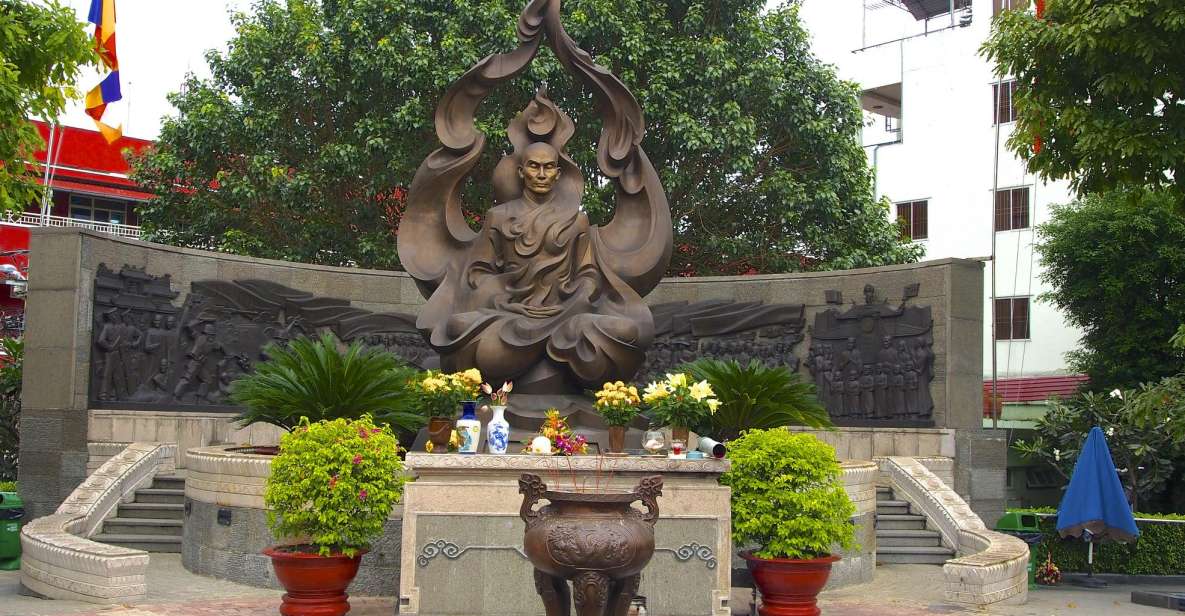
- War Remnants Museum and the Thich Quang Duc Monument give context to events that still shape Vietnam today.
- Hoa flower market and Da Lat blooms bring a sensory break from monuments and museums.
- Chinatown’s 300-year-old Thien Hau temple plus market atmosphere in the same ride.
How a 4-hour scooter tour covers Saigon essentials across 8 districts
This is the kind of tour that helps you get your bearings fast. In just 4 hours, you’ll cover a long list of sights that normally take multiple trips. The big win is the mix: major attractions, plus stops that feel more like how Saigon lives day to day.
You’ll ride with a private driver who has fluent English, and you’re not bouncing between landmarks with strangers. The itinerary is designed to keep moving, but it’s also described as flexible, so your guide can adjust the order or pacing based on what’s happening and how you’re feeling.
For value, the $49 per person price matters because it bundles more than sightseeing. You’re getting scooter transport, a private guide/driver experience, entrance tickets, and guidance between locations in one go—handy if it’s your first time in the city and you don’t want to build an entire day on your own.
You can also read our reviews of more city tours in Ho Chi Minh City



Cathedral, post office, and the France connection in central Saigon

The tour starts at one of Saigon’s most famous church buildings: a cathedral built entirely from materials sourced from France. Even if you’ve seen grand churches before, this one lands differently in Vietnam because the materials story is part of why it looks the way it does.
Right after, you’ll head to Saigon’s post office. The special part here isn’t just the building—it’s the human moment. You meet a 90-year-old man who is described as the last hand-written letter-writer in Vietnam. It’s a reminder that places aren’t only architecture; they’re people continuing habits that technology has largely pushed aside.
One practical thing: churches and heritage buildings can mean more walking than you expect. Bring comfortable shoes, because you’ll want to enjoy stops without feeling rushed.
War Remnants Museum and Thich Quang Duc: history with context, not noise

Next comes the War Remnants Museum. Vietnam has lived through repeated conflicts, and this museum is built to help you understand not just battles, but also the human cost and the lesser-known stories behind the wars. This is the stop where the tour’s tone matters—your guide is expected to handle the subject with sensitivity, not sensational shock.
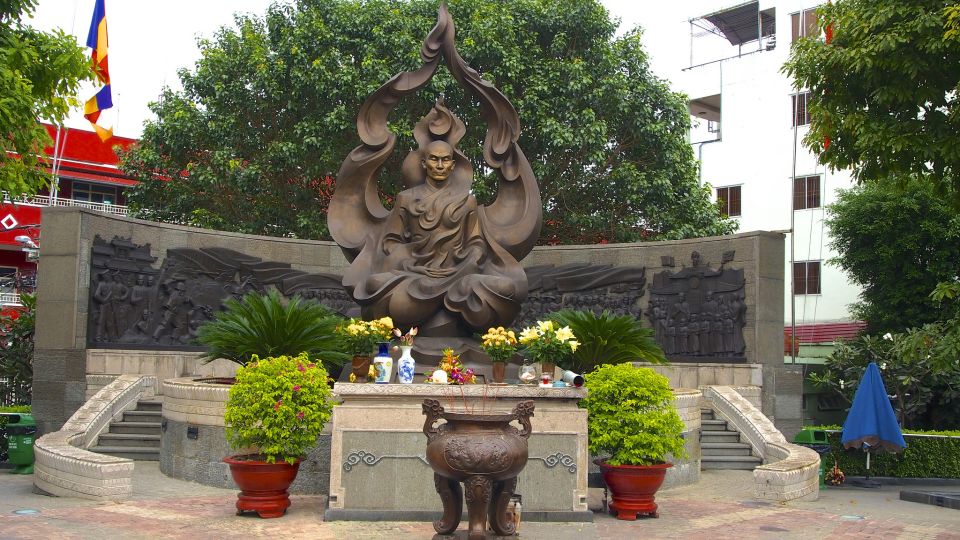
After that, you’ll visit the Thich Quang Duc Monument, which honors the famous monk who self-immolated in 1963 as a protest. Even if you’ve heard the name before, the monument gives the event a clear, physical place in the city’s story.
If you want a tour that gives you context rather than a checklist, this is a strong section. It also means you might want to pace yourself. Museums and memorials can be mentally heavy, even when the guidance is thoughtful.
An old apartment shaped by war, and what “home” looks like now
The route continues to the oldest apartment in Ho Chi Minh City, described as an apartment built from the war. This is one of the more grounded stops because it shifts you from national stories back to everyday life.
You’ll see how local people lived—and still live—within a structure that carries history. The aim here is simple: to show you Saigon at street level, not only as a place of monuments.
This portion works well if you enjoy small-scale details: where people gather, how daily routines play out, and how the city makes use of older structures. It can also be the part where you learn the most about how Saigon residents think about the past in ordinary life.
Hoa flower market: Da Lat blooms and a near-24-hour energy

Then you’ll hit the biggest flower market in the city. It’s described as having started in 1980 and running almost 24 hours a day, so it doesn’t feel like a staged tourist market. The scale is part of the draw: thousands of flowers, laid out like Saigon’s own color map.
The day-to-day supply chain is the cool detail. Flowers are transferred from Da Lat each morning (Da Lat is often called the Paris of Vietnam), which means you’re seeing something that connects two cities through daily movement.
If you’re the kind of traveler who likes textures—fragrance, bright shapes, quick bargaining energy—this stop is a nice release. It also gives you something to photograph that doesn’t look like the same heritage facade you’ve seen elsewhere.
You can also read our reviews of more historical tours in Ho Chi Minh City






A 75-year-old Vietnamese coffee shop and the method that few use
Coffee is next, and not in the generic sense. You’ll be taken to a coffee shop that’s described as 75 years old, where the method of making coffee is one that only three coffee shops in Vietnam use.
Even if you don’t become a coffee expert by the end of the stop, the value is that you taste the idea of continuity. This isn’t about trendy novelty; it’s about a particular way of doing something that has lasted.
If you’re sensitive to caffeine, you might want to pace yourself. Also, coffee shops can be busy, so keep an eye on your personal timing so you don’t feel rushed at the counter.
Chinatown with a 300-year-old Thien Hau temple and market life
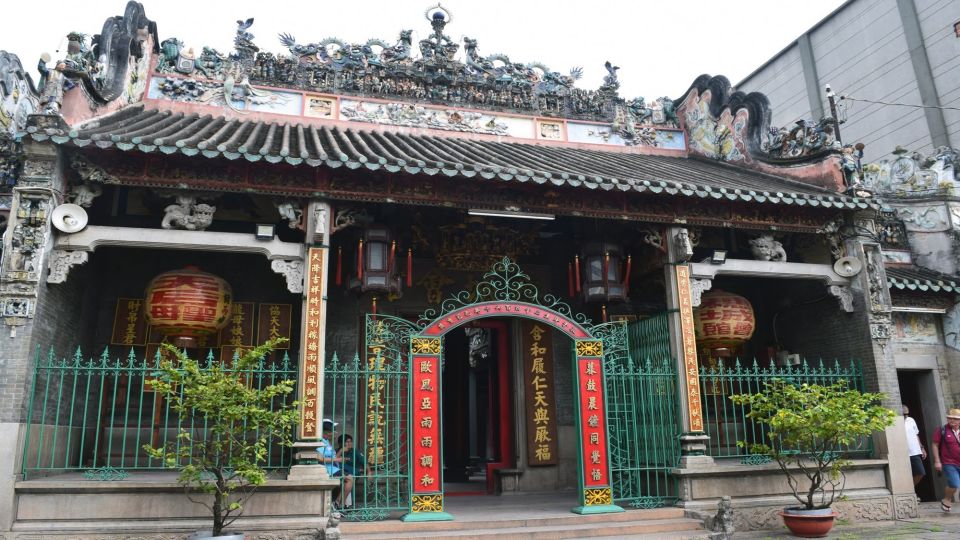
The tour ends by shifting into Chinatown. Here you’ll find a 300-year-old temple, and it’s centered on Thien Hau, a key spiritual figure for the Chinese-Vietnamese community. The area is described as home to 1.5 million Chinese-Vietnamese living across generations, which helps explain why you’ll see more than one kind of everyday culture in the same streets.
You’ll also pass through market-style scenes, including a motorbike market and a bird market. It’s not a quiet sightseeing district. It’s practical, active, and intensely local.
One note for expectations: Chinatown can be energetic, so if you prefer serene views over street bustle, keep your pacing with your guide. The scooter format helps because you’re moving through it with interpretation, rather than getting stuck in confusing side streets on your own.
What “private” means in real life: guides, safety, and pacing
This is a private tour, so the scooter experience is part of the guiding plan. Past guides mentioned in the available details are praised for how they handle heavy traffic and how they keep the ride feeling safe and controlled. That’s not a small thing in Saigon.
Some guides also stand out for how they talk. Halsey is specifically described as knowledgeable about culture and history while still putting people at ease. Henry and Hannah are noted for teaching the city’s story in a way that feels friendly and grounded. Son and Sunny are mentioned for language clarity and for showing less common places without making you feel like you’re just being driven from stop to stop.
Even with a great driver, you should go in with realistic expectations:
- You’ll be close to traffic.
- You’ll feel motion.
- You may want a few minutes to settle in at the start.
The tour helps by providing a good quality helmet and raincoat, so you aren’t scrambling for gear.
Price and logistics: why $49 can make sense (and when it might not)
At $49 per person for a 4-hour private scooter tour with entrance tickets included, the value is easiest to see if you’re trying to do several different kinds of sights in one day. You’re paying for transport, a fluent English-speaking guide/driver, and ticket access across multiple locations.
Where it may not feel like a deal is if you already plan to do all these stops on your own. But if your goal is city orientation plus real local flavor, the structure saves time and mental effort.
Also, because the pickup is only at 8:00AM or 1:00PM, you’ll want to plan your other activities around that. If your day is full of flexible wandering anyway, the tour can slot in nicely as your anchor activity.
What to bring and how to stay comfortable on the ride
This tour is practical. You don’t need fancy clothes. You do need the basics that make scooter time feel better.
Bring:
- Comfortable shoes (you’ll be on and off the scooter for stops)
- Sunglasses
- Sunscreen
And don’t forget sunscreen for your skin. That’s a clear directive here. Saigon sun can be relentless, especially if your route includes open-air market time.
The tour also provides a raincoat, which helps if you get caught by weather. Still, shoes and your ability to walk comfortably matter more than you’d think when you’re moving through several attractions.
Who should book this tour, and who should skip
This tour is a strong fit for:
- First-time visitors who want a broad overview of Ho Chi Minh City in a single morning or afternoon
- Couples or small groups who prefer a private rhythm over group schedules
- Travelers who like context, especially around Vietnam’s war-era history and how it shows up in monuments and everyday spaces
It’s not suitable for:
- People with back problems
- People with mobility impairments
- Wheelchair users
- People with heart problems
If any of those apply, don’t force it. Scooter time is physical, and the tour isn’t designed as an accessible option.
Should you book the Ho Chi Minh historical scooter tour?
Book it if you want one day in Saigon that feels like more than a checklist. The route covers major landmarks, war-era context, a major flower market with near-24-hour motion, and Chinatown’s Thien Hau temple and market atmosphere—all in one organized private ride.
Skip it if you dislike scooters, can’t handle traffic stress, or need an accessible format. Also, if heavy history isn’t your thing, the War Remnants Museum and Thich Quang Duc Monument are central parts of the experience, not side notes.
If you’re choosing between planning everything alone and getting a structured guide, this tour is a smart way to save time while still seeing the city beyond the most obvious stops.
FAQ
How long is the Ho Chi Minh historical city scooter tour?
It runs for 4 hours.
What time does pickup happen?
Pickup is included, and your pick-up time is either 8:00AM or 1:00PM.
Is this tour private?
Yes, it’s described as a private tour for you.
What language will the guide speak?
The live tour guide speaks Vietnamese and English.
What’s included in the price?
The tour includes the attractions listed, a good quality helmet and raincoat, a private driver with fluent English, and entrance tickets.
What should I bring?
Wear comfortable shoes, and bring sunglasses and sunscreen.
Is the tour suitable for people with mobility or health issues?
No. It is not suitable for people with back problems, mobility impairments, heart problems, or wheelchair users.