REVIEW · HO CHI MINH CITY
Ho Chi Minh: 1-Day Mekong Delta Tour-Floating Market & Islet
Book on GetYourGuide →Operated by VIET FUN TRAVEL COMPANY LIMITED · Bookable on GetYourGuide
Floating markets don’t do well with late starts. This one-day Mekong Delta run links Cai Rang Floating Market breakfast with hands-on food and then lands you on Cồn Sơn (Son) islet for fish-farm fun.
I love the way the morning is built around real boat life: coffee on deck, then breakfast and cooking moments tied to what people actually trade. I also love the tactile stop at Cồn Sơn—walking, fruit picking when in season, and the koi fish foot massage that turns your feet into a comedy act.
The main tradeoff is time and heat: you’ll leave Ho Chi Minh City before 5:00 am, and the road trip takes long enough that you’ll feel it. If you hate early mornings, or if you need lots of downtime, this may feel like a full-on day rather than a slow wander.
In This Review
- Key things you’ll remember
- Leaving Ho Chi Minh City for the Mekong: a long day, well staged
- Cai Rang Floating Market: breakfast, coffee, and the boat rhythm
- What to watch for (and what to accept)
- Hu Tieu and the food-making mindset: watching how daily life gets cooked
- Pineapple on the boat: sweet fruit, direct prep, no waiting around
- Cồn Sơn (Son) islet: fish farm, koi massage, and garden time
- Floating fish farm + koi massage
- Monkey bridges and picking fruit (when in season)
- Making traditional cakes and pop rice: the hands-on souvenir you actually use
- Lunch on the islet and the snack rhythm that keeps you going
- Timing and logistics: what the schedule feels like in real life
- Value for about $70: why the price makes sense (and when it might not)
- Guide quality matters here: English, pacing, and care
- Who should book this Mekong Delta day trip?
- Should you book? My practical take
- FAQ
- How long is the tour?
- What time do we leave Ho Chi Minh City?
- Where are the pickup locations?
- What do I get for breakfast?
- Is Hu Tieu making included?
- Do we see pineapple preparation?
- What activities happen on Cồn Sơn (Son) islet?
- Can I make traditional cakes and pop rice?
- What meals are included besides breakfast?
- What should I bring?
Key things you’ll remember
- Cai Rang Floating Market breakfast from a boat, with that shaky, hands-on feel of morning trade
- Hu Tieu (rice vermicelli) making taught as a process you can watch and try
- Pineapple prep right on the boat, with peeling done on the spot for fresh tasting
- Cồn Sơn fish farm + koi foot massage, ticklish enough to make you grin
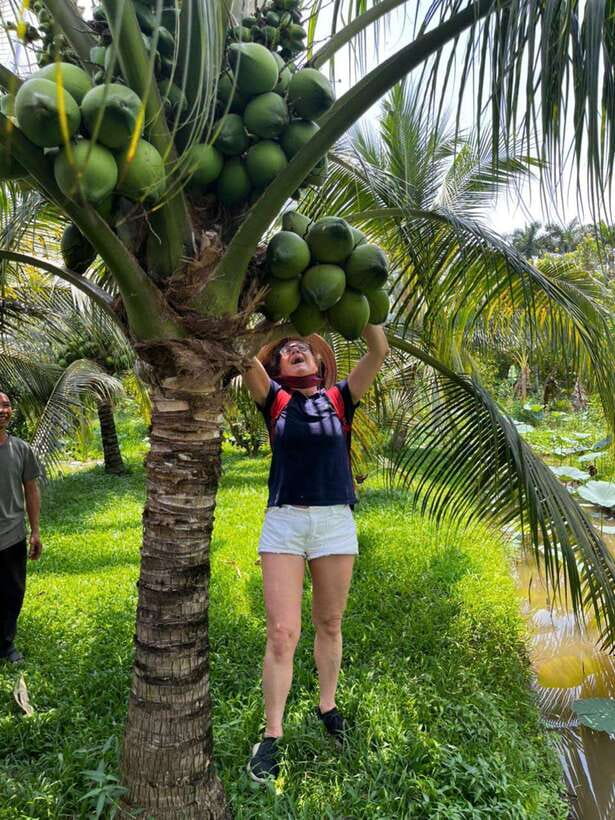
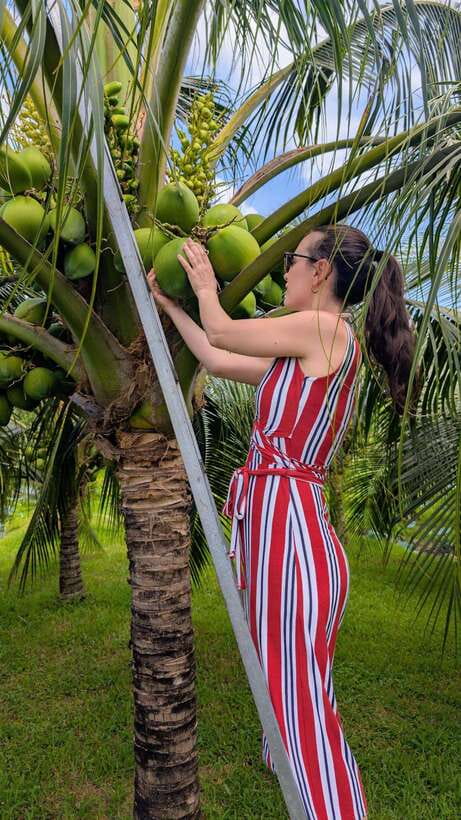
- Seasonal fruit picking from local gardens, plus monkey bridges on the islet walk
- Traditional cakes and pop rice, including the communal flying-menu style meal
Leaving Ho Chi Minh City for the Mekong: a long day, well staged
This tour is scheduled like a proper day out of the city: you’re picked up in District 1 or District 4 and then driven about 2.5 hours to the Mekong Delta area, arriving in Cần Thơ around 7:30 am. The pacing matters here. You get to be there early enough for the floating market experience to feel active, not like a midday performance.
Once you’re out of Ho Chi Minh City, the road scenery shifts into what southern Vietnam does best—rice fields, orchards, and roads lined with everyday life. It’s not the kind of scenery that demands constant attention for 2.5 hours, but it’s a good buffer while you wake up and get your bearings.
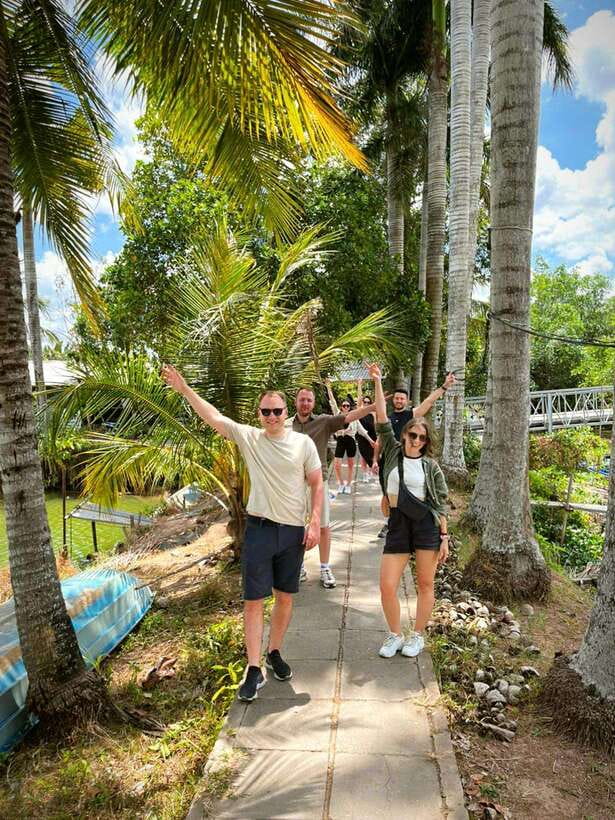
A practical note: wear comfortable walking shoes. There’s a moderate amount of walking once you reach Cồn Sơn, and you’ll be hopping between boat and land in heat and humidity.
You can also read our reviews of more shopping tours in Ho Chi Minh City


Cai Rang Floating Market: breakfast, coffee, and the boat rhythm
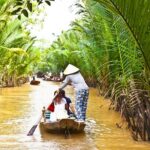
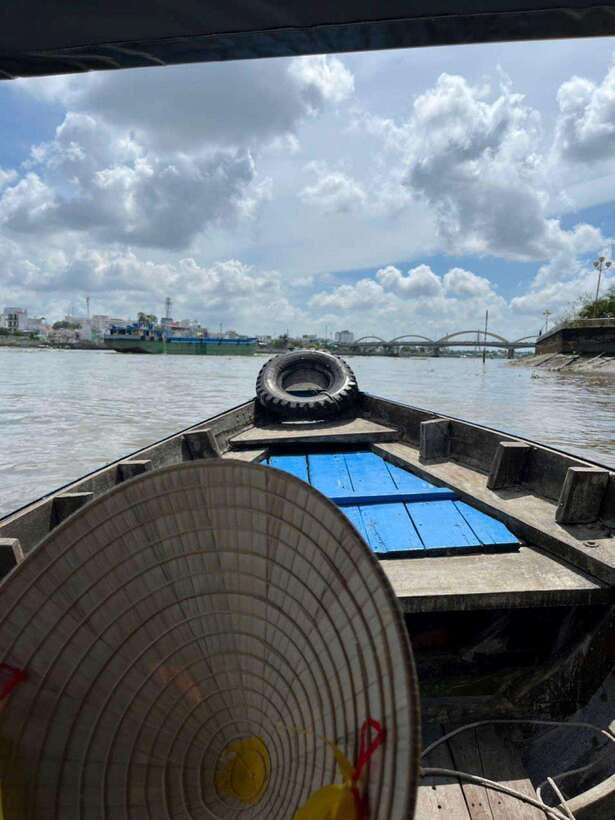
Cai Rang Floating Market is the headline. You’ll cruise the river early in the morning, watching daily activity along the banks—traditional-style homes, orchards, ship-building areas, and all the moving parts of market life.
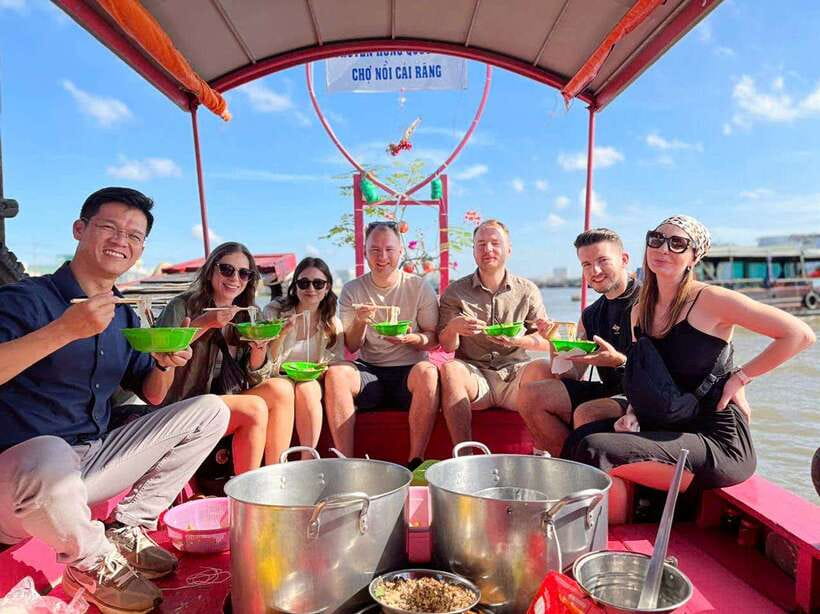
Then comes the part most people remember first: breakfast on the floating market. The meal is described as a shaken breakfast, which is exactly what it sounds like. Between the boat’s motion and the fact that you’re eating in the middle of active water traffic, it feels more like participating than observing.
After breakfast, you’ll typically sip coffee on the deck while the market energy stays in motion around you. If you like mornings with real smells and real sounds—oar strokes, voices carrying over water, and that humid morning air—this stop will land.
What to watch for (and what to accept)
This is a popular circuit. You may share the water with other boats and tour groups, and the floating market can feel commercial at the edges. Still, the core value here is that the market isn’t a museum. It’s a working place where trading happens as a daily routine.
Hu Tieu and the food-making mindset: watching how daily life gets cooked
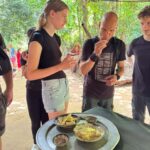
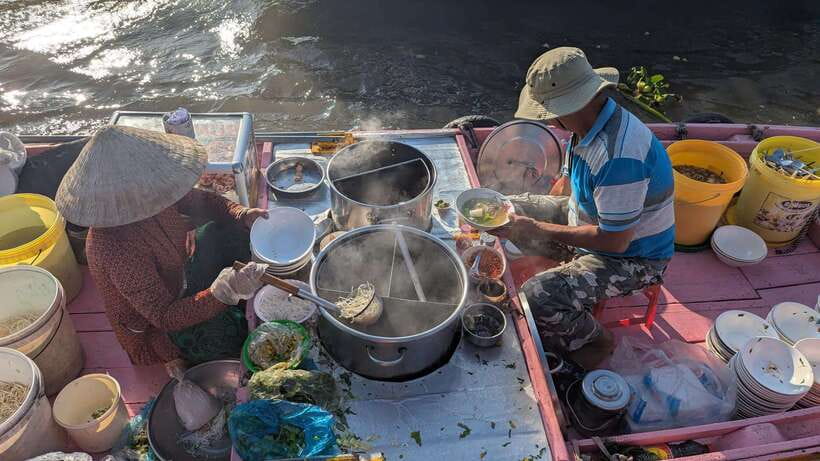
One of the best-value parts of this day trip is that you don’t just taste; you watch and learn small parts of how people prepare food. The Hu Tieu lesson focuses on rice vermicelli, described as soft, flat, slippery, and slightly chewy—texture is half the story with these dishes.
This is the kind of activity that helps your brain connect food to geography. The Mekong Delta grows the ingredients, and the cooking techniques reflect the ingredients and local schedules. You’re seeing why certain foods feel like a regional signature rather than just another restaurant plate.
Even if you don’t care about cooking classes in general, the hands-on nature helps you stay engaged on a long day. It also makes lunch and snacks feel less random, because you’ve already learned where the flavors start.
Pineapple on the boat: sweet fruit, direct prep, no waiting around
After the Hu Tieu experience, you move to another morning segment centered on pineapple—often described as the queen of fruits. Here’s the detail that makes it more than just a fruit stop: the seller peels the pineapple on the spot right on the boat.
That matters. Fresh pineapple straight from a quick peel tastes different than pre-cut fruit, and you get to see how trading and serving happen at water level. It’s also a simple but effective way to understand the rhythm of boat vendors: hands busy, customers close, and everything happening on the move.
You also get a real snack rhythm during the day. The included plan mentions fruit and candies, plus pop rice later on, so your energy stays steady even with the long drive.
You can also read our reviews of more tours and experiences in Ho Chi Minh City


Cồn Sơn (Son) islet: fish farm, koi massage, and garden time
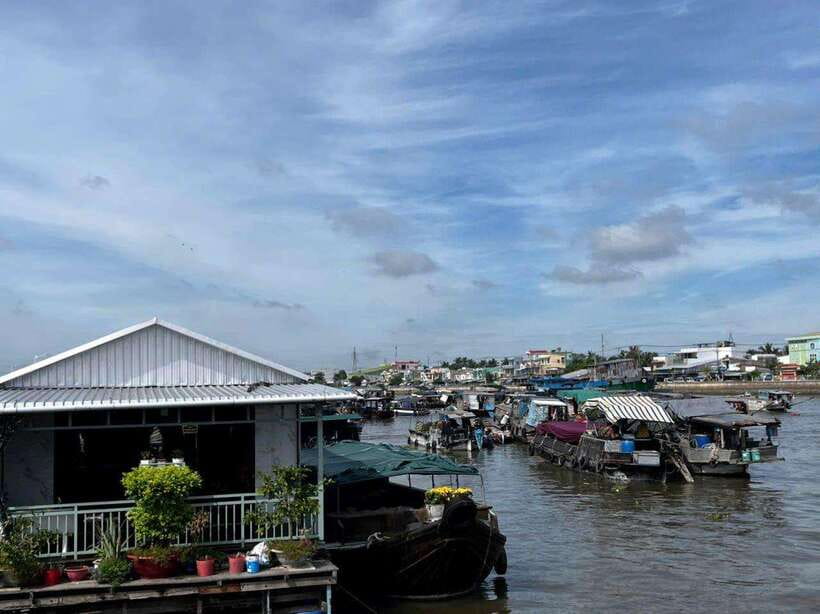
You’ll take a short boat ride back, then hop on the van to Cồn Sơn (Son) islet, which sits on the Hậu River separated from the mainland nearby. This stop is where the tour slows down enough to feel like you’re on someone’s home turf, not just passing through market stalls.
Floating fish farm + koi massage
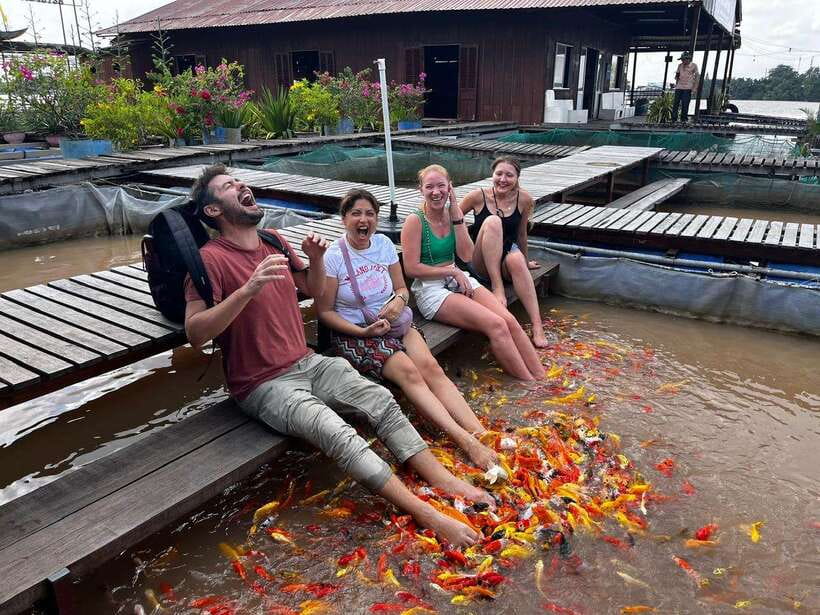
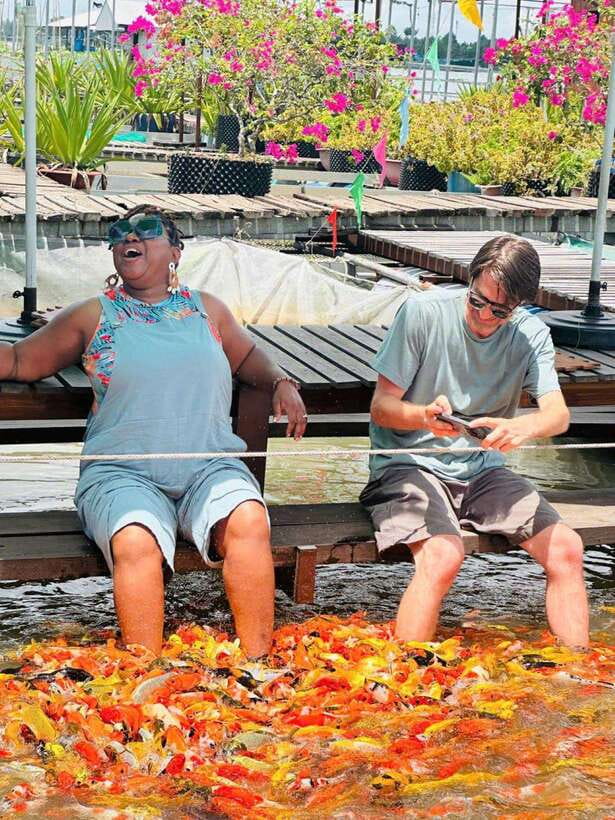
The tour centers a big portion of Cồn Sơn around a floating fish farm. You’ll see the fish collection and then do the signature experience: foot massage with koi fish. It’s ticklish fun, and it’s one of those activities that’s hard to explain until you’re standing there deciding how brave to be with your feet.
If you’re the kind of person who enjoys “small adventure” moments—nothing extreme, but still memorable—this is your anchor experience.
Monkey bridges and picking fruit (when in season)
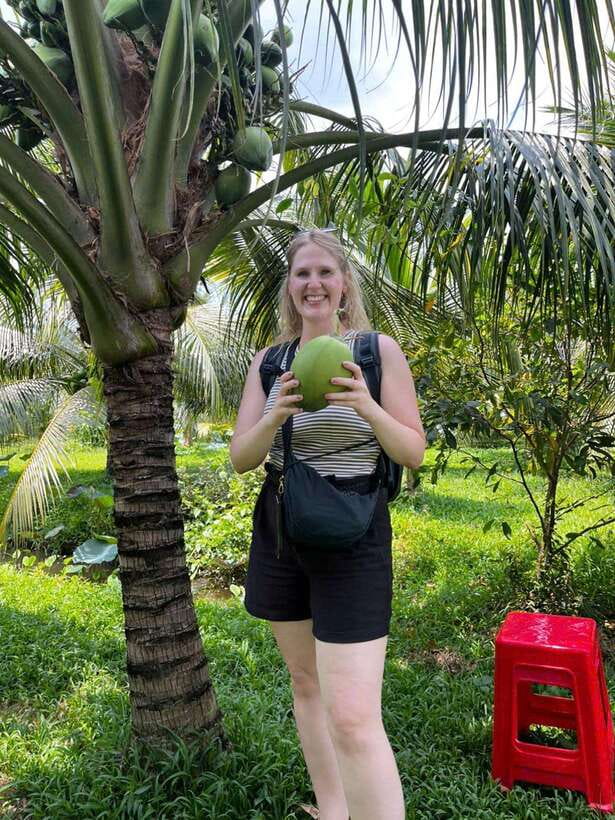
You’ll walk around the islet area, with a community of about 80 households. There’s time to visit gardens with local people and pick fruit directly from the tree. The fruit is described as seasonal, so what you get depends on timing.
Don’t skip the monkey bridges. They’re a small sight, but they’re the kind of detail that makes a place feel specific and alive rather than generic sightseeing.
Making traditional cakes and pop rice: the hands-on souvenir you actually use
On Cồn Sơn, you get more than sightseeing. You can help make traditional cakes and make pop rice. These are the kind of activities that don’t require expertise. Your goal isn’t perfection. It’s learning the process and eating something you helped prepare.
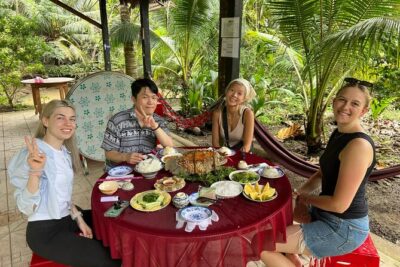
There’s also a community-based meal style described as the flying menu. Each family prepares a dish and serves it to you. That’s not a fancy restaurant trick—it’s a way for locals to share what they cook and for visitors to sample multiple home dishes in one sitting.
If you like cultural experiences that feel practical and shared, this segment is a strong reason to book. It also helps explain why the day has so many food moments: it’s structured around local production, not just tourist sampling.
Lunch on the islet and the snack rhythm that keeps you going
Lunch comes after the main islet activities, around 12:00 pm, and it’s included as a Vietnamese set menu at a local restaurant. The day also includes snacks like fruits, candies, and pop rice, plus bottled water.
This is one reason I like this tour’s value. You’re not constantly paying extra for your baseline day needs. Even so, drinks aren’t included, so bring or budget for what you personally prefer to sip in the heat.
Lunch is typically a shared style meal with local specialties. If you’re picky about how food is served (for example, you prefer individual bowls), you might want to mentally prep for shared plates.
Timing and logistics: what the schedule feels like in real life
You depart Ho Chi Minh City at about 5:00 am. You arrive around 7:30 am in Cần Thơ, then spend time at Cai Rang. After that, you travel to Cồn Sơn, do fish farm and islet activities, then return and arrive back in Ho Chi Minh City at about 18:00.
That means this is a “do it once” day. It’s long, but it’s long in a purposeful way: early for the floating market, later for the islet activities when you can walk and taste. If you can’t function after an early start, you’ll be fighting your own body for the first half.
Also, plan for walking and heat. The tour advises hat, sunscreen, umbrella, and insect repellent. If you’ve ever spent time in southern Vietnam on a sunny morning, you’ll know you don’t win by being tough. You win by being prepared.
Value for about $70: why the price makes sense (and when it might not)
At $70 per person, this isn’t a cheap half-day. But it includes a lot that usually costs extra: AC transfer, a tour guide, boat trips, admission fees, plus both a breakfast and a lunch, and also snacks and water.
The value is in the structure. You’re paying for transport out of the city, the boat-based market portion, and several hands-on food and community experiences. If you were to try to assemble this on your own, you’d likely spend extra time figuring out timing, boats, and meal planning—plus you’d be paying for guide help anyway.
Where the price can feel less justified is if you mainly want one attraction and you don’t care about food-making. This tour gives you multiple food moments (breakfast, Hu Tieu practice, pineapple tasting, pop rice and cake-making, plus lunch). If you don’t enjoy that style of day, you may feel like it’s more activity than you wanted.
Guide quality matters here: English, pacing, and care
This kind of day lives or dies by the guide. The experience is built on explanation—what you’re seeing on the banks, how Hu Tieu is prepared, why certain foods and fish-farm practices matter.
You may encounter guides with strong English like Safa, Steven, Tony, Michael, Daniel, Jack, Ben, or Windy (Phong), and people also highlight drivers who keep things safe and comfortable on the long road trip. That matters because the day is full. Good guidance turns it from “stuff happened” into “I understand what I’m looking at.”
If you’re traveling with kids, you’ll also appreciate that guides can be funny and engaging—especially during the koi fish foot massage and snack moments.
Who should book this Mekong Delta day trip?
Book this if you want a full day with real local food experiences and you’re excited by boat life. It’s a good match for first-timers who want the Mekong highlights without overnight logistics, and for food lovers who don’t mind learning small techniques.
It’s also a great fit if you enjoy the outdoors-in-the-heat style of touring as long as you’re prepared with sun protection and comfortable shoes.
Consider skipping if you hate early mornings, dislike long road travel, or want a slower pace with lots of quiet time. The tour is packed. Even at its best, it’s a day designed to keep moving.
Should you book? My practical take
If you’re in Ho Chi Minh City and you want one day that actually feels like southern Vietnam—not just a quick photo stop—this is a solid pick. The best reasons are the boat-based Cai Rang breakfast, the Hu Tieu and pineapple food moments, and the Cồn Sơn fish farm and koi massage plus fruit and pop rice/cake-making.
My advice: come ready for heat, bring your sun gear, and wear shoes you can walk in without thinking. If you do that, you’ll spend your day eating, learning, and laughing at your ticklish feet—exactly the kind of memorable day trip worth the early alarm.
FAQ
How long is the tour?
It runs for about 12 hours.
What time do we leave Ho Chi Minh City?
You depart around 5:00 am.
Where are the pickup locations?
Pickups are available from District 1 and District 4.
What do I get for breakfast?
You’ll have breakfast on the floating market (included as part of the tour meals).
Is Hu Tieu making included?
Yes. You’ll learn about how locals make Hu Tieu (rice vermicelli).
Do we see pineapple preparation?
Yes. You’ll taste pineapple and see pineapple peeled on the spot on the boat.
What activities happen on Cồn Sơn (Son) islet?
You’ll visit a floating fish farm, try koi fish foot massage, walk around the islet, and have time for fruit picking when fruits are in season.
Can I make traditional cakes and pop rice?
Yes. The plan includes making traditional cakes and pop rice.
What meals are included besides breakfast?
In addition to breakfast, you’ll have lunch at a local restaurant (included as a Vietnamese set menu).
What should I bring?
Bring comfortable shoes, a hat, an umbrella, camera, biodegradable sunscreen, biodegradable insect repellent, cash, and comfortable clothes.