REVIEW · HO CHI MINH CITY
Ho Chi Minh City Half Day – VIP Private Tour
Book on Viator →Operated by Indochina Heritage Travel · Bookable on Viator
Four hours can change how you see Saigon. This Ho Chi Minh City VIP private half-day tour mixes big sights with local streets, and your guide ties it all to the city’s French-colonial influence and the Vietnam War era you’ll be seeing up close. I love the hotel pickup in Districts 1, 3, and 4, and I also love that you’re with an English-speaking guide who explains what matters without turning it into a lecture.
The one thing to keep in mind is the 4-hour pace. You’ll cover several major stops, so you do want to be ready to move at a good clip, especially for photo moments and museum entry lines.
In This Review
- Key highlights at a glance
- A 4-hour VIP loop of Saigon’s major landmarks and side streets
- Price and what you actually get for $50 per person
- Saigon Central Post Office: orientation in a French-era icon
- Emperor Jade Pagoda: a Chinese-influenced temple with bold details
- War Remnants Museum: when context matters more than speed
- Independence Palace: a time capsule of South Vietnam’s leadership
- Notre-Dame Cathedral: Saigon’s iconic cathedral after the palace
- The guides make the difference: clear explanations and calm control
- Timing, comfort, and how to get the best photos
- Who this tour is best for (and who might want something else)
- Should you book this Ho Chi Minh City VIP Private Tour?
- FAQ
- How long is the Ho Chi Minh City half-day VIP private tour?
- What time does the morning tour start?
- Is hotel pickup and drop-off included?
- What’s included in the price besides the tour guide?
- Are tickets and entry fees covered?
- Is this tour private?
- Which main attractions are visited?
- Do I need to tip?
- What’s the cancellation policy?
Key highlights at a glance
- Private VIP format for your group so you’re not squeezed into someone else’s schedule
- Hotel pickup and drop-off within Districts 1, 3, and 4 for a low-stress start
- Short stops that still feel intentional, like the Central Post Office and Jade Emperor Pagoda
- A serious, focused museum visit at the War Remnants Museum (plan on taking it in)
- Iconic contrast of sites: Jade Emperor Pagoda, Independence Palace, and Notre-Dame Cathedral
- Flexibility when time allows, including examples like swapping in the Pink Church
A 4-hour VIP loop of Saigon’s major landmarks and side streets

This is built for people who want the best of Ho Chi Minh City without spending your whole day in transit. You’ll get an air-conditioned car or van and an English-speaking guide, and you’ll be moving between standout places that represent very different chapters of the city’s story. The tour route includes both main roads and smaller lanes, which is a big part of why it feels more like a guided walk through neighborhoods than a hop-on bus tour.
What makes the experience work is the rhythm. Some stops are shorter and designed to orient you fast. Others, like the War Remnants Museum, are where your guide slows down and gives context so you don’t just “see artifacts,” you understand what they’re showing and why it was preserved.
You also get to choose your departure style: there’s a morning option (the tour starts at 8:00 am on the morning run) or an afternoon option. That flexibility helps if you’re doing other activities the same day, like shopping, a food tour, or a longer evening plan.
You can also read our reviews of more city tours in Ho Chi Minh City


Price and what you actually get for $50 per person
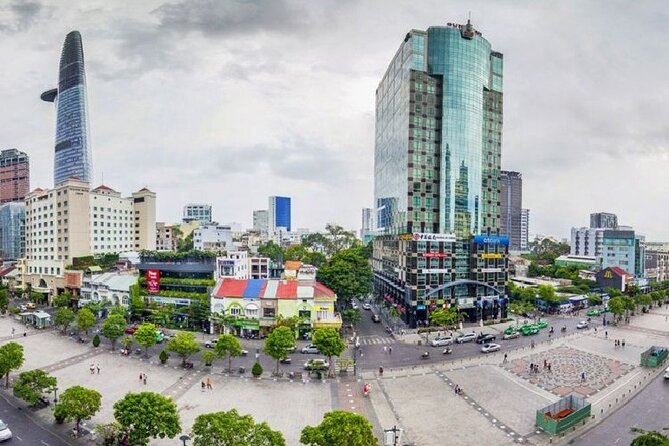
At $50 per person for about 4 hours, the value is largely in what’s included. Your ticket covers transportation (air-conditioned vehicle), your guide, entrance fees, and mineral water. On top of that, hotel pickup and drop-off are included for Districts 1, 3, and 4, which can be a hidden cost if you’re paying for taxis or rides separately.
The “VIP” part is less about fancy extras and more about control. This is a private tour, so you’re not negotiating where to stand, when to take photos, or how long you can ask questions. In real life, that matters, because you’ll want to ask your guide things like why a building looks the way it does, or what you’re supposed to notice at a site that carries heavy history.
The entrance fees and the water are also easy wins. It means you can focus on the stops instead of budgeting for add-ons every step of the way. Tip isn’t mandatory, but it’s always appreciated for good guide service—so decide based on how your guide handles timing, explanations, and any personal requests.
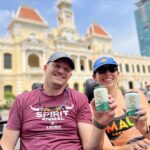
Saigon Central Post Office: orientation in a French-era icon
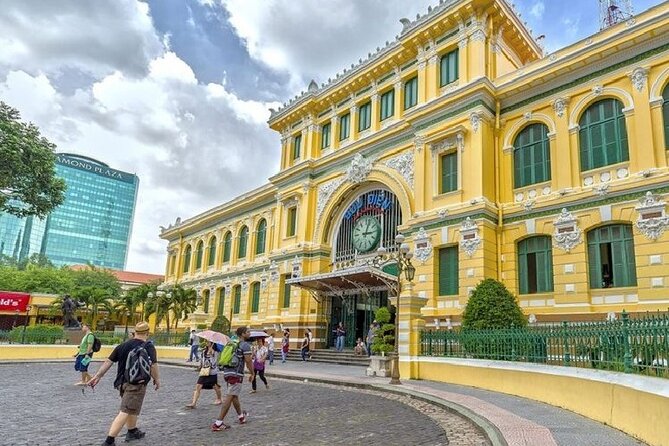
Your tour starts at the Saigon Central Post Office, with about 30 minutes on site. This is the kind of place that works well as an opener because it sets the tone fast: you see a major landmark right away, and your guide can connect its architecture to the French period and the European influence you’ll notice throughout the city’s culture and even the way some traditions feel today.
What I like about starting here is the “reset effect.” By the time you step out from the post office, the rest of the day makes more sense. You can spot patterns in the city—how older colonial-era structures sit alongside modern streets and daily life.
Practical note: 30 minutes is enough to walk, take photos, and get the important points from your guide, but it’s not long. If you’re the type who wants to read every plaque, plan to treat this stop as an overview and let your guide’s explanations do the heavy lifting.
Emperor Jade Pagoda: a Chinese-influenced temple with bold details
Next up is the Emperor Jade Pagoda, again with about 30 minutes and entrance included. This is where the tour shifts away from French-era landmarks and into a more distinctly Chinese-inspired religious world.
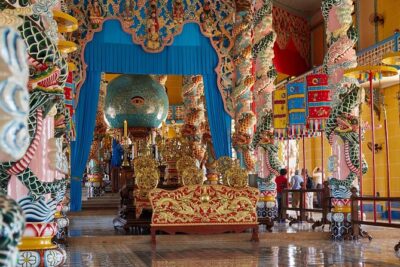
The pagoda is known for its 1892 construction and striking design choices, including a Yin-Yang roof and decorative brickwork. Even if you don’t read temple history or know the names of every offering, you’ll still understand quickly why this place draws people in. The roof shape and the ornament details are the kind of visual language that tells you this is not just a building—it’s a lived practice.
This stop also gives you a nice contrast against the heavier sites later. Your brain gets a break. Then, when you reach the War Remnants Museum, the day doesn’t feel like one long emotional hammer; it feels like a sequence of different realities that all exist in the same city.
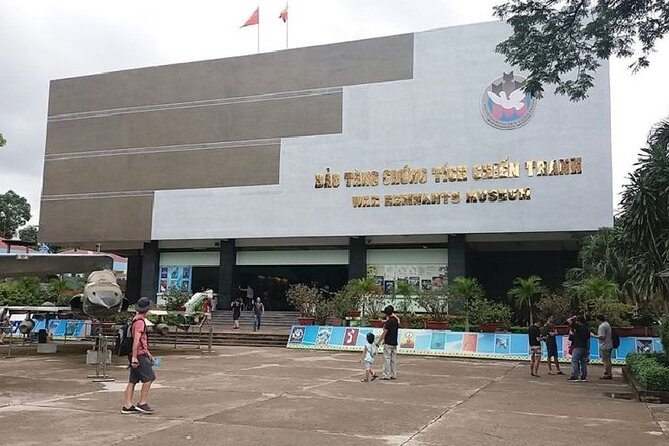
War Remnants Museum: when context matters more than speed
The War Remnants Museum is the heart of the “history that hits” portion of the tour. You get about 1 hour here, and entrance is included.
This museum does something many casual sightseeing plans miss: it forces you to slow down and reconsider what you think you already know. The exhibits are arranged so that the Vietnam War isn’t treated like a distant headline—it’s tied to human experiences and consequences that still echo through the country’s story.
Here’s my practical advice: don’t try to rush this like a checklist. Use your guide. If you ask even one good question—about what a specific display is showing, or why something was preserved—you’ll get more out of the hour than if you try to read everything yourself.
Also, be ready for emotion. Even if you’re not a museum person, this is one of those places where the meaning of what you’re looking at is bigger than the room you’re standing in.
You can also read our reviews of more private tours in Ho Chi Minh City




Independence Palace: a time capsule of South Vietnam’s leadership
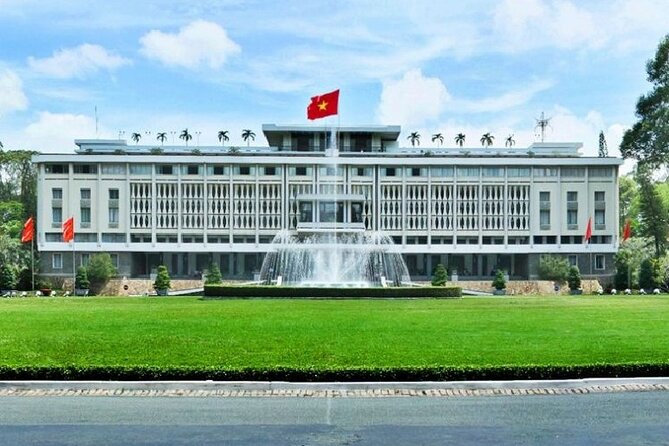
After the museum, you’ll head to the Independence Palace, with about 1 hour on site and admission included. This was the home and workplace of South Vietnamese President Nguyen Van Thieu during the Vietnam War.
The reason this stop is so valuable is simple: you don’t just learn about decisions, you walk through the kinds of spaces where decisions were made. It’s a historic landmark that helps you picture the pressure, the urgency, and the logistics of leadership during a conflict.
You’ll likely notice how the palace is set up for function—rooms and areas designed for operations, meetings, and communication. Your guide can connect those details to the broader political and military timeline, so it doesn’t become just “rooms with furniture,” but a map of power during a specific period.
Good pacing matters here. One hour can go fast if you spend most of it waiting for others to catch up. In a private format, your guide can keep your group aligned, but you still want to stay present and not spend the whole time focused on photos.
Notre-Dame Cathedral: Saigon’s iconic cathedral after the palace
Finally, you’ll visit the Notre-Dame Cathedral. It’s presented as one of the most celebrated cathedrals worldwide, and the tour frames it as the only Southeast Asian entry among the 19 most magnificent cathedrals.
This stop is a useful ending because it changes the mood. After the war history of the museum and palace, you’re back in the world of public architecture—religious design, street life, and the kind of landmark many people recognize right away.
What to do during this time: look closely at details instead of just getting one wide shot. Cathedrals reward attention—doorways, façades, and how the building sits against the street. Your guide may point out the European influence woven into the city’s built environment, tying it back to the broader story the tour has been building all day.
The guides make the difference: clear explanations and calm control
A VIP private tour lives or dies by your guide, and the guides on this program are repeatedly highlighted by their people skills and how they handle time.
I’ve seen names like Nguyen Tuong mentioned for helpful, informative guidance, plus even extra value for people who love photos. Other guides like Jen, My, Kim, and Jason come up for being patient, organized, and personable—plus for giving the right amount of background without letting the group wander off-track.
The best part of the guide experience is pacing. On a half-day, you can’t afford to get stuck in long explanations every stop, and you also can’t afford to get rushed. With an experienced local guide, you get just enough context to make each site click.
If you care about photos, tell your guide early. Some guides naturally act as a photographer for the group, helping with timing and angles so everyone gets usable images without turning the tour into a constant stop-start.
Timing, comfort, and how to get the best photos
This is a private half-day, but it’s still a tight schedule. That means how you prepare affects how enjoyable the day feels.
A few practical tips that fit the tour length:
- Wear comfortable walking shoes. You’ll be moving between major sites and navigating streets.
- Bring a light layer. Even though the vehicle is air-conditioned, sites can feel warm depending on the time of day.
- If you’re doing the morning 8:00 am start, treat breakfast as your priority before pickup.
- If you choose an afternoon departure, plan one simple thing after, not five. You’ll want time to decompress.
Photo-wise: prioritize the places where your guide tells you what to look for. The Central Post Office and Jade Emperor Pagoda offer strong architectural features, while the museum is more about the story than the perfect snapshot. Independence Palace and Notre-Dame Cathedral are where you can get strong “Saigon landmark” photos without rushing.
Also, because pickup is included only in Districts 1, 3, and 4, make sure your hotel falls within those areas. If it doesn’t, you might need to plan your own way to the meeting point or rethink the day.
Who this tour is best for (and who might want something else)
This Ho Chi Minh City half-day tour is a smart fit if you:
- want a fast overview of the biggest Saigon landmarks
- care about history but don’t want to spend hours doing it alone
- like the comfort of hotel pickup, air-conditioned transport, and entrance fees handled
- want an English-speaking guide who can answer questions on the spot
It’s less ideal if you:
- need a very slow travel pace or long museum time
- want to linger for long at each location without moving on
- are looking for a food-focused itinerary (this one is landmarks first, history second, food only in context)
Should you book this Ho Chi Minh City VIP Private Tour?
If your goal is to get oriented fast and see the key sites that define modern Saigon, I think this is a strong pick. The biggest reasons are practical: private guiding, entrance fees included, AC transport, and pickup/drop-off within Districts 1, 3, and 4. For the time you’re spending, you’re not losing your half day to logistics.
I’d book especially if you want a guided explanation that makes the War Remnants Museum and Independence Palace feel understandable instead of overwhelming. The guide-first approach is what turns a list of landmarks into a coherent story.
If your schedule is extremely tight, build in a little buffer for pickup and early timing. Otherwise, this tour is one of the more efficient ways to experience Ho Chi Minh City in a single stretch.
FAQ
How long is the Ho Chi Minh City half-day VIP private tour?
It’s approximately 4 hours.
What time does the morning tour start?
The morning departure starts at 8:00 am.
Is hotel pickup and drop-off included?
Yes. Pickup and drop-off are included for hotels in Districts 1, 3, and 4.
What’s included in the price besides the tour guide?
Entrance fees, mineral water, and air-conditioned car or van are included.
Are tickets and entry fees covered?
Yes. Entrance tickets/fees are included for the stops on the tour.
Is this tour private?
Yes. It’s private, and only your group participates.
Which main attractions are visited?
The tour includes Saigon Central Post Office, Emperor Jade Pagoda, War Remnants Museum, Independence Palace, and Notre-Dame Cathedral.
Do I need to tip?
Tip is not mandatory.
What’s the cancellation policy?
You can cancel for a full refund up to 24 hours in advance of the experience’s start time.