REVIEW · HO CHI MINH CITY
Cu Chi Underground Tunnels Half-day Tour
Book on Viator →Operated by Hoi An Express Travel · Bookable on Viator
Cu Chi Tunnels makes history feel physical and close. On this half-day trip from Ho Chi Minh City, I like that you cover two different open sections and learn how the network functioned in both the struggle for independence and the Vietnam War. I also like the practical setup: an English-speaking guide plus round-trip hotel transport, entrance fees, and bottled water. The main thing to watch is timing—city traffic can affect how smoothly the 5-hour plan feels.
This is a 5-hour outing that targets one of Vietnam’s most discussed wartime sites without dragging you through an all-day schedule. You’ll get a guided walkthrough of a tunnel system that stretches about 155 miles (250 kilometers), plus context for what life underground required to keep fighters operating for years.
If you want a slow, meandering pace, this one may feel structured. Some departures run with a tighter tempo to fit both stops, so your best bet is to pick a time of day that matches your energy and ask your guide to spend extra seconds on the details you care about most.
In This Review
- Key things to know before you go
- Cu Chi Tunnels in 5 Hours: What You Actually See
- From Viet Minh to the Free-Fire Zone: Why These Tunnels Mattered
- Stop 1: The 2-Hour Circuit Through a Subterranean City
- Stop 2 and the 1988 Open Sections: Moving Parts and Survival Design
- The Optional Shooting Range: M16 or AK47 (Extra Fee)
- Price and Value at $48: What You’re Actually Paying For
- Timing Tips: Morning Tours and the Traffic Tax
- Guides, Pacing, and What Makes a Good Departure
- Included Comforts That Help You Focus on the Site
- Who This Half-Day Cu Chi Tour Is Best For
- Should You Book This Cu Chi Tunnels Tour?
- FAQ
- How long is the Cu Chi Tunnels half-day tour?
- What does the $48 price include?
- Is hotel pickup and drop-off included?
- Can I shoot at the firing range, and is it included?
- How large is the group?
- Are there discounts for children?
Key things to know before you go
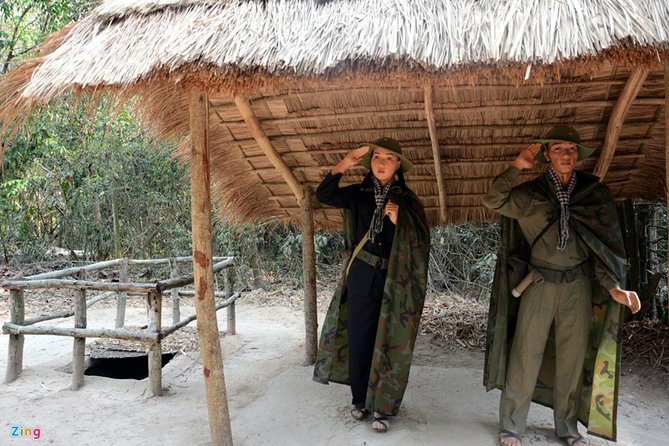
- Two guided tunnel sections instead of a single spot, so you see more of how the system worked
- English-speaking guide + hotel pickup/drop-off from Ho Chi Minh City center to keep logistics simple
- Optional firing range activity with M16 or AK47 available for an extra fee
- Small-group feel (max 15), which helps questions and keeps the tour from getting chaotic
- Bottled water, entrance, and travel insurance included, so you can budget fast
- Morning tours tend to be cooler and less busy, a good match for people who hate crowds
Cu Chi Tunnels in 5 Hours: What You Actually See
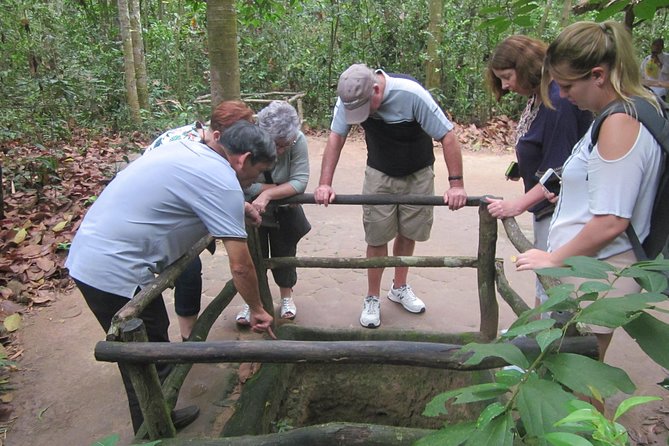
This half-day tour is built around a clear goal: show you two portions of a huge underground system and explain what made it effective. You’re in the tunnels area for about 2 hours at the first stop, then about 1 hour at the second stop, with admission included for both.
Think of it as a guided “systems tour.” You’re not just looking at dug passages. You’re learning how the tunnels were designed for long-term use, with spaces that supported day-to-day living and wartime operations.
That approach is part of the value. A lot of Vietnam War tours stop at big names and dates. Here, you get a more practical view of how the Viet Cong and earlier forces relied on the underground network.
You can also read our reviews of more tours and experiences in Ho Chi Minh City

From Viet Minh to the Free-Fire Zone: Why These Tunnels Mattered
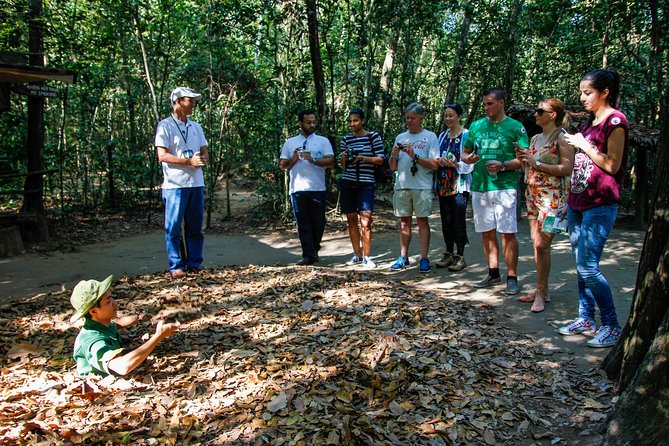
Cu Chi Tunnels weren’t built in one sitting. Construction began in 1948 to support the Viet Minh fighting for independence from the French, and tunneling continued for about 25 years.
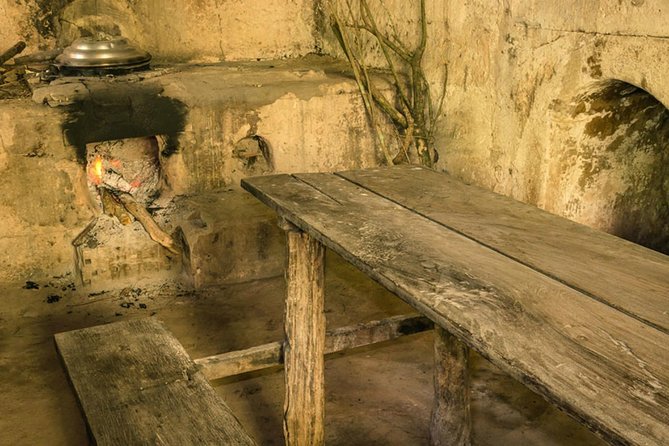
By the time the system was at full strength, it functioned like a subterranean city. The network included living areas, kitchens, storage, weapons-related spaces, field hospitals, and command centers, built to house and support thousands of fighters who lived underground for long stretches.
What makes this part of the tour especially important is the “two-war” framing. The Cu Chi area was later designated as a free-fire zone during the American War, and the tunnels were subjected to heavy attacks and bombings. Then, in 1988, two sections were opened for visitors, which is exactly what you’ll tour.
Stop 1: The 2-Hour Circuit Through a Subterranean City
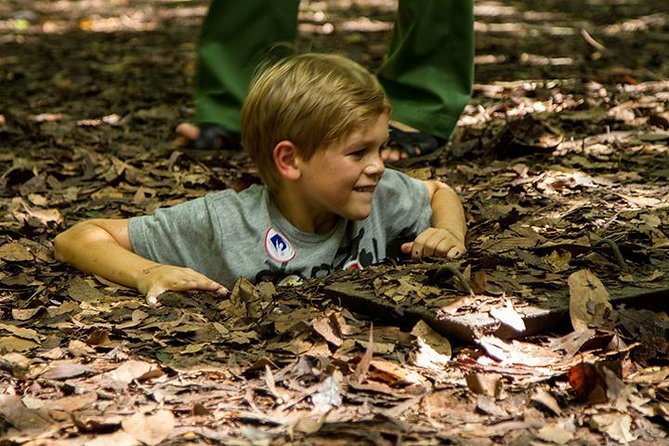
Your first stop is the main tunnel experience: a guided visit that focuses on how the system worked over time. The site you’ll see is described as a network covering around 250 kilometers, with enough scale to support people for years.
During this first stretch, you’ll learn how the tunnels supported life underground, not just movement. The tour explains that the network included spaces meant for living—plus practical facilities like kitchens and storage—and also wartime functions such as field hospitals and command centers.
I like this stop because it gives you the “big picture” before you move on to the second open section. If you’re new to the Vietnam War, this is the chunk where the explanations matter most, since it’s the foundation for everything you’ll notice later.
Stop 2 and the 1988 Open Sections: Moving Parts and Survival Design
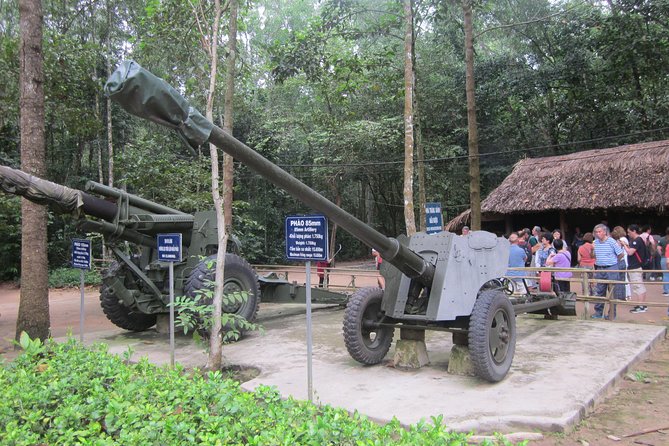
The second tunnel stop is shorter—about 1 hour—but it has a different emphasis. You’re looking at open sections connected to how the tunnels were used and adapted during the later war period.
A key detail here is that parts of the tunnel structures were built with moving parts, designed to be livable for long periods. That design point changes how you interpret what you’re seeing. You’re not just touring a hiding place. You’re seeing a system engineered for staying functional under pressure.
This stop is also where you’ll hear about the shift to the American War era, including the fact that Cu Chi was treated as a free-fire zone. The contrast between “building for independence” and “surviving bombing campaigns” is where the whole site clicks.
The Optional Shooting Range: M16 or AK47 (Extra Fee)
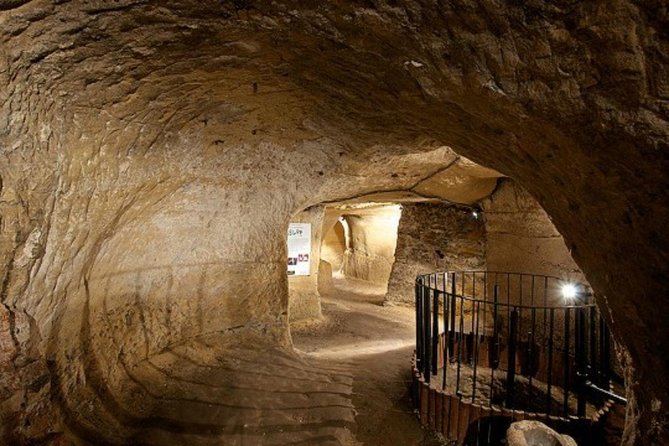
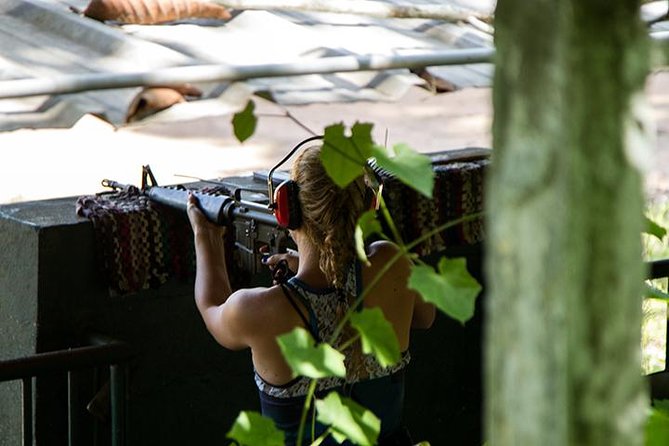
Right near the tunnels area, there’s an optional firing range activity. The tour information says you can fire rounds from a war-era M16 or AK47, but the firing range fees are not included.
I recommend treating this as a separate decision. If you’re interested in how the weapons were discussed or displayed historically, it can add an intense hands-on moment. If you’d rather keep the visit focused on tunnel history, you can skip it and use that time to go over more questions with your guide.
Either way, it’s smart to confirm what the extra cost is on the day, since the base price covers the tunnel experience, guide, and included items—not the range.




Price and Value at $48: What You’re Actually Paying For
At $48 per person, this tour price looks more reasonable once you line up what’s included. You get hotel pickup and drop-off from Ho Chi Minh City center, air-conditioned transport, an English-speaking guide, entrance fees, bottled water, and travel insurance.
That matters in Ho Chi Minh City, where even basic transport can add up fast. If you were to piece together guide + admission + a reliable transfer on your own, you’d likely spend more than the tour price once you add time and hassle.
Also, the group size cap—max 15 travelers—is part of the value. Smaller groups often mean better pacing and more room for questions, especially when you’re covering a complex topic like underground warfare and daily life.
Timing Tips: Morning Tours and the Traffic Tax
The tour runs about 5 hours in total, including time for transfers and both tunnel stops. If you can choose, I’d pick the morning tour. The tour info notes it tends to be cooler and less busy, which makes the day feel more manageable.
Here’s the practical drawback: traffic can spoil the flow. One of the most common practical issues with Ho Chi Minh City day trips is road congestion, and a rushed schedule can reduce how much you get from the second stop.
My advice is simple:
- If you prefer a calm pace, choose a time slot that avoids peak city rush.
- Keep expectations flexible, especially if you’re trying to stack this with dinner plans.
Guides, Pacing, and What Makes a Good Departure
The guide experience can make or break history tours like this. The tour offers English-speaking guides (other languages may be available with a surcharge), and past trips have highlighted how effective clear explanations are when you don’t already know the Vietnam War.
Some guides are praised for strong English and detailed answers, with people mentioning guides named Stephen, Lam, and Anh. The repeating pattern in the good experiences is pacing that feels intentional—enough time to explore the tunnel grounds without sprinting.
One caution: not every departure moves at the same speed. Some people felt hurried and wished they had more time in specific areas. If time matters to you—especially for photography or for asking lots of questions—choose a smaller-group tour (this one caps at 15) and ask your guide about pacing early.
Included Comforts That Help You Focus on the Site
This tour quietly removes several annoyances that often distract from historical sites.
You’ll have bottled water provided, so you don’t have to stop for basics mid-visit. You’ll also have round-trip hotel transport with air-conditioning, which helps if your day already starts with heat and city travel.
Because entrance fees are included, you won’t spend part of the day dealing with ticket lines. And with travel insurance included, it’s easier to feel covered for a half-day outing.
Who This Half-Day Cu Chi Tour Is Best For
This is a strong fit if you:
- Want a meaningful half-day instead of an all-day slog
- Like guided context, not just walking around and reading signs
- Want both historical phases covered: independence-era tunneling and the later free-fire zone period
- Enjoy structured tours that hit two tunnel sections within a single outing
It’s also a good pick if you’re traveling with someone who learns better through explanation. The way the tour ties tunnels to kitchens, field hospitals, living areas, and command centers helps non-specialists understand what underground life required.
If you’re the type who wants maximum time per stop, you may prefer a format that gives more than about an hour or two per section. The half-day structure is the whole point here, so you’re trading length for efficiency.
Should You Book This Cu Chi Tunnels Tour?
I’d book it if you want one of the most talked-about wartime sites in Vietnam, but you want your day kept manageable and your logistics handled. The combination of two tunnel sections, a guide, admission fees, water, and hotel transport makes the $48 price feel like practical value rather than a random tour markup.
You might skip it if you know you hate time pressure or you want ultra-slow exploration. In that case, the fixed half-day structure can feel tight, especially if traffic runs late.
If you do book, a smart strategy is to go into it ready to ask questions. This site becomes far more meaningful when you connect the tunnel design to the role it played—first for independence, then for survival during heavy attacks.
FAQ
How long is the Cu Chi Tunnels half-day tour?
The tour runs for about 5 hours (approx.), with about 2 hours at the first tunnel stop and about 1 hour at the second open section.
What does the $48 price include?
It includes an English-speaking guide, entrance fees, bottled drinking water, hotel pickup and drop-off in Ho Chi Minh City center, air-conditioned transportation, and travel insurance.
Is hotel pickup and drop-off included?
Yes. The tour includes round-trip hotel transport from Ho Chi Minh City center.
Can I shoot at the firing range, and is it included?
There is an optional opportunity to fire rounds from a war-era M16 or AK47 at a nearby firing range, but firing range fees are not included.
How large is the group?
The tour has a maximum of 15 travelers.
Are there discounts for children?
Children age 0-5 are free. Children age 6-10 pay 50% off. The policy also notes that a maximum of 1 child can be accompanied by 1 adult, and the 2nd child will pay the adult price.