REVIEW · HO CHI MINH CITY
Ben Duoc ‘Less-Crowded’ Cu Chi Tunnels Half-Day Tour
Book on Viator →Operated by Joy Journeys · Bookable on Viator
Underground history, minus the crowd crush. This Ben Duoc Cu Chi Tunnels tour is built for a calmer visit, with most of your time spent at the less-busy complex and a hands-on feeling for what wartime life meant.
I like the small group size (max 10) because it makes questions easier and the day feels more human. I also like the guided focus on what matters: booby traps, the tunnels, and the surrounding war story you won’t get from just looking at photos.
One drawback to plan for: the tunnels are tiny. If you hate crouching or you feel closed in, this won’t be your relaxing stroll.
In This Review
- Key things that make this Cu Chi half-day different
- Ben Duoc Tunnels: the “less busy” Cu Chi plan that actually helps
- The 6–7 hour timeline: pickup, drive time, and when you’ll actually be there
- Stop by stop: what happens at each moment of the day
- Saigon pickup + the history orientation you don’t want to skip
- Ben Duoc tunnel complex: where the tour earns its keep
- The return to Ho Chi Minh City: enough time for dinner plans
- Underground war details: booby traps, tank time, and the crawl factor
- Viet Cong food tastings and Hoang Cam kitchen: why the tour includes meals
- Tan Phu Trung Ward propaganda visuals: history with a point of view
- Craft shop stop: worthwhile to look, watch the shopping math
- Price and value: $34 for a small-group Ben Duoc day
- Who this tour suits best (and who should think twice)
- Should you book Joy Journeys Ben Duoc Cu Chi Tunnels?
- FAQ
- What is the duration of the Ben Duoc Cu Chi Tunnels half-day tour?
- Where does the tour pick up and how long is pickup?
- Is there a meeting point if I’m not using hotel pickup?
- How many people are in the group?
- What is included in the price?
- What is not included?
- Do I need to bring anything or get a ticket?
- Is the tour suitable for most people?
- What is the cancellation policy?
- What can I expect to do during the tour?
Key things that make this Cu Chi half-day different
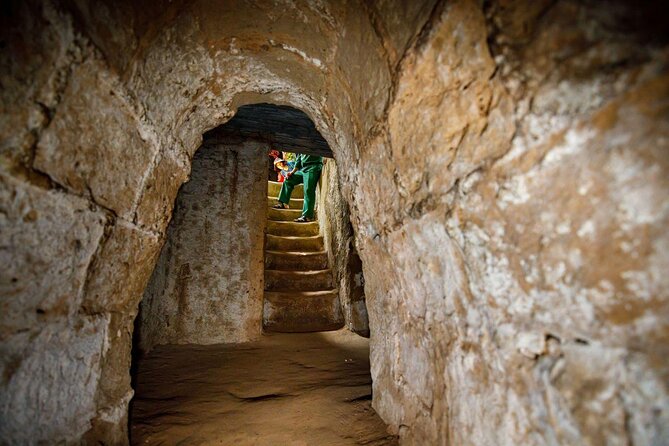
- Ben Duoc is the quiet target: you spend most of the time here, not at the busiest sites
- You get the hands-on moment: crawling in the tunnels is the centerpiece
- War details, not just scenery: booby traps, an ex-US Army tank you can touch, and interior examples
- Local food tasting is part of the route: tapioca linked to Viet Cong foodways
- Context beyond the tunnels: propaganda visuals and an underground Hoang Cam kitchen stop round it out
Ben Duoc Tunnels: the “less busy” Cu Chi plan that actually helps
Cu Chi can turn into a crowd magnet. So I like that this tour is designed around Ben Duoc, which is specifically described as less-crowded and more authentic than the usual high-traffic option. When you’re squeezed between tour groups, it’s hard to take anything in. Here, the pacing gives you a better chance to understand what you’re seeing.
The other big win is the structure. Instead of bouncing around too fast, you spend the majority of your visit at the Ben Duoc complex. That means you can slow down where it counts: the cramped tunnel spaces, the explanations along the way, and the exhibit-style details like booby traps and the ex-US tank.
Guides also matter. Based on what people say, the experience can be driven by strong personalities and clear storytelling. Names that come up include Leo, Ken, Safa, and Tommy—each described as funny and solid on Vietnam history. That blend of humor and context can make a heavy place feel more understandable without turning it into a theme park.
You can also read our reviews of more tours and experiences in Ho Chi Minh City

The 6–7 hour timeline: pickup, drive time, and when you’ll actually be there
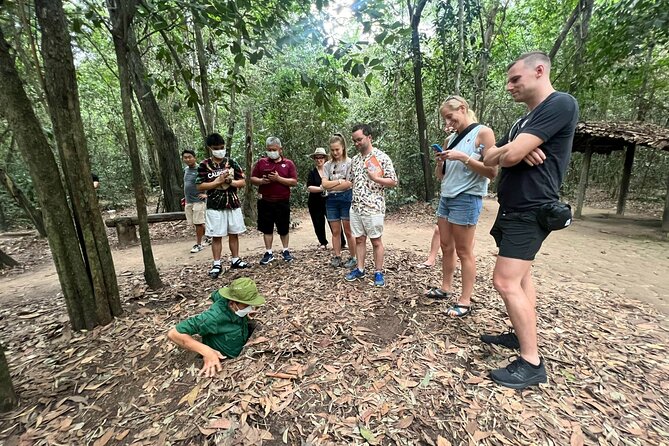
This is billed as a half-day, but real time depends on where you’re staying. Pickup starts from District 1, 3, and 4, and the transfer to the Cu Chi area typically takes about 30 minutes from your hotel before the longer outbound drive. Then, plan for roughly a 2-hour drive to reach the tunnels complex from the city side.
In practical terms, you’re not spending every minute underground. The tour flow is:
- Get picked up and head out of central Ho Chi Minh City
- Reach the Cu Chi area and start with an orientation stop for history context
- Spend around 2.5 hours at the Ben Duoc tunnel complex
- Return to the city and get dropped back near your lodging (or you can request a near-airport drop-off if you tell the provider ahead of time)
I like this timing because it doesn’t pretend travel time doesn’t matter. It also avoids the trap of “see everything” bus tours that barely let you form a memory. The day feels long enough to learn something, but short enough that you’re not stuck committing a whole day to one site.
Stop by stop: what happens at each moment of the day
Saigon pickup + the history orientation you don’t want to skip
You meet at Notre Dame Cathedral of Saigon (Quận 1) as the starting point. If you’re staying in Districts 1, 3, or 4, you’ll likely get picked up at your accommodation, and that part is usually about half an hour.
The first time block focuses on getting your bearings. Before you crawl into the earth, you need the why. This early stop gives you the foundation so the later visuals make sense instead of feeling random. It’s also where a good guide can set expectations—what you’ll see, what you’re meant to notice, and what parts are meant to be felt rather than just photographed.
Ben Duoc tunnel complex: where the tour earns its keep
This is the main event. You spend around 2.5 hours at the Ben Duoc tunnel complex, and admission is included.
Here’s what to expect, and why it matters:
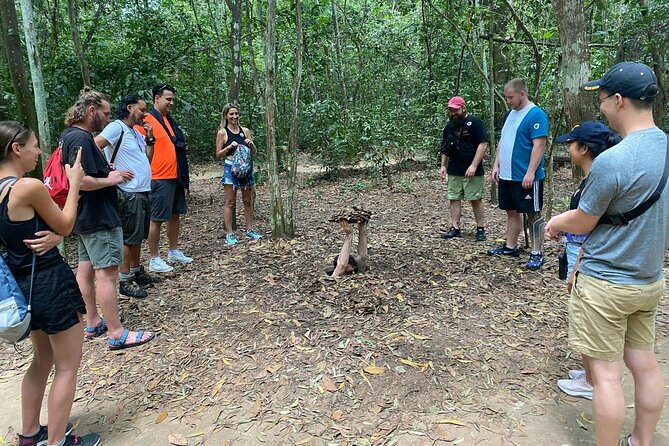
- Booby traps: seeing the devices in context helps you understand how the tunnel system was engineered for survival and resistance.
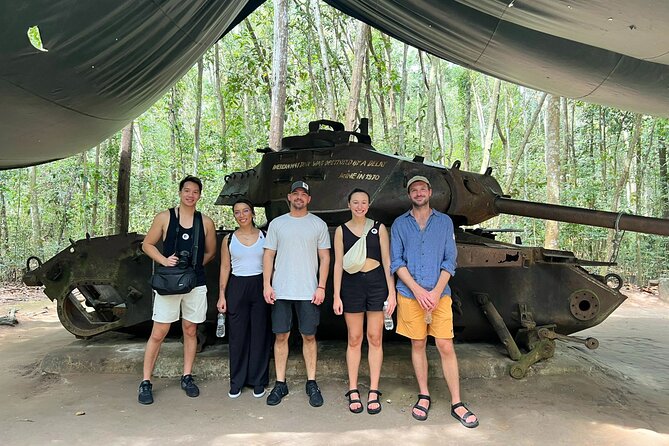
- An ex-US Army tank you can touch: people don’t just look at it; you’re invited to interact. That small “touch” element turns the exhibit into something more real.
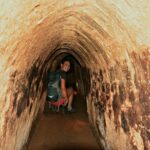
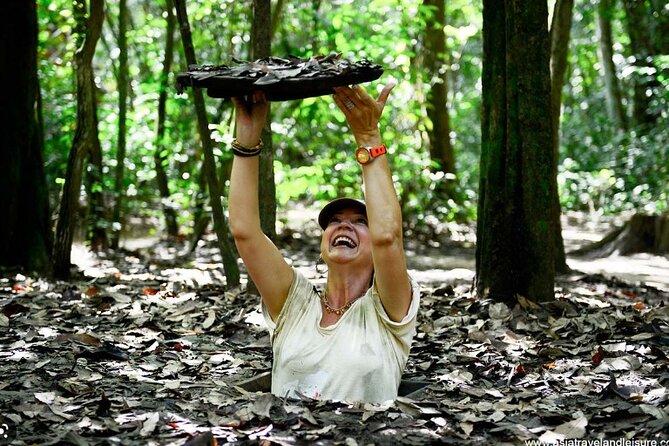
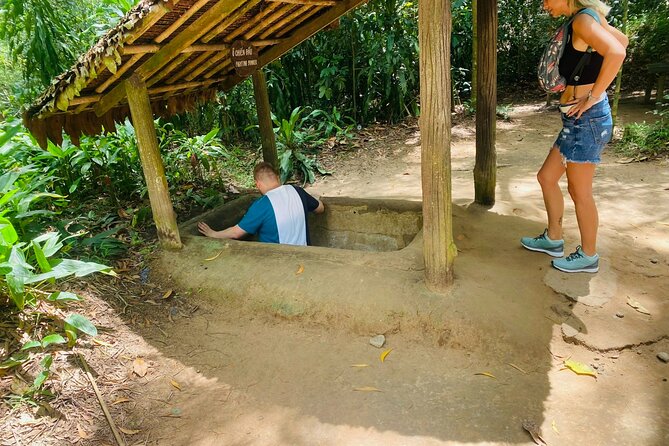
- Crawling inside the tunnels: this is the highlight. Several people point out how small the space is—one note mentioned a roughly 50m stretch that still felt like a lot once you’re bent over and moving slowly.
A quick practical note: tunnels are small by design. If you’re tall, you’ll be crouching or ducking. If you’re short, you’ll still feel the narrowness because you’re not walking upright in any comfort zone. Either way, treat it like a workout for your neck and knees, not a casual museum stroll.



The return to Ho Chi Minh City: enough time for dinner plans
After Ben Duoc, you head back. The last segment is about 2 hours, and you finish back at your lodging area (and you can request a drop near the airport if you plan ahead).
This ending matters. Cu Chi days can leave you mentally drained. A smooth return keeps the day from turning into late-night stress.
Underground war details: booby traps, tank time, and the crawl factor
The most praised part is the hands-on element. The tour doesn’t sell the tunnels as a quick photo stop. It frames crawling into the tunnel system as the moment that actually changes how you understand the place.
Here’s what you should mentally prepare for:
- You’ll be low and cramped. This is not a “walk through.” It’s a “move through” experience.
- Slow is the point. If you rush, you’ll miss the explanations and the feel of the space.
- It’s emotional, even when you’re trying to stay practical. You’re seeing how people lived, fought, and adapted underground. That humbles you, even if you came in expecting history trivia.
Booby traps are part of that emotional education. Seeing how they were used in the context of the tunnels helps you understand that the underground network wasn’t just shelter. It was also strategy—hard, dangerous, and built to work under pressure.
And then there’s the ex-US tank you can touch. That’s a rare break from purely visual exhibits. It turns the war into a tangible object, which helps many people make the leap from “war stories” to “war reality.”
Viet Cong food tastings and Hoang Cam kitchen: why the tour includes meals
Some Cu Chi stops focus only on tunnels and war artifacts. This tour adds foodway context, and I appreciate that.
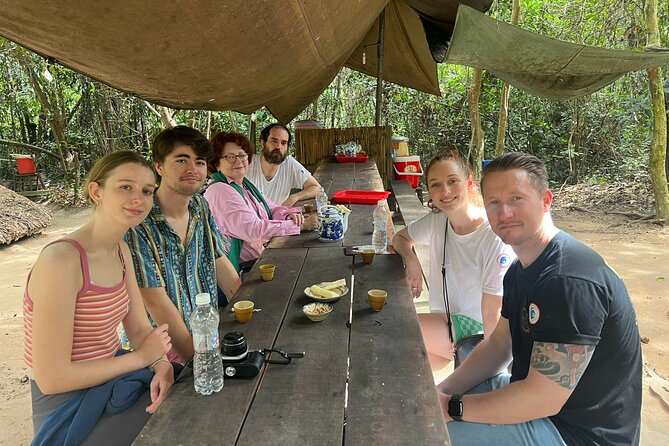
You’ll have a chance to taste tapioca near the tunnels. The point isn’t to make it a fun food tour. It’s to show what was locally grown and used—how daily survival and resistance overlapped. Taste-based learning lands differently than reading a sign.
There’s also an underground Hoang Cam kitchen stop. That’s the kind of detail that makes the underground system feel less like an exhibit and more like a functioning community. It brings in the idea that people weren’t just hiding; they were eating, cooking, and keeping routines going while living in cramped conditions.
These food elements do add value because they remind you that war affected every basic human need. Even if you’re not a food person, the tasting is more than a snack.
Tan Phu Trung Ward propaganda visuals: history with a point of view
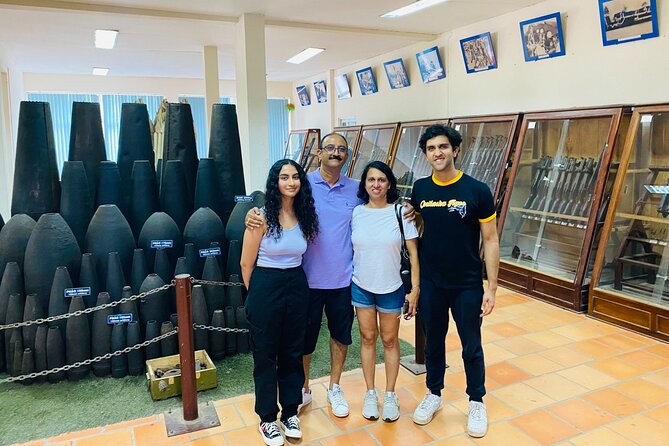
The tour includes time to see propaganda of Viet Cong soldiers in Tan Phu Trung Ward. I’m glad this is included, because propaganda is part of how conflicts shape public belief and identity. It’s also part of why the tunnel story isn’t only military. It’s political and psychological too.
The key is how it’s explained. A strong guide helps you read these visuals with context—who made them, why they were used, and what they tried to communicate. In this tour, the guide role seems to be a big part of why people rate the experience so highly, especially when humor and clear explanations show up together.
Craft shop stop: worthwhile to look, watch the shopping math
One route feature is a stop at a craft shop where handmade items are made by handicapped people affected by the war. I find this a meaningful break in the day. It shifts the focus from wartime strategy to long-term impact—how communities keep creating livelihoods after conflict.
The trade-off is price. One note points out that the items can feel expensive compared with what you might find at other Cu Chi-related spots. So here’s my practical advice: enjoy the visit for the human story, and treat purchasing like any souvenir decision—buy only if you’d pay that price even if it were from a regular store.
Price and value: $34 for a small-group Ben Duoc day
At $34 per person, this tour is priced like real value in a city full of mid-priced excursions. What makes it feel fair is the combination of:
- Small group size (max 10)
- Pickup from central districts (District 1, 3, 4)
- Air-conditioned vehicle
- Bottled water (two bottles per guest)
- All fees and taxes included
- Admission included for the Ben Duoc tunnel complex
Also, you’re not paying extra just to get into the main site. That matters because entrance fees can add up across multiple stops.
The main “cost” isn’t money. It’s time and physical comfort. You’re trading an easy day for a cramped, emotional one. If you’re okay with that, $34 can feel like a bargain because the day is designed for meaning, not just check-the-box sightseeing.
Who this tour suits best (and who should think twice)
This is a great match if you:
- want a Cu Chi experience that stays calmer than the busiest tunnel areas
- like history explained by a guide (people mention guides like Leo, Ken, Safa, and Tommy)
- can handle small spaces and a hands-on crawl
- want more than tunnels—food tasting, propaganda visuals, and the Hoang Cam kitchen add layers
Think twice if you:
- feel strongly uncomfortable in tight, low spaces
- hate activities that involve crouching and moving slowly through narrow tunnel sections
- prefer ultra-flexible days with no fixed schedule
Even then, you might still get value from the parts above ground and the exhibits. But the crawling element is the centerpiece, and it’s part of why this tour gets high marks.
Should you book Joy Journeys Ben Duoc Cu Chi Tunnels?
I’d book this if you want Cu Chi with less chaos and more actual time inside the Ben Duoc area. The small-group limit helps. The guide-driven focus helps even more. And the hands-on tunnel crawl is the kind of experience that changes how the story sticks in your head.
If you’re sensitive to cramped spaces or you’re hoping for a gentle, leisurely outing, consider another option. Otherwise, plan on a serious, informative day that mixes war history with a few human details—like tapioca tastings and the underground kitchen—that make the tunnels feel lived-in, not just displayed.
FAQ
What is the duration of the Ben Duoc Cu Chi Tunnels half-day tour?
The tour is listed as about 6 to 7 hours total.
Where does the tour pick up and how long is pickup?
Pickup is offered from accommodations in District 1, District 3, and District 4, and pickup typically takes about 30 minutes.
Is there a meeting point if I’m not using hotel pickup?
Yes. The start meeting point is Notre Dame Cathedral of Saigon in Quận 1. The tour ends back at the meeting point.
How many people are in the group?
The maximum group size is 10 travelers.
What is included in the price?
Included items are an air-conditioned vehicle, bottled water (two bottles per guest), and all fees and taxes. Admission for the Ben Duoc tunnel complex is included.
What is not included?
Tips/gratitude and anything not mentioned as included are not covered.
Do I need to bring anything or get a ticket?
A mobile ticket is listed as part of the experience.
Is the tour suitable for most people?
It’s listed as most travelers can participate, and service animals are allowed.
What is the cancellation policy?
Free cancellation is available up to 24 hours in advance for a full refund. Poor weather can also lead to a different date or a full refund.
What can I expect to do during the tour?
You’ll spend most of your time at Ben Duoc Tunnels, see war-related features like booby traps, explore underground tunnels (including a crawl), touch an ex-US Army tank, taste tapioca, and also visit a propaganda stop and an underground Hoang Cam kitchen.