REVIEW · HO CHI MINH CITY
Cu Chi Tunnels Guided Tour: Vietnam War History Half-Day
Book on GetYourGuide →Operated by SST Travel · Bookable on GetYourGuide
Cu Chi hits different the moment you go underground. This half-day tour from Ho Chi Minh City takes you to the Cu Chi Tunnels with comfortable AC pickup and drop-off, plus an English-speaking guide who turns the Vietnam War into something you can picture.
I love the clear structure of the day and the fact that you’re not stuck waiting around in a bus for hours. I also love the chance to try a tunnel crawl in an original section, then see the weapons, booby traps, and daily-life setups that made the Viet Cong strategy work. One consideration: the tunnels are tight and there are steps, so this is not the right fit for anyone with claustrophobia or who is pregnant.
In This Review
- Key things I’d watch for before booking
- From Ho Chi Minh City to Cu Chi War Ground in Half a Day
- The ride where the guide sets the stage
- Cu Chi Tunnels: what you’ll actually see and why it matters
- The optional tunnel crawl: the moment reality gets physical
- Weapon displays, trap explanations, and the fine line between history and shock
- The rest stops that keep the day humane (and the art break)
- Optional add-ons: workshop stops and shooting experiences
- Price and value: why about $16 can still make sense
- Who this tour fits best (and who should skip it)
- Practical tips: what to bring and how to make it comfortable
- Should you book the Cu Chi Tunnels half-day tour?
Key things I’d watch for before booking
- Small vs big group options let you pick the vibe and the value.
- English-speaking guides can make the war story personal, not just dates and maps.
- Traps, hidden doors, bunkers, kitchens, and hospitals show how survival worked underground.
- Optional tunnel crawling is the hands-on moment, with real physical effort.
- Tea, tapioca, snack, and bottled water keep you comfortable between stops.
- Restroom break + lacquer paintings gives you a quick cultural detour without forcing purchases.
From Ho Chi Minh City to Cu Chi War Ground in Half a Day
Ho Chi Minh City can feel like a nonstop motion machine. This tour gives you a structured break from the noise and trades it for wartime reality, fast. You leave the city by AC bus/van/limousine (the exact vehicle depends on your option), then get historical context before you even reach the tunnels.
Two timing options make this tour practical. The morning slot runs about 7:30 AM–2:30 PM, and the afternoon slot runs about 12:30 PM–7:30 PM. If you’re trying to fit in other sights (like the War Remnants Museum), morning is often the easiest, because you’ll have the rest of the day free. Afternoon works well if you need a slower start or you’re squeezing in activities before you go.
The big win here is that the tour is built around getting you to Cu Chi without turning your day into a logistical puzzle. You get hotel pickup and drop-off, and you’re not left figuring out transport, ticketing, or the “what am I looking at?” part.
You can also read our reviews of more guided tours in Ho Chi Minh City



The ride where the guide sets the stage
The bus ride isn’t just time to stare out the window. Your guide uses the drive to explain how the Cu Chi region became a symbol of resistance and why the tunnel network mattered. It helps a lot when you arrive, because you’ll recognize what you’re seeing instead of treating the site like a random maze.
On the ride, you’ll also get small comforts. The tour includes bottled water and a snack, plus tapioca and hot tea. In Vietnam’s heat, that hot tea part feels like someone remembered you’re human.
One practical note: transport size can matter. I’ve seen comments about the bus having limited space for tall people. If you’re over-tall, pick a seat where your knees aren’t banging and try to keep your bag in a way that doesn’t turn the aisle into a storage area.
Cu Chi Tunnels: what you’ll actually see and why it matters
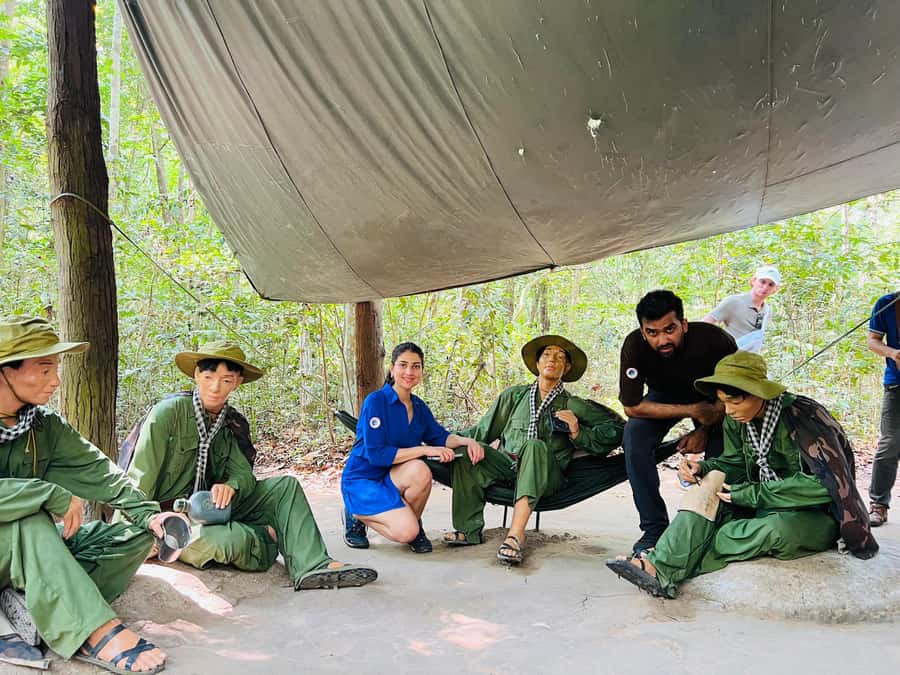
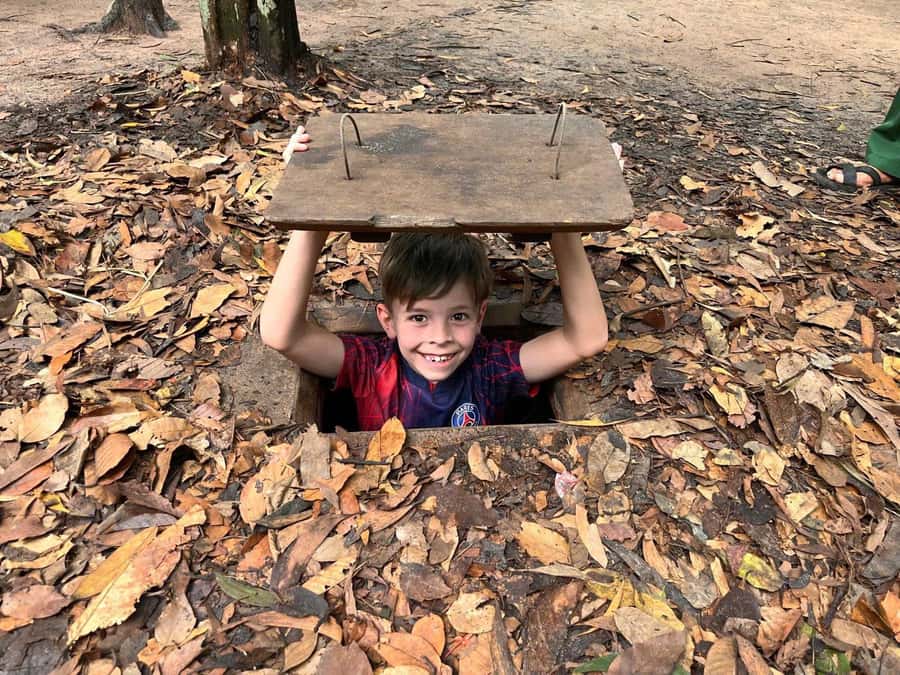
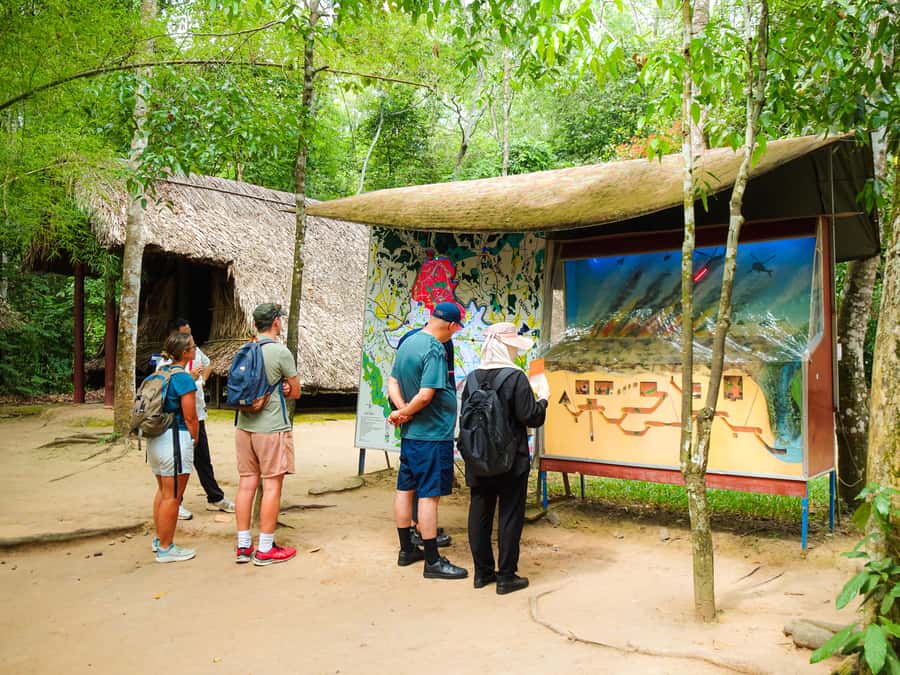
This is the heart of the day. You visit a preserved section of the vast Cu Chi tunnel network that was once used by Viet Cong fighters. What makes the site powerful is how it connects strategy to daily life. The tunnels weren’t built for sightseeing. They were built for movement, hiding, and survival.
Here’s what you’ll typically encounter during the walk-through and exhibits:
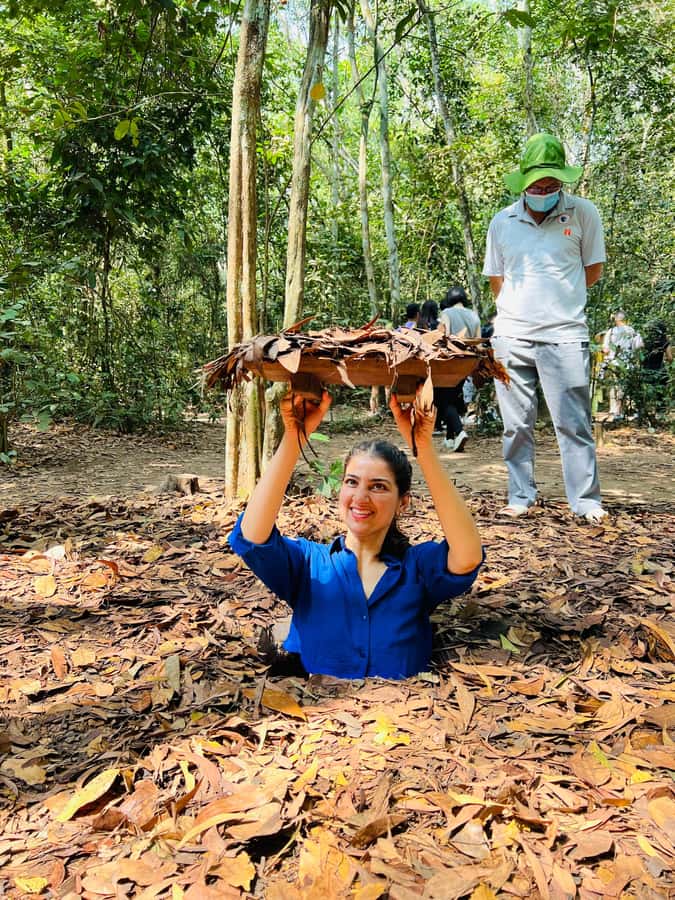
- Trapdoors and hiding points that show how people could disappear fast.
- Underground bunkers designed to protect from attacks.
- Improvised kitchens and hospital areas that point to how life had to keep going even while hiding.
- Displays of weapons and booby traps that explain how the landscape itself became part of the defense.
When you connect those elements, the tour stops being about one dramatic underground moment and becomes about the full system. Your guide explains how the tunnels worked as an ecosystem: concealment, quick movement, and constant adaptation.
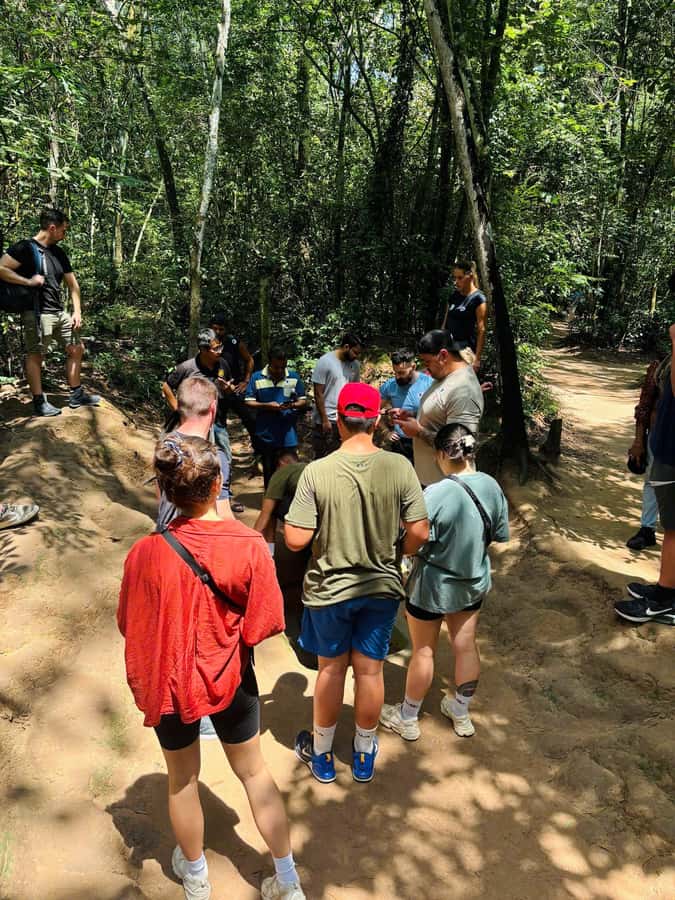
And the guide is usually the difference between a confusing visit and a clear one. Names that have shown up in past groups include Khoa, Lenny, Bao, Robert, Rick, Khang, Jonny, Sam, Kyle, Haley, Truong, and others. If your guide is a strong storyteller, you’ll get war context plus small human details, like what it might have meant to live with cramped spaces and sudden danger.
The optional tunnel crawl: the moment reality gets physical
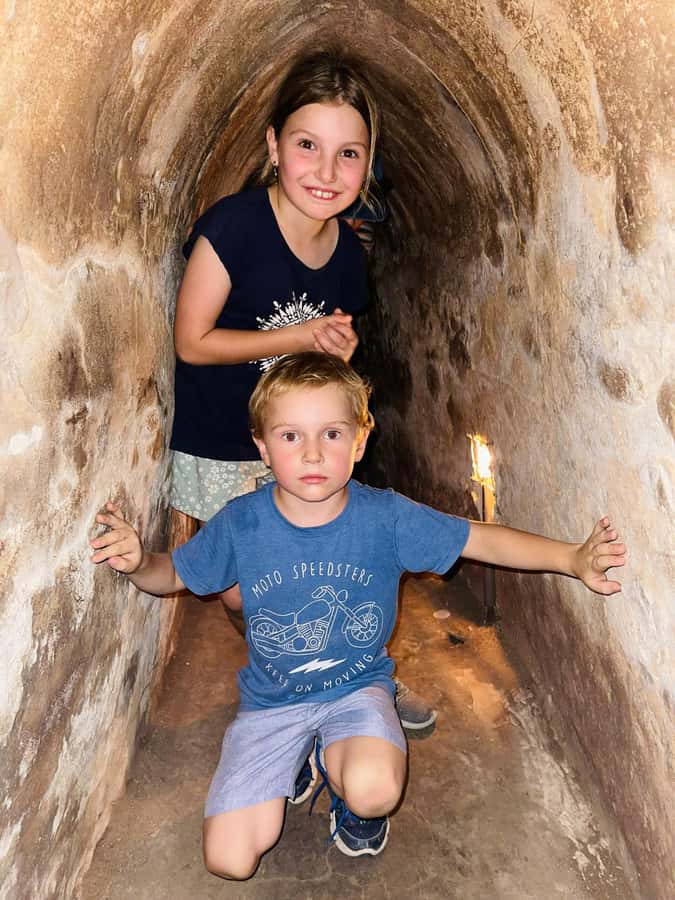
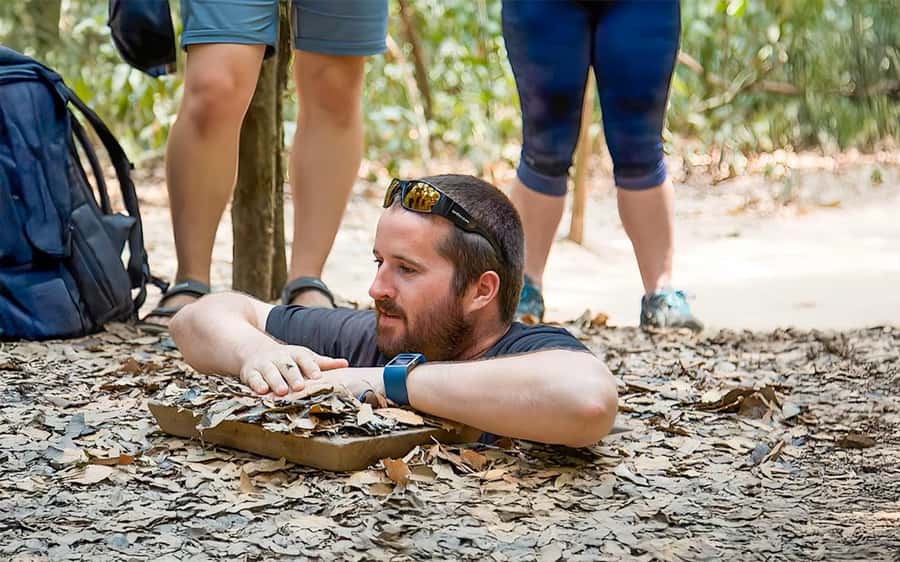
The most talked-about part for a reason: you can crawl through an original tunnel section yourself. It’s labeled optional, and it’s not meant to be an endurance test. Still, it’s not a walk-through either.
What to expect:
- You’ll likely deal with tight spaces and an up-and-down feel due to steps.
- The tunnel is usually well lit, but the real issue isn’t darkness. It’s space and body position.
- If you want the full sense of what it was like, you’ll need to go slowly and follow the guide’s safety cues.
This is where you should be honest with yourself. The tour explicitly notes it’s not suitable for people with claustrophobia. Even if you can tolerate small spaces, consider that your breathing, comfort, and head/shoulder positioning will decide how enjoyable it is.
If you’re slightly nervous but not panicking, I’d still recommend trying with support from the guide. One person with claustrophobia reportedly managed a tunnel section around 10 meters, describing it as manageable because it was well lit. Your experience could differ, so don’t treat that as a guarantee. Treat it as a signal that the route may be short, but it’s still cramped.
Weapon displays, trap explanations, and the fine line between history and shock
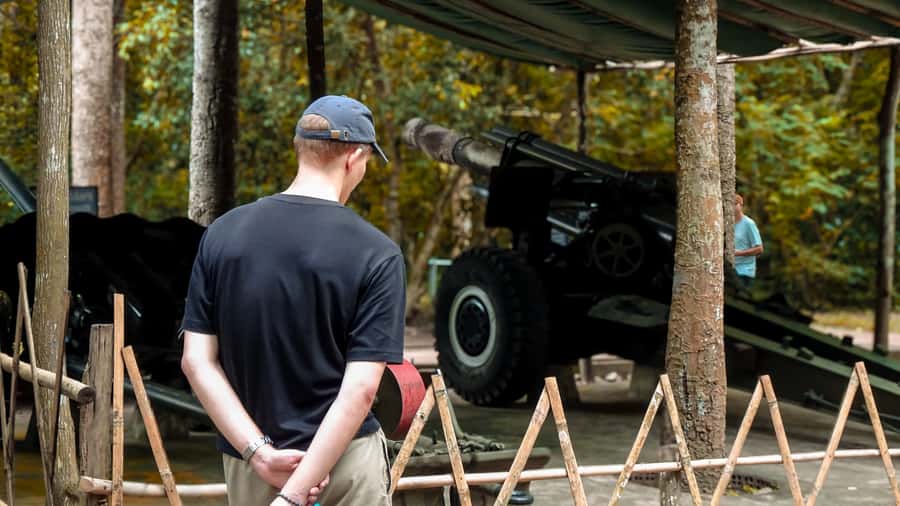
Cu Chi includes exhibits with weapons and booby traps, and your guide explains what you’re seeing and how it fits the tactics of the time. This is valuable because it prevents the site from becoming only dramatic. You learn the logic behind the devices and the setting where they were used.
Still, I’ll say this plainly: the subject matter can be intense. Some people come looking for action-style war history. That’s not what this site is really about. It’s about engineering, desperation, and survival—often told in a way that tries to be factual and respectful.
If you’re sensitive to wartime imagery, take your pace. Don’t feel pressured to rush through exhibits just to “finish.” Your guide can also help you interpret what matters most.
You can also read our reviews of more historical tours in Ho Chi Minh City





The rest stops that keep the day humane (and the art break)
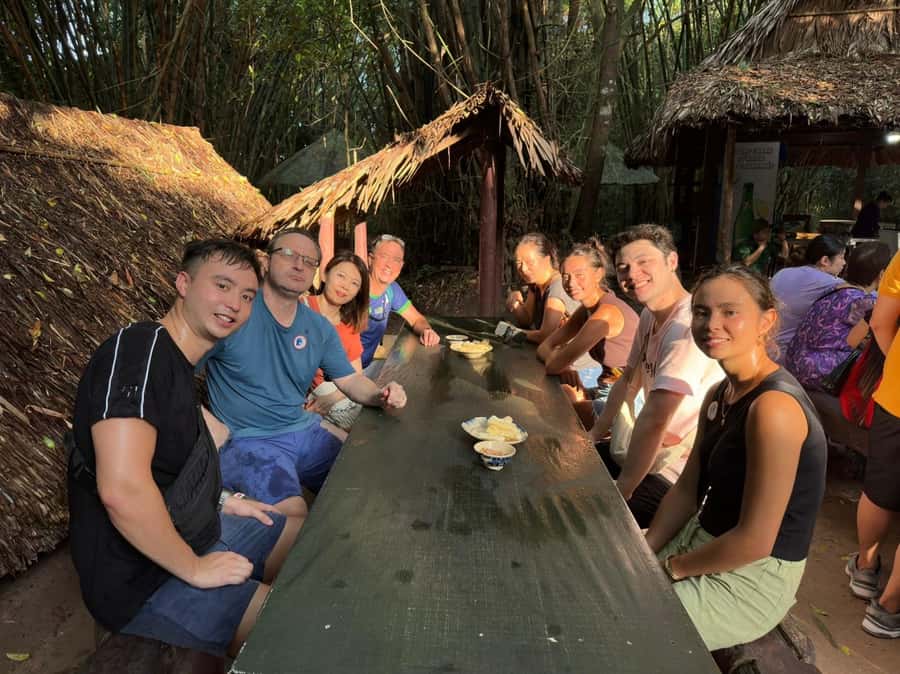
Half-day tours can feel rushed. This one tries to stay human in two ways: food and quick cultural detours.
First, there’s a restroom break where you can also visit an art exhibition featuring traditional lacquer paintings. Purchasing is not mandatory, so you can just look and move on. If you’re a fan of Vietnamese crafts, this short stop adds texture to the day and reminds you that the country wasn’t only war, even when the tunnel story dominates the schedule.
Second, the tour includes light refreshments to keep energy up. You’ll have hot tea and tapioca plus a snack, and you get wet tissue as well. It’s not a fancy lunch day. It’s a comfort-preserving day.
Optional add-ons: workshop stops and shooting experiences
Some versions of the experience include extra stops beyond the core tunnel visit. In past groups, there’s been mention of stops at local workshops making mother of pearl artwork, including context about employing locals who are victims of agent orange. If that’s on your route, it can be meaningful, because it connects the war era to long-term impacts and the work people do afterward.
Another optional add-on that’s come up is a shooting range experience with an AK47, described as an additional thrill stop. The guidance provided in those cases is that you’d need cash in Vietnamese dong (for example, one group mentioned planning around 600,000 VND for at least 10 bullets). Because these add-ons aren’t part of the basic included items, treat them as optional, and expect extra spending if you choose them.
If you want to keep costs predictable, ask your guide on the day what extras are available before you commit.
Price and value: why about $16 can still make sense
At $16 per person, this tour is priced like a budget-friendly way into one of the most famous Vietnam War sites near Ho Chi Minh City. What you’re getting for that price is more than just a ticket. You’re getting:
- Entrance to Cu Chi
- An English-speaking guide
- Round-trip transportation from central HCMC
- Snacks/tea and water
- Basic comfort items like wet tissue
Lunch is not included, so you should plan to eat before or after. Also, there’s an occasional holiday surcharge of 100,000 VND on specific travel dates (for example, 01–03/02/2025, 29/04–02/05/2025, 02/09/2025, and 31/12–01/01/2026). If your trip falls on one of those windows, you’ll want to budget the extra on-site.
Even with that, the tour can still represent strong value if you want history with minimal hassle. You pay for convenience: someone handles the transport and interpretation so you can focus on the site.
Who this tour fits best (and who should skip it)
This is a strong pick if you:
- Want a half-day Vietnam War history experience without committing a full day.
- Prefer a guide who explains traps, tactics, and daily underground life rather than reading signage alone.
- Enjoy interactive moments, especially the tunnel crawl option.
- Are combining this visit with other Ho Chi Minh City sites later the same day.
It’s a weaker fit if you:
- Have claustrophobia. The tour says it’s not suitable.
- Are pregnant. The tour says it’s not suitable.
- Want long, relaxed pacing or a full lunch break. This is built for time efficiency, not lingering.
If you’re unsure about the tunnel crawl, keep your expectations realistic. You can still learn a lot even if you choose not to crawl. The exhibits and guide explanation do most of the heavy lifting.
Practical tips: what to bring and how to make it comfortable
Here’s your pre-trip shopping list, based on what the tour asks for:
- Comfortable shoes (you’ll be stepping on uneven surfaces and stairs)
- Hat (sun can be brutal before and after your tunnel time)
- Camera (you’ll want photos above ground, and possibly from the tunnel area if allowed)
- Water (you get bottled water, but bringing extra is smart)
- Comfortable clothes (you’ll likely want breathable layers)
Also note the on-site rules: no smoking.
A small travel strategy that helps: wear shoes you can move in confidently. When you’re dealing with steps and tight passages, confidence beats fashion. Your feet will thank you.
Finally, be on time. Pickup times are approximate, and the guide may arrive a bit early or late. But if you’re more than 10 minutes late, your booking is listed as canceled with no refund. In practical terms: stand by early, not on coffee time.
Should you book the Cu Chi Tunnels half-day tour?
If you want a fast, guided way to understand Cu Chi beyond photos, I’d book it. It has the key ingredients most people need: AC transport, hotel pickup/drop-off, an English-speaking guide, meaningful stops at the tunnels and exhibits, and just enough food support to keep the day from feeling like a suffer-fest.
You should think twice if you can’t handle small spaces. This tour explicitly doesn’t suit claustrophobia, and the tunnel crawl is where that risk shows up fast.
If you’re traveling with limited time in Ho Chi Minh City, this is one of the best ways to spend a half-day: you’ll come away with a clearer mental map of how the tunnels shaped the war, and you’ll be ready to connect what you learned here with the museums and memorials back in the city.