REVIEW · HO CHI MINH CITY
Cu Chi Tunnels Guided Tour – Explore Vietnam War History
Book on Viator →Operated by HAPPY PLUS TRAVEL · Bookable on Viator
Tunnels teach fast what people survived. This Cu Chi Tunnels guided tour from Ho Chi Minh City turns Vietnam War history into a readable, human story, with a documentary intro and a warm English-speaking guide leading you through underground life and hard choices. I especially like the free pickup/drop-off from the Ben Thanh area and the way guides (from Mr Le to James to Jacky Hieu) explain what you’re seeing in plain, practical terms.
The day runs about 6 to 7 hours, and it focuses heavily on conflict details—maze-like tunnels, trap doors, and dangerous traps—so it can feel intense if you’re not up for darker history.
In This Review
- Key highlights (what makes this tour worth your time)
- Cu Chi in One Long Day: Why the Timing Works
- Pickup From Ben Thanh: The Simple Logistics That Save Energy
- Getting Oriented With Documentary Film and Guide Stories
- Cu Chi Tunnels Living Areas: Kitchens, Bedrooms, and Wartime Work
- Trap Doors and Underground Dangers: What You’ll Really Notice
- Rice Paper Workshop and War-Time Food: Tea and Tapioca
- Price and Value: Why $23 Can Make Sense Here
- Private Tour Pacing: How It Changes the Experience
- What’s Optional and What You Should Budget For
- Who This Tour Suits Best (and Who Might Want to Rethink It)
- Should You Book This Cu Chi Tunnels Guided Tour?
- FAQ
- Where does the tour start and end?
- How long is the Cu Chi Tunnels guided tour?
- Is hotel pickup included?
- What’s included with the ticket price?
- Is it a private tour?
- Is the documentary film included?
- Is there anything optional or extra you may pay for?
- Can I cancel and get a full refund?
Key highlights (what makes this tour worth your time)
- Hotel pickup with AC comfort: Free pickup and drop-off in central Saigon for a smooth start.
- Film + on-site explanations: You watch a documentary film, then learn on the ground as you go.
- Underground life, not just bullets: Kitchens, bedrooms, field hospitals, and command centers are part of the walkthrough.
- Trap doors and handmade weapons: You see how the tunnel layout worked and what made it risky.
- Rice paper workshop and guerrilla tea: Tapioca and tea are served, tied to wartime survival food.
- Private group feel: It’s set up so only your group participates, which helps questions and pacing.
Cu Chi in One Long Day: Why the Timing Works
This is a classic Ho Chi Minh City day trip. You start from Ben Thanh Market (District 1), then head about 60 km to Cu Chi—usually around 1.5 hours each way depending on traffic. Expect a full half-day with a drive portion, because the point here is getting you to the site and back without hassles.
I like that it’s built around a simple rhythm: travel in comfort, learn, walk the site, then return. The tour also includes entrance fee and basic refreshment support (bottled water, plus snack time), so you’re not juggling extra stops or ticket counters.
Also, you’re not crammed into a crowded bus-and-pray setup. This experience is described as private, meaning only your group goes together. Even if the broader region is busy, your time inside the tour is controlled.
You can also read our reviews of more guided tours in Ho Chi Minh City


Pickup From Ben Thanh: The Simple Logistics That Save Energy
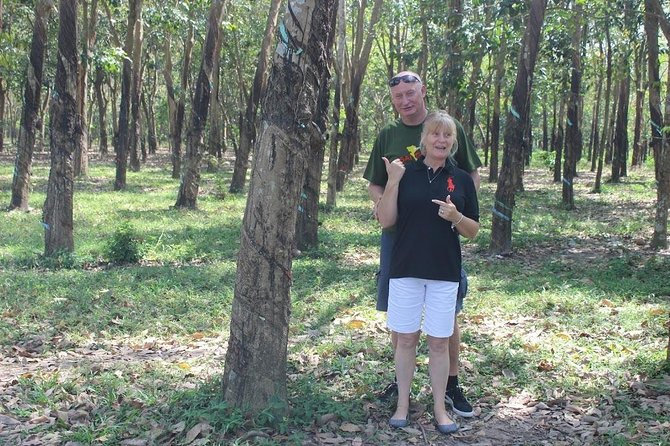
If you’ve ever lost an hour trying to “find the meeting point,” you’ll appreciate how straightforward this one is. Pickup is included and described as free for people staying in central Saigon, and you return to the meeting point at the end.
It’s also an AC car for the drive. That matters in Vietnam’s heat, especially when you’ll spend time outdoors before and after underground exhibits.
One more small plus: the tour uses a mobile ticket. You’re not stuck hunting paper, and it keeps the start of the day faster and calmer.
Getting Oriented With Documentary Film and Guide Stories
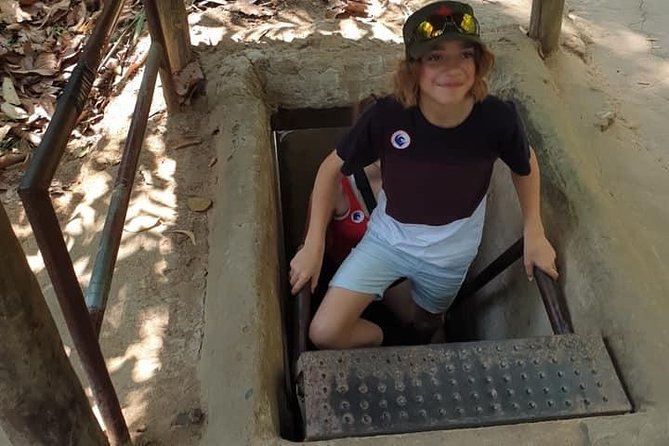
Before you even get deep into the tunnels, the tour includes a documentary film. That’s not just filler. It gives you a framework so the physical spaces make sense as you move through them.
Then your guide takes over. The standout theme in the experience is the way guides connect facts to what you’re seeing. Names that come up strongly include Mr Le, James, and Jacky Hieu (also written as Jackie Hieu). In different groups, they’re praised for being warm, friendly, and helpful, and for explaining historical facts during the drive and on-site.
What I’d watch for in your own planning is your preference for story style. If you like history explained with personality—practical details, context on Ho Chi Minh and the wider Vietnam story—you’ll likely enjoy the pacing. If you prefer quiet self-guided viewing, a guided format may feel a bit more talk-heavy than you want.
Cu Chi Tunnels Living Areas: Kitchens, Bedrooms, and Wartime Work

This tour doesn’t reduce Cu Chi to a single “tunnel walkthrough.” You move through constructed living areas showing daily function during the war. The stops you’re taken through include:
- Kitchens
- Bedrooms
- Storage areas
- Weapons factories
- Field hospitals
- Command centers
I like this approach because it answers the question you might be asking: how did people actually operate down there? Seeing command spaces and medical areas alongside everyday rooms helps you understand that the tunnels weren’t only for hiding. They supported living, managing operations, and treating injuries.
It also makes the underground town idea easier to grasp. The tour describes you discovering an underground town, where the tunnel network is presented as a working system rather than a random maze.
Trap Doors and Underground Dangers: What You’ll Really Notice
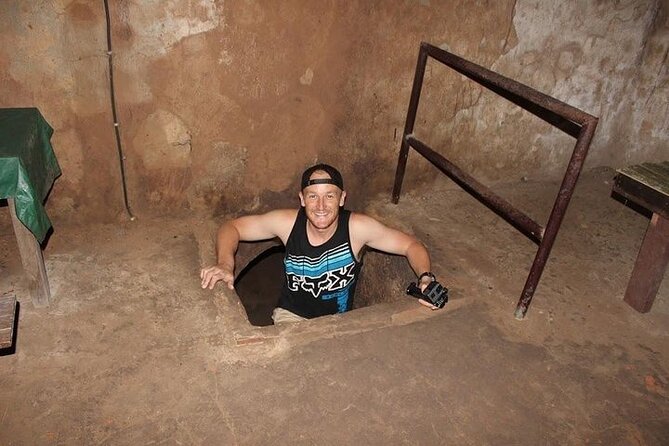
Once you’re inside the tunnel set-up, the tour focuses on the maze-like tunnel network, including hidden trap doors and other dangerous traps. You also learn about handmade weapons and traps, which is where the experience shifts from “museum history” to “survival logic.”
This is the part that can feel the most intense, mainly because the tour is openly about defensive design and risk. It’s not just that traps existed—it’s that the tunnel layout was meant to create fear, confusion, and delay.
Practical thought: if you’re sensitive to claustrophobic spaces or you prefer a softer pace, plan your expectations. The tour content clearly emphasizes danger elements, and it’s worth deciding in advance if that tone is okay for you.
You can also read our reviews of more historical tours in Ho Chi Minh City





Rice Paper Workshop and War-Time Food: Tea and Tapioca
Not all Cu Chi tours stop at weapons and tunnels. This one adds a rice paper workshop stop, which is a smart counterweight. It pulls you toward something hands-on and cultural instead of purely wartime mechanics.
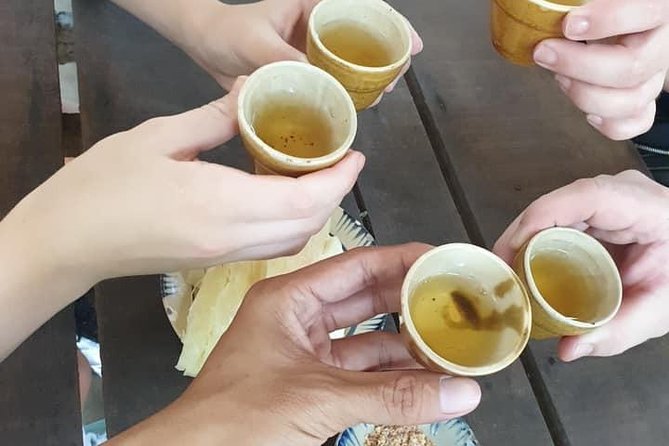
Then comes food: the tour includes a light snack with tea and tapioca, described as guerrilla’s food during the war. You’re not just eating something simple; you’re tasting a wartime survival idea made approachable.
Even if you don’t usually seek out food stops, this one is useful because it helps you remember that Cu Chi was lived in. People had to eat, rest, and keep working. The snack ties that everyday reality back to the larger story you saw underground.
Price and Value: Why $23 Can Make Sense Here
At $23 per person, this isn’t a budget-buster, and it’s also not a “pay for a seat and figure it out” kind of cost. The value comes from what’s included:
- AC car
- Free pickup and drop-off in central Saigon
- Helpful English-speaking guide
- Bottled water
- Entrance fee to Cu Chi Tunnels
- Light snack (tea and tapioca)
When you compare that to tours where you pay separately for admission, transfers, and guide time, this package feels structured. The group-discount element is also mentioned, which can make it even better if you’re traveling with friends or family and want everyone in one plan.
Booking timing is another detail: this is typically booked about 9 days in advance. If you’re traveling around a busy period or you want a specific starting rhythm, booking sooner usually helps.
Private Tour Pacing: How It Changes the Experience
The tour is set up as private, meaning only your group participates. That changes more than you might think.
First, you get a better chance to ask questions as the guide moves through each exhibit. Guides like Mr Le and Jacky Hieu/Jackie Hieu are praised for being friendly and for explaining facts during the drive and on-site, which fits perfectly with a private format where you can actually follow up.
Second, it reduces the “stand in line, then rush through” feeling. You can usually spend a bit more time at the places that catch your attention—like command areas, trap examples, or the wartime-food segment.
If your group includes a history-minded parent, this format tends to work well. One set of comments specifically mentions a dad receiving extra explanation during the drive and throughout the tour, which is exactly the kind of benefit you want from a guided day.
What’s Optional and What You Should Budget For
Most essentials are included, so you’re not surprised mid-day. Still, there are a couple of add-ons to note.
- Tips and personal expenses are not included.
- There’s an optional shooting range component, where there’s a bullet fee you’d need to pay if you choose it.
- If you request a different language, a surcharge for other languages may apply.
One practical way to handle this: decide early whether you want the shooting range. If you skip it, you’ll keep the day on track around the tunnel, food, and workshop stops.
The tour ends back at the meeting point near Ben Thanh, so you can plan dinner afterward without needing a complicated return plan.
Who This Tour Suits Best (and Who Might Want to Rethink It)
This experience fits best if you want guided Vietnam War history with strong on-site explanations. It’s also a good choice for:
- Families who want structure and a guide to help with context
- Solo travelers who prefer not to figure out the site alone
- Groups of friends who want a private vehicle and better pacing
- History-curious travelers who care about how people lived and protected themselves, not only dates
The biggest “rethink” case is emotional readiness. Since the tour highlights traps and dangerous elements and walks through defensive system details, it may not be ideal if you want something lighter or purely scenic. Also remember the tunnel part is physically demanding in the sense that it’s a maze and underground—so bring your comfort judgment.
Should You Book This Cu Chi Tunnels Guided Tour?
I’d book it if you want an organized, explanation-led day that covers more than just tunnel entrances. The mix—documentary film, living areas (including field hospitals and command centers), trap door explanations, then a rice paper workshop and tea and tapioca—makes the day feel balanced.
It’s also a smart value play at $23 because entrance fee and key services are included, and you don’t have to chase water, tickets, or transfers. Add the private group feel, and the guide names people mention—Mr Le, James, and Jacky Hieu/Jackie Hieu—signal that the on-the-day teaching matters here.
If your ideal tour is quiet, purely self-paced, or you prefer to avoid intense war-related details, consider whether guided tunnel-and-trap content fits your comfort level. But if you’re here to understand what Cu Chi was and why it worked, this one is a solid, efficient way to do it.
FAQ
Where does the tour start and end?
The tour starts at Ben Thanh Market in District 1, Ho Chi Minh City, and it ends back at the same meeting point.
How long is the Cu Chi Tunnels guided tour?
The tour is listed at about 6 hours, with an overall duration of around 6 to 7 hours.
Is hotel pickup included?
Yes. Free pickup and drop-off are included for locations in the center of Saigon.
What’s included with the ticket price?
Included items are the entrance fee to Cu Chi Tunnels, a bottled water, and a light snack with tapioca and tea at Cu Chi Tunnels, plus an English-speaking tour guide and an AC car.
Is it a private tour?
Yes. It’s set up as a private tour/activity, so only your group participates.
Is the documentary film included?
Yes. You watch a documentary film after arriving at Cu Chi Tunnels.
Is there anything optional or extra you may pay for?
The bullet fee for the shooting range is optional. Tips and personal expenses are also not included. There may be a surcharge for other languages if you request them.
Can I cancel and get a full refund?
Yes. There is free cancellation up to 24 hours in advance for a full refund. Canceling within 24 hours does not receive a refund.