REVIEW · HO CHI MINH CITY
Cu Chi Luxury Group Tour – Tapioca and Cake Half Day
Book on Viator →Operated by KIM TRAVEL · Bookable on Viator
Tight spaces, big stories. This Cu Chi Tunnels half-day style tour brings you into a layered underground network used across the war years, starting with a 3D film that sets the scene fast. I like that it also adds real-life food touches, like the cassava/cassava-style snacks, plus tapioca with Vietnamese hot tea.
You’ll also look outward at the rice fields above the tunnels and overgrown blast craters left by bombing campaigns. One thing to plan for: you need decent physical comfort with crawling and crouching, especially in heat and with other visitors around.
In This Review
- Key Things to Know Before You Go
- Cu Chi Tunnels Start With a 3D Film (So It Makes Sense)
- Pickup and Timing: 6–7 Hours That Still Feels Like a Half Day
- What Happens at the Cu Chi Tunnels (Beyond the Main “Hole”)
- Walking the Tunnel Maze: The Points You Should Not Rush
- Aboveground Stops: Rice Fields and Overgrown Bomb Craters
- The Food Break: Tapioca, Hot Tea, and a Wheat Cake Snack
- Expect Optional Extras Like a Shooting Range
- That Arts Stop on the Way: Lacquer Craft (With No Hard Sell)
- Crowds, Hot Sun, and How to Stay Comfortable
- Price and Value: Is $21.99 Actually a Good Deal?
- Who This Tour Fits Best
- FAQ
- How much does the Cu Chi Luxury Group Tour cost?
- About how long is the tour?
- Where do pickup and drop-off happen?
- What food and drinks are included?
- Is the entrance fee included?
- Will I go inside the tunnels?
- What language will the guide speak?
- How big are the groups, and is it physically demanding?
- Can I cancel and get a full refund?
- Should You Book This Cu Chi Luxury Group Tour?
Key Things to Know Before You Go
- A guided 3D film first, so you understand what you’re about to see before you go underground
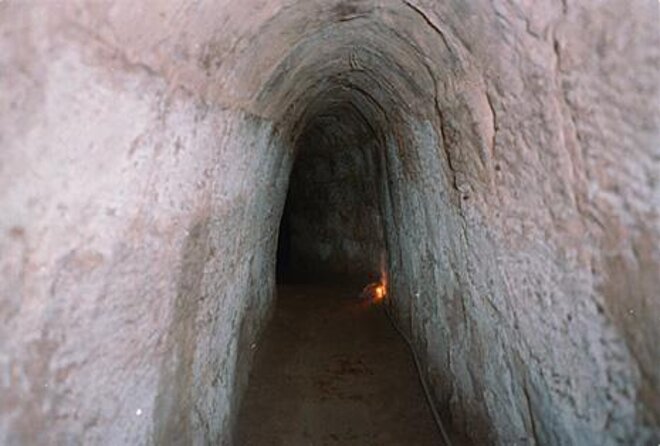
- A real crawl-through tunnel section, not just photos from the outside
- Trapdoors, ventilation, kitchens, hospitals, and command posts, explained as you walk the maze
- Aboveground context: rice fields over tunnel areas and overgrown blast craters
- Food included: tapioca plus hot Vietnamese tea, and a Vietnamese wheat cake snack
- Group size capped at 25, which can keep the experience moving without feeling chaotic
Cu Chi Tunnels Start With a 3D Film (So It Makes Sense)
The biggest win here is the order: you get a 3D movie about the largest American ground operation in the Vietnam War, then the guide connects that to what the Viet Cong needed—movement, protection, and staying hidden. That matters, because Cu Chi can feel like a bunch of holes in the ground if you show up cold.
Once the film ends, the tour pivots to how the tunnels actually worked. You’re not just told that there were multiple levels—you’re walked through how fighters lived there across years of conflict. Guides like Hien and Long are singled out in past departures for turning the technical parts into clear, story-based explanations, which is exactly what you want when you’re about to walk through dim, cramped spaces.
You can also read our reviews of more tours and experiences in Ho Chi Minh City



Pickup and Timing: 6–7 Hours That Still Feels Like a Half Day
This tour is usually described as about 7 hours, but the tunnel portion alone runs around 6 hours with admission included. Translation: you’ll be out for most of the day, not just a quick outing.
The logistics are straightforward. There’s hotel pickup for hotels in District 1, 3, and 4, and the tour drops back in District 1. You travel in an air-conditioned minivan, which is a real quality-of-life upgrade in Ho Chi Minh City traffic.
If you’re trying to fit this around meals, plan a small buffer. Even though it’s marketed as a half-day style experience, you’re going to spend time watching the film, moving between stops, walking outdoors in sun, and then doing the tunnel crawl.
What Happens at the Cu Chi Tunnels (Beyond the Main “Hole”)
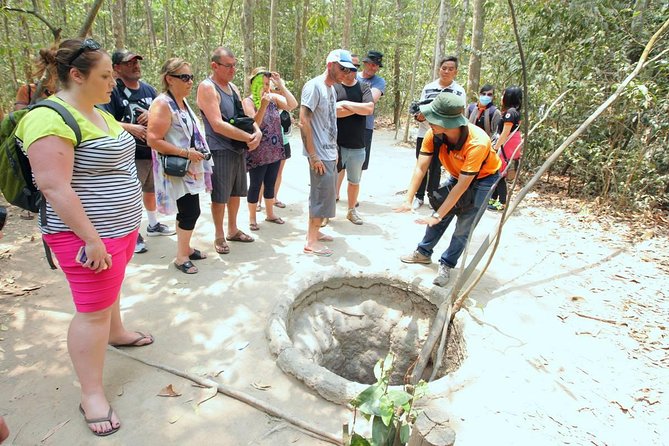
Your day starts on-site with a mix of presentation and hands-on reality. Here’s the flow you can expect.
First, you’ll watch that 3D briefing and get the war-and-strategy context: why the tunnels were built, how the layered network supported survival, and how people navigated the system from 1961 to 1972.
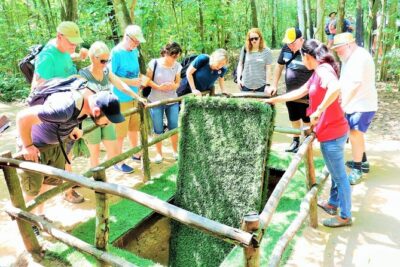
Next comes the tunnel approach. You’ll try a tiny entrance/hiding spot—think of it as a short preview of what real movement underground feels like. Then you’re led through the larger tunnel maze, where you’re shown features that go beyond “escape routes,” including:
- trapdoors
- storage areas
- field hospitals
- command centers
- kitchens
- ventilation systems
- and other practical facilities tied to daily survival
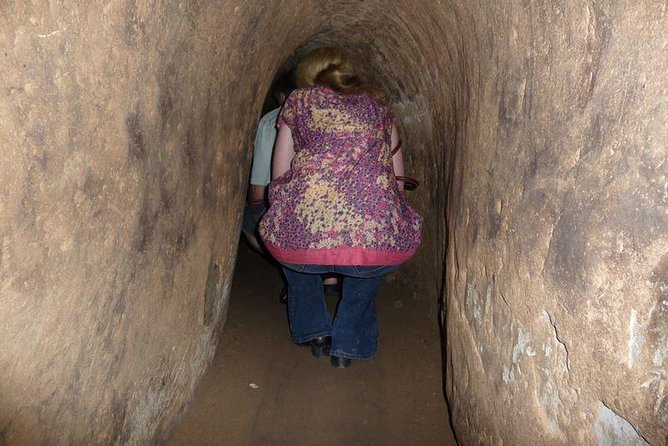
The tour isn’t just a walk past exhibits. You’ll also do a crawling section where you go into an actual tunnel area so you can feel the scale of the passageways. That’s the moment that tends to land with most people, because it turns abstract history into a physical experience.
Walking the Tunnel Maze: The Points You Should Not Rush
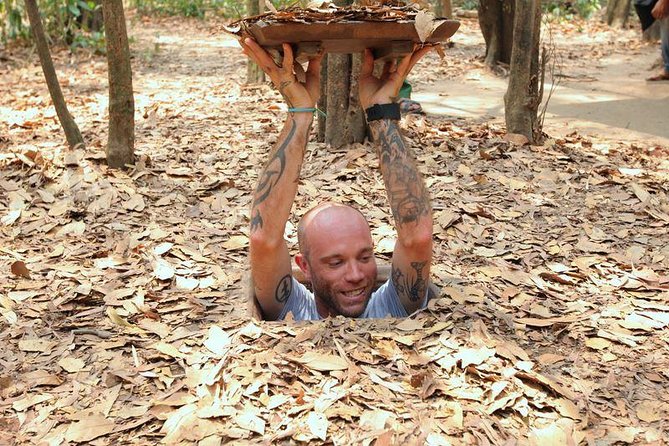
If you want value from this tour, treat the tunnel maze as the main event. A lot of people rush it to get the “check the box” feeling. Don’t. The guide’s job is to point out what you’d normally miss in the dark—functional design, not just dramatic storytelling.
A few practical realities to keep in mind:
- Some tunnel sections are tight. This is why the tour calls for a strong physical fitness level.
- The tour can include time outdoors before and after the crawl-through, so your comfort hinges on heat, sun, and how long you’re waiting to enter specific areas.
In past experiences, you may see that guides try to manage waiting by bringing you to a tunnel opening where other groups aren’t currently lined up. That helps a lot, because standing around in the sun can drain the energy you’ll need for the crawl.
Aboveground Stops: Rice Fields and Overgrown Bomb Craters
One reason Cu Chi hits harder with a guided tour is that it doesn’t stay underground. You’re also shown what’s going on above the tunnels—particularly rice fields nearby, including areas where villages work in fields that sit over the tunnel zones.
That visual matters. It connects the tunnels to agriculture and ordinary life. You get a sense that these weren’t abandoned ruins; the landscape was tied to daily routines even during wartime pressure.
Then there are overgrown blast craters left by aerial bombing campaigns. They’re not presented as a horror museum. Instead, you get strategic and historical context that helps you understand the scale of the conflict and the reason the tunnels had to be more than hiding places.
You can also read our reviews of more tours and experiences in Ho Chi Minh City



The Food Break: Tapioca, Hot Tea, and a Wheat Cake Snack
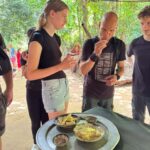
This tour includes food, and it’s simple but helpful: tapioca and Vietnamese hot tea, plus a wheat cake. There are also wet tissues and bottled water included, which is a small thing that becomes a big thing when you’re out in sun and then crawling into tight spaces.
A subtle tip: if food timing matters to you, watch for it early. A few past departures reported missing the tapioca/tea, so I’d personally ask at the start when the snack stop will happen and make sure you understand when it’s served.
Also, the tour highlights cassava as the most popular wartime food at Cu Chi. In practice, that often means you’ll see cassava referenced as part of the food story, even if the included snack is tapioca-based. Either way, it’s a “war-meets-survival” detail that feels grounded rather than theatrical.
Expect Optional Extras Like a Shooting Range
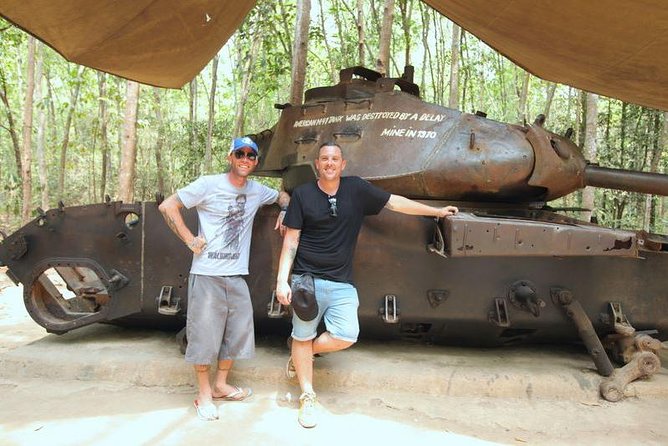
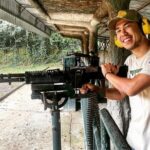
There’s an added layer you might encounter depending on what’s offered on the day: a shooting range can appear as an extra activity with additional costs. Some people liked this because it adds a different kind of realism to the war setting.
If you’re not interested, you can simply skip it. Just don’t let the optional stop steal time from the tunnel section if that’s what you care about most.
That Arts Stop on the Way: Lacquer Craft (With No Hard Sell)

On the drive, many departures include a stop connected to local craft. You’ll often see a lacquer/handicrafts workshop associated with people affected by Agent Orange, where lacquer work turns into livelihood.
This stop is usually described as not pushy. The helpful part is the pause it creates: it turns your day from history-only to people-and-work reality. The drawback is timing. If you’re sensitive to long hot rides, you may feel this adds to the total day.
Still, it’s one of the more meaningful “support the local economy” moments you’ll get on this route, as long as you keep expectations realistic: it’s a short shop-stop, not a full museum.
Crowds, Hot Sun, and How to Stay Comfortable
Cu Chi can get busy. The site is popular, and tunnel entrances are natural bottlenecks. One past review called out how crowded moments can lead to long standing stretches in hot sun while waiting to look at exhibits or enter tunnels.
You can’t control crowds, but you can control your preparation:
- Wear closed shoes you can tighten/adjust if needed.
- Bring a hat and sunscreen even if you think you’ll be indoors for long stretches.
- Plan to dress for heat under sun, then for the reality of tunnels where you may want something that protects your knees and hands.
- Bring a small towel or extra tissues if you get sweaty easily, even though wet tissues and bottled water are included.
Price and Value: Is $21.99 Actually a Good Deal?
At $21.99 per person, this tour is priced low for what you get: hotel pickup, air-conditioned transport, English-speaking guide, entrance fee, travel insurance, plus the included food and drinks.
Here’s why that can be good value for you:
- The included logistics remove the stress of figuring out transport to an out-of-city site.
- The admission matters. A tunnel visit can become expensive when you price out entry plus a guide plus transport separately.
- The food package is not fancy, but it keeps you moving without searching for snacks mid-day.
The fair caution: you’re paying for a group experience. If you’re picky about guide speaking style or want every moment to feel perfectly paced, you may feel the differences between guides on different days. In some cases, people reported rushed timing or limited English from a guide. If you care about deep context, ask questions early, and if you want better language support, consider smaller group departures when available.
Who This Tour Fits Best
This is a strong match if you:
- want the most famous tunnel experience with guided explanation
- like history that connects strategy to daily life (food, facilities, survival)
- are okay with physical effort and going into tight spaces
- want an organized day without planning transport yourself
It may not fit if you:
- have serious claustrophobia or strong mobility limitations (the crawl-through is part of the experience)
- hate heat and long waits in crowded areas
- need a slow, unhurried pace with lots of downtime
FAQ
How much does the Cu Chi Luxury Group Tour cost?
It’s priced at $21.99 per person.
About how long is the tour?
It runs for about 7 hours on average (the tunnel portion is listed around 6 hours with admission included).
Where do pickup and drop-off happen?
Pickup is available from hotels in District 1, 3, and 4, and the tour drops you back in District 1.
What food and drinks are included?
The tour includes tapioca and Vietnamese hot tea, plus wheat cake, bottled water, and wet tissues.
Is the entrance fee included?
Yes, the entrance fee is included.
Will I go inside the tunnels?
Yes. The experience includes both walking the tunnel maze and a crawl into the tunnel.
What language will the guide speak?
You’ll have an English speaking guide.
How big are the groups, and is it physically demanding?
The tour has a maximum of 25 travelers, and it requires strong physical fitness due to crawling/tunnel conditions.
Can I cancel and get a full refund?
Yes. You can cancel for a full refund if you cancel at least 24 hours before the start time. If you cancel less than 24 hours before, the amount won’t be refunded.
Should You Book This Cu Chi Luxury Group Tour?
If you want a practical, guided Cu Chi visit with tunnel access, clear context starting with a 3D film, and included snack breaks, this is a solid pick—especially at $21.99 with pickup and admission bundled. I’d book it if you’re comfortable with tight spaces and you want the experience to feel structured instead of chaotic.
If tight spaces scare you, or you want a slow, crowd-light day, you should think twice. Otherwise, bring sun protection, expect real physical effort, and ask your guide questions early—those two moves turn the visit from a sightseeing stop into a story you’ll actually remember.