REVIEW · HO CHI MINH CITY
Bean to bar Chocolate Workshop in Ho Chi Minh City
Book on Viator →Operated by Ban Cacao - Vietnamese chocolate maker · Bookable on Viator
Cacao to chocolate happens fast here. I love the step-by-step pods-to-bars process and how you learn what makes good beans, not just how chocolate tastes. I also like that you finish with your own take-home chocolate and a bit of creative decorating in the final stretch at Ban Cacao.
One thing to plan for: the traditional grinding step uses a granite mortar, and it can be tiring for younger kids. If you’re bringing children, I’d aim for families with kids around 8+ who won’t mind a hands-on workout during the process.
In This Review
- Key highlights before you go
- Where Ban Cacao Is in District 1 and What That Means for Your Day
- The Pods-to-Bars Flow: Exactly What You’ll Do in the 2 Hours
- Picking Good Cacao Beans Starts With Your First Taste
- Husking Cacao Beans: The Work That Makes It Real
- Grinding Cacao Paste With a Granite Mortar (Hands-On, Not a Spectator Sport)
- From Cacao Paste to Your Own Bar: Tools That Actually Matter
- The Drink Break and the Small-Group Pace
- What You’ll Take Home (and Why It’s the Real Value)
- Price and Value in Ho Chi Minh City: Is $32 Fair?
- Who This Workshop Suits Best (and Who Might Feel Less Happy)
- Should You Book This Bean-to-Bar Workshop in Ho Chi Minh City?
- FAQ
- How long is the Bean to Bar Chocolate Workshop?
- How much does the workshop cost?
- Where does the workshop take place?
- What will I do during the workshop?
- Does the class include tasting?
- Do we make the chocolate ourselves?
- What tools and materials are used?
- Is it a small group?
- Is there a drink included?
- Can I get a full refund if I cancel?
Key highlights before you go
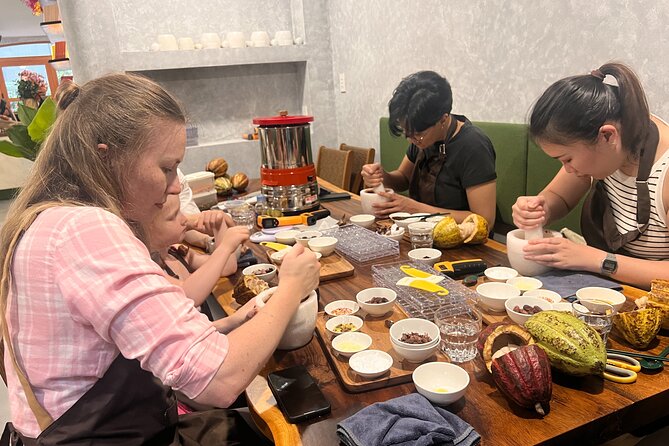
- Small-group vibe (max 10): you get real time with the process, not just a quick demo.
- Fresh cacao pod tasting: you learn what you’re starting with, before beans ever hit the tools.
- Granite mortar paste-making: traditional style, very hands-on, and part of the fun.
- From paste to mold to bar: you follow the full chain to a finished chocolate you can take home.
- You decorate your own wrapper: the take-home part feels personal, not generic.
Where Ban Cacao Is in District 1 and What That Means for Your Day
This workshop runs from 89/14 Hàm Nghi in Quận 1 (District 1), an area that’s easy to reach and simple to pair with other food stops in the city. It’s near public transportation, so you’re not forced into a long, complicated commute.
You also keep things efficient: the class is about 2 hours, and it loops back to the same meeting point. With a maximum of 10 travelers, the pace stays calm enough for questions, and the instructor-style explanation doesn’t get swallowed by a big crowd.
There’s also a practical benefit to the format: you get a mobile ticket, which keeps things low-fuss once you’re in Saigon for the day.
You can also read our reviews of more city tours in Ho Chi Minh City


The Pods-to-Bars Flow: Exactly What You’ll Do in the 2 Hours
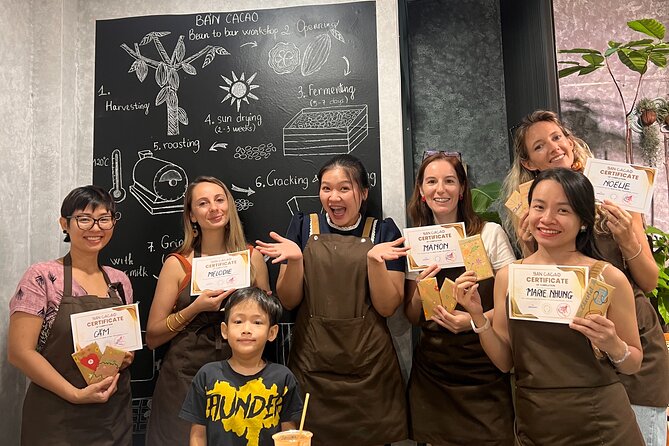
The whole class is built around a single goal: making a chocolate bar starting from cacao. You’ll get a walkthrough of the pods-to-bars process, plus context on cacao in Vietnam and how local makers use familiar ingredients and techniques.
Here’s the sequence you can expect:
First, you start with the “source” side of the story. You taste fresh cacao pods, then learn how to pick solid cacao beans as the first real step of the journey. This is more useful than it sounds. It trains your eye for quality before you ever get to chocolate flavor.
Next comes the physical part. You’ll husk your own cacao beans, then shift to the traditional workbench stage where the class turns from theory into food craft. You’ll make your own cacao paste using a granite stone mortar (that means grinding, not clicking a button).
Then you move into chocolate-bar building. You’ll make your own bar from start to finish, including the tools and measurements that help chocolate turn out right: a thermometer, a scale, and a chocolate mold. Finally, you finish with decorating your chocolate and using wrapping paper so you can take your bar home as something you actually made.
Picking Good Cacao Beans Starts With Your First Taste
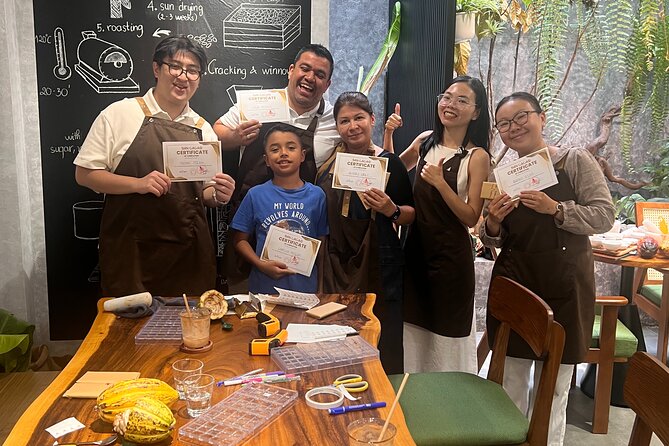
One of the smartest parts of this class is that it treats cacao like an ingredient you can learn. You don’t just hear about chocolate. You start with the fresh pods and get a taste of what’s inside the fruit before the process changes everything.
The workshop also focuses on choosing good cacao beans from the first step. That matters because most chocolate-bar flavor comes down to what the beans bring to the table. When you understand the start, later steps make more sense: grinding texture, paste consistency, and the way sweetness balances the cacao.
If you’re a chocolate person, you’ll probably notice how different cacao stages feel. Pod tasting is raw and bright in a way that cooked chocolate never is. Then, as you move into beans and paste, you start connecting the dots between the fruit you tasted and the bar you mold at the end.
Husking Cacao Beans: The Work That Makes It Real
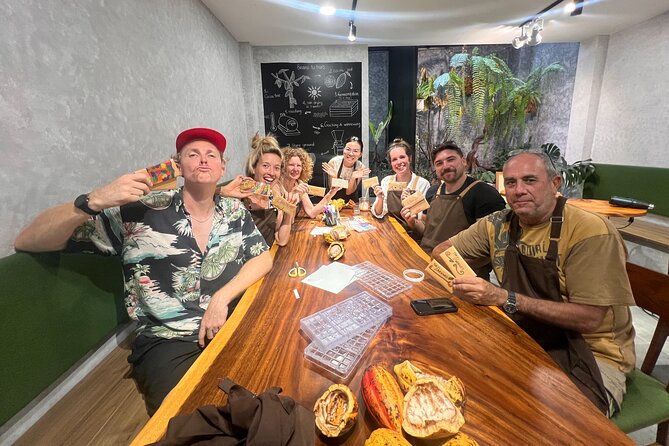
Husking cacao beans is one of those steps that sounds simple until you’re doing it. That’s why it’s valuable. It breaks the process into understandable chunks, instead of leaving you with a vague idea of how chocolate happens.
This is also where the class becomes genuinely personal. You aren’t just watching a maker do everything. You handle the beans, and you see the raw material become something you can process.
Because the group is capped at 10, the experience stays interactive. You should expect to get enough attention to understand what you’re doing, especially during the hands-on parts like husking and grinding.
Grinding Cacao Paste With a Granite Mortar (Hands-On, Not a Spectator Sport)
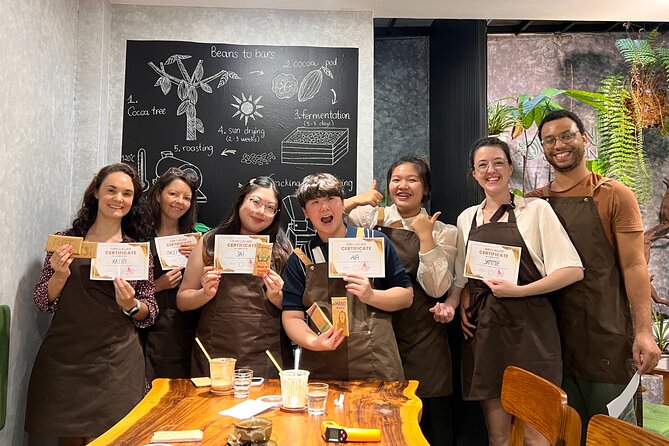
The traditional-style paste-making using a granite stone mortar is the signature moment. It turns the class into more than a tasting workshop. It’s a skill-building session where your effort becomes part of the final chocolate texture.
It also comes with the one caution I’d give families: grinding takes time and effort. One parent noted the grinding part can be tiring for kids, and that makes sense. The sweet spot for enjoying this step is with kids who can stay focused while hands get tired.
If you’re an adult (or a kid ready for a workout), you’ll probably find the grinding stage oddly satisfying. You’ll watch the paste change as you work, and later the mold step feels earned instead of automatic.
You can also read our reviews of more drinking tours in Ho Chi Minh City





From Cacao Paste to Your Own Bar: Tools That Actually Matter
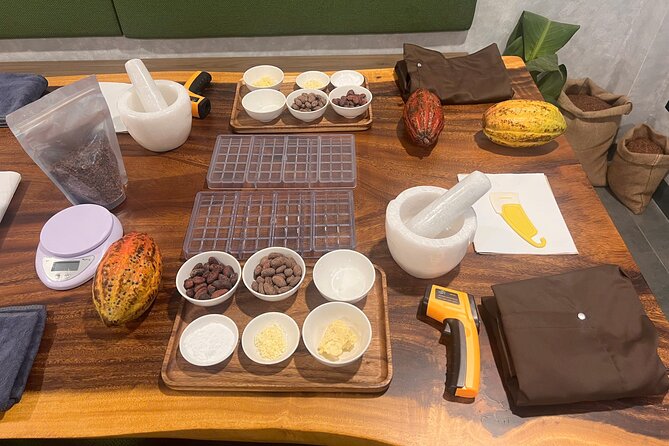
Once you have your cacao paste, the class shifts to transforming it into a real bar. You’ll work with ingredients listed for making chocolate: cacao butter and cane sugar along with the cacao base. The process also includes measurements using a scale and temperature checks with a thermometer, which is key for chocolate that sets properly.
Then the fun payoff: you’ll use a chocolate mold to form your bar. This is where the steps stop being abstract and become physical. You see the final shape, and you can understand why prior stages (grinding consistency, ingredient ratios, temperature) influence the result.
Afterward, you decorate your chocolate and wrap it with the wrapping paper provided. The result is a bar that looks like something you made, not something that came pre-packaged.
The Drink Break and the Small-Group Pace
This workshop includes a drink for each person, with one common note being hot or iced chocolate. That’s a nice reset during a hands-on activity, especially if you’re moving from tasting to husking to grinding.
The pacing also helps. With a maximum of 10 people, you’re less likely to be stuck waiting for instructions while your group gets shuffled to the next step. Instead, the flow stays focused on doing the work, not just watching the clock.
And because it’s in District 1, it’s easy to fit into an afternoon without dragging your energy across town.
What You’ll Take Home (and Why It’s the Real Value)
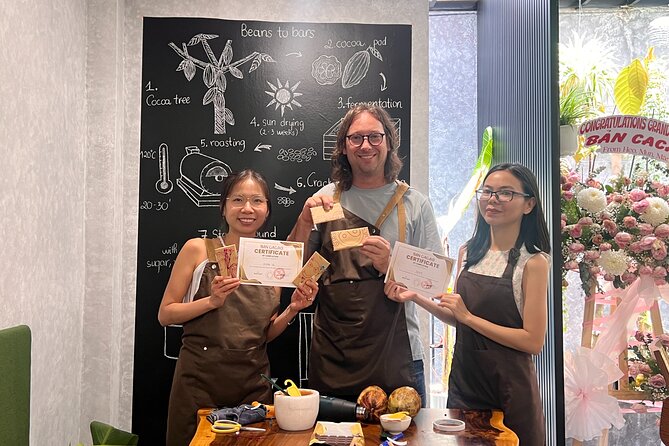
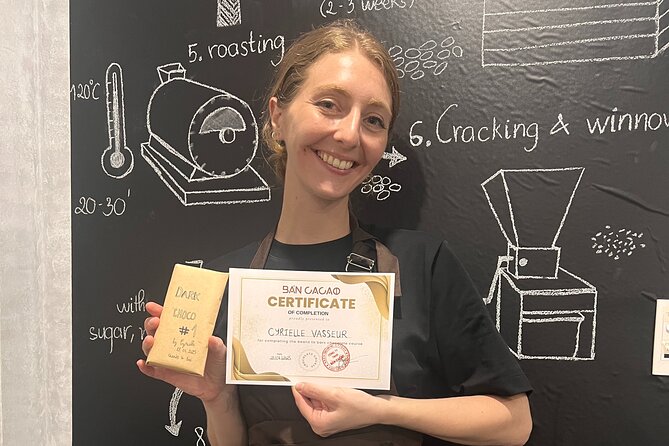
Plenty of food tours give you samples. This one gives you a finished product. You take home the chocolate bar you make, plus your own decorated presentation with your wrapper.
That matters for value because the experience isn’t only about eating. It’s about learning how the process connects, from cacao source to finished bar. When you leave holding something you shaped, the knowledge sticks.
In at least one family experience, kids were able to take home two bars after decorating. Even if your final amount depends on the exact class flow, the consistent part is this: you’ll leave with your own chocolate creation.
Price and Value in Ho Chi Minh City: Is $32 Fair?
At $32 per person for about 2 hours, the value comes from what’s included: hands-on production, guided instruction through the pods-to-bars process, and the tools and ingredients needed to actually make chocolate.
You’re not paying only for tasting. You’re paying for structured learning plus the stuff that costs money in real production: cacao ingredients, grinding and temperature control tools, molding supplies, and wrapping materials. Add the included drink, and the total feels more like a short workshop than a simple activity.
In a city where food experiences range from quick-and-cheap to pricey-and-broad, this hits a sweet balance: small-group attention and a take-home product, without eating up half your day.
Who This Workshop Suits Best (and Who Might Feel Less Happy)
You’ll likely enjoy this if you’re:
- a chocolate lover who wants to understand how chocolate is made, not just what it tastes like
- curious about cacao and how Vietnamese makers use local ingredients
- visiting with older kids who can handle a hands-on step that takes some effort
Families should pay attention to the grinding step. A parent noted the mortar grinding can be quite tiring for children, and that’s a helpful clue. If your child is energetic but easily frustrated, you might find this workshop more fun with a calmer age range.
If you want a fully passive class where you only watch and taste, this probably won’t feel like the best fit. The whole point here is doing the work: husking, grinding, and molding.
Should You Book This Bean-to-Bar Workshop in Ho Chi Minh City?
Book it if you want a food activity with a clear payoff: you learn the process and you leave with chocolate you made yourself. The small group size, the fresh cacao pod tasting, and the traditional granite mortar step make it feel like a real craft session, not a quick show.
Skip it (or choose another option) if you’re traveling with a younger child who can’t handle hands-on grinding, or if you want purely light tasting with no physical steps.
FAQ
How long is the Bean to Bar Chocolate Workshop?
It runs for about 2 hours.
How much does the workshop cost?
The price is $32.00 per person.
Where does the workshop take place?
It’s at Ban Cacao, located at 89/14 Hàm Nghi, Phường Nguyễn Thái Bình, Quận 1, Thành phố Hồ Chí Minh, Vietnam.
What will I do during the workshop?
You’ll learn the pods-to-bars process, taste fresh cacao pods, husk cacao beans, make cacao paste in a granite mortar, and make your own chocolate bar. You’ll also decorate your chocolate and wrap it to take home.
Does the class include tasting?
Yes. You taste fresh cacao pods as part of the workshop.
Do we make the chocolate ourselves?
Yes. The class includes steps where you husk beans, make cacao paste, and create your own chocolate bar using provided tools.
What tools and materials are used?
Materials include fresh cacao fruits, cacao beans, cacao nibs, cacao butter, and cane sugar. Tools include a granite mortar, thermometer, scale, chocolate mold, and wrapping paper.
Is it a small group?
Yes. The workshop has a maximum of 10 travelers.
Is there a drink included?
Yes. One review notes the class includes a drink for each person, with options mentioned as hot or iced chocolate.
Can I get a full refund if I cancel?
The experience offers free cancellation, with a full refund if you cancel at least 24 hours before the start time.