REVIEW · HO CHI MINH CITY
Ho Chi Minh City Private City Tour – History, Culture, Local Life
Book on Viator →Operated by Vietnam - Ho Chi Minh City Package Tours · Bookable on Viator
Saigon can feel like a blur. This private tour turns it into a guided story of Vietnam’s modern past and everyday life. In about four hours, you’ll move between major landmarks, memorial sites, and a few quieter corners that show how the city actually lives now.
I especially like the way this tour blends War Remnants Museum context with street-level, human-scale stops like the Thích Quảng Đức Monument. You don’t just see places; you get the meaning behind them, in plain language, with time to ask questions.
One consideration: a couple of the most in-demand sights cost extra if you want entry—like the War Remnants Museum ticket (and Independence Palace if you decide to go in). Also, the museum closes after 17:00, so timing matters.
In This Review
- Key highlights you’ll actually feel during the tour
- A private 4-hour Saigon primer, with flexible pacing
- War Remnants Museum and the facts you can’t skip
- Thích Quảng Đức Monument: street-level history in a public place
- Secret Weapon Cellar (Hầm Vũ Khí Bí Mật): what you see vs. what you imagine
- Colonial-era landmarks you pass by (and why that still counts)
- Nguyen Huệ Walking Street and District 3 apartment memories
- Chua Văn Phát: Temple of Ten Thousand Buddhas in Chinatown
- Flower Market time: where local life feels ordinary
- Café Apartment and the neighborhood view that ties it all together
- Price and logistics: what $31.57 gets you in real terms
- Who this tour suits best (and who might want something else)
- Should you book this Ho Chi Minh City private tour?
- FAQ
- FAQ
- What’s included in the private tour?
- What’s the duration of the tour?
- Do I need to pay extra for the War Remnants Museum?
- Are there any other ticketed sites?
- Are there any free stops?
- Where does hotel pickup happen?
- Can the tour be customized for how we travel?
- Is this a group tour or private?
- When should I plan my visit to the War Remnants Museum?
- What’s the cancellation policy?
Key highlights you’ll actually feel during the tour
- A flexible private format with your pace and choices, not a rigid checklist
- English-speaking guide who can adapt when you need coffee or a slower rhythm
- Real contrasts in one route: memorial sites, colonial-era buildings, and Chinatown temple life
- Short, efficient stops that work well for first-time orientation in District 1 and beyond
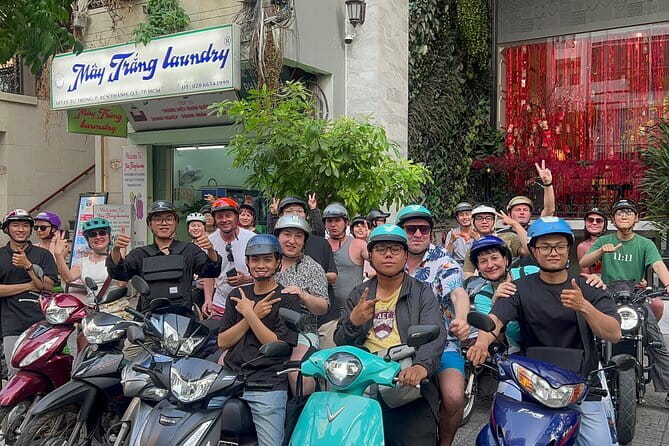
- Optional ways to travel (motorbike, jeep, car, walking, cyclo) depending on how you want to move
- Free stops at the Thích Quảng Đức Monument and the Secret Weapon Cellar
A private 4-hour Saigon primer, with flexible pacing
This is a private city tour built for getting your bearings fast. You’re not sharing the experience with strangers, so the guide can slow down when you want context or speed up when you want photos and movement.
The big win here is flexibility. The tour can be operated by motorbike, jeep, car, walking, or cyclo, and that matters because the city’s streets aren’t uniform. Sometimes a quick ride makes sense; sometimes walking helps you read the neighborhood. If you like to pause for a drink or a bite, this route is designed to allow it.
It’s also a good length. At roughly four hours, you’ll cover enough key spots to understand the city layout, without ending the day feeling like you sprinted through it. Many people book these tours around their arrival day, and this one works particularly well if you’re trying to connect history with what you see outside the car window.
One more practical detail: pickup and drop-off are offered in Districts 1, 3, and 4, so you’re less likely to waste time crossing town before the tour even starts.
You can also read our reviews of more city tours in Ho Chi Minh City

War Remnants Museum and the facts you can’t skip
The tour starts with the War Remnants Museum. Expect a heavy, photo- and artifact-based look at Vietnam’s modern history through what’s displayed and what the guide explains. If you want to understand why certain streets and memorials exist where they do, this stop gives you the framework.
You’ll spend about 30 minutes here, and that’s a helpful slice of time. The tradeoff is you won’t read every label in full detail. The smart approach is to tell your guide what kind of history you’re most curious about—then use the museum to answer that, instead of trying to absorb everything.
Budget note: the museum ticket isn’t included and costs 40,000 VND. And timing is crucial because it’s closed after 17:00. If your day starts later, you might have to adjust the day’s order or choose a different plan for that ticketed stop.
Why this museum stop is worth the money in a tour like this: it doesn’t just throw images at you. It gives you a guided narrative for the rest of the route—especially when you reach memorial-related landmarks later.
Thích Quảng Đức Monument: street-level history in a public place
Next up is the Venerable Thích Quảng Đức Monument, a stop tied to a moment of protest and public attention. The guide’s explanation centers on Thích Quảng Đức, a Mahayana Buddhist monk who died by self-immolation on 11 June 1963, protesting the persecution of Buddhists by South Vietnam at the time.
This is one of those places where the setting matters. It sits in a busy, road-intersection kind of area, so you get the sense of how a personal act became a public symbol. The experience here lasts around 15 minutes, and that short duration works because the guide can keep the focus on what you need to understand without turning it into a long memorial lecture.
The best part? The stop is free. You’re not forced to decide whether it’s worth an extra ticket. You can treat it as a meaningful waypoint on your way through the city.
Practical tip: bring a little patience for photos. A monument like this draws attention, and you may want a quiet angle for pictures before continuing.
Secret Weapon Cellar (Hầm Vũ Khí Bí Mật): what you see vs. what you imagine

Then you’ll visit Hầm Vũ Khí Bí Mật Secret Weapon Cellar, described as a hidden weapon bunker used during the war, with context tied to Tết in 1968. The stop runs about 15 minutes and is also free.
What makes this stop so valuable is the contrast. The museum is broad and explanatory. This is physical, hidden, and specific—built space rather than a timeline behind glass. Even in a short visit, it helps you feel how war history was stored, concealed, and protected.
As with any small, enclosed or structured site, you’ll get more from it if you listen closely to what the guide points out. If you tend to rush, you’ll miss the meaning and just see a room. Let your guide translate the purpose into everyday terms.
Colonial-era landmarks you pass by (and why that still counts)
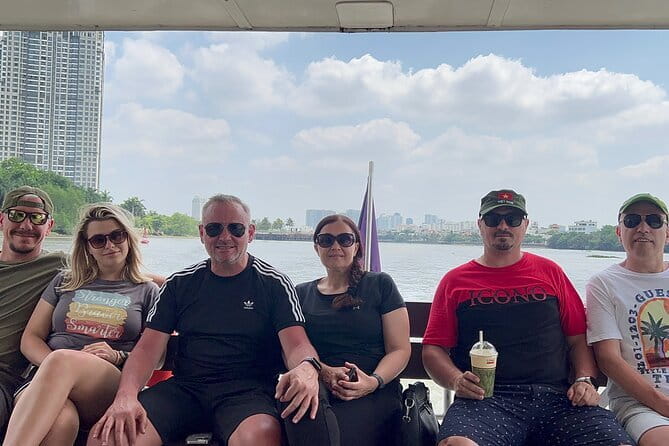
After the memorial and bunker stops, the route turns toward the downtown landmarks you’ve likely seen in photos. Even when you’re passing them rather than entering, it can still be a smart use of time—because the guide can connect them to the city’s layers.
You’ll pass by the Central Post Office, located near the Notre-Dame area. The stop is tied to the building being constructed when Vietnam was part of French Indochina. That single fact gives you a lot to hold onto while you look around: you’re seeing architecture that reflects a different era of control and infrastructure.
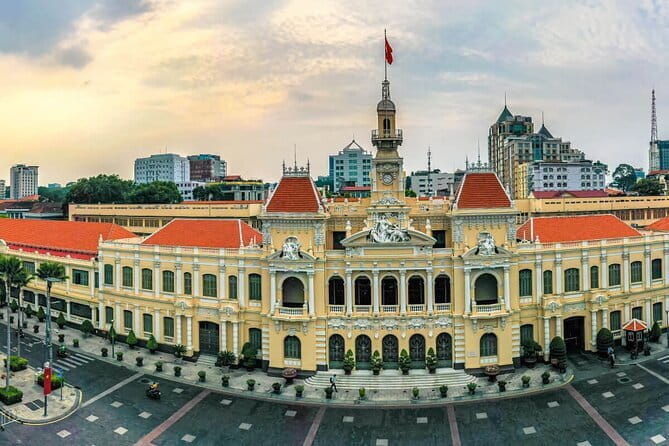
You’ll also pass by the Saigon Opera House, described as a beautiful example of colonial-era design. And you’ll roll past other civic landmarks like City Hall and the large reunification-era site known as the Reunification Convention Hall (also publicly known as the Independence Palace). The guide notes it was designed by architect NGO Việt Thu and served as the home, workplace of the president.
The value of passing by these places is orientation. You start to recognize the city’s old power centers, then you see them from street level and understand why people still use these landmarks as reference points.
For people who love photography: pay attention to angles. Even a quick drive-by can be worth it if you know what your camera should capture—main facade symmetry, signage, or nearby street life.
You can also read our reviews of more private tours in Ho Chi Minh City





Nguyen Huệ Walking Street and District 3 apartment memories
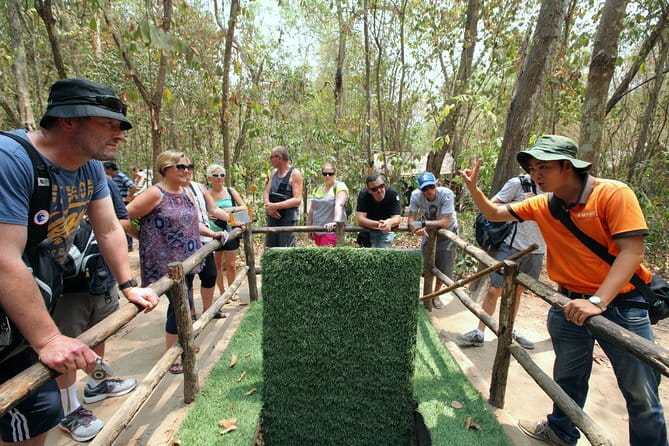
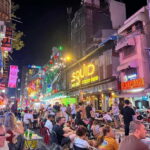
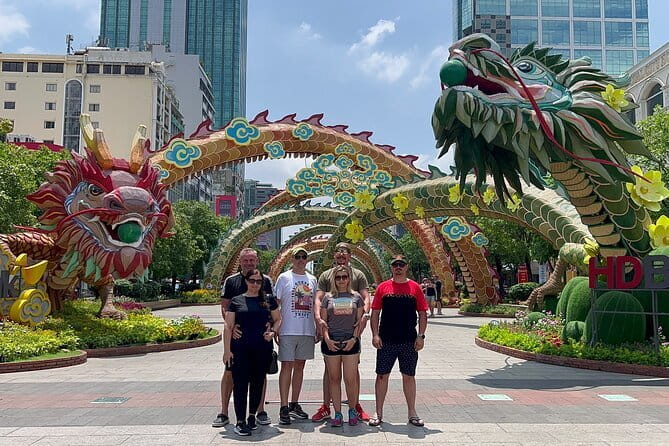
Once you’re closer to the downtown walking area, you’ll spend time around Nguyễn Huệ Walking Street. The route describes it as one of Saigon’s oldest thoroughfares that has changed over time, and it’s currently a well-known boulevard in District 1.
This is the moment when your tour stops being only history. You start seeing a living city street. Walking here also helps you reset after the more intense content of the earlier stops—your brain gets a breather.
The tour also includes a look at Nguyễn Thiện Thuật apartment buildings in District 3, described as an American-built historic complex. You’ll get time to view the complex and the surrounding city context.
Is this stop “important history”? It’s more about what the city preserves. When you see apartment buildings with historical notes, you understand that history isn’t only museums and monuments. It shows up in where people live and work today.
Chua Văn Phát: Temple of Ten Thousand Buddhas in Chinatown
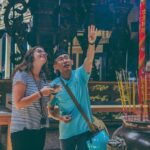
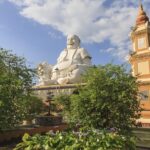
In Chinatown, the tour shifts toward spiritual and cultural traditions with a stop at Chùa Văn Phát (Temple of Ten Thousand Buddhas). This is a temple visit described as a way to learn about spiritual traditions and the Chinese cultural influence in that area.
You’ll spend about 30 minutes here, with admission free. That’s a good length for a temple stop because it gives you time to look around without feeling rushed, and it’s long enough for the guide to explain what you’re seeing.
The value here is the cultural contrast. Earlier stops focus on war and political protest. Here you see religion and community traditions, and it helps you understand that Saigon isn’t only shaped by conflict. It’s also shaped by belief systems and daily rituals.
If you’re sensitive to religious spaces, follow local etiquette: keep your voice low and be mindful about where you stand while taking pictures.
Flower Market time: where local life feels ordinary

After temples, you’ll visit a Flower Market. The purpose is straightforward: observe local daily life at one of the city’s lively markets.
This part of the tour is underrated. Museums tell you what happened. Memorials tell you what people remember. A market tells you what continues—what people buy, what routines look like, and how commerce plays out in everyday blocks.
The tour doesn’t give a set duration for the market in the details you provided, but it fits naturally with a private tour pacing style. If you like slowing down to chat with vendors or just watch what’s happening, a market stop is one of the easiest places to do that.
Bring cash if you want to buy a small souvenir or snack. Even when the tour isn’t asking you to purchase anything, markets are where small spending supports local life.
Café Apartment and the neighborhood view that ties it all together
The route includes a stop described as the Café Apartment and mentions a beautiful view. You’ll also pass through authentic local neighborhoods, which is part of why this tour feels less like a checklist.
These segments are valuable because they help connect “major sights” to a lived city. When you’re looking at the same street scenes that locals use, history becomes less abstract. You start to see the city’s layers at a human scale: buildings, small streets, and everyday movement.
The tour also includes Nguyễn Huệ Street area time plus neighborhood glimpses, meaning you don’t only ride through. You pause enough to make the city feel like a place you could return to and explore further.
Price and logistics: what $31.57 gets you in real terms
At $31.57 per person, this tour sits in an accessible range for a private format. What makes the value stand out is that it includes:
- an English-speaking tour guide
- center hotel pickup and drop-off in Districts 1, 3, and 4
- private transportation
- private tour only your group
- a mobile ticket
Then you factor in what’s extra. The big two are:
- War Remnants Museum ticket: 40,000 VND
- Independence Palace ticket: 40,000 VND (the route passes the palace area, so entry would be an add-on choice)
So the real value equation is: you’re paying mostly for guided time and logistics, while entrance tickets handle the costs of specific museums or sites. If you plan to spend your four hours hitting the museum, you’re doing the worthwhile part that costs extra anyway.
Also, if you’re arriving with limited time, this tour’s structure helps. You won’t waste half your day figuring out where to go next. You get a planned route, but with the flexibility to make it your day.
One more practical note: the tour can be customized by vehicle type (motorbike, jeep, car, walking, cyclo). That means you’re not locked into one style of sightseeing. Choose what matches your comfort level and how you like to move.
Who this tour suits best (and who might want something else)
This private tour is ideal if you’re:
- a first-time visitor who wants history plus daily life
- the type who likes context while walking through major sites
- traveling with a small group and want hotel pickup in the central districts
- someone who values a guide who can adjust pacing and stop for coffee or food
It may be less ideal if you want a long, slow museum deep-read. The War Remnants Museum stop is about 30 minutes, and the rest of the route is mostly about efficient coverage and interpretation. It’s built for understanding, not for hours of silent gallery time.
If you’re a visitor who wants to enter every single landmark, you’ll likely spend extra on tickets. The itinerary includes several pass-by landmarks, and it lists tickets separately for the museum and Independence Palace.
Should you book this Ho Chi Minh City private tour?
I’d book it if you want a guided intro that feels meaningful without feeling heavy-handed. The strongest reasons are the private pacing and the guide’s flexibility—especially the way the tour can slow down for what you need, like coffee and food, instead of forcing you to sprint through stops.
It’s also a smart way to pair war history with cultural and neighborhood reality. You’re not only looking at monuments; you’re also seeing Chinatown temple life and market rhythms, which makes Saigon feel more complete.
Before you book, do two quick checks:
1) Make sure your schedule allows for the War Remnants Museum before 17:00.
2) Budget for the museum ticket (and Independence Palace entry if you decide to go in).
If those boxes fit your plan, this tour is a solid, efficient way to get oriented and understand the city’s layers fast.
FAQ
FAQ
What’s included in the private tour?
The tour includes an English-speaking tour guide, center hotel pickup and drop-off in Districts 1, 3, and 4, and private transportation.
What’s the duration of the tour?
It runs about 4 hours.
Do I need to pay extra for the War Remnants Museum?
Yes. The War Remnants Museum ticket is not included and costs 40,000 VND.
Are there any other ticketed sites?
Independence Palace has a listed ticket cost of 40,000 VND. The tour also includes pass-by stops, so entry would depend on your choice.
Are there any free stops?
Yes. The Thích Quảng Đức Monument and the Secret Weapon Cellar are listed as free. The temple stop and flower market are also listed as free where applicable.
Where does hotel pickup happen?
Pickup and drop-off are available for hotels in Districts 1, 3, and 4.
Can the tour be customized for how we travel?
Yes. The tour can be operated by motorbike, jeep, car, walking, or cyclo, depending on what you choose.
Is this a group tour or private?
It’s private. Only your group participates.
When should I plan my visit to the War Remnants Museum?
The War Remnants Museum is noted as closed after 17:00, so plan to arrive earlier if you want to enter.
What’s the cancellation policy?
Free cancellation is available up to 24 hours in advance for a full refund. Changes made less than 24 hours before the start time aren’t accepted.