REVIEW · HO CHI MINH CITY
Saigoncholon
Book on Viator →Operated by Saigoncholon · Bookable on Viator
Cholon teaches you to read a city fast. This short tour in Ho Chi Minh City’s Chinatown area, led by Minh (you can call him Tony), is built around real neighborhood trading and temple life you won’t usually see from main-street sightseeing.
I especially like two things: first, you get a small group (up to 4), so it’s easier to ask questions and actually talk with your guide. Second, the day mixes shopping, worship spaces, and food—plus you start with Chinese-style noodle breakfast and a hot drink so you’re ready for the markets.
One thing to consider: one stop centers on a more personal religious moment (including touching a god figure and praying for luck). If that feels uncomfortable to you, adjust your expectations going in.
In This Review
- Key highlights
- Meeting at Ben Thanh and Getting Into Cholon Without Stress
- What You Really Get for $29.75 (And What You Don’t)
- Breakfast and Coffee: Fueling Your Chinatown Walk the Local Way
- Bến Tày Market: The Chinatown Symbol and Your First Trading Lesson
- Soai Kinh Lâm Fabric Market: Silk, Trading, and the Global-Local Mix
- Ba Thiên Hậu Temple: Comparing Local Worship and Tourist Worship
- Nghĩa An Temple: A More Personal Moment and a Hidden Reveal
- Chợ Thủ Đô Food Market: Street Food That Ends the Tour on a High Note
- Price and Logistics: A Short, Local-Focused Tour With Clear Limits
- Who Should Book This Tour (And Who Might Skip It)
- Should You Book Saigoncholon’s Saigon Cholon Discovery Tour?
- FAQ
- Where does the tour start and end?
- How long is the Saigon Cholon tour?
- How much does it cost?
- Is pickup included?
- What’s included in the price?
- Are the market and temple admissions included?
- Is the tour limited to a small group?
- FAQ
- Do I need good weather for this tour?
- Is a mobile ticket used?
- Can I request help if I have a food allergy?
- What should I bring for the food market stop?
- How does the guide handle personal interests?
- Is there a hidden stop during the tour?
Key highlights
- Minh (Tony) tailors your walk if you tell him what you care about
- Bình Tây Market for Chinatown shopping and cheap, satisfying bites
- Soai Kinh Lâm fabric market to watch silk and fabric trading in action
- Ba Thiên Hậu and Nghĩa An temples for two very different ways local worship shows up
- Chợ Thủ Đô street-food stop with safe, local options for a final taste
- Value bundle: breakfast, coffee/tea, bottled water, and A/C transport included
Meeting at Ben Thanh and Getting Into Cholon Without Stress
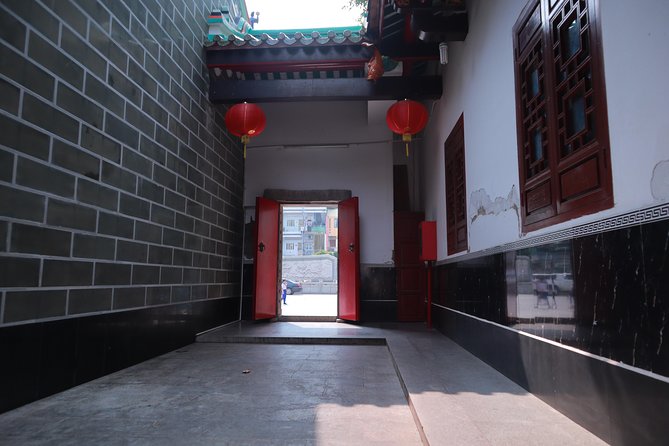
You start back at Ben Thanh Market in District 1. That’s a practical base because it’s one of the easiest places to orient yourself in the city, even if you’re new to Ho Chi Minh City.
From there, the tour includes air-conditioned vehicle time and pickup is offered. For a 3–4 hour experience, that matters more than you’d think. Your feet still walk, but you’re not baking in the midday heat just to reach the start of the neighborhood.
The tour also runs with a mobile ticket and you receive confirmation at booking. I like that this tour doesn’t feel like a last-minute guessing game.
You can also read our reviews of more tours and experiences in Ho Chi Minh City.
What You Really Get for $29.75 (And What You Don’t)
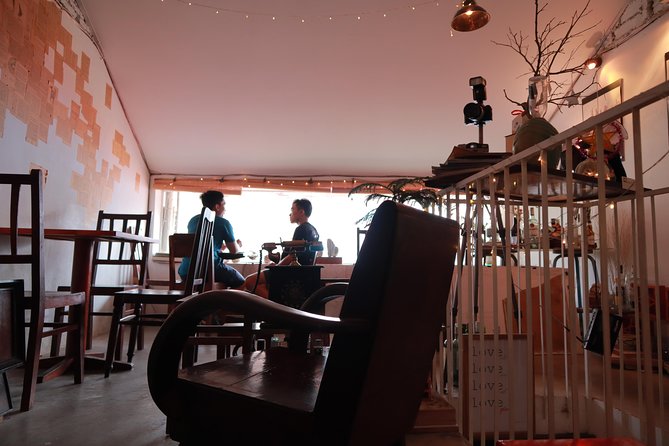
At $29.75 per person, the big value is what’s included, not just the headline price. You get breakfast (Vietnamese–Chinese style noodles served in the alley), coffee and/or tea, and one bottled water per person. Add A/C transport, and it becomes a straightforward package for a short time in the city.
What’s not included is also clear: extra foods, water, and snacks are on you if you want more than what’s provided. That’s normal for market tours. Just don’t plan on the tour covering every bite you spot.
Breakfast and Coffee: Fueling Your Chinatown Walk the Local Way
Before the markets and temples really hit, you get breakfast that fits the neighborhood theme. The tour includes Vietnamese–Chinese style noodle breakfast served in an alley, plus coffee/tea.
I like this approach because breakfast isn’t a separate “tourist detour.” It ties directly into the Chinese-Vietnamese food culture you’ll see later at the market stalls. If you’re the type who needs food early (most of us do), this saves you from hunting while everyone else is already browsing fabrics and snacks.
Bring a little extra appetite mindset. Even with breakfast included, you’ll still want to sample along the way.
Bến Tày Market: The Chinatown Symbol and Your First Trading Lesson
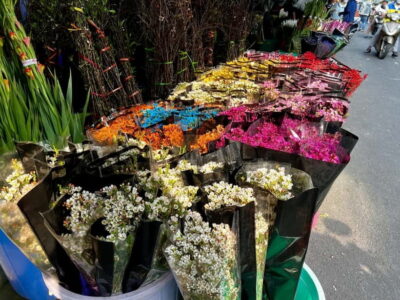
Bình Tây Market is the first major stop, and it’s treated as the symbol of Chinatown. The story given here is that it was built by a wealthy Chinese businessman, which helps frame why this place is more than just a market hall.
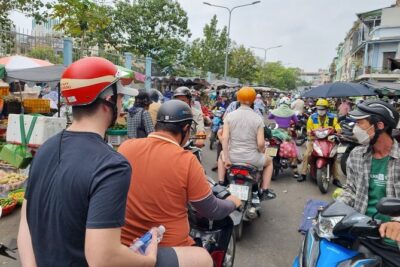
You’ll spend about 30 minutes here, with free admission. The practical payoff is simple: you can shop for cheap snacks and delicious foods, and you’ll also get a better sense of how locals trade day-to-day. Markets like this work differently than tourist bazaars. The rhythm is about speed, variety, and repeat customers.
A small timing note: 30 minutes is enough to get your bearings and buy a first snack, but not enough for a deep shopping spree. If you want souvenirs, do it early while your guide is still setting context.
Soai Kinh Lâm Fabric Market: Silk, Trading, and the Global-Local Mix
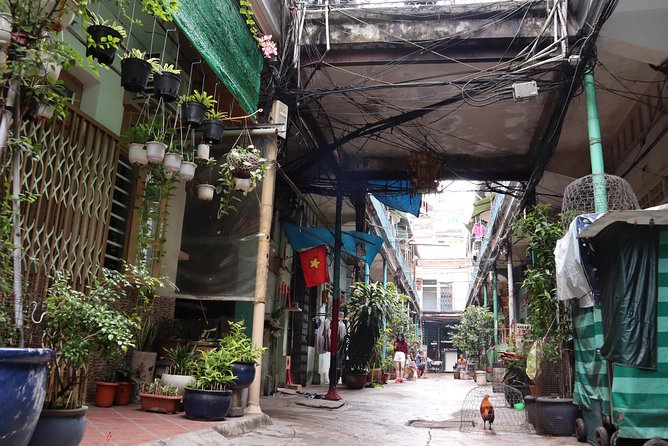
Next up is Soai Kinh Lâm, described as the biggest fabric and silk market. You’ll have another 30 minutes and free admission, and the focus is on the trading culture—how fabric moves between locals and the outside world.
This is the stop where you’ll notice how Cholon sells in practical ways. People here aren’t just browsing for fun. They’re looking for materials, quality, and what can be made or resold. If you like textiles, this is one of the fastest places to understand the supply chain vibe in one neighborhood.
If you’re thinking about buying, go with small, specific questions. Ask what a fabric is used for, what it’s typically matched with, or whether there are common differences you’ll see in-store. Your guide’s local perspective helps you avoid getting lost in price talk.


Ba Thiên Hậu Temple: Comparing Local Worship and Tourist Worship
Ba Thiên Hậu Temple comes next, with about 30 minutes and free admission. The point of this stop is a comparison: how a temple that’s meaningful to locals can look different from the version you see when worship becomes sightseeing.
I like this angle because it helps you read what you’re seeing. You’re not only taking in the scenery. You’re also learning what feels normal to people who live nearby—how they dress, how they move, and what they treat as important.
This stop is a good calm break between shopping spaces. You’ll get a sense of Cholon’s spiritual layer, not just its shopping power.
Nghĩa An Temple: A More Personal Moment and a Hidden Reveal
One hour is allocated to Nghĩa An Temple, and this is the stop with extra emotional weight. It’s described as the more hidden local temple, and you’ll be part of a religious moment that includes touching the god figure and experiencing the praying culture aimed at wishing for luck and blessings.
There’s also a promise built into the experience: the hidden place will be shown after the visit. That changes the feel of the hour. You’re not just checking off a temple photo. You’re doing a sequence, and you’ll stay alert for the next step.
A practical consideration: this is the stop most likely to feel different from what you expect if you prefer only observation. If you’re unsure about participating in religious actions, you can still benefit from the context—just be mentally ready that the tour is intentionally hands-on in this moment.
Chợ Thủ Đô Food Market: Street Food That Ends the Tour on a High Note
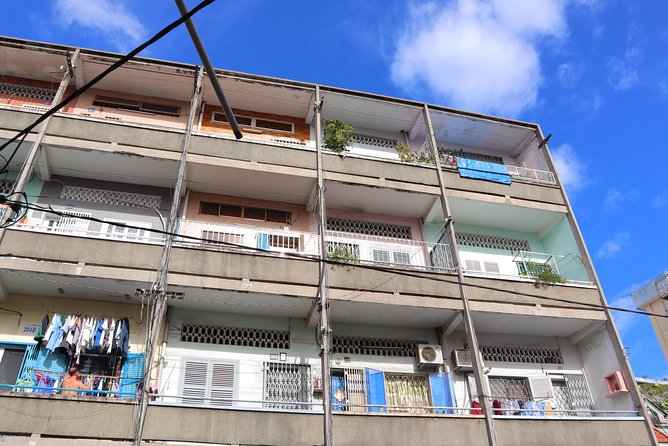
The final market stop is Khu ăn uống chợ Thủ Đô, focused on local market food trading and street eats. You’ll have about 30 minutes, again with free admission, and it’s positioned as a place for tasting various foods that are described as safe.
This stop matters because it ties the whole tour together. Earlier you’re learning about trade—fabric and goods. Here you see trade you can taste. It’s also a smart pacing choice: by the time you arrive, you’ve already built context for why vendors are selling what they sell.
What to do if you’re a cautious eater: start with small portions. You’ll still get the experience without committing to a full meal you might not like. If you have a food allergy, tell the tour beforehand so your guide can steer you toward safer options.
Price and Logistics: A Short, Local-Focused Tour With Clear Limits
Let’s talk real-life logistics. This is a 3 to 4 hour tour, and it caps at a maximum of 4 travelers. That small cap is one of the best reasons to book, because it turns a market and temple circuit into something more like a guided neighborhood walk.
Pickup is offered, and you start at Ben Thanh Market. The tour also notes that it’s near public transportation, which is useful if you want options for arrival or if plans change.
The price looks even better when you compare it to what you’d pay on your own. You’re getting breakfast, coffee/tea, and water, plus A/C transport. You’re still likely to spend extra on snacks, but at least the tour already covers your fuel.
Weather matters here. The tour requires good weather, and if it’s canceled due to poor weather, you’ll be offered a different date or a full refund. If your schedule is tight, keep a backup day in mind.
Who Should Book This Tour (And Who Might Skip It)
This tour is a strong fit if you want Cholon in a short window without turning it into a rushed checklist. You’ll like it if you care about Chinese-Vietnamese community life, markets as working places, and temples as lived-in spaces.
It’s also a good choice for people who enjoy conversation. The guide, Minh (Tony), is described as asking beforehand about special interests and tailoring the tour around you while still covering the essentials. In a small group, that kind of tailoring is easier to deliver.
You might think twice if:
- You’re not comfortable with the more hands-on religious moment at Nghĩa An Temple.
- You want a long, slow museum-style history route. This one is built for markets, movement, and quick cultural reading.
If you have food allergies, let the operator know ahead of time. The tour explicitly asks you to inform them about allergies.
Should You Book Saigoncholon’s Saigon Cholon Discovery Tour?
If you want a practical, neighborhood-first taste of Cholon, I’d book it. For the money, you get a tight route with meaningful stops plus real included value: breakfast noodles, coffee/tea, bottled water, and A/C transport.
I’d also go in with the right mindset: this is about trading culture and everyday worship, not staged entertainment. Bring comfortable shoes, plan to nibble a little extra with your own budget, and be ready for one temple stop that involves participation.
One extra piece of advice: because pickup timing matters for tours like this, confirm details ahead of time and keep a message ready if something seems off. Most days will run smoothly, but you’ll sleep better with a plan.
If your goal is to understand Cholon beyond postcards, this tour is a solid way to do it in a half day.
FAQ
Where does the tour start and end?
It starts at Ben Thanh Market in District 1, and it ends back at the meeting point.
How long is the Saigon Cholon tour?
It runs about 3 to 4 hours.
How much does it cost?
The price is $29.75 per person.
Is pickup included?
Pickup is offered.
What’s included in the price?
You get coffee and/or tea, a breakfast of Vietnamese–Chinese style noodles, 1 bottled water per person, and air-conditioned vehicle transport.
Are the market and temple admissions included?
The listed admission for the stops is free.
Is the tour limited to a small group?
Yes. The tour/activity has a maximum of 4 travelers.
FAQ
Do I need good weather for this tour?
Yes, it requires good weather. If canceled due to poor weather, you’ll be offered a different date or a full refund.
Is a mobile ticket used?
Yes, you receive a mobile ticket.
Can I request help if I have a food allergy?
You should inform the tour prior to the tour if you have a food allergy.
What should I bring for the food market stop?
You’ll want to bring some flexibility for extra snacks, since extra foods and snacks are not included.
How does the guide handle personal interests?
The guide can tailor the tour based on special interests you share beforehand.
Is there a hidden stop during the tour?
At Nghĩa An Temple, the hidden place is shown after the visit.