REVIEW · HO CHI MINH CITY
Ho Chi Minh City Half Day or Full Day Tour
Book on GetYourGuide →Operated by Asian Travel Discovery · Bookable on GetYourGuide
Saigon can feel like a blur, but this route gives it structure. In one tour, you get French-era architecture plus a Saigon Water Bus view that shows the city from the river.
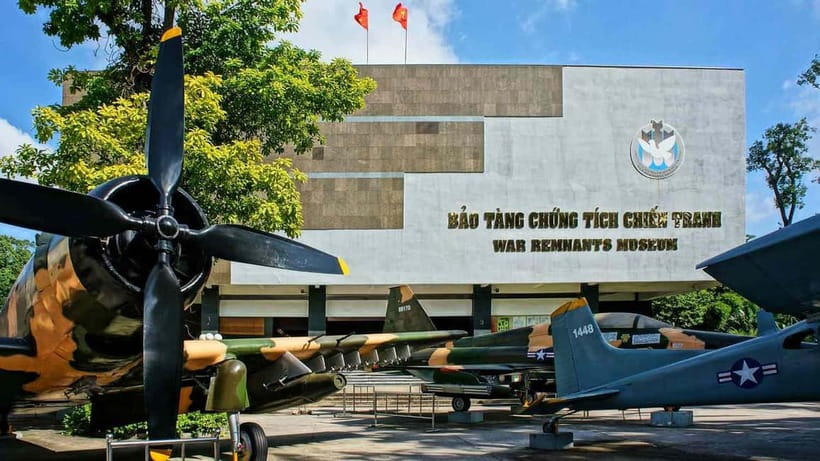
I especially like the emotional punch of the War Remnants Museum and how it’s paired with major landmarks like Independence Palace. One possible drawback: the day depends on smooth timing, and there have been reports of long pauses if English clarity or water-bus ticket coordination isn’t handled well.
In This Review
- Key things to know before you go
- Pickup, pacing, and what $30 really covers
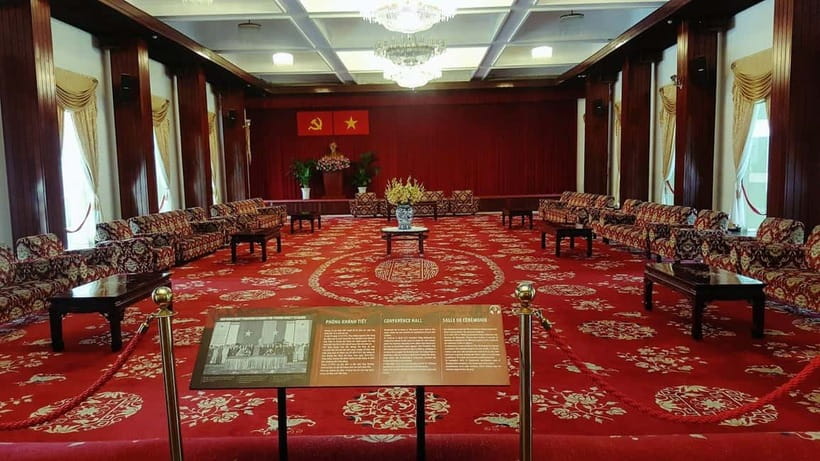
- Independence Palace: French-influenced rooms with big political gravity
- War Remnants Museum: emotional weight you should plan for
- Saigon Notre Dame Cathedral: iconic, romantic, and photo-friendly
- Central Post Office by Eiffel design: old-world order in a modern city
- Lunch pause: the one gap that can save your afternoon
- Cho Lon and Binh Tay Market: Chinatown through the supply chain
- Thien Hau Pagoda: incense, devotion, and a calm break
- Bach Dang Wharf and the Saigon Water Bus ride for skyline views
- Guide quality is the difference between a good day and a frustrating one
- How long is the tour really, and what should you do with the rest of your day
- Is it worth it? The value math for your Saigon time
- Who should book this tour
- Should you book this Saigon tour?
- FAQ
- How long is the Ho Chi Minh City half-day or full-day tour?
- Where does the tour pick up and drop off?
- What’s included in the price?
- Is lunch included?
- Do I need to pay entrance fees separately?
- Are the Saigon Water Bus and river views part of the tour?
- What languages are available for the guide?
- Is free cancellation available?
Key things to know before you go

- French colonial hits in a tight loop: Independence Palace, Notre Dame Cathedral, and the Central Post Office by Eiffel design
- War Remnants Museum is not a quick photo stop: plan to slow down and absorb the exhibits
- Cho Lon and Binh Tay Market feel like real daily life in District 5 and 6
- Thien Hau Pagoda brings a spiritual reset with incense-filled halls and sea-goddess devotion
- Bach Dang Wharf + Water Bus lets you see modern skyline moments from the river
- Guide quality can vary: a great guide can make facts click; communication issues can waste time
Pickup, pacing, and what $30 really covers
This is a half-day to full-day style tour (listed as 4 hours to 1 day), with the classic rhythm being morning landmark core, a lunch break, then Chinatown, and finishing with the water-bus ride along the river. The tour includes pickup and drop-off at the center of Saigon, transportation in an AC car, bottled water on board, entrance fees, and a friendly guide.
At around $30 per person, the value is less about bargain pricing and more about what’s bundled: you’re not spending your time figuring out routes, paying entrance fees one by one, or negotiating a timeline across multiple neighborhoods. If you’re short on time, that “logistics solved” factor matters.
The main thing to consider is pacing. You’ll move between very different places—palace rooms, museum exhibits, a cathedral, markets, and a river ride—so you’ll want comfortable shoes and a mind-set that this is a guided overview, not a slow, choose-your-own-adventure day.
You can also read our reviews of more city tours in Ho Chi Minh City


Independence Palace: French-influenced rooms with big political gravity
Independence Palace (Reunification Palace) is the anchor stop for the tour’s morning. You’ll walk through grand halls and secret chambers tied to Vietnam’s leadership history, with an emphasis on the building’s French-influenced architecture and interiors from the French period. If you’ve only seen photos, the scale and layout make it easier to understand how the place functioned beyond being a landmark.
What I like about this stop is that it gives context before the more direct conflict-focused museum visit later. You get the sense that politics, power, and everyday life were all connected to specific rooms and systems in the building.
The potential drawback is that you can feel “sped through” if your group is moving quickly. If you’re the type who reads every label, you may want a quiet moment when your guide pauses. This palace stop works best when you’re willing to listen, then look longer when something catches your eye.
War Remnants Museum: emotional weight you should plan for
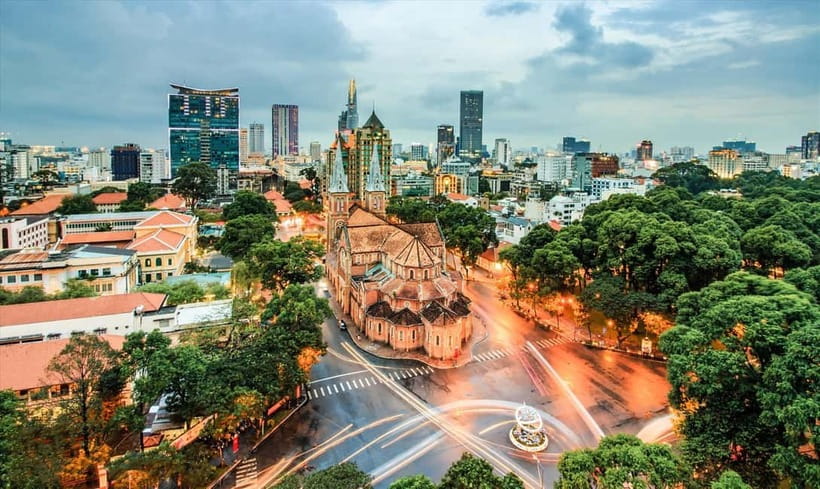
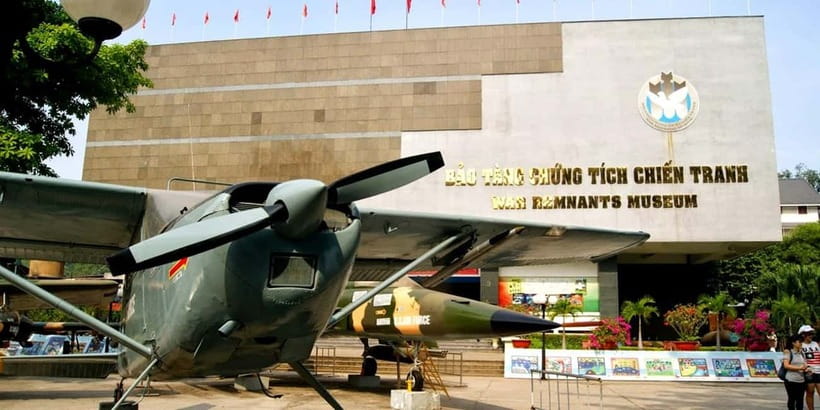
Next up is the War Remnants Museum. This is the stop most likely to change the mood of your day. The exhibits, historic photos, and wartime artifacts focus on the pain and loss that Vietnamese people suffered during conflict, and the way this is framed pushes you to feel the human cost rather than treat it as a history lesson.
I like that the tour doesn’t hide behind neutral sightseeing here. It’s a straightforward educational visit, and if you want to understand how the country remembers, this is one of the best places for it.
Because the subject matter is intense, it can also be exhausting. Bring a little mental space. If your group energy starts to dip, that’s normal. This is not the time to rush for the next photo because you feel you should keep up.
Saigon Notre Dame Cathedral: iconic, romantic, and photo-friendly
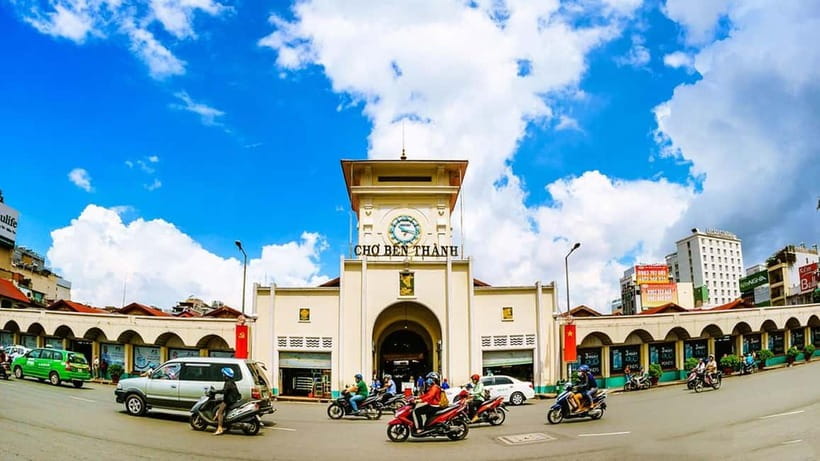
After the museum, the tour heads to Saigon Notre Dame Cathedral, also called the Cathedral of the Virgin Mary. It’s a landmark people love for a reason: the building’s look is instantly recognizable, and it has that long-standing presence that makes it feel woven into daily city life.
You may notice locals using it as a meeting point and couples taking wedding photos. That small detail matters because it keeps the day from feeling like you’re only visiting museums. You’re in a place that still holds meaning now.
The only caution: since it’s a famous photo stop, it can feel crowded depending on timing. If you want better photos, take a moment to step aside from the main flow and wait for a gap in the crowd.
Central Post Office by Eiffel design: old-world order in a modern city
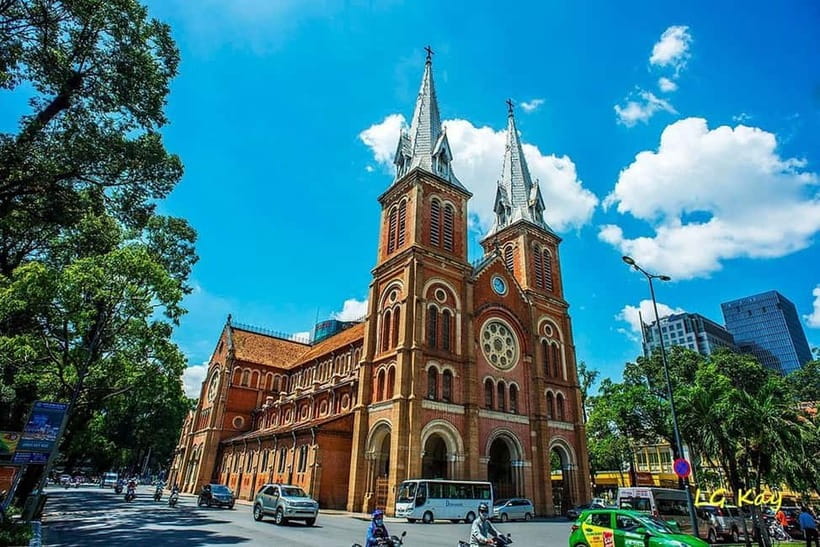
Across the street, the Central Post Office is a standout for architectural fans. It’s designed by Gustave Eiffel, the mind behind the Eiffel Tower, and the ornate French colonial details and patterns make this more than a functional building.
What makes this stop work well in a tour is contrast. You just moved from the museum’s emotional content into a place that feels orderly and precise. The post office gives your eyes a chance to rest while you still get a strong sense of historical influence.
If you’re the type who enjoys practical details, it helps to know you’re looking at a building where design and public use meet. Even if you don’t need to mail anything, you’ll likely want to pause inside just to take in the space.
You can also read our reviews of more tours and experiences in Ho Chi Minh City






Lunch pause: the one gap that can save your afternoon
Lunch is listed as optional, served at a local restaurant after the morning core. This is one of the most valuable pieces of the day, because it keeps your energy stable before Chinatown and the water-bus ride.
If you do choose lunch, you’ll probably find it easier to stay patient. Markets can take longer than you expect, and the river portion depends on timing.
If you skip lunch, you might still need a quick snack between stops. Markets include lots of tempting food, but the tour plan is built around structure, and getting too hungry can turn “interesting walking” into “fast frustration.”
Cho Lon and Binh Tay Market: Chinatown through the supply chain
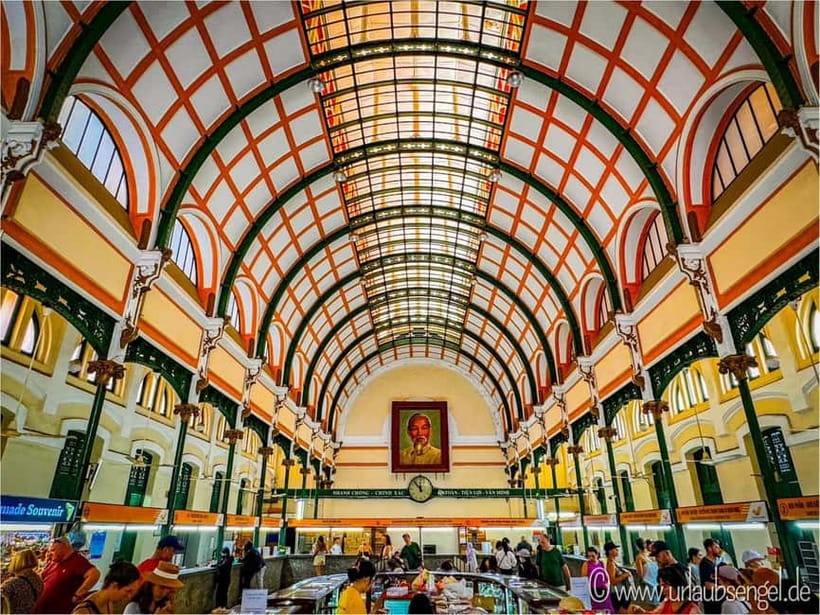
In the afternoon, you head to Cho Lon in Districts 5 and 6, focusing on Binh Tay Market. This is described as the city’s most famous wholesale market, and it shows. You’ll walk among busy stalls where the atmosphere feels connected to how people and businesses really operate, not just how tourists view the neighborhood.
I like that the tour frames this as culture, markets, and history meeting in one place. If you pay attention to what’s for sale and how vendors move, you get a sense of how Chinatown supports the wider city.
The practical drawback is that markets can be loud and tight. If you have mobility issues or get overwhelmed by crowds, this stop needs extra caution. Your best strategy is to keep your pace steady, not fast, and let your guide lead you through the spots they know.
Thien Hau Pagoda: incense, devotion, and a calm break
Next is Thien Hau Pagoda, one of Chinatown’s oldest and most sacred temples. It’s dedicated to the Goddess of the Sea, and people come to pray for peace, luck, and prosperity. The key here is the atmosphere: incense-filled halls and intricate architecture make it feel like a working place of faith, not just a museum exhibit.
What I like about this stop is that it resets your brain after a market. You go from visual noise to a quieter rhythm. Even if you’re not religious, you can still respect how locals use the space.
The only caution is timing. If you’re rushing to the next stop, you may miss the feeling here. Give yourself a minute to slow down, look around, and let the pace change.
Bach Dang Wharf and the Saigon Water Bus ride for skyline views
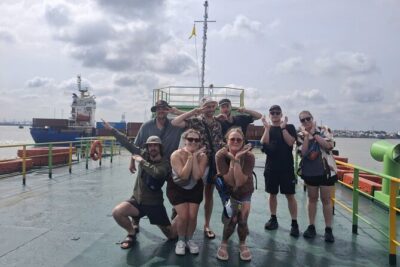
The day ends at Bach Dang Wharf, where you board the Saigon Water Bus. This is the part that often feels like the “why didn’t I do this earlier?” moment, because the river angle changes how you read the city.
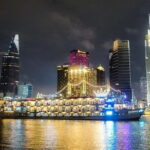
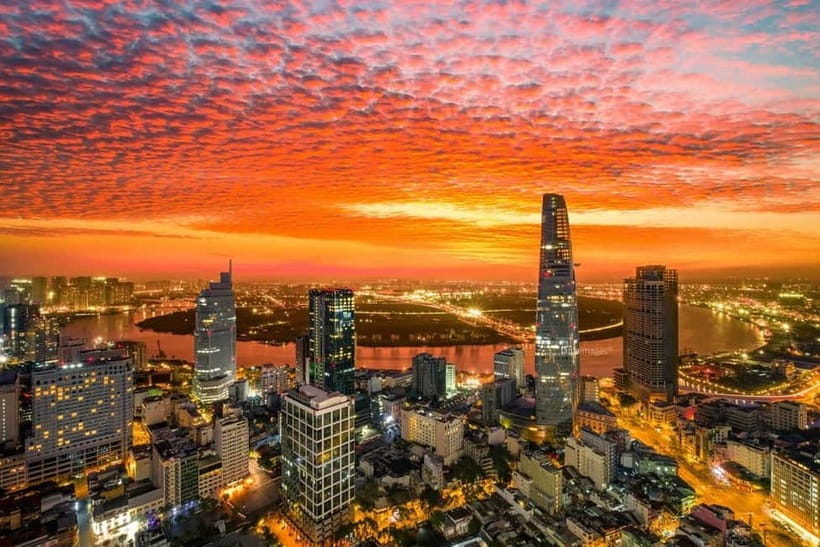
As you glide along the Saigon River, you’ll pass by major sights like Landmark 81 and Thu Thiem Bridge. The mixture of older landmarks with modern structures is what makes the ride click. It’s a different kind of sightseeing where you’re not walking past buildings; you’re watching the city reveal itself from water.
One possible drawback is coordination. A few reports point to waiting when the river-bus tickets weren’t organized well, including a case where people waited over an hour at a coffee shop. That’s not something you can control, but you can control your expectations. If you’re prone to stress when plans slip, keep a little buffer in your day.
Guide quality is the difference between a good day and a frustrating one
The tour is run by Asian Travel Discovery and uses an English-speaking guide, with surcharges for other languages. The language options listed include English, Chinese, French, Japanese, Italian, Spanish, Korean, German, and Russian. A private group is also available.
From the guide experiences tied to this route, the best days come when your guide is clear and organized. One positive mention includes a guide named Soli, described as very good, patient, and knowledgeable. Another positive example is Tuco from TNK travel, who helped turn a confusing start into a solid experience.
The caution is also clear: if English is hard to understand, or if your group meets delays at pickup and ticket handoffs, your time shrinks fast in Saigon. Pay attention to meeting points and stay ready at the stated times. If your communication feels scattered, ask the guide or operator to confirm the exact flow of stops for your group.
How long is the tour really, and what should you do with the rest of your day
The listing says 4 hours to 1 day, and the itinerary describes an ending around 6:00 PM with drop-off back to your hotel or meeting point. That means you’ll likely have the morning and afternoon covered, then the river ride to finish.
If you book the half-day version, you might still want to plan your afternoon lightly. Markets and museums can stretch when groups ask questions. If you book the full-day side, treat it as your main Saigon experience and keep evening plans simple.
A practical move: schedule something low-effort after the tour. You’ll have walked through big places, and even when the tour is well-run, the emotional stops like the War Remnants Museum can make you tired in a way you don’t fully notice until later.
Is it worth it? The value math for your Saigon time
At about $30 per person, this tour is best viewed as a time-saver plus a curated mix of places. You’re paying for:
- AC car transport across key neighborhoods
- entrance fees
- a guide who connects the dots between buildings and events
- a water-bus ride that you might not plan on your own without local help
- bottled water and pickup/drop at central Saigon
If you like structure and you want a fast path to the big names—Independence Palace, War Remnants Museum, Central Post Office, Cathedral, Chinatown, Thien Hau Pagoda, and the river ride—then it’s good value.
If you hate guided groups, feel uncomfortable in dense markets, or want to spend long hours in just one museum, you might find this tour too “many stops, limited time.” In that case, a more relaxed plan with fewer priorities may suit you better.
Who should book this tour
This tour is a strong match if you want a guided overview of central Saigon plus Chinatown without having to map everything yourself. It also fits well if you’re traveling with limited time and want to see both colonial-era landmarks and modern city views from the river.
It’s less ideal if you need a very quiet pace, you struggle with crowd noise, or you’re sensitive to emotionally heavy exhibits and prefer to control how long you stay.
Should you book this Saigon tour?
Book it if you want one guided day that covers the core landmarks, the War Remnants Museum, and the water-bus river view, all with transport and entrance fees handled. It’s a smart pick for first-time visitors who want a guided sense of how Saigon fits together.
Skip or modify your plan if you’re already planning to spend extended time in museums, dislike market environments, or if your schedule is so tight that even a short waiting delay would ruin your day. If you do book, keep your expectations realistic for timing around the river portion, and prioritize comfort: good shoes, water, and a calm attitude will make the day feel worth it.
FAQ
How long is the Ho Chi Minh City half-day or full-day tour?
The tour is listed as lasting 4 hours to 1 day, and it notes you should check availability for starting times.
Where does the tour pick up and drop off?
Pickup and drop-off are included at the center of Saigon, with drop-off back to your hotel or meeting point around the end of the day.
What’s included in the price?
Included items are pickup and drop-off at central Saigon, a friendly professional guide, an English-speaking guide, AC car transport, entrance fees, bottled water on the car, and optional lunch.
Is lunch included?
Lunch is listed as optional. The tour includes lunch if you choose the lunch option.
Do I need to pay entrance fees separately?
No. Entrance fees are included.
Are the Saigon Water Bus and river views part of the tour?
Yes. The itinerary includes boarding the Saigon Water Bus at Bach Dang Wharf and riding along the Saigon River for city views.
What languages are available for the guide?
English is available, and other languages are listed as Chinese, French, Japanese, Italian, Spanish, Korean, German, and Russian (with a surcharge for other languages).
Is free cancellation available?
Yes. Free cancellation is offered, with cancellation up to 24 hours in advance for a full refund.