REVIEW · HO CHI MINH CITY
Grandma Noodles, Good Coffee, Exotic Fruits & Little History
Book on GetYourGuide →Operated by Spring Saigon Tours · Bookable on GetYourGuide
Saigon hits different when it is slower. This small-group 3-hour walk with Spring Saigon Tours swaps crowds for back-alley breakfasts and stories, with guides Hieu and Spring keeping the pace easy. I especially love the way the tour pairs comfort food with real context, from grandma-stall noodles to a local take on the Vietnam War.
One thing to plan for: you will be on your feet in narrow alleys and markets, so it is not a great match if you have mobility limits.
Key moments you should look forward to
- Grandma-style noodle dumplings soup served from a tiny local setup
- Wet market fruit safari at Saigon’s second-largest market, nicknamed the chessboard
- Vietnam War perspective told in a historic residential area, with stories you will remember
- Cà phê sữa đá coffee made with condensed milk and taught by a local expert
- Warm ginger tofu pudding finished with ginger syrup and coconut milk
- Small group of up to 6 with English-speaking guide help for questions as you go
In This Review
- Saigon, the Quiet Way: What Makes This Tour Special
- Grandma Noodles in a Hidden Alley: Breakfast Soup Without the Noise
- Wet Market Fruit Safari at the Chessboard: Tasting Like You Mean It
- Vietnam War Stories in a Historic Area: A Different Kind of History
- Expert Vietnamese Coffee: Cà Phê Sữa Đá (and the Lime Option)
- Ginger-Syrup Silken Tofu: The Soft Landing at the End
- Backstreet Wander: Where Saigon Actually Lives
- Walking Logistics You Should Know Before You Go
- Price and Value: Is $40 a Good Deal
- Who This Tour Fits Best (and Who Might Not Love It)
- Should You Book Spring Saigon Tours for This Quiet Side of HCMC?
- FAQ
- How long is the tour?
- What is the group size?
- Is transportation included?
- Where do we meet?
- What language is the guide?
- Is the tour suitable for people with mobility impairments?
Saigon, the Quiet Way: What Makes This Tour Special
This is the Saigon morning you do not get when you arrive late in the day. Instead of high noon traffic and packed cafes, you start while the city still feels half-asleep—steam hissing, chopsticks scraping, and vendors doing their daily rhythm.
I like the tone right away. It is not a loud food parade. It is closer to a calm wander with lots of bites and just enough explanation to connect the food to daily life. You also get a guide who can answer questions on the spot. In past tours with Hieu, people walked away impressed by his clear English and his comfort answering everything from food choices to what life was like during and after wartime.
The small group size matters here. With only up to 6 people, you are less likely to get split up, rushed, or lost in a human crowd.
Grandma Noodles in a Hidden Alley: Breakfast Soup Without the Noise
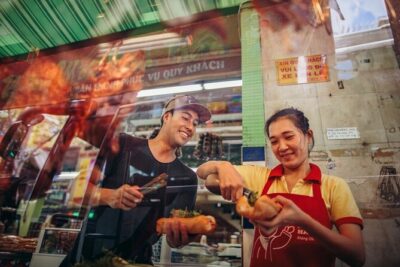
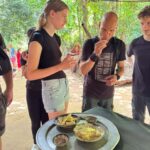
The tour starts where locals actually eat—no big signage, no menu hunting from across the street. You will land at a stall-like spot for Vietnamese noodle dumplings soup, the kind that feels simple until you taste the broth and realize the work is in the details.
This part is more than food. It is about learning how to navigate the city like a person who belongs there for a day. You will sit on stools, watch how the order-and-eat flow works, and notice how quickly you fall into the pace: sip, taste, chopsticks, then ask a question when the timing feels right.
In at least one past run, the experience also began with a small breakfast stop for bo kho in an ultra-tiny local restaurant before moving on to the main noodle moment. That fits the spirit of the tour: quick, local, and hard to find on your own.
Photo note: even though it is a locals-first setup, you can still take pictures. The trick is to be polite, keep it quick, and do not block someone mid-bite.
You can also read our reviews of more historical tours in Ho Chi Minh City


Wet Market Fruit Safari at the Chessboard: Tasting Like You Mean It
From noodle warmth, you head into a wet market fruit maze—Saigon’s second-largest local market, known as the chessboard. This is where the tour earns its playful reputation, because the fruit list reads like it was written for a fantasy story.
You may taste things like:
- rambutan
- mangosteen
- breast milk fruit (yes, that name)
- sapodilla
The best part is not just variety. It is the hand-on tasting approach. You are not sent to a “look but do not touch” display. You get fruit you can actually eat, and the guide helps you make sense of what you are tasting and why locals buy it.
Practical tip: fruit can be messy. Bring tissues if you tend to get sticky fingers. Also, eat slowly at this stop. The sweetness can hit fast, and you will want to keep your appetite for what comes after coffee.
If you have dietary restrictions, bring them up early. On one past tour, a guest who does not eat beef or pork was offered a vegan option when a meat-based stop came up. That tells me the guides are paying attention, not ignoring preferences.
Vietnam War Stories in a Historic Area: A Different Kind of History
Next comes history, but not the textbook kind. You walk through an older housing-block area where the Vietnam War is discussed from a local perspective, focusing on resilience and daily life. The tour keeps dates minimal and uses short story beats, so you end up with understanding that feels human instead of chronological.
What makes this section worthwhile is the contrast. You just ate, tasted, and smelled the city. Now the guide connects it to why people live the way they do—what survival looks like, what memory sounds like, and how neighborhoods carry the past without turning it into a museum exhibit.
You should go into this part ready for mixed feelings. It is not designed to be heavy for the sake of heaviness, but it is also not pretending the war was distant. If you want only cheerful stops, this might be more serious than you planned. If you want context, it hits.
Expert Vietnamese Coffee: Cà Phê Sữa Đá (and the Lime Option)
Coffee is where the tour changes the energy. You watch Vietnamese coffee drip in the classic style: slow and deliberate into a glass with condensed milk. Then comes the taste—sweet, strong, and unlike the lighter, more standardized coffee chain experience.
The guide also helps you understand the why. This is not just caffeine. It is a culture of comfort, speed, and routine. In one past tour, the coffee stop happened at one of the older, character-filled coffee shops in Saigon, with plenty of charm and history baked into the atmosphere.
And here’s the fun local variation you may hear about: cà phê chanh, coffee with lime. It sounds weird if you are used to sweet and simple drinks, but the guide explains how it fits Vietnamese tastes. If you are the adventurous type, ask what to expect before you take a sip.
Ginger-Syrup Silken Tofu: The Soft Landing at the End
After walking and tasting all morning, dessert feels like a warm exhale. You finish with silken tofu in warm ginger syrup, often paired with coconut milk. The texture is smooth, the flavor is gentle, and the ginger adds warmth without overpowering.
This ending matters because it keeps the tour from becoming only “try this, then try that.” Instead, it closes on something calm. It also fits the tour’s overall theme: everyday comfort foods, the kind Vietnamese grandmas might give when someone is tired or emotionally worn out.
If you are sensitive to ginger, take small bites at first. If you love ginger, you will probably want to linger and ask for a second taste.



Backstreet Wander: Where Saigon Actually Lives
Between stops, you move through hẻm alleys—those narrow lanes where daily life plays out in full view. This is not just transit. It is part of why the tour feels different from standard city sightseeing.
You will notice how people set up shop, how streets smell right before cooking starts, and how locals walk their routines without performing for tourists. It makes the food and history feel grounded, not staged.
A nice touch is that the guide often keeps time for questions at the end. One approach described in past tours includes finishing somewhere quiet for open chat—coffee, a bench, and space to ask about history, daily life, or what to eat next.
Walking Logistics You Should Know Before You Go
This tour is short—3 hours—but it does include real walking through narrow alleys and market sections. Wear comfortable shoes and something you do not mind getting a little warm. Markets have their own smells and sounds, and that is part of the experience.
The tour is also not suitable for people with mobility impairments, mainly because the route goes through tight, uneven spaces.
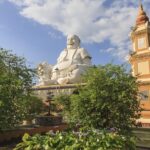
You will meet in front of a monument of a monk. One practical note: arrive a few minutes early so you can spot your guide and settle your group before the walking starts. Transportation is not included, so you’ll want to plan how you get to that point and back afterward.
Price and Value: Is $40 a Good Deal
At $40 per person for 3 hours, you are paying for more than food. You are paying for:
- a live English-speaking guide
- access to places you would likely skip or miss on your own
- multiple tastings (no “one tiny sample” approach)
- context that connects meals to daily life and history
- a small group setup (limited to 6 people)
Also, the tour says everything is included, which matters in Vietnam when you want to avoid budgeting every stop. If you like guided experiences, especially ones that trade big sights for real local food and stories, this price starts to feel fair fast.
If you are the type who prefers to travel completely on your own with zero structure, then $40 might feel like a lot. But if you want someone to translate the signals—what to eat, where to stand, what matters—then you get your money back in time saved and confusion avoided.
Who This Tour Fits Best (and Who Might Not Love It)
This is best for you if:
- you like authentic street food and do not need fancy presentation
- you enjoy history that feels personal, not just dates
- you want a calmer morning in Saigon
- you like having an English guide who will answer questions without making you feel dumb
This may not be for you if:
- you need totally step-free access (the route is not mobility friendly)
- you hate walking through busy, narrow market lanes
- you only want “big tourist sights” instead of neighborhood life
Also, if you eat beef or pork, you will likely be fine since the tour offers local food variety. If you do not eat those foods, tell the guide early. The fact that a vegan alternative was provided on a prior run suggests your request will be taken seriously.
Should You Book Spring Saigon Tours for This Quiet Side of HCMC?
I think you should book it if you want Saigon with less noise and more meaning. The core value here is the mix: grandma-stall noodles, market fruit tasting, war stories with local perspective, expert Vietnamese coffee, and a comforting finish with ginger-syrup tofu. It is not a checklist. It is a morning story.
Skip it only if you cannot handle walking in tight spaces or you need a more traditional sightseeing format. Otherwise, this tour is a smart way to spend your time—especially for first-timers who feel overwhelmed by the city’s speed.
You leave with full stomachs, yes. More than that, you leave with a Saigon that feels human.
FAQ
How long is the tour?
The tour lasts about 3 hours.
What is the group size?
The tour is a small group, limited to 6 participants.
Is transportation included?
No. Transportation to the meeting point and back home is not included.
Where do we meet?
You meet in front of a monument of a monk.
What language is the guide?
The guide leads in English.
Is the tour suitable for people with mobility impairments?
No. The route involves walking through narrow alleys and markets, so it is not suitable for people with mobility impairments.