REVIEW · HO CHI MINH CITY
Using Medium Format film camera to discover Saigon
Book on Viator →Operated by Bui Hoang Tu · Bookable on Viator
Saigon turns slower with film. This private photo walk uses a medium format TLR camera and one roll of B&W film to help you see Ho Chi Minh City with more patience—and fewer autopilot moments. I really liked the hands-on feel of the analog setup (simple, old, and surprisingly effective), and I also loved the way the tour pairs photography with a local coffee stop and street culture. One possible drawback: you only get one roll, so you’ll need to choose your shots carefully instead of spraying photos like your phone.
I also appreciate that the experience is built around real daily life, not a checklist of monuments. You start at a local address in District 1 area, grab the camera, get a short briefing, and then you’re guided through nearby alley street markets and an old apartment area that’s kept off the main tourist path. With Bui Hoang Tu as your host, you’re not just photographing walls—you’re talking to people, eating, and learning how Saigon sounds when you’re not rushing.
Finally, this works best if you can slow down and walk comfortably. Good weather is required, and since you’ll be out in the neighborhood for a few hours, plan for a bit of strolling and lots of looking through a viewfinder.
In This Review
- Key highlights you’ll feel fast
- A Saigon photo walk that starts with restraint
- Who you’ll meet: Bui Hoang Tu and the TLR briefing
- Stop 1: Old-school coffee and a 1968 building moment
- Learning analog photography by doing, not performing
- Alley street markets and a hidden apartment area
- The local touch: breaking the ice with a translator
- What’s included (and what you’ll want to plan)
- Price, timing, and how to get the most from 3–4 hours
- Who this Saigon film experience is perfect for
- Who should consider something else
- Should you book this analog Saigon photo tour?
- FAQ
- How much does the tour cost?
- How long is the experience?
- What is included in the price?
- Where does the tour start and end?
- Is private transportation included?
- Is the tour affected by weather?
Key highlights you’ll feel fast
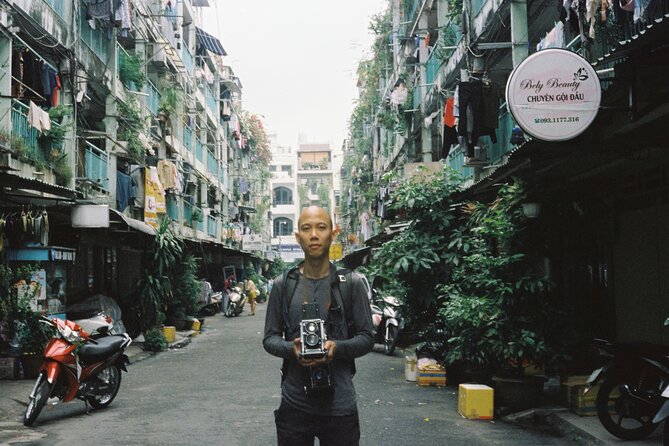
- Medium format B&W film + a TLR camera that changes how you frame a scene
- Coffee culture visit at an old-style shop, plus time near a 1968 building
- Alley street markets practice that teaches framing and pacing
- A translator host (Bui Hoang Tu) to help you break the ice with locals
- Only one roll of film forces focus and makes the experience more reflective
A Saigon photo walk that starts with restraint
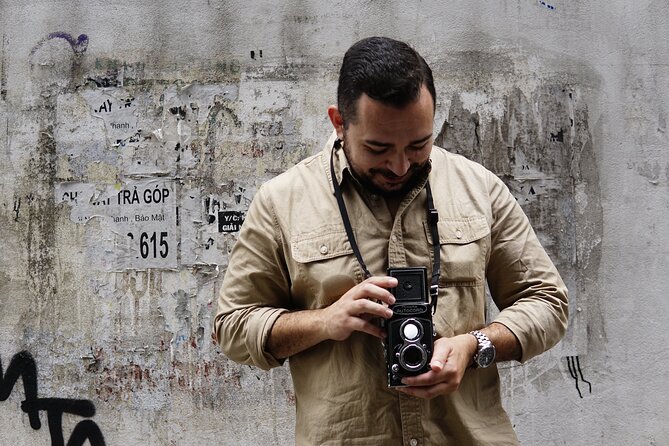
Most city tours train you to look fast. This one trains you to look slow. The moment you pick up the medium format camera, you feel the difference: it’s not about endless takes. It’s about committing. That one change makes Saigon feel less like background noise and more like something you’re actively participating in.
In Ho Chi Minh City, that matters. The streets move quickly, scooters cut across your peripheral vision, and shopfronts turn into kitchens in seconds. With film, you notice more. You wait for the moment when the light, the faces, and the small street details line up. You stop thinking, I need a photo, and start thinking, what is the scene actually saying?
The best part is that photography isn’t separated from daily life. You get the coffee and the street food culture context up front, so when you later photograph alleys and markets, you already understand what you’re seeing. It’s not just images. It’s meaning.
You can also read our reviews of more tours and experiences in Ho Chi Minh City.

Who you’ll meet: Bui Hoang Tu and the TLR briefing
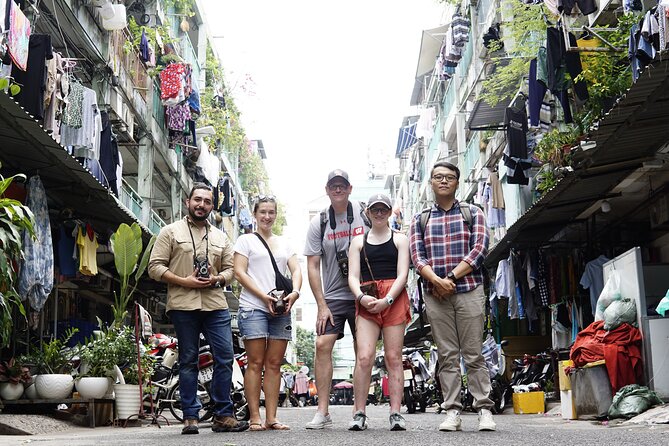
The tour starts at 73/8 Hồ Hảo Hớn, Phường Cô Giang, Quận 1. From there, you meet your guide, Bui Hoang Tu, and you pick up a TLR camera plus one roll of black-and-white medium format film.
The briefing is short and practical, not a lecture. You’ll get what you need to operate the camera for the time you have—enough to start shooting without turning the session into a workshop that never ends. You’ll also get some small talk about Saigon, which sounds simple, but it helps set the tone. It makes your first conversations feel natural instead of scripted.
Because this is a private experience for your group, you’re not competing with anyone’s curiosity or camera questions. If you need a moment to adjust how you’re holding the camera or where you’re placing your feet in a tight market lane, you can take it.
Stop 1: Old-school coffee and a 1968 building moment
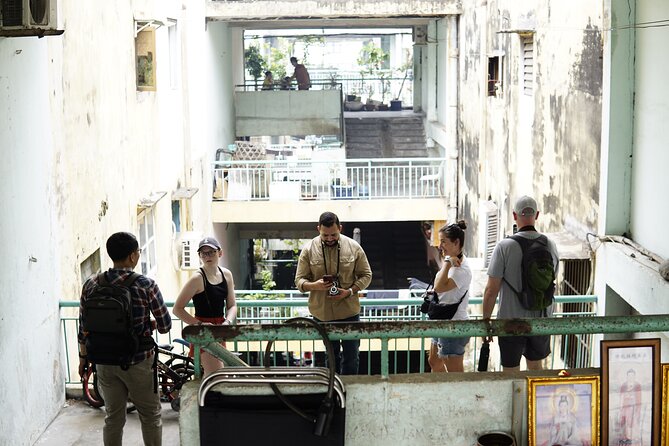
One of the first experiences is a café stop—an old coffee shop that’s about 90 years old—where you can sit down and enjoy coffee like locals. That isn’t just a drink break. It’s a rhythm check.
In Saigon, coffee culture is its own language. You’ll notice how people wait, how they talk, how the café feels like a small social center rather than a quick pit stop. Sitting for a bit gives you time to calibrate before you start taking photographs. It also makes your conversations later feel easier because you’re not starting from zero.
The tour also includes time near a 1968 building of HCMC. The point here isn’t to memorize dates. It’s to connect street life with the city’s layered timeline—especially when you move from older buildings into the more everyday chaos of alley markets.
Potential drawback to plan around: if you’re the type who hates sitting still, the café portion may feel like a pause. But for this concept, it’s essential. It sets the pace for shooting on film.
Learning analog photography by doing, not performing
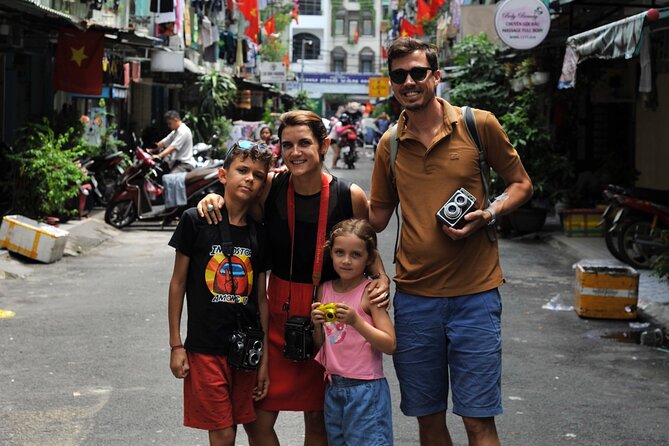
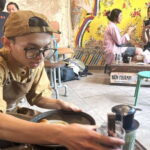
The core of the experience is learning how to photograph with a medium format TLR camera—plus practicing immediately. Instead of being stuck in theory, you’re put into scenes where the limits of film become a teacher.
Here’s what the one-roll format changes:
- You think about composition before you press anything.
- You pay attention to light and timing.
- You walk slower and watch more carefully.
One of the most praised parts of this kind of tour is exactly that: the camera feels like a relic, old and simple, and its charm is the way it forces you to be thoughtful. When you only have a few photos available, every frame feels like a decision, not a default.
As you move through the neighborhood, you’ll likely find yourself re-checking focus and framing—because mistakes cost you shots. That’s frustrating for the first few minutes, then oddly satisfying. It trains you to see with more care.
A practical note: B&W film tends to highlight texture, contrast, and shapes. In a street market area with signage, hands, faces, and shop shadows, that can look especially powerful.
Alley street markets and a hidden apartment area
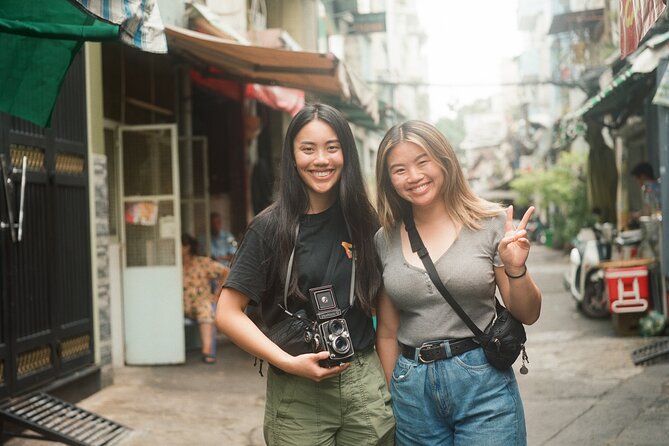
After the first coffee stop, the route leans into smaller lanes: alley street markets nearby and an old apartment area hidden in town. This is the part that feels most like Saigon on an average day—less polished, more real, and full of details you’d miss if you only stayed on major roads.
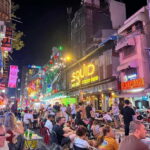
The markets are a classroom for photography. You get patterns: rows of items, repeated colors, faces that pass close by, and narrow sightlines. You also get moments of human scale—people eating, chatting, selling, and moving through the space like it’s normal, because it is.
In tight alleys, the camera becomes a tool that makes you present. The physicality of the TLR camera can also change how people respond. You’re not just holding a phone overhead; you’re standing and looking like someone who’s actually there to pay attention. That naturally leads to more conversation.
The hidden apartment area adds another layer. Even if you’re not trying to photograph architecture specifically, these places often have quieter corners—small doorways, stair areas, windows, and lived-in details. Those scenes can be great for black-and-white because the mood often comes from contrast: shade against sun, rough walls against bright signs.


The local touch: breaking the ice with a translator
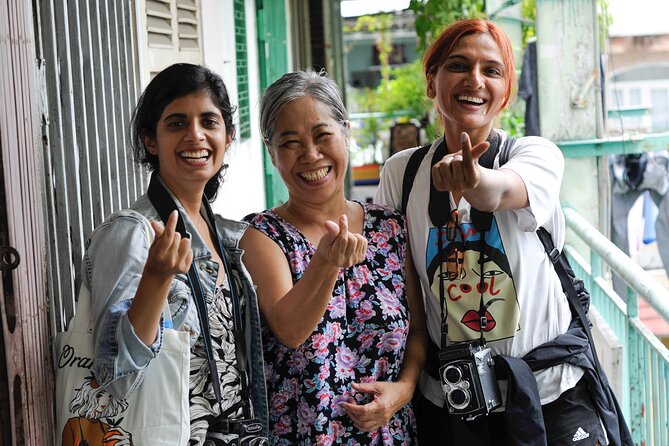
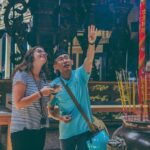
One of the best reasons to book a tour like this is social access. The tour includes a host who can help you break the ice and act as a translator so you can connect with local people during stops and on the street.
This matters because analog photography can make you look slightly more curious than you would with a phone. People may wonder what you’re doing, or they may just be curious. When you have support in the moment, you’re more likely to get friendly exchanges instead of awkward pauses.
You also don’t have to guess how to order coffee or how to move through the spaces respectfully. The guide’s role keeps the experience human. It’s not a performance for your camera. It’s interaction.
What’s included (and what you’ll want to plan)
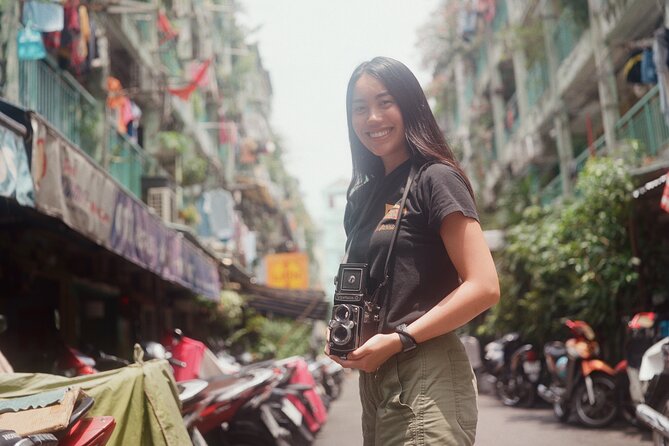
This experience is priced at $148.27 per person and runs about 3 to 4 hours.
Included:
- Coffee and/or tea
- An analog camera (TLR)
- One roll of black-and-white medium format film
Not included:
- Private transportation
So the value question comes down to what you’re really paying for. For this price, you’re getting more than gear rental. You’re getting:
- a hands-on analog photography session with an actual medium format camera,
- a curated coffee stop tied to local culture,
- and a translator-led walk through alley markets and lesser-seen areas.
If you’re the kind of traveler who enjoys craft, process, and real conversation, that’s a fair match. If you only want quick sightseeing shots and don’t want to think about framing or film limits, it may feel like too much effort for too few photos.
Price, timing, and how to get the most from 3–4 hours
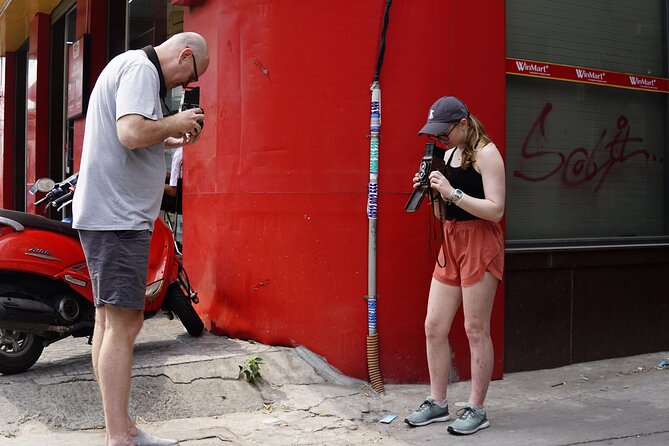
Three to four hours is long enough to do two things well: first, settle into the analog rhythm; second, go out and practice. It’s also short enough that you’re not spending your whole day tethered to a single neighborhood.
The timing usually works best when you want a focused block of experiences: coffee culture up front, photography practice right after, and market walking that gives you enough scenes to choose from—without dragging into a full half-day slog.
Since the experience requires good weather, check conditions before you go. Film tours are especially sensitive because you’ll want light and comfort for the walk, and you’ll likely be concentrating through the viewfinder rather than rushing indoors for cover.
Who this Saigon film experience is perfect for
I think this tour fits travelers who like any of the following:
- You enjoy hands-on experiences more than passive sightseeing.
- You’re curious about medium format film photography, or you’ve used cameras before and want a different feel.
- You want coffee and street food culture, not just shots of food.
- You’re open to conversation and you’ll appreciate having Bui Hoang Tu help you connect.
It can also be a great choice for photographers who feel tired of tourist crowd optics. The medium format format slows you down, and the local coffee + alley routes keep it grounded.
Who should consider something else
If your travel style is strictly grab-and-go, this may test your patience. One roll of film means fewer shots, and that’s the whole point—but it’s not always comfortable for everyone.
Also, since private transportation is not included, you’ll want to be ready to reach the start point using public transit or your own plans. The meeting point is near public transportation, which helps, but it still means you’re not being chauffeured door-to-door.
Should you book this analog Saigon photo tour?
If you want a Saigon experience that feels personal and a little old-school, book it. The camera choice and the one-roll limit are the heart of the value: they force focus, and they make you engage with the city instead of just collecting images. Add in the 90-year-old coffee shop stop, the chance to photograph alley street markets, and the translator support with Bui Hoang Tu, and you get a walk that’s about people as much as pictures.
If you hate waiting, dislike learning equipment, or expect dozens of photos from a single session, you might want to pass. This one is for slower travelers who enjoy craft, coffee, and conversation more than quantity.
FAQ
How much does the tour cost?
The price is $148.27 per person.
How long is the experience?
It lasts about 3 to 4 hours.
What is included in the price?
Coffee and/or tea are included. You also receive an analog camera and one roll of black-and-white medium format film.
Where does the tour start and end?
It starts at 73/8 Hồ Hảo Hớn, Phường Cô Giang, Quận 1, Thành phố Hồ Chí Minh 70000, Vietnam. It ends at Chợ Bàn Cờ, Phường 3, Quận 3, Thành phố Hồ Chí Minh.
Is private transportation included?
No. Private transportation is not included.
Is the tour affected by weather?
Yes. The experience requires good weather. If it’s canceled due to poor weather, you’ll be offered a different date or a full refund.