REVIEW · HO CHI MINH CITY
Tales of Cho Lon Cultural Walking Private Tour
Book on Viator →Operated by SaigonWalks by Scivi Travel · Bookable on Viator
Cho Lon reveals itself one street at a time. This private walk in Ho Chi Minh City’s Chinatown connects assembly halls and street-food culture in a way that feels practical, not museum-like.
I especially like the mix of spiritual landmarks and everyday life: you’ll walk past places people actually use, then stop for snacks and coffee that match the neighborhood’s rhythm. My one caution is simple: it’s a walking tour, and the hot weather can feel intense if you’re not used to it.
If you do this early, it’s more comfortable. The best part is how the guide ties the architecture and food to the different Chinese community groups in the area, so you understand what you’re seeing instead of just photographing it. The only possible drawback is you’ll cover ground on foot, with extra walking time added between stops.
In This Review
- Key highlights you’ll feel (fast)
- Why Cho Lon works so well on foot
- Price and what you’re really buying for $32
- Stop 1: Nghia An Assembly Hall (Teochew identity in plain sight)
- Stop 2: Thien Hau Pagoda and Tuệ Thành Assembly Hall
- Stop 3: On Lang Pagoda (Hokkien community ties)
- Stop 4: Cho Thủ Đô food area plus old-school coffee
- Stop 5: St Francis Xavier Church and Franco-Chinese architecture
- Stop 6: Binh Tay Market (Cho Lon Grand Market) and Sino-French style
- What your guide adds (and how it helps you in real life)
- Timing tips for a better experience
- Is it worth it for you?
- Quick FAQ
- FAQ
- How long is the Tales of Cho Lon Cultural Walking Private Tour?
- Where does the tour start and end?
- What time does it begin?
- How much does it cost?
- Is it a private tour?
- Do the stops require paid entry tickets?
- What are the main places you visit?
- Is there a mobile ticket?
- Is good weather required?
- What is the cancellation policy?
- Should you book this Cho Lon walking tour?
Key highlights you’ll feel (fast)
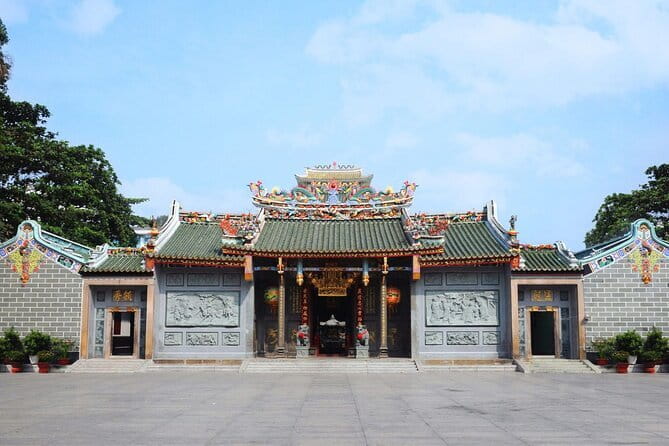
- Cho Lon meeting halls: Teochew, Hokkien, and more, all reflected in everyday religious spaces
- Temples with strong community identity: Thien Hau worship shows up again and again in different halls
- Street-food stop that includes coffee: one of the oldest coffee stands still operating, plus Cantonese-style snacks
- Franco-Chinese architecture you can spot: St Francis Xavier Church is a visual lesson in mixing influences
- Binh Tay Market structure: a large inner courtyard and Sino-French style, built in 1928
- Private guide attention: you stay with your group only, ideal for asking questions and moving at your pace
Why Cho Lon works so well on foot
Ho Chi Minh City can feel big and fast. Cho Lon is the opposite: it’s compact, character-heavy, and the details are all at street level. That’s why a walking tour makes sense here. You’re not just “visiting” places—you’re moving through the same trading streets and market areas that shape daily life.
This tour is designed for a clear theme: how the neighborhood became Chinatown-like, then how it still functions through community halls, temples, and food. You start at an assembly hall and end at Binh Tay Market, so your route naturally builds from faith and identity to commerce and crowd energy. It’s a 3 to 4 hour experience, and plan on roughly an extra hour of walking time between points, not just the time sitting inside.
You can also read our reviews of more walking tours in Ho Chi Minh City



Price and what you’re really buying for $32
At about $32 for a private, guided walk lasting 3 to 4 hours, this is one of those deals that feels fair because so much is included in the experience itself. Most stops list free admission, which matters in a neighborhood where the main value is access plus context. You’re paying for guidance that connects the dots between architecture, religious roles, and food culture.
It also helps that the tour provides a mobile ticket, which keeps things simple on the day. And since it’s private, you don’t get steamrolled by the pace of a bigger crowd.
If you want a low-stress way to see a part of the city that doesn’t feel like a theme park, this price level can be a good match.
Stop 1: Nghia An Assembly Hall (Teochew identity in plain sight)
Your tour starts at the courtyard of Hội Quán Nghĩa An on Nguyễn Trãi, in Quận 5. It’s also known by several names, including Quan De Temple and Ong Pagoda, which already hints at how these spaces served different community needs over time.
This hall is significant within the Teochew community, and it’s the kind of place where meaning is written into the setting: you’re not just looking at a building, you’re standing where community identity gets practiced and reinforced. For me, the value of starting here is that you get a foundation before moving on to other temples. When you later see similar motifs in Thien Hau worship, it’s easier to understand why the neighborhood repeats certain religious themes.
Practical consideration: courtyards and entry areas can be crowded with local foot traffic, so give yourself a moment to slow down and let the group settle before walking further.
Stop 2: Thien Hau Pagoda and Tuệ Thành Assembly Hall
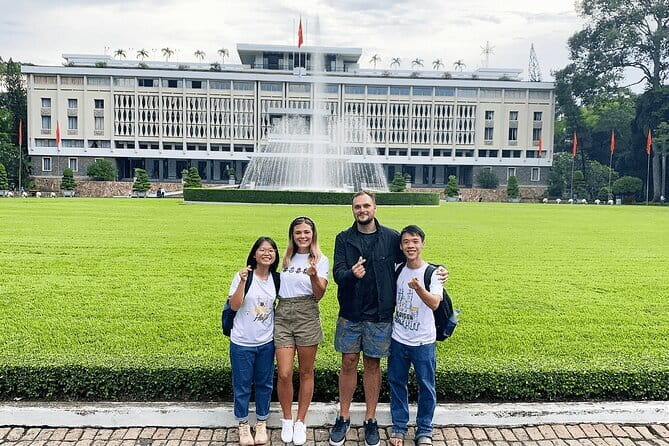
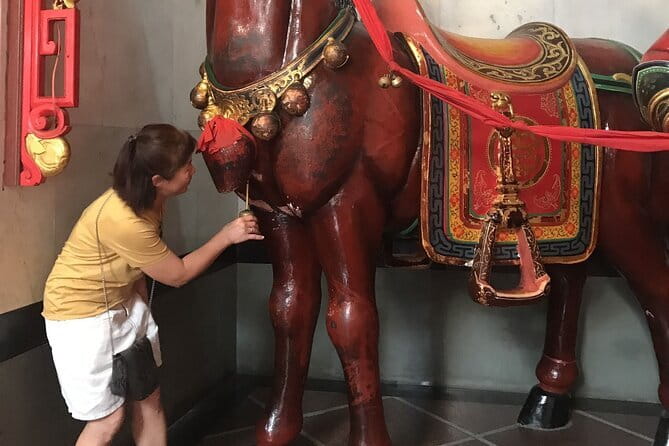
Next is Thien Hau Pagoda, also tied to Tuệ Thành Assembly Hall. You may hear it called Thien Hau Temple or Ba Chua Cholon Pagoda, and the focus is on worship of Thien Hau, the Holy Mother.
This stop is where the tour’s theme sharpens. You’re not just seeing “a temple.” You’re seeing the religious anchor that shaped community gathering across generations. Even if you don’t know the names coming in, you’ll come away with a clearer sense that these halls were social-spiritual structures for Chinese community groups in Cho Lon—not only places for private prayer.
Time on this stop is about 45 minutes, which is long enough to notice details like how worship spaces are used and how the community’s identity shows through in what they prioritize.
Stop 3: On Lang Pagoda (Hokkien community ties)
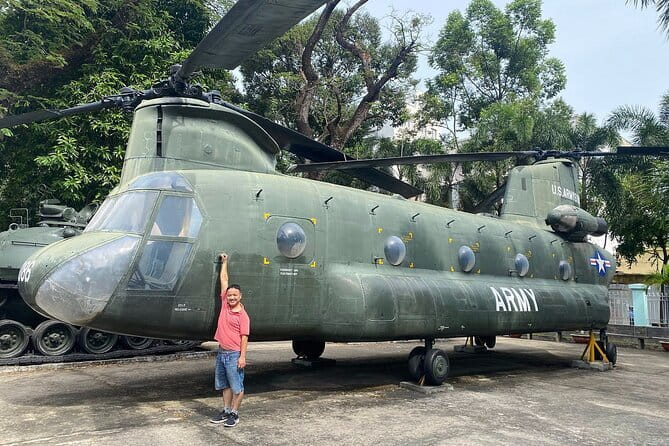
You then move to On Lang Pagoda, also known as Ôn Lăng Assembly Hall, Quan Âm Temple, or Ông Lào Temple. This one belongs to the Hokkien Chinese community and is associated with worship of Thiên Hậu Thánh Mẫu (Thien Hau/ Holy Mother) and other religious elements listed with the temple.
What makes this stop worthwhile is comparison. Seeing different halls for different community groups helps you understand that Chinatown here isn’t a single uniform culture. It’s a patchwork of groups, each with its own identity markers, even when they share worship themes.
Consideration: because you’re walking between sacred stops, comfortable shoes matter more than you think. Also, keep your pace steady and listen when your guide explains what to look for, since these halls reward attention to small details.
You can also read our reviews of more private tours in Ho Chi Minh City



Stop 4: Cho Thủ Đô food area plus old-school coffee
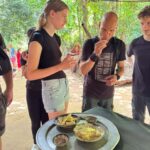
After temples, the tour shifts into the neighborhood’s stomach. At Khu ăn uống chợ Thủ Đô, you’ll get street food and a break that feels like it belongs in Cho Lon.
This stop specifically includes:
- street snacks
- one of the oldest coffee stands still in business in the city
- a traditional Cantonese snack
This is a smart pairing after the assembly halls. Faith and food might sound unrelated, but in immigrant trading districts they often share the same logic: community networks bring people together, and food becomes one of the easiest ways to show that identity in daily life.
Time here is about 45 minutes, which is enough for a snack and a pause without dragging on. If you tend to walk fast when you travel, slow down here. Eating in this area works best when you give yourself a moment to watch how people order, move, and share.
Stop 5: St Francis Xavier Church and Franco-Chinese architecture
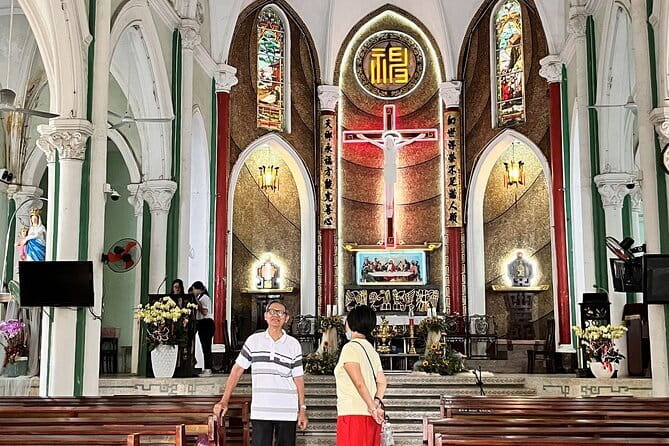
Then comes a different kind of landmark: St Francis Xavier Church, one of the older churches in the Chinatown area. It’s described as a masterpiece of Franco-Chinese architecture with Vietnamese influence.
This stop is great because it changes your frame. You’ve been focused on Chinese community halls and Thien Hau worship. Now you see how European Catholic architecture and local building culture mixed together in the same urban footprint.
In practical terms, this is also a photo-friendly break with a strong “spot the influences” quality. Watch for how shapes and structural choices feel both European and adapted to the local context. Even if you’re not an architecture person, the visual contrast makes the neighborhood feel bigger than a single cultural label.
Time is about 30 minutes, which is enough to absorb it without feeling you’re racing to the market.
Stop 6: Binh Tay Market (Cho Lon Grand Market) and Sino-French style
The tour ends at Binh Tay Market, also known as Cho Lon (the Grand Market). This is one of the most recognizable shopping-and-trading anchors in the area, and it’s famous for its unusual structure: a big inner courtyard and Sino-French architecture.
This market was built in 1928, and that date matters. In a city where you often see newer development, you get a sense of how long this place has served commercial life for Cho Lon.
Why this ending works: after you’ve learned the community and religious structures, the market becomes easier to interpret. The market isn’t just a place to buy things. It’s the neighborhood’s engine room—where networks meet, goods move, and identities mix in a practical, everyday way.
Time here is about 30 minutes, so aim to treat it as a tasting-and-looking stop, not a full shopping spree. If you want to shop more, use the end point to continue on your own.
What your guide adds (and how it helps you in real life)
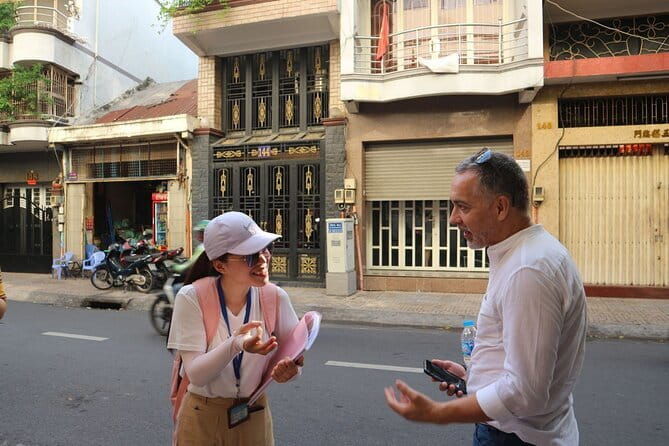
The reviews highlight a key strength: guides who are passionate and explain what you’re actually looking at. One guide named Percy came up in feedback as especially informative, caring, and fun. That matters in Cho Lon because the value isn’t only in the buildings—it’s in the lived street knowledge.
A small example from what people found helpful: navigating traffic and street crossings in this part of the city can be intimidating at first. A good guide helps you get your bearings fast and teaches you how to move with local flow, not against it.
You also benefit from the private setup. Since it’s only your group, you can ask questions in real time—about family communities, religious practices, or why a certain food feels “of the neighborhood” rather than generic.
Timing tips for a better experience
The start time is 8:00 am, which I strongly recommend. Cho Lon can heat up, and a walking schedule feels much easier when you catch cooler morning air.
This experience also requires good weather. If conditions are poor, it can be rescheduled or you can get a full refund. Either way, the point is clear: the tour is designed to be outdoors and moving.
Plan your clothing like you expect walking in humidity. Comfortable shoes and light layers will do more for your enjoyment than trying to look perfect for photos.
Is it worth it for you?
This tour is a strong fit if you want:
- a guided route through Cho Lon that doesn’t feel random
- a deeper understanding of Chinatown beyond a few photo stops
- the combination of temples, churches, markets, and street food
- a smaller, more personal feel thanks to the private format
It may be less ideal if:
- you hate walking for several hours even at a moderate pace
- you struggle with heat and don’t handle outdoor time well
- you prefer an all-indoor, low-stairs itinerary (this is not that kind of tour)
Quick FAQ
FAQ
How long is the Tales of Cho Lon Cultural Walking Private Tour?
It runs about 3 to 4 hours, with additional walking time among stops that adds up around 1 hour.
Where does the tour start and end?
It starts at Hội Quán Nghĩa An, 678 Đ. Nguyễn Trãi, Phường 11, Quận 5, Hồ Chí Minh 70000, Vietnam, and ends at Binh Tay Market, 57A Tháp Mười, Phường 2, Quận 6, Hồ Chí Minh 700900, Vietnam.
What time does it begin?
The start time is 8:00 am.
How much does it cost?
The price is listed as $32.
Is it a private tour?
Yes. It’s a private tour/activity, and only your group participates.
Do the stops require paid entry tickets?
The information provided lists admission ticket free for the stops shown (including the assembly halls, pagodas, and sites listed on the itinerary).
What are the main places you visit?
You’ll visit Hội Quán Nghĩa An, Thien Hau Pagoda (Tuệ Thành Assembly Hall), On Lang Pagoda (Ôn Lăng Assembly Hall), a food area at chợ Thủ Đô, St Francis Xavier Church, and Binh Tay Market.
Is there a mobile ticket?
Yes, the tour includes a mobile ticket.
Is good weather required?
Yes. The experience requires good weather, and if it’s canceled due to poor weather, you’ll be offered a different date or a full refund.
What is the cancellation policy?
Free cancellation is available, with a full refund if you cancel at least 24 hours in advance of the experience’s start time.
Should you book this Cho Lon walking tour?
If you want Cho Lon to make sense, this is a great booking. The route is built around what actually defines the neighborhood: assembly halls, Thien Hau worship across different community groups, and food that matches the area’s character. You also finish at Binh Tay Market, which gives your morning a clear “destination” instead of a random stop.
Book it if you’re comfortable with walking in the heat and you like your cultural travel grounded in real places—temples, church architecture, and markets where people show up for daily life. Pass if you’re looking for a fully indoor, low-walking itinerary.