REVIEW · HO CHI MINH CITY
Shared Cu Chi Tunnels & Mekong Delta Tour Full Day
Book on Viator →Operated by KIM TRAVEL · Bookable on Viator
Two boats and a hole in the ground. This full-day shared trip links Cu Chi Tunnels with the Mekong countryside, and a good English-speaking guide can make the war-era survival stories click fast. I like how the day has both learning and movement, so it does not feel like one long museum shuffle.
I also love the Mekong portion: motorboat rides, a rowing sampan moment, and tastings of tropical fruit paired with honey tea and Vietnamese folk music. One consideration: this is a group-style experience, and some stops can involve persistent sales talk for honey wine, candy, or other products—go in knowing you can say no and move on.
In This Review
- Key Highlights Worth Your Time
- War Underground, River Life Above: Is This Day Trip Good Value?
- Cu Chi Tunnels: What the Underground System Is Really For
- What to watch for at Cu Chi
- Vinh Trang Pagoda: Southern Architecture With a Different Tone
- My Tho on the Mekong: From Motorboat Speed to Sampan Calm
- A quick reality check
- Village Stops, Fruit Tastings, and the Sales-Pitch Factor
- Folk music and a relaxing pause
- Food on the Day: Lunch, Snacks, and Vegan Options
- The practical win
- Pace, Group Size, and Why Your Guide Affects Everything
- Who Should Book This Tour, and Who Should Consider Another Option
- Should You Book? My Bottom Line
- FAQ
- How long is the Cu Chi Tunnels & Mekong Delta shared tour?
- Do I get hotel pickup in Ho Chi Minh City?
- What transport do we use during the day?
- Are entrance fees included?
- What food and drinks are included?
- Is there a visit to Vinh Trang Pagoda?
- How big is the group?
- Is the tour suitable for children?
- What if the weather is bad?
Key Highlights Worth Your Time
- Cu Chi Tunnels access with guided context that explains how people lived underground
- Motorboat + rowing sampan for a real change of pace on the Mekong
- Vinh Trang Pagoda visit for Southern Vietnamese architecture from the 19th century
- Food tastings included: fruit, honey tea, honey wine, and coconut candy
- Village transport by tuk tuk or electric car for quick, low-stress touring
- English-speaking guides with solid storytelling when you get a strong one (names like Tony B and Nim come up)
War Underground, River Life Above: Is This Day Trip Good Value?
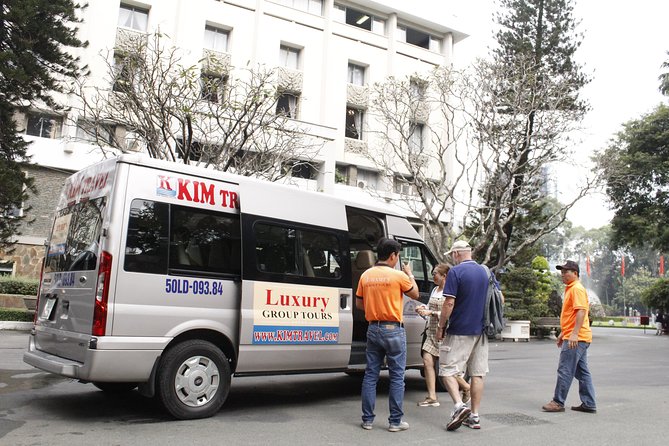
For $39, you’re buying a full day that mixes two very different Vietnam experiences: the underground world of Cu Chi and the water-based rhythm of the Mekong Delta. What makes the price feel fair is that it’s not just rides and sightseeing. Entrance fees are included, you get a lunch set menu (with vegan food available), and the day also covers boat time, village transport, and a bundle of snack and drink tastings.
The tour runs about 10 hours, and it’s designed to keep you moving without feeling frantic. It’s also limited to a maximum of 29 travelers, so it’s not a giant cattle-car bus. You will still be in a shared group, but the day is structured to keep things understandable: you’re taken to the major anchors, explained by your guide, then returned to the same pickup area in central Ho Chi Minh City.
The vibe is best if you like practical information and you enjoy seeing how ordinary life looks in a different region. If you’re the type who hates guided group time, you might find some segments feel more like structured stops than free wandering. Still, for many visitors, it’s a great way to cover a lot in one day.
You can also read our reviews of more tours and experiences in Ho Chi Minh City
Cu Chi Tunnels: What the Underground System Is Really For
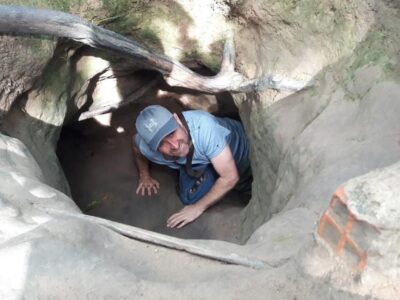
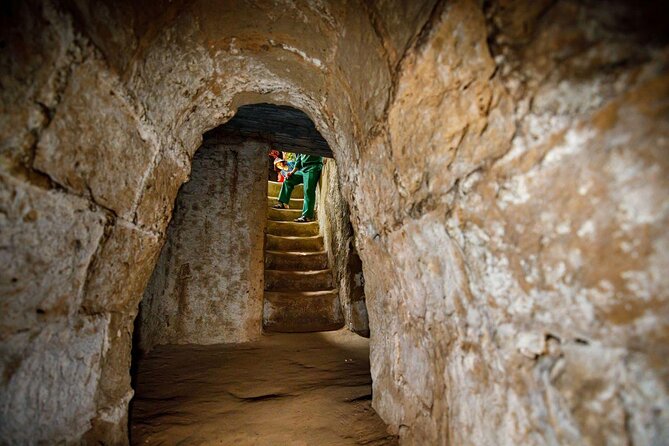
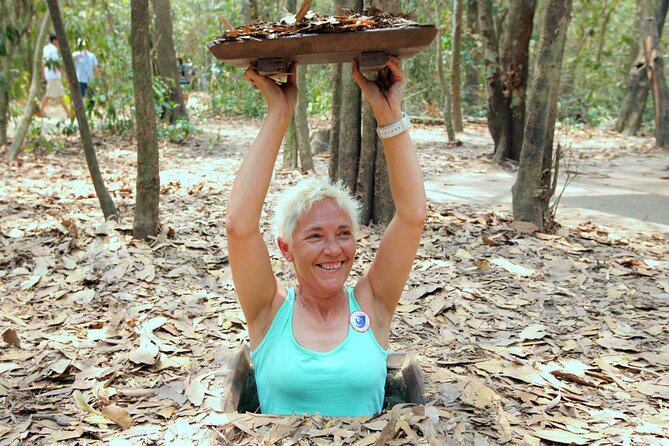
Cu Chi Tunnels are famous for a reason. This is not a casual photo stop. You learn that the underground network was expanded under pressure from two major eras of conflict. Communal guerrilla troops dug tens of thousands of miles of tunnels with basic tools during the fight against French occupation in the 1940s, then expanded again during the American War in the 1960s.
When you arrive, the key is to understand what you are looking at. The site is an elaborate network of tunnels and chambers—about 250 km in total—built to protect people and keep operations going. The preserved sections help you imagine cramped living spaces, hidden movement, and how survival depended on staying out of sight.
Here’s what I find most valuable as a visitor: the guide doesn’t just recite dates. You’re guided to connect the physical structure with the strategy. Why were there branching tunnels? How did the layout help with hiding, moving, and resisting detection? Even if you don’t speak Vietnamese, a strong guide can translate the logic into clear stories.
A good English-speaking guide matters here. If you happen to get someone with the storytelling chops of Tony B, you’re more likely to get history plus human detail—what life felt like and how harsh conditions shaped choices. That’s the difference between reading about war and actually understanding what the tunnels were built to do.
What to watch for at Cu Chi
The experience is intense, and it can be physically uncomfortable in places because the tunnel concept is about tight spaces. Wear shoes you’re comfortable walking in for long stretches. If you’re sensitive to enclosed, underground settings, be mentally prepared that this is part of the point.
Vinh Trang Pagoda: Southern Architecture With a Different Tone
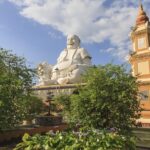
After the heavy underground history, the tour shifts tone with a visit to Vinh Trang Pagoda, built in the middle of the 19th century. This stop is useful because it reminds you that Vietnam’s story isn’t only shaped by conflict. The architecture gives you a visual anchor in Southern Vietnamese culture.
I like this kind of contrast. The tunnels are about hiding and survival. The pagoda is about community, faith, and long-term cultural continuity. Even if you’re not the biggest temple person, you’ll likely appreciate the craftsmanship and the chance to reset your mental gears.
The goal here isn’t to turn it into a religious lecture. It’s more like a cultural breather inside a very eventful day. You can also use the time to rehydrate and regroup before heading deeper into Mekong countryside.
My Tho on the Mekong: From Motorboat Speed to Sampan Calm
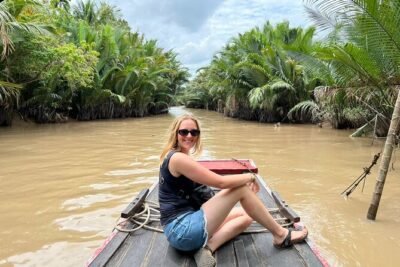
Then comes the Mekong. The region around My Tho sits in the “Nine Dragon” river delta idea, formed by nine rivers, and the character of the landscape shows up fast: rice fields, coconut farms, tropical fruit gardens, and water-based daily life. If Ho Chi Minh City feels loud and fast, the Mekong feels slower—still busy, but more grounded.
The best part for me is the change in boats.
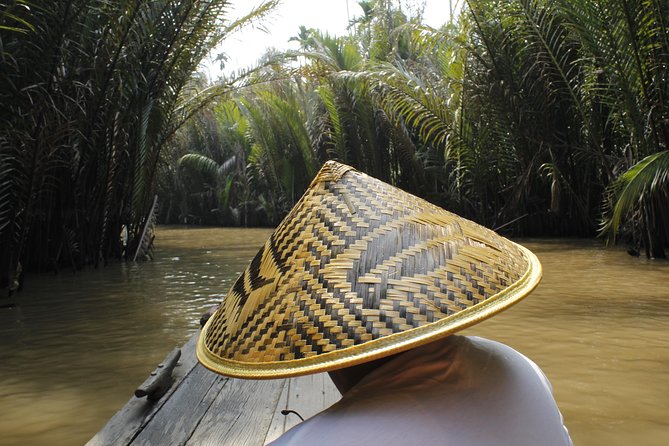
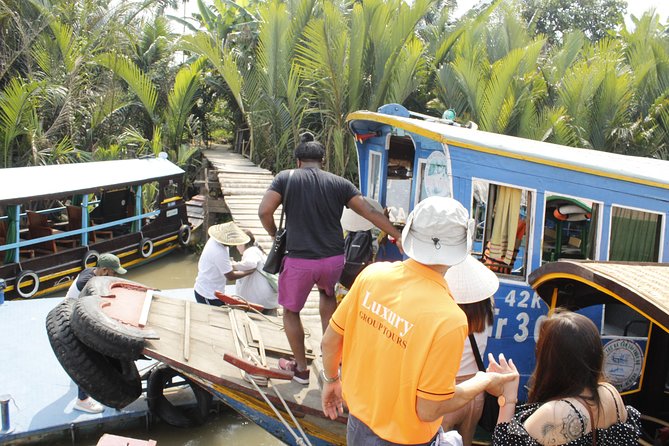
You get a motorboat ride, which covers ground quickly and gives you that wide river view. Then you switch to a rowing sampan, which slows everything down. That slow glide is where you notice everyday details—how people move, what they sell, and how the water shapes work and family routines.
Your guide ties it together with context about rural communities: farmers working in fields, children riding on the backs of water buffaloes, and the idea of floating markets and trading that happens on the water. Even if you do not spend hours in one market, the boat sequence helps you see the Mekong as a living place, not a postcard.



A quick reality check
You’re on a schedule. The Mekong portion includes several stops and village-style segments, so you won’t get deep solo exploring. It’s a guided overview with hands-on moments like boat rides and tastings. If you want long free time, plan for a return visit later.
Village Stops, Fruit Tastings, and the Sales-Pitch Factor
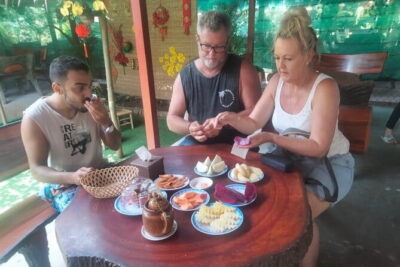
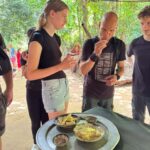
One of the tour’s strengths is how it makes the Mekong feel sensory. You’ll sample tropical fruits across the seasons, and you’ll get honey tea. There’s also honey wine and coconut candy in the mix, plus snacks like wheat cake, tapioca, and hot tea.
This is not random fluff. Those tastings are a way to understand local food culture, and they’re usually the easiest moment to ask your guide questions. You can learn what people make, why certain flavors are popular, and what ingredients matter in this region.
Many Mekong delta day trips include some time in craft or village-style areas. In this tour, you also get tuk tuk or electric car transport through the village. That helps when distances are longer than you expect, and it keeps the group comfortable in hot weather.
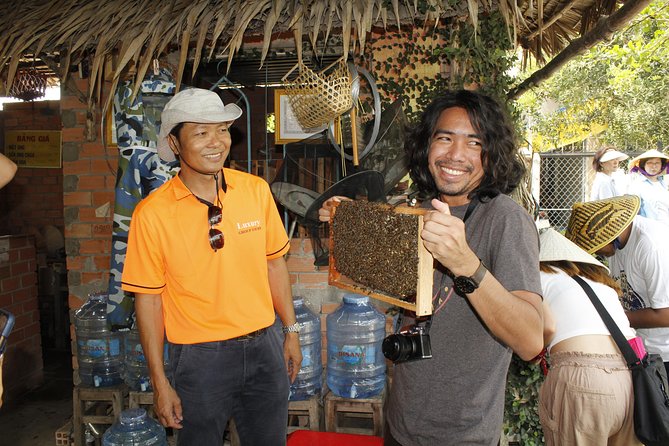
Now, the consideration: some of these stops can come with sales pressure. One negative experience flagged that the day included lots of product offers and insistence to buy, with limited walking or biking compared to expectations. You can’t control how every shop assistant behaves, but you can control your response. If you want souvenirs, decide a budget early. If you don’t, practice saying no calmly and keep moving with your group.
Folk music and a relaxing pause
A high point is the chance to listen to Vietnamese folk music while enjoying drinks like honey tea. It’s a small detail, but it adds emotional texture. After war history, it feels good to have a moment that’s just human and cultural, not instructional.
Food on the Day: Lunch, Snacks, and Vegan Options

This tour feeds you. You get a Vietnamese lunch set menu, with vegan food available if you arrange it. On top of lunch, you’ll also see lighter snacks and drinks throughout the day—mineral water, wet tissues, tapioca, and hot tea. There are also the fruit and honey tastings we already talked about.
For planning, treat this as an all-day meal plan rather than a single meal plus snacks. You likely won’t need to pack a full lunch yourself, but I still suggest bringing an extra small snack if you’re picky or have dietary restrictions beyond what the tour offers.
The practical win
Since many entrances and activities are included, you avoid that last-minute money stress. You can focus on the experiences instead of constantly checking what costs extra.
Pace, Group Size, and Why Your Guide Affects Everything
A big difference between a good day trip and a frustrating one is pacing. This tour is structured around major points, with time blocks built in (the Cu Chi segment is long enough to matter, and the river and village segments are paced to keep you from feeling trapped on one stop).
The reviews strongly associate a positive day with strong guiding and smooth driving. Names like Nim show up for doing history clearly at a good pace, and Nam is mentioned as a great driver. I can’t guarantee who you’ll get, but it’s a hint: when the guide is organized and the driver is steady, the day feels easier.
With a max of 29 travelers, you’ll typically have space to hear your guide without constantly craning your neck. Still, remember it’s a shared experience, so you won’t control every minute. If you’re the type who hates waiting, bring patience. This is a long day—about 10 hours—so comfort and attitude matter.
Who Should Book This Tour, and Who Should Consider Another Option
This tour is a strong fit if you:
- Want a single day covering Cu Chi and Mekong Delta highlights
- Like guided context, especially for Vietnam’s war history
- Enjoy boat rides and cultural stops with food tastings
- Prefer a practical group schedule over planning multiple transfers yourself
It may be less ideal if you:
- Want lots of free time to wander independently
- Really dislike any shopping pressure, even small amounts
- Struggle with enclosed or tunnel-like environments
It’s also helpful for visitors staying in central Ho Chi Minh City because pickup is offered from areas including District 1, 3, and 4. That removes one headache.
Should You Book? My Bottom Line
If you’re trying to pack meaning into your Vietnam time without overplanning, this is a smart option. For $39, you get not just famous stops, but also the extras that make it feel like a full experience: entrance fees, lunch (vegan option), boat rides including a rowing sampan, and tastings like tropical fruit and honey tea.
Book it if you’re ready for a full-day rhythm and you trust a good guide to tie it together—especially at Cu Chi, where explanation matters. Skip or look closely if you prefer quiet travel, avoid sales pressure at cultural stops, or want long independent time.
FAQ
How long is the Cu Chi Tunnels & Mekong Delta shared tour?
It runs for about 10 hours.
Do I get hotel pickup in Ho Chi Minh City?
Yes. Pickup and drop-off are offered for hotels in the center of District 1, 3, and 4.
What transport do we use during the day?
You travel by air-conditioned minivan or tourist bus (optional), then you also use a motorboat and a rowing sampan. There’s also tuk tuk or an electric car ride through the village.
Are entrance fees included?
Yes, all entrance fees are included.
What food and drinks are included?
You get a Vietnamese lunch set menu (vegan food available), plus snacks and drinks like wheat cake, mineral water, tapioca, hot tea, tropical fruit tasting, honey tea, honey wine, and coconut candy.
Is there a visit to Vinh Trang Pagoda?
Yes, the tour includes a stop at Vinh Trang Pagoda.
How big is the group?
The tour has a maximum of 29 travelers.
Is the tour suitable for children?
Children must be accompanied by an adult. There is no charge for children under 5 years old, though parents are responsible for any costs that arise.
What if the weather is bad?
The tour requires good weather. If it’s canceled due to poor weather, you’ll be offered a different date or a full refund.