REVIEW · HO CHI MINH CITY
Private Tour: Cu Chi Tunnels and Cao Dai Temple
Book on Viator →Operated by Bravo Indochina Tours · Bookable on Viator
The war went underground, and you can follow it. This private day trip blends a rare midday Cao Dai Temple ceremony with the intense Cu Chi tunnel crawl at Cu Chi, far from the usual city routine. It’s a lot to pack into one day, and the long drive out of Ho Chi Minh City is part of the deal.
Two things I really like: you travel by a professional driver in an air-conditioned private vehicle, and your day includes lunch plus small comfort extras like bottled water, hot tea, and tapioca snacks. That means fewer headaches and more time focused on the sites.
One drawback to keep in mind: the schedule depends on what’s open and how smooth pickup and timing go, so you’ll want to plan for possible time pressure—especially around the tunnel portion. Also, some people report parts of the day being swapped out if an extra stop can’t happen.
In This Review
- Key Things to Know Before You Go
- A Private 8-Hour Day Starts with an Early Pickup
- Cao Dai Temple in Tay Ninh: Syncretic Faith at Midday
- Lunch Around the Temple: Fuel That Actually Fits the Day
- Cu Chi Tunnels: Wartime Survival, Not a Theme Park
- What to expect while crawling
- Time matters
- Guides Can Make or Break the Day
- Language and pace
- The Wildlife Stop Twist (and How to Handle Substitutions)
- Logistics and Road Time: Why This Tour Feels Like a Real Day Trip
- Simple self-defense checklist
- Price and Value: Is $97 Worth It?
- Who This Tour Fits Best (and Who Should Skip)
- Should You Book This Cu Chi and Cao Dai Private Tour?
- FAQ
- What time does the tour start?
- How long is the drive to Tay Ninh?
- How long is the tour total?
- What’s included in the price?
- Are admission tickets included?
- Is the tour really private?
- How late can I cancel for a full refund?
Key Things to Know Before You Go

- Cao Dai midday ceremony at Tay Ninh: You’ll go at the time when the ritual energy is most visible, with a guide to explain what you’re seeing.
- Cu Chi Tunnel memorial park access: Expect a short film, then a guided crawl into narrow passages that were used in wartime.
- Air-conditioned private transport: The drive out of the city is long, so the comfort matters.
- Lunch and refreshments included: Bottled water, hot tea, and tapioca snacks help you avoid a mid-day crash.
- Time can feel tight: The full day is roughly 8 hours, and the 2.5-hour countryside drive is real.
- Some stops may change: If a planned side visit can’t run, you may get a substitute activity instead.
A Private 8-Hour Day Starts with an Early Pickup
This is a full-day trip built around two “very different” Vietnam stories: faith and war. You start at 8:00 am with hotel pickup, then you head out in an air-conditioned private vehicle with a professional driver. The total time is listed as about 8 hours, which usually means you’ll be in motion most of the day—not just hopping between attractions.
The drive to Tay Ninh (near the Cambodian border) is about 2.5 hours, so the car comfort isn’t a luxury here. It’s the difference between arriving fresh and arriving a little fried. Bring something for that ride—water is included, but you might still want a hat, sunscreen, and a light layer for AC on the way back.
My tip: confirm your pickup details clearly before departure and be ready at the scheduled time. One recurring issue in the experience is that pickup can run late if the operator doesn’t have your hotel details right, and that can shrink your time at Cu Chi.
You can also read our reviews of more private tours in Ho Chi Minh City


Cao Dai Temple in Tay Ninh: Syncretic Faith at Midday
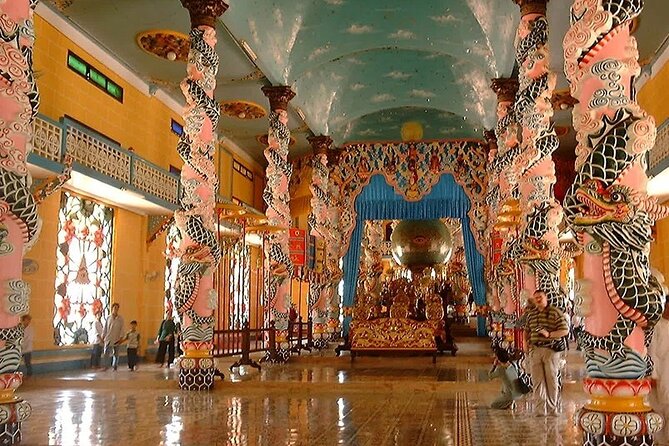
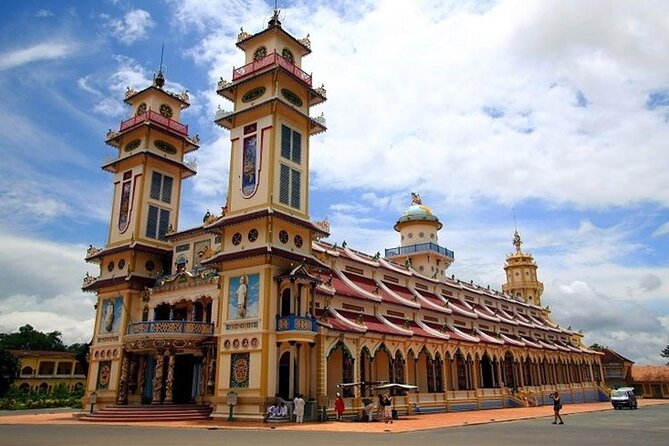
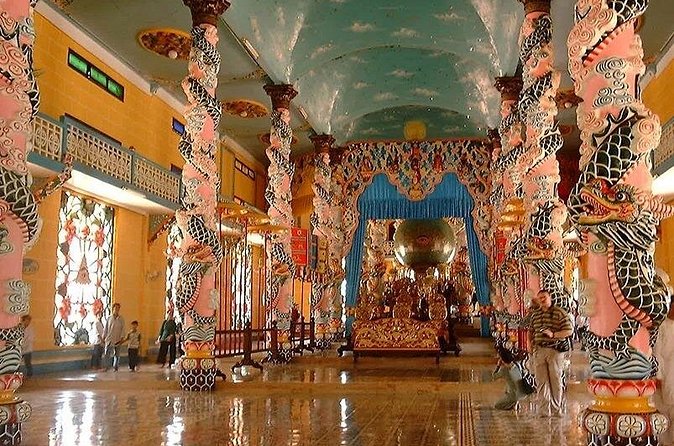
The Cao Dai Temple stop is where the day turns from road trip to something more theatrical—in a respectful way. Cao Dai is a religion that blends teachings from Buddhism, Confucianism, Taoism, and Christianity, and it also includes belief in the occult. That mix is not just academic. It shows up in the ceremony itself.
You’ll be taken to the temple for a midday ceremony, guided by someone who explains the rituals as they happen. You also have time to take photos, which is a big deal here because the temple and ceremony are made for observation. Expect colors, symbolism, and a very structured sense of timing—nothing like a quick “see the building” stop.
What I like most about this part of the trip is the guide’s role. Without someone to translate the vibe and the meaning, Cao Dai can look like just costumes and staging. With a guide, it becomes easier to understand why the ceremony feels so specific and important to the worshippers.
Possible drawback: access and timing can be unpredictable on any given day. If the ceremony timing shifts or the temple situation changes, you may end up with less ceremony time than you hoped. That’s not unique to this tour, but it matters when you’re choosing a fixed schedule day.
Lunch Around the Temple: Fuel That Actually Fits the Day
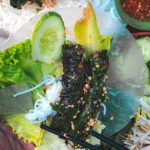
Between Cao Dai and Cu Chi, you’ll have a traditional Vietnamese lunch. Lunch isn’t just a bonus here—it’s the break that keeps the tunnel experience from feeling like punishment.
The tour includes lunch, plus bottled water, hot tea, and tapioca snacks. Those extras are smart, because you’ll likely sweat during the long day and you might not want to pay for drinks every time you turn around.
If you have dietary needs, you’re advised to share them at booking. Do it early and be specific (for example, what you can and can’t eat). The most common food-related mistake on long day trips is assuming meals can be adjusted on the fly.
Cu Chi Tunnels: Wartime Survival, Not a Theme Park

Then comes the part that makes the tour famous: Cu Chi tunnels. This is described as a network that served as a strategic base for the Viet Cong during the Vietnam War (known in Vietnam as the American War). The tunnels weren’t just hiding spots. They included things like schools, hospitals, hidden kitchens, meeting rooms, and living quarters, and they connected villages.
Today, the site is preserved by the government as a memorial park. That matters because it changes the tone. You’re not just looking at “cool tunnels.” You’re walking through a space created for survival under extreme pressure.
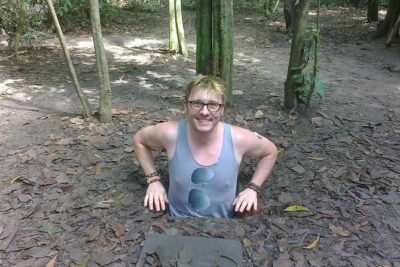
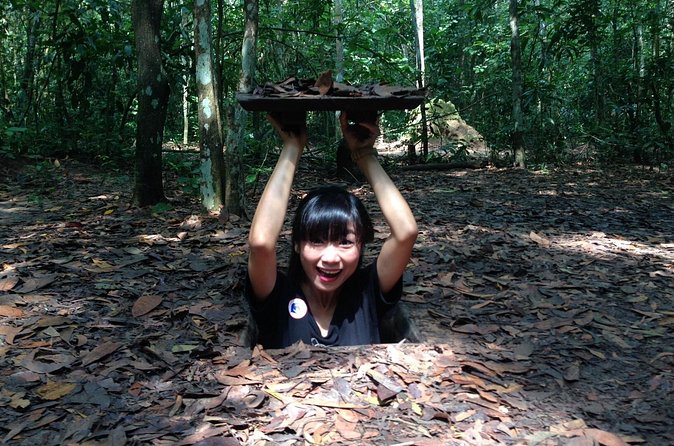
Before you go underground, you’ll see a short film that sets the historical context, then your guide brings you to the forest area where the tunnel entrances are. The tour includes a guided exploration, and you’ll crawl through narrow passages once used by wartime forces. This is specifically flagged as not for the faint of heart, and I agree with that warning in spirit—your body is involved here.
What to expect while crawling
- Expect tight spaces where you have to bend and move slowly.
- You’ll need a steady pace—this isn’t a “quick walk-through.”
- Your guide helps you explore safely, but you should still go in mentally prepared for discomfort.
My advice: wear clothes you can move in and shoes you don’t mind getting dusty. Also, avoid anything you can’t tolerate if it gets bumped or scuffed. You’ll thank yourself when you’re not thinking about your outfit the whole time.



Time matters
One thing that varies in practice is how much time you truly spend at the tunnels. The experience is sometimes described as taking around a couple of hours at Cu Chi, but some schedules can end up feeling shorter. If you’re the type who wants to take photos, read details, and crawl thoroughly, ask your guide on arrival how the tunnel time is structured and how strict the schedule is.
Guides Can Make or Break the Day
The guide is the thread that connects the ceremony, the history, and the tunnel reality. In many successful versions of this tour, the guide is friendly and animated, with strong English. Some guides people remember include Tony, Tuan, and Wang. Tony, in particular, is noted for being outgoing and still energetic at an older age; Wang is mentioned for thorough explanations and good English; and Tuan shows up as a fun, capable presence.
That’s not just personality. A good guide helps you understand:
- what Cao Dai rituals mean (so you don’t just see shapes and colors)
- what daily life underground was like (so the tunnels feel human, not abstract)
- what you should do (and what you shouldn’t) while moving through narrow spaces
Language and pace
On the flip side, if your guide’s English isn’t smooth—or if the day runs behind schedule—communication can get rushed. Some people also describe confusion around what’s open at the temple or where the group is supposed to go next. If you’d like deeper explanations, bring questions with you and don’t be afraid to ask for clarification when something seems unclear.
The Wildlife Stop Twist (and How to Handle Substitutions)
Here’s an important real-world consideration: while this tour is built around Cao Dai and Cu Chi, some people report that an extra stop involving a wildlife rescue station/sanctuary doesn’t always happen. In a number of cases, the site was described as closed, and the tour replaced it with a different activity such as a cricket farm visit or a workshop.
So what does that mean for you? It means your day may not always look identical to another person’s day. If you’re choosing this tour specifically because you want a conservation-focused stop, treat that as a bonus, not a guaranteed “must-see.”
How to protect yourself: when booking, ask whether any wildlife rescue-style stop is included in your exact schedule and what the substitute plan is if it’s closed.
Logistics and Road Time: Why This Tour Feels Like a Real Day Trip
Ho Chi Minh City to Tay Ninh is a long hop. 2.5 hours out is not a warm-up; it’s the start of your day. That affects everything:
- Your energy level
- Your tolerance for timing changes
- How much time you’ll really have in each place
Some people also report that traffic can hit pickup and reduce tunnel time. If your pickup runs late by even an hour, you may still complete the day, but you’ll likely feel it when Cu Chi time gets squeezed.
Simple self-defense checklist
- Bring a light layer (AC + temples can feel cool).
- Use sunscreen before you head out (the countryside time happens whether you like it or not).
- Keep your camera gear secured and easy to access.
- If you care about ceremony details, arrive ready to focus—don’t treat it like a quick photo stop.
Price and Value: Is $97 Worth It?

At $97 per person (and often booked about 69 days in advance), you’re paying for a few key things that are hard to replicate cheaply on your own: door-to-door hotel pickup, air-conditioned private transport, a professional guide, lunch, admission tickets, and on-site refreshments like bottled water and hot tea.
For many people, the best value here is not “seeing the sites.” It’s the reduction of friction:
- you don’t have to coordinate transport across towns
- you don’t have to puzzle out temple timing and what to notice during the ceremony
- you don’t have to manage tunnel logistics (which is part physical, part safety)
When the day works smoothly—especially with a strong guide—the price can feel fair. When there are substitutions or timing problems, the value drops fast, because Cu Chi is the main “special” experience and it can’t be stretched forever.
My practical take: if you want a guided, structured day that handles the hard parts for you, this price can make sense. If you hate tight schedules, or if you’re relying on a side stop being open, you should choose your expectations carefully.
Who This Tour Fits Best (and Who Should Skip)
This is a good match if you:
- want a one-day overview of two major Vietnam themes: faith and wartime survival
- like having a guide explain what you’re seeing
- can handle physical discomfort of crawling through narrow passages
- appreciate an organized plan, especially with long road time out of the city
It may be a tougher match if you:
- get uncomfortable in tight spaces
- dislike day trips that feel rushed
- strongly depend on specific extra stops that aren’t guaranteed
If you’re traveling with kids, this one is likely only suitable for older teens or families comfortable with the intensity of tunnels and the physical crawling aspect (the tour is described as most travelers can participate, but that doesn’t automatically mean it’s easy for everyone).
Should You Book This Cu Chi and Cao Dai Private Tour?
I’d book it if you want a guided day that balances something bright and symbolic (Cao Dai) with something physically real and historically grounded (Cu Chi tunnels). The inclusion of hotel pickup, air-conditioned private transport, a guided ceremony, lunch, and admission tickets makes it feel like a complete package, not just transportation to two locations.
I’d hesitate if your plan depends on a wildlife rescue/conservation stop happening at all, or if you know you need generous time on-site. In that case, message the operator before you go and ask how your schedule will run, what substitutes are used, and how much time is planned for Cu Chi.
If you go in prepared—comfortable clothes, sunscreen, and realistic timing—you’ll leave with two very different kinds of Vietnam stories stuck in your head: one told in ceremony, and one told underground.
FAQ
What time does the tour start?
The tour starts at 8:00 am.
How long is the drive to Tay Ninh?
You’ll travel about 2.5 hours from Ho Chi Minh City to Tay Ninh.
How long is the tour total?
The duration is about 8 hours.
What’s included in the price?
Hotel pickup and drop-off, transport by air-conditioned private car, a professional guide, lunch, bottled water, hot tea and tapioca snacks, and admission tickets for the Cao Dai Temple and Cu Chi tunnels.
Are admission tickets included?
Yes. Admission tickets are included for Cao Dai Temple and Cu Chi tunnels.
Is the tour really private?
It’s described as a private tour/activity, meaning only your group participates.
How late can I cancel for a full refund?
You can cancel up to 24 hours in advance of the experience start time for a full refund.