REVIEW · HO CHI MINH CITY
Private Ho Chi Minh City Tour from Port & Vietnamese Egg Coffee
Book on Viator →Operated by Maximus Travel Vietnam · Bookable on Viator
Saigon hits fast, and this private cruise-day tour keeps you moving with purpose. I really like the early, cruise-port pickup and the fact that you get a real private guide—so the day feels tailored, not rushed. I also like the mix of French-colonial landmarks, major war history, and classic coffee culture built into one route, including Vietnamese egg coffee with lunch. One watch-out: the War Remnants Museum is emotionally heavy, and with an 8 to 12 hour schedule, you’ll want energy (and comfortable shoes) from the start.
Your guide for the day, Laurence, and driver Khanh in particular, stand out for how smoothly they handle the logistics. Khanh’s calm approach to the traffic makes a huge difference when you’re on a tight cruise clock. If you’re the type who hates walking between close-by stops (cathedral to post office is a short hop), you can ask for a slower pace—your private format helps.
In This Review
- Quick hits before you go
- Why this private cruise-day format works in Ho Chi Minh City
- Starting strong: Saigon orientation plus the big “you’re here” moments
- Notre Dame Cathedral and the Central Post Office: French Saigon in one short stretch
- Independence Palace and the People’s Committee: where politics became architecture
- The War Remnants Museum and the former U.S. Embassy rooftop: Saigon history you can’t shrug off
- Lunch with Vietnamese egg coffee: where the day gets human again
- Beyond the classics: Ngoc Hoang Temple, Nha Rong wharf, and the Emperor Jade Pagoda
- Ben Thanh Market shopping that doesn’t feel like a trap
- Logistics that matter: private vehicle, traffic, and pace
- Price and value: what $119 buys you on a cruise day
- Should you book this Ho Chi Minh City tour?
- FAQ
- Is this a private tour or a shared group?
- Where does pickup and drop-off happen?
- How long is the tour?
- How much does it cost?
- What’s included in the tour price?
- What is not included?
- Which places are visited?
- Is there an admission fee for the attractions?
- What if my plans change and I need to cancel?
Quick hits before you go
- Port pickup that gets you off the ship fast, with a guide already waiting early so you don’t lose daylight.
- Private guide flexibility, so you can pause, ask questions, and adjust the order without turning it into a debate.
- Top emotional stop: War Remnants Museum, a powerful, graphic-look museum with context that’s easier with commentary.
- French-era highlights in a tight cluster, including Notre Dame and the Central Post Office right by each other.
- Real Saigon shopping time at Ben Thanh, plus street-level snacks inside the market area.
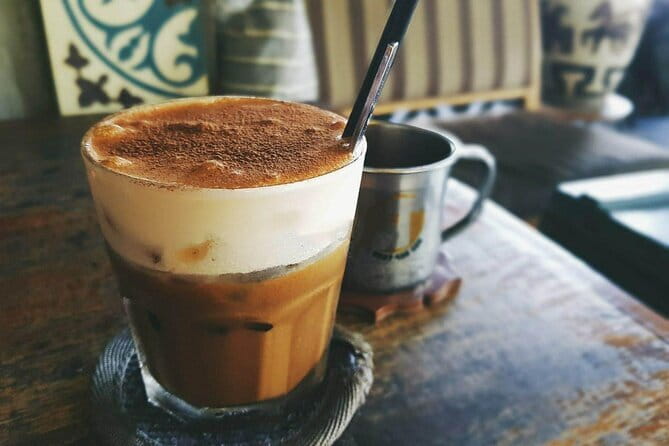
- Egg coffee built into the day, and yes, condensed milk style is a favorite you can look out for.
Why this private cruise-day format works in Ho Chi Minh City
If you’re in Ho Chi Minh City on a cruise, your biggest enemy is time. This tour is designed around that reality: pickup and drop-off from your cruise port, a private vehicle, and a private professional guide who can steer the day around your preferences. That matters more than it sounds. When you’re short on hours, the difference between skipping the wrong museum and spending just enough time at the right one is your whole experience.
I also like that it’s not a one-size-fits-all checklist. The tour can be customized, and because it’s private, you’re not forced to match the pace of a large group. In the reviews, Laurence is praised for being patient and sharing plenty of information, which is exactly what you want on a first trip. When you’re seeing landmarks that tie into modern Vietnam, having someone connect the dots makes the day feel more meaningful and less like photo stops.
The other big win is comfort. You’re traveling in a private vehicle, not squeezing into a shared ride. For a city known for busy streets, that comfort adds up fast.
Still, plan your day like a marathon, not a stroll. The schedule runs about 8 to 12 hours. You’ll likely be on your feet for parts of the route, and you’ll be bouncing between indoor and outdoor stops. If your cruise port time is tight, this tour’s structure usually helps—but it doesn’t remove the reality that you’re cramming in a lot.
You can also read our reviews of more city tours in Ho Chi Minh City

Starting strong: Saigon orientation plus the big “you’re here” moments
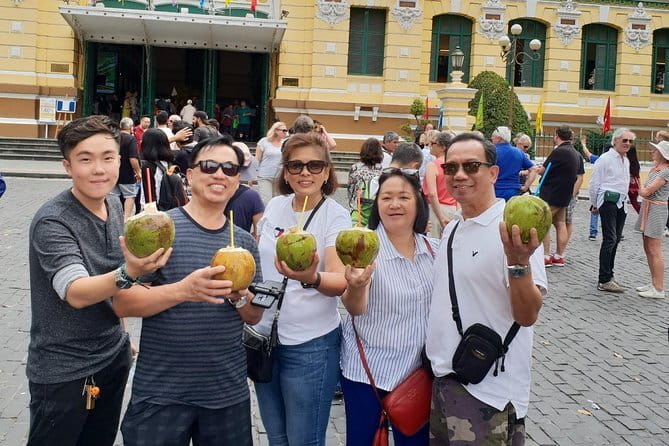
The day begins with a look at Ho Chi Minh City and Saigon’s role as Vietnam’s busiest urban center. This first stop matters because it gives you a frame. Without that, places like independence sites and colonial buildings can feel like random history set pieces.
From there, you move into the heart of District 1, where a lot of the classic photos come from. The key advantage is proximity: you’re stacking major sites close together, so you spend more time looking and less time traveling.
For first-time visitors, that’s gold. You get the “this is what Saigon is” overview, then immediately plug into the big landmarks—cathedral, post office, government architecture, war history—so your brain keeps connecting the dots.
Notre Dame Cathedral and the Central Post Office: French Saigon in one short stretch
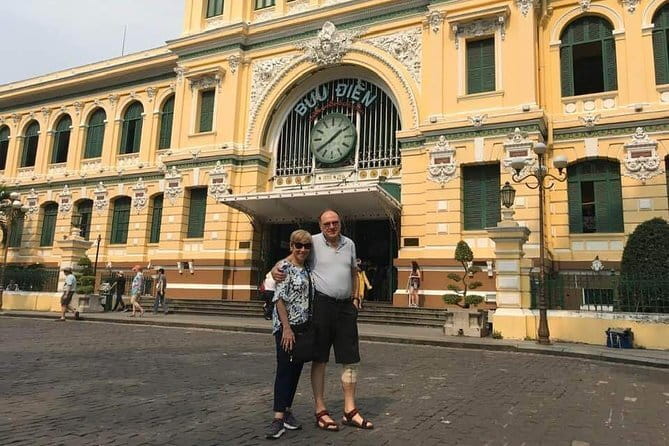
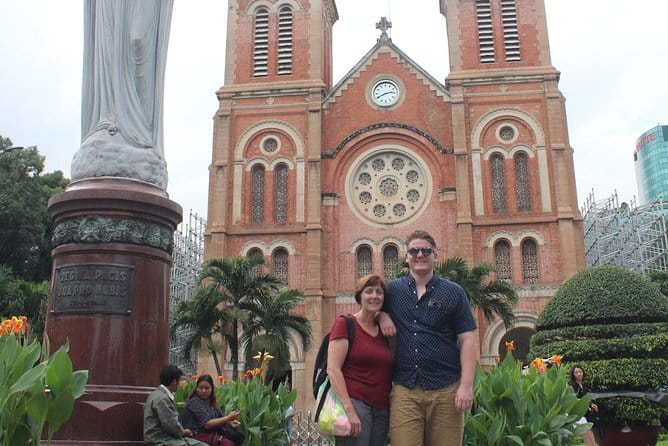
One of the smoothest parts of the route is the classic pairing: Saigon Notre Dame Cathedral and the Central Post Office. They’re neighbors in the city’s French-colonial story, and the tour builds that into the timing.
At Notre Dame, built in the late 1880s by French colonists, you’re seeing one of Vietnam’s strongholds of Catholicism in a country that’s mostly Buddhist. The cathedral sits in Paris Square, which helps explain why this area looks and feels different from the rest of the city. It’s not just architecture—it’s a cultural marker.
Then you head to the Central Post Office, described as one of the grandest post offices in all of Southeast Asia. The building is a preserved remnant of French colonial time, and it’s the kind of place where being inside changes the experience. If you like details, this stop rewards your attention: it’s one of the easiest “slow down and look” places on the itinerary.
Why I think this matters: when you get colonial-era buildings early in the day, it sets up the rest of the political and war-history stops. You start seeing how different eras left physical footprints across the city.
Independence Palace and the People’s Committee: where politics became architecture
After the cathedral-and-post-office cluster, the tour goes into the political heart of Saigon’s modern history.
The Independence Palace (also known in global history for 1975) is tied to major Vietnamese events. It was the base of Vietnamese General Ngô Đình Diệm until his death in 1963, and a tank belonging to the North Vietnamese Army is associated with the famous 1975 turning-point moment. Even if you don’t know the timeline cold, the structure and story help you place what you’re looking at.
Then you visit the People’s Committee Building, which originally was constructed in 1898 as a hotel by French arc-hitects. It’s French colonial architecture, set in a garden landscape. This pairing is useful because it shows you how power was housed—and how those spaces were later repurposed.
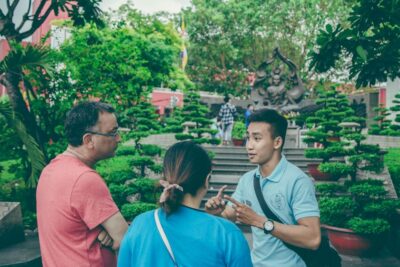
Practical tip: in a private tour, don’t be shy about asking your guide what you’re seeing in plain terms—like what part of the building reflects which era. With Laurence’s commentary style mentioned in the reviews, you should get clear explanations without it turning into a lecture.
The War Remnants Museum and the former U.S. Embassy rooftop: Saigon history you can’t shrug off
If you care about understanding Vietnam beyond headlines, the War Remnants Museum is the center of gravity on this day. It opened to the public in 1975 and was once known as the Museum of American War Crimes. The museum is described as a shocking reminder of the long and brutal Vietnam War, with graphic photography. Plan for that tone.
This is where having a guide really pays off. With commentary that’s described as top rated, you don’t just look at images—you understand why they’re presented and what the broader context is. It can feel heavy, but it’s also one of the most honest places to process the history of the country.
From there, you continue to the Former U.S. Embassy, where you can visit the historic rooftop—symbol of the end of the Vietnam War. A rooftop visit might sound like a small stop, but it works as a kind of reset. You step back from the museum’s close-up images and see the landmark in a different way: as a place tied to a specific end-of-war moment.
One consideration: if you’re sensitive to difficult content, you may want to spend less time in the museum and take breaks between stops. The private format makes it easier to do that than in a rigid group tour.
You can also read our reviews of more private tours in Ho Chi Minh City



Lunch with Vietnamese egg coffee: where the day gets human again
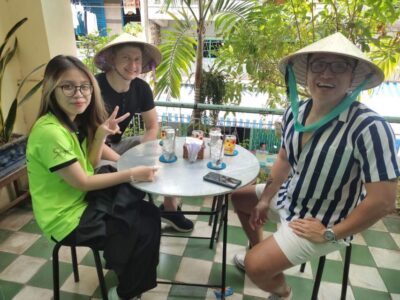
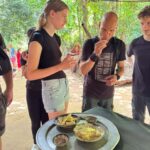
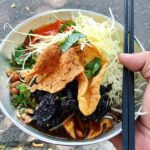
Midday is where the tour breathes. You get Vietnamese-style lunch at a local restaurant, followed by Vietnamese egg coffee. This isn’t just a food stop. It’s a chance to slow down, regroup, and get a real taste of everyday Vietnam between weighty history sites.
In the reviews, the food gets specific praise—pho and Vietnamese coffee were highlighted, and at least one person recommends the condensed milk coffee at the end of the trip. While the tour’s main mention is egg coffee, the broader point holds: this is a food-and-drink moment that feels integrated, not pasted on.
If you’re used to cruise excursions that treat lunch like an afterthought, this one feels more intentional because it builds a local meal right into the tour rhythm. Also, bottled water and tissues are included, which helps on a warm day when you’re walking between stops.
Beyond the classics: Ngoc Hoang Temple, Nha Rong wharf, and the Emperor Jade Pagoda
After lunch, you’ll head toward additional cultural stops. The tour can include Ngoc Hoang Temple and Nha Rong wharf, which add a different flavor than the government buildings and museums. Nha Rong wharf is tied to the city’s riverfront story, and it helps you understand Saigon as a working city, not only a historical set.
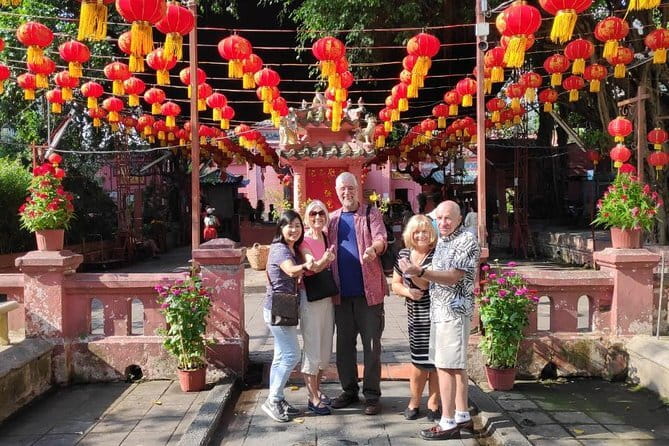
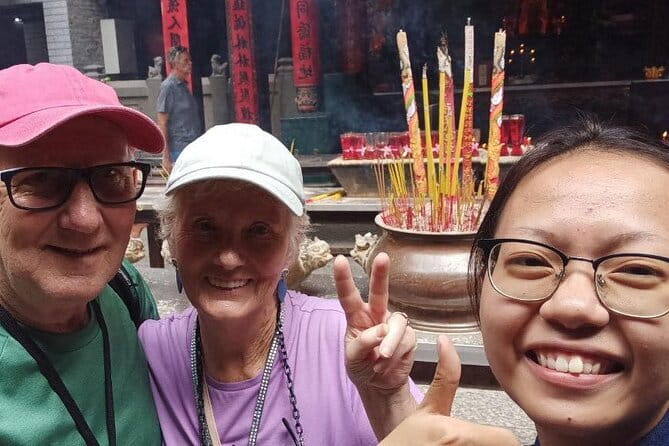
You also visit the Emperor Jade Pagoda, also known as Tortoise Pagoda. This is one of the five most important shrines in Ho Chi Minh City. Built at the turn of the 20th century by a community of Cantonese who migrated from Guangzh…, it adds another layer: Ho Chi Minh City is a crossroads of cultures, and religious sites reflect that mix.
Why these stops are worth it: they help balance the day. After the intensity of war history, you shift into temples and everyday city life. You get more than politics. You get the spiritual and cultural rhythms that still matter today.
Ben Thanh Market shopping that doesn’t feel like a trap
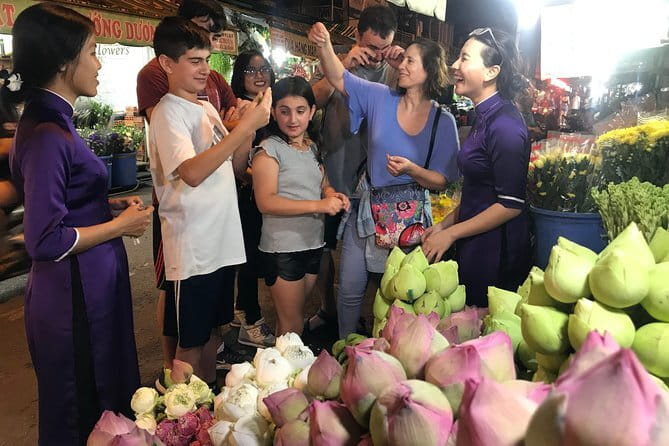
You finish with Ben Thanh Market, one of the most famous shopping stops in Ho Chi Minh City. It’s in District 1 and is a practical place to hunt for souvenirs because you can find local handicrafts, branded goods, Vietnamese art, and other keepsakes. There are also eating stalls inside the market area, so you can sample snacks if you still have room.
The tour schedules shopping time without turning it into a long detour. That’s important on a day shaped by museums and landmark visits. You get enough time to browse and buy, but you’re not stuck in the market for hours.
Private-guide advantage here: if you want to find a specific type of item—crafts versus souvenirs versus art—your guide can steer you. Even just knowing where to start helps you feel less lost.
Logistics that matter: private vehicle, traffic, and pace
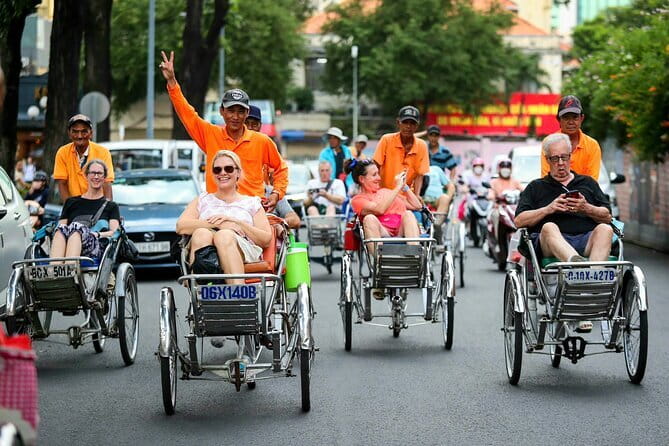
Ho Chi Minh traffic can be intense, and your schedule depends on it. Khanh is specifically mentioned for navigating the hectic streets with ease. That’s a big deal because it means you don’t lose time waiting, detouring, or playing guesswork with routes.
The tour also includes all entrance fees, which simplifies budgeting. You won’t be scrambling for tickets mid-day. And because it’s private, the timing tends to stay smoother: fewer moving parts, less waiting around for strangers.
About pace: the itinerary includes short time blocks for most major sites (often 15 to 45 minutes per stop). You won’t spend a whole day at a single museum, but you will cover the key anchors. If you want to slow down at one place—say, to spend longer in the museum or linger by the cathedral—ask. With your private guide, you can usually adjust.
Finally, if your cruise schedule or plans change, there’s free cancellation up to 24 hours in advance for a full refund. That reduces risk if you’re still juggling shore times.
Price and value: what $119 buys you on a cruise day
At $119 per person, you’re paying for more than sightseeing. You’re paying for:
- cruise port pickup and drop-off
- a private professional guide
- private transportation
- lunch plus Vietnamese egg coffee
- bottled water and tissues
- entrance fees for the stops
The value is strongest for cruise travelers who want structure without the stress of figuring out schedules, tickets, and local logistics. A private guide and vehicle in one package usually costs more when booked last-minute. Here, you also have a realistic route that covers major Ho Chi Minh City highlights in one day.
Who gets the best value? Anyone who wants first-time orientation plus depth—cathedrals and colonial architecture, then the war story, then temple/culture, then shopping. If that’s your kind of mix, this pricing makes sense as a time-saver.
Should you book this Ho Chi Minh City tour?
Book it if you want a private, cruise-friendly day that covers the city’s key landmarks with built-in commentary and a planned meal. I’d especially recommend it if:
- you don’t want to stress about transport and timing in traffic
- you want a guided understanding of the war sites (not just photos)
- you like getting both history and culture in one day, capped with coffee and shopping
Skip or consider alternatives if you hate emotionally intense content, because the War Remnants Museum is part of the core flow. And if you dislike long days, you’ll still be on the move for 8 to 12 hours, so choose your energy strategy.
FAQ
Is this a private tour or a shared group?
This is a private tour/activity, meaning only your group participates.
Where does pickup and drop-off happen?
You get private pickup and drop-off from your Ho Chi Minh cruise port.
How long is the tour?
The duration is about 8 to 12 hours.
How much does it cost?
The price is $119.00 per person.
What’s included in the tour price?
Included items are private cruise port pickup and drop-off, a private professional tour guide, Vietnamese egg coffee and lunch, private tour flexibility, all entrance fees, bottled water, and tissues.
What is not included?
Personal expenses are not included.
Which places are visited?
The tour includes stops such as War Remnants Museum, Reunification/Independence Palace, Notre Dame Cathedral, Central Post Office, Ben Thanh Market, and Emperor Jade Pagoda. The day may also include Ngoc Hoang Temple and Nha Rong wharf.
Is there an admission fee for the attractions?
All entrance fees are included in the tour price.
What if my plans change and I need to cancel?
You can cancel for a full refund up to 24 hours in advance of the experience’s start time. If you cancel less than 24 hours before, the amount paid isn’t refunded.