REVIEW · HO CHI MINH CITY
Ho Chi Minh: Cu Chi Tunnels Small-Group Tour & War Veteran
Book on GetYourGuide →Operated by TripGuru Vietnam · Bookable on GetYourGuide
The tunnels tell the war in your own body. This Cu Chi Tunnels tour from Ho Chi Minh centers on a Vietnam War veteran account, then backs it up with what you can see at Ben Dinh. You also get a small-group setup, so the day feels less like a cattle call and more like guided storytelling with room to ask questions.
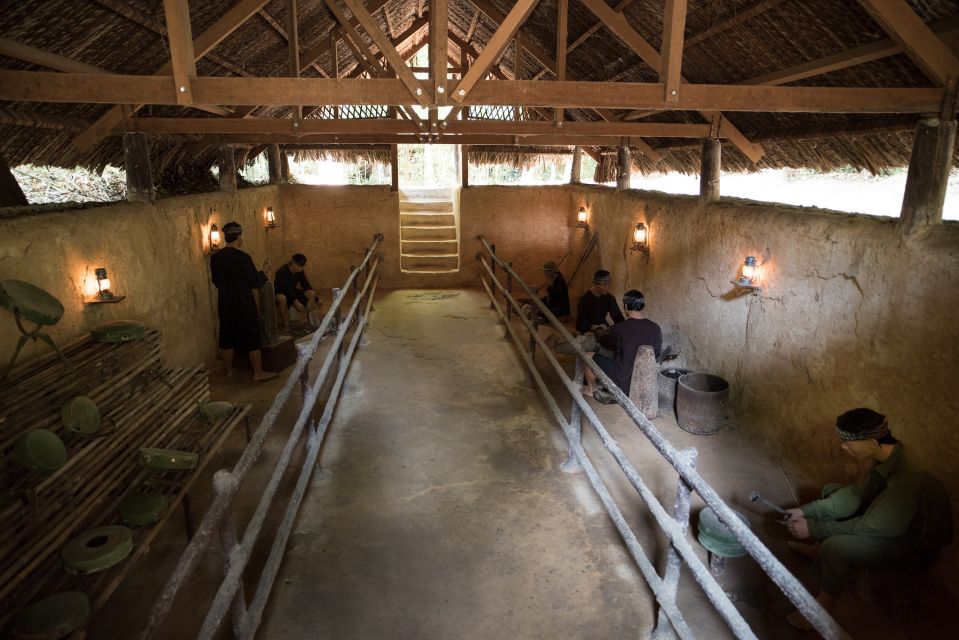
I especially like the Ben Dinh Tunnel stop with its booby-trap and sleeping-quarter replicas. It’s one of those rare moments where history turns practical—you can connect the tactics to everyday survival.
One thing to plan for: the tunnels are tight and physically demanding. If you’re even mildly worried about claustrophobia or breathing issues, you should treat this as a do-what-you-can visit, not a full crawl-for-everyone experience.
In This Review
- Quick hits before you go
- Leaving Ho Chi Minh: how the morning ride sets the tone
- Ben Dinh Tunnel: the place where you can see the strategy
- The war veteran session: the emotional core of the trip
- Cu Chi tunnels: what it feels like to move underground
- Firing range option: the adrenaline, safely framed
- Added stops you might notice (and why they’re worth your attention)
- Timing, crowds, and how to set yourself up for an easier day
- Price and what you actually get for it
- Who should book this tour, and who should skip it
- Final call: should you book the Ho Chi Minh Cu Chi Tunnels small-group tour?
- FAQ
- How long is the Cu Chi Tunnels small-group tour?
- How large is the small group?
- Where do I meet if I don’t want hotel pickup?
- Is pickup included?
- Do I get to meet a Vietnam War veteran for sure?
- Can I choose to fire a rifle?
- Are entrance fees included?
- What should I bring?
- Is this tour suitable for everyone?
Quick hits before you go

- War veteran Q&A for about an hour, with time to ask direct questions (and a guide translating)
- Ben Dinh replicas that show how people lived and how traps were set
- Limited to 9 people, which helps you move and pause without getting swept along
- Underground passages that make you understand why Viet Cong tunnels worked
- Optional rifle firing later at a shooting range
- Early start advantage in many cases, which can mean less peak-time crowd pressure
Leaving Ho Chi Minh: how the morning ride sets the tone
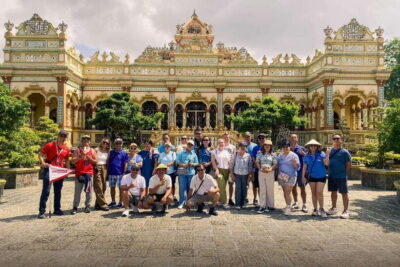
Your day starts either with pickup from selected areas in Ho Chi Minh (look for a TripGuru shirt or sign) or, if you prefer to self-head there, you meet at Central Market Le Lai. They ask you to arrive at least 10 minutes early if you use the meeting point option, because the group does not wait long.
The drive out to the tunnels is a big part of why this tour feels manageable. You’re not just dumped into a museum-like crowd. You get a comfortable, air-conditioned ride, and your guide uses that travel time to build context—how Vietnamese villages were affected, how guerrilla life worked, and what you’re actually looking for once you hit the tunnel complex.
This matters because Cu Chi can go two ways: either it turns into generic battlefield sightseeing, or it becomes a “how did they live like this?” experience. With a good guide, you’ll start spotting patterns—camouflage, concealment, movement routes, and why underground spaces weren’t just for hiding. They were for working, sleeping, communicating, and surviving.
I also like that the tour keeps you moving on a real schedule. You’re in for roughly 6 hours total, and the pacing helps you avoid the worst fatigue. Still, it’s worth packing for heat and dust: sunglasses, sunscreen, and insect repellent aren’t optional if you want to stay comfortable.
You can also read our reviews of more tours and experiences in Ho Chi Minh City.


Ben Dinh Tunnel: the place where you can see the strategy
The day’s first major stop is the Ben Dinh entrance area. You’ll spend time there with a guide before moving deeper into the Cu Chi tunnel network.
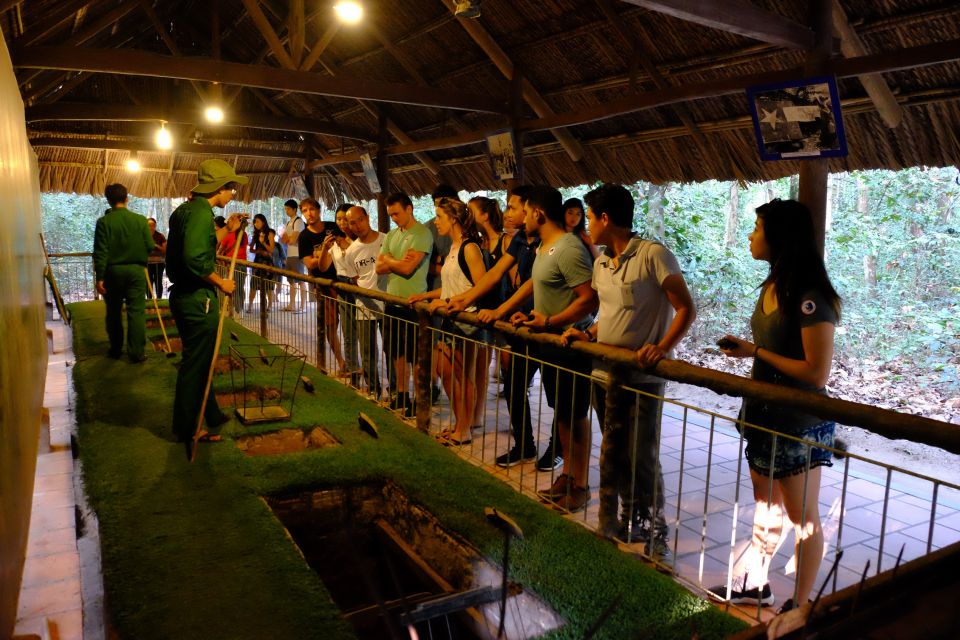
Here’s why Ben Dinh is such a smart start: the replicas give you a “decoder ring.” You see model sleeping quarters and barracks-like spaces, plus replicas of booby-trap setups. Even if you only remember a few details later, this is the part that helps your brain connect underground life to real constraints—space, safety, stealth, and routine.
It also helps that you’re not dropped straight into a crawl without preparation. You get a chance to stand, look, and ask questions while the information is still fresh. That’s key if you’re doing this for understanding rather than just ticking off a landmark.
One small drawback: because Ben Dinh is a top stop, it can feel busy depending on timing. The good news is that a small group (max 9) makes it easier to pause, take photos without fighting for position, and keep your attention on what matters instead of just watching other people’s heads.
If you love hands-on context, this stop is where the day starts paying off.
The war veteran session: the emotional core of the trip
The biggest reason people book this tour is the war veteran interaction. The experience is structured around an about-one-hour session where you hear life from someone who lived through the war’s reality.
In practical terms, you’re not just reading labels. You’re asking questions and hearing personal explanations—how hiding worked, what daily life looked like, and what it felt like to operate under constant pressure. Guides also help translate and keep the conversation flowing.
There’s another important detail: on days the veteran isn’t able to lead, a family member of Phan Thi Kim Phuc (known as Napalm Girl) fills in his shoes. That means the day stays meaningful even when health makes full participation impossible.
A tip I’d take seriously: bring questions ahead of time. Some sessions have a natural rhythm, and once conversation slows down, it may move on. If you care about topics like guerrilla logistics, fear and morale, or how underground communities organized themselves, write down your top 5 questions. You’ll thank yourself later.
Also, note that the veteran’s role may be more focused on conversation than on physically walking you through every point. So don’t expect a full guided narration by the veteran throughout the tunnels. Instead, think of it as a direct window into lived experience—then your English-speaking guide ties the story back to what you’re seeing.
For many visitors, this is the most memorable part because it turns history into a person’s reality.
Cu Chi tunnels: what it feels like to move underground
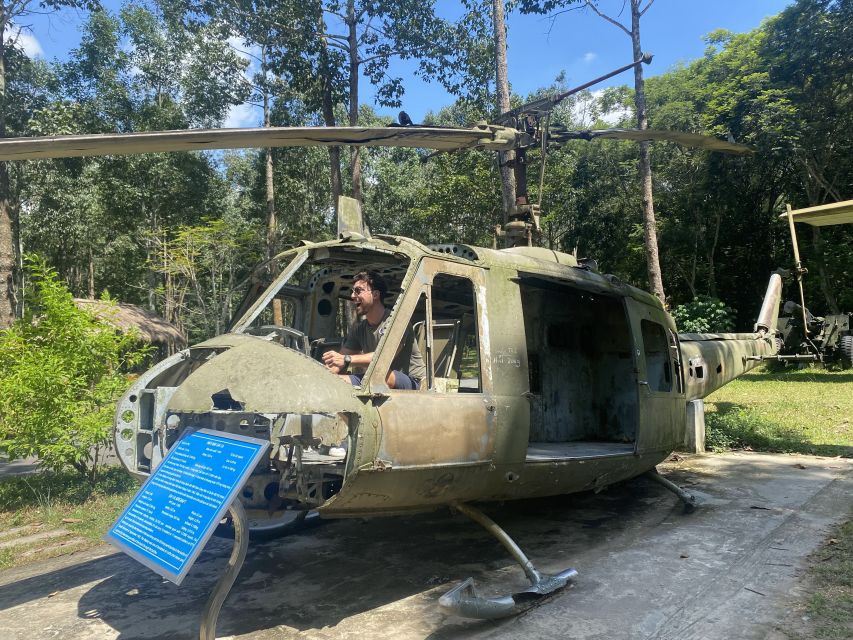
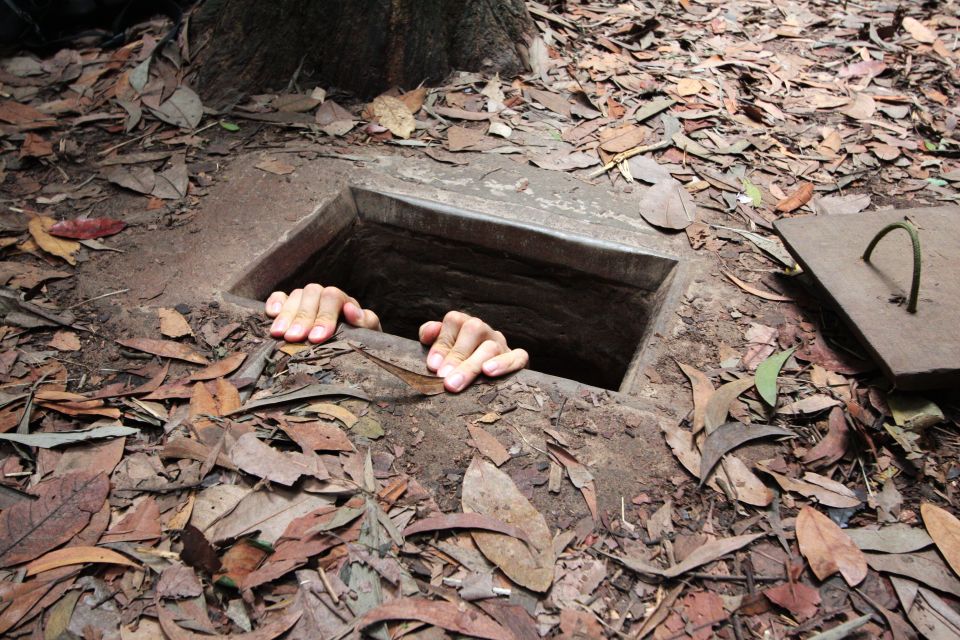
After Ben Dinh, you’ll spend time walking the labyrinth of underground passages. The tour includes a guided portion plus sightseeing time, and this is where the experience shifts from explanation to physical understanding.
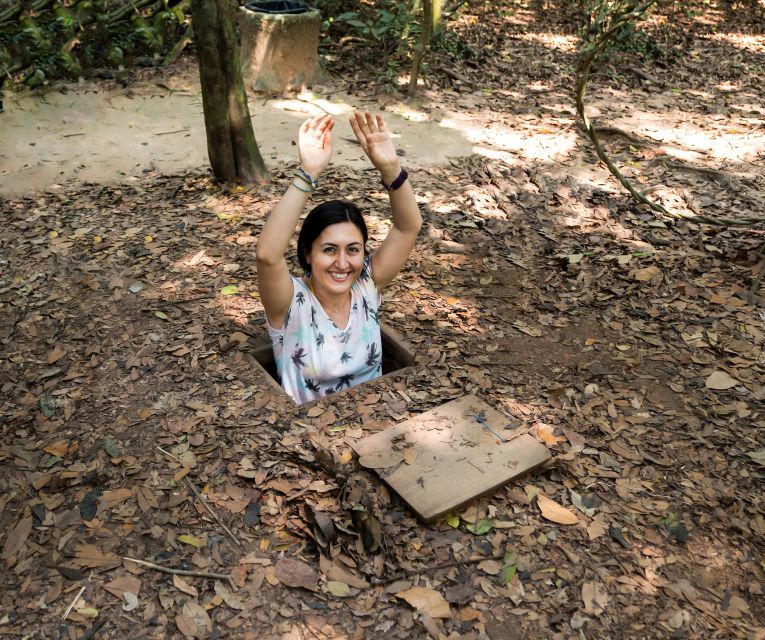
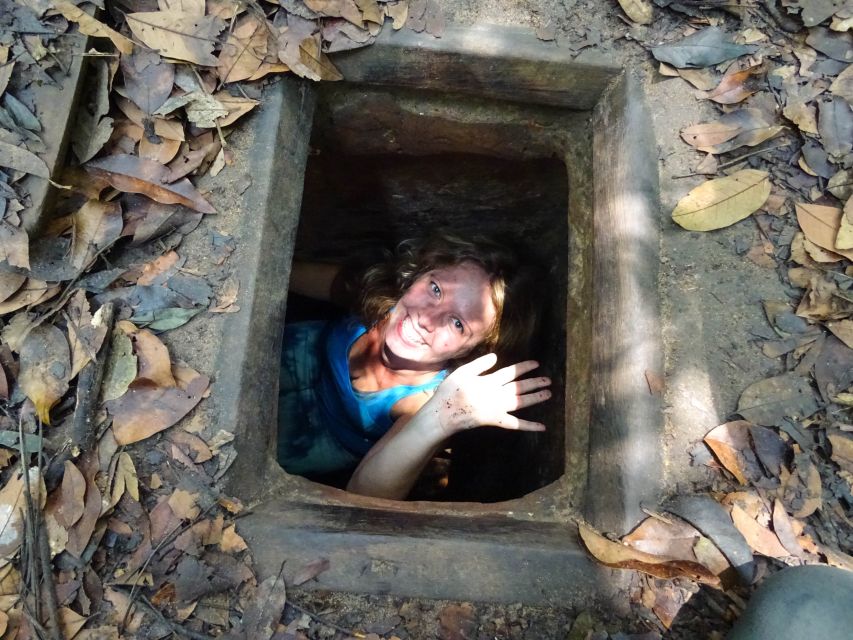
Let’s be blunt: the tunnels are tight. Some people find the tunnel section harder than expected. You’ll likely have stretches where you need to crouch, adjust your shoulders, or move carefully to avoid feeling panicky. If you’re claustrophobic, don’t treat it as an all-or-nothing challenge.
A key reassurance from experience on the ground: there are exits available if you want to step out rather than push through. That flexibility is important, because no one benefits from forcing themselves into discomfort just to prove a point.
Your body size can matter here too. Taller people and those with broader shoulders may struggle at the initial emergency hatch and in certain tunnel sections. The tour also isn’t suitable for people with mobility impairments, heart problems, or respiratory issues—and that’s not small-print. The environment is physically demanding and involves enclosed spaces.
What I like about doing the tunnel part on a guided tour is that you’re not guessing what you’re supposed to notice. Your guide can point out the logic behind design choices: why certain routes were used, how concealment worked, and how underground areas served daily needs—not only emergency hiding.
This is also where you learn the most by going slowly. Take your time at key points. If you need pauses, take them early rather than waiting until you’re stressed.
If you want a clear takeaway: the tunnels don’t just show what happened. They teach why survival required discipline, engineering, and adaptation.
Firing range option: the adrenaline, safely framed
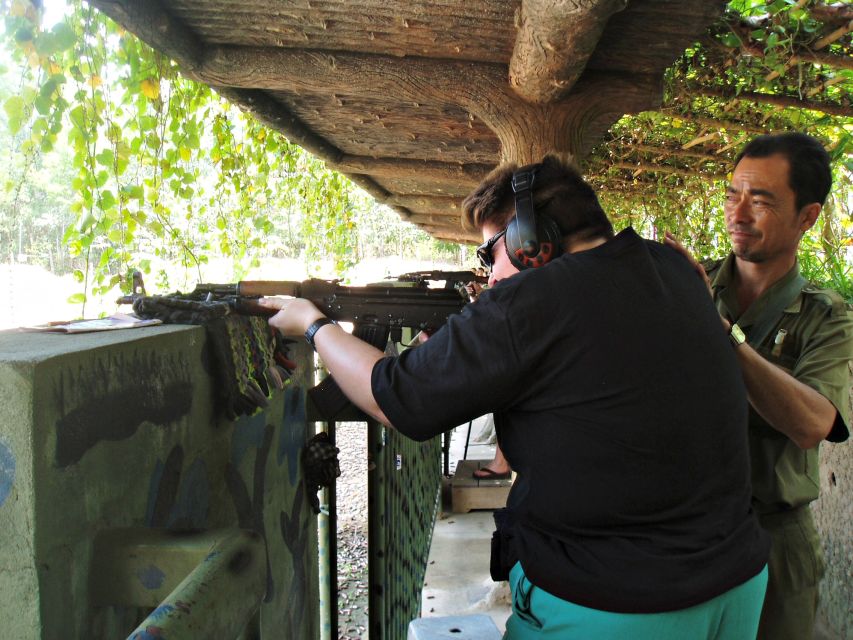
After the tunnels, the tour heads to a firing range. You have the option to fire an M16 or AK-47.
The rifle firing fee is not included, so you’ll need to plan for that if you choose to do it. The idea here isn’t to turn the day into a shooting spree. It’s a moment of contrast—how modern weapons changed the battlefield, and how guerrilla forces faced an enemy with heavy firepower.
If you’re sensitive to the topic, you can skip the firing without ruining the tour. You’ll still get the tunnel experience and the veteran session.
One more practical note: bring the right mindset. This part is optional, but it happens after you’ve already been walking in heat and enclosed spaces. You may feel more tired than you expect, so pace yourself during the tunnels so you still have energy for the last segment of the day.



Added stops you might notice (and why they’re worth your attention)
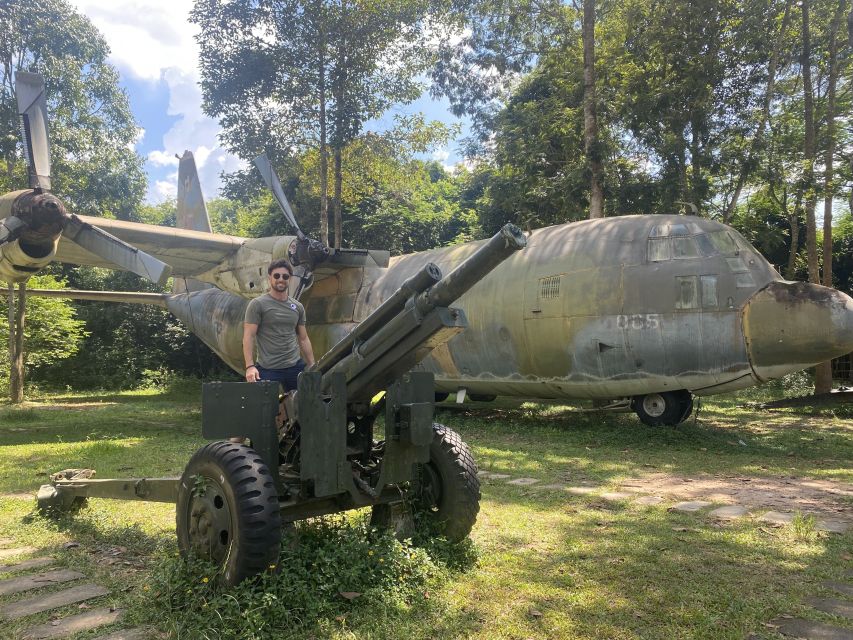
Some tours include extra cultural or educational stops on the way back. In real-world operation, you may see things like a lacquer workshop stop, or a stop related to people affected by Agent Orange and the work they do (including art made through their efforts). The exact schedule can vary depending on the day and guide.
If you get one of these add-on stops, treat it as part of the story, not as a random detour. The Cu Chi tunnels explain tactics and survival. These extra stops connect the war’s aftermath—health impacts and livelihoods—so you leave with a fuller picture of what lasts beyond 1975.
And yes, a coffee stop can happen too. One of the nicest surprises of small-group tours is that your guide can often pick a calmer place for a break without turning it into a long side mission.
Timing, crowds, and how to set yourself up for an easier day
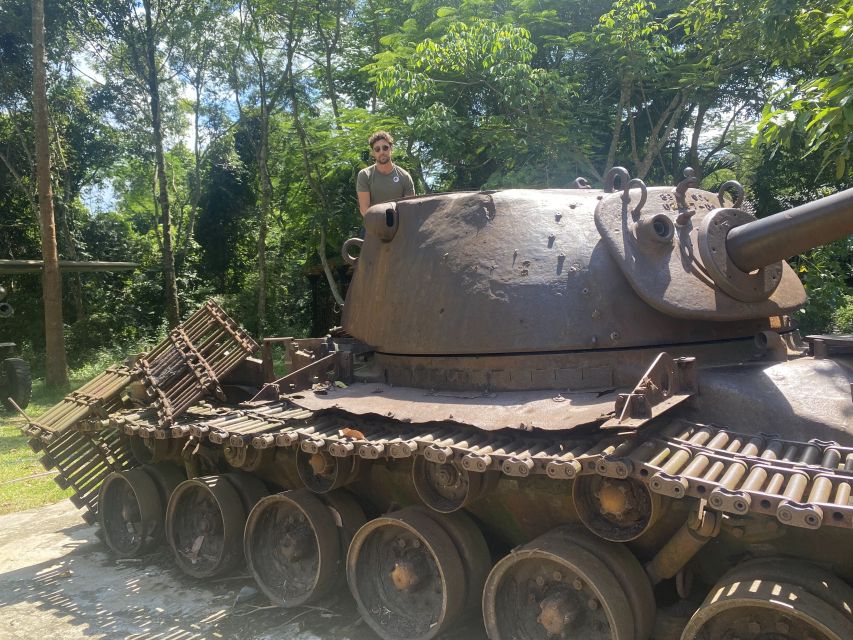
Most people plan this tour as a half-day escape from Ho Chi Minh’s city pace, and that’s exactly how it tends to feel. Many group departures are timed so you can be at the tunnels earlier in the day, which helps avoid the heaviest crowd pressure.
Crowds are still real at Cu Chi—this is a major site—but a group limited to 9 people makes a difference. You’re less likely to get stuck behind a wall of tour groups, and your guide can choose movement points that keep you from standing around too long.
You’ll also get bottled water, which sounds basic, but it matters on a site where the air feels dry and hot. Your comfort will affect how much you remember from the explanations.
A smart move: plan a low-stress evening after the tour. This isn’t a sit-and-watch activity. It’s walking, crouching, sun exposure, and strong emotional content. If you’re also scheduling museum time back in the city, choose a flexible day or keep your next commitment light.
Price and what you actually get for it
At about $23 per person for a 6-hour experience, this tour sits in the “budget-friendly but not skimpy” category—especially because it includes more than just transport.
What’s typically included:
- hotel pickup and drop-off (for eligible areas) and an air-conditioned vehicle
- a professional English-speaking guide
- an about-one-hour war veteran interaction
- exclusive use of a resting hut
- entrance fees depending on the option you select
- bottled water
What’s not included:
- rifle firing fee (optional)
- meals
- and if you choose an option that doesn’t include entrance fees, the Cu Chi Tunnels entrance fee is listed as VND 125K
Here’s the real value logic: the veteran interaction plus guided tunnel time is the core product. If your alternative is doing Cu Chi on your own, you lose the personal Q&A component and the guided meaning-making that helps you interpret what you’re seeing underground. That’s what makes this more than a photo stop.
Who should book this tour, and who should skip it
I think this tour is best for you if you want:
- war history explained through a person’s lived experience
- a guided tunnel visit with a focus on how guerrilla life worked
- a manageable group size (max 9)
- an option to add extra activities like rifle firing and potentially a workshop stop
You should skip it if:
- you’re traveling with children under 7
- you’re pregnant
- you have mobility impairments
- you have heart problems or respiratory issues
- you strongly expect claustrophobia and don’t feel comfortable with tight enclosed spaces
And if claustrophobia is mild to moderate, you still might do it—just go in knowing you can turn back. The tour is set up in a way that doesn’t force everyone to complete every tight segment.
Final call: should you book the Ho Chi Minh Cu Chi Tunnels small-group tour?
If you’re trying to choose between a casual Cu Chi visit and a day with context, I’d book this. The combination of Ben Dinh replicas, guided tunnel walking, and an hour-long war veteran Q&A is what makes it hit in a real way.
Just don’t treat the tunnel section lightly. Wear comfortable closed shoes, protect yourself from sun and insects, and bring cash for optional extras. If you’re okay adjusting your expectations—slow crawl, lots of questions, and exits available—this tour can be one of the most meaningful ways to understand Vietnam War history while you’re in Ho Chi Minh.
FAQ
How long is the Cu Chi Tunnels small-group tour?
The tour runs for about 6 hours from pickup (or meeting) to drop-off back in Ho Chi Minh.
How large is the small group?
It’s limited to a maximum of 9 participants.
Where do I meet if I don’t want hotel pickup?
The meeting point is Central Market Le Lai. You should arrive at least 10 minutes before the stated meeting time.
Is pickup included?
Pickup is optional. It’s available for hotels in District 1 (except Tan Dinh Ward and Da Kao Ward) and for parts of District 3 (only in Vo Thi Sau Ward and 6th Ward), with pickup based on the tour’s listed rules.
Do I get to meet a Vietnam War veteran for sure?
The tour includes an about-one-hour veteran interaction, but the provided information says the veteran may skip some tour days due to health. On those days, a family member of Phan Thi Kim Phuc (known as Napalm Girl) fills in.
Can I choose to fire a rifle?
Yes, firing an M16 or AK-47 is offered at the range as an optional activity. The rifle firing fee is not included.
Are entrance fees included?
Entrance fees for the Cu Chi Tunnels depend on the option you select. If entrance fees are not included, the listed Cu Chi Tunnels entrance fee is VND 125K.
What should I bring?
Bring comfortable shoes, sunglasses, a hat, an umbrella, a camera, sunscreen, insect repellent, and cash.
Is this tour suitable for everyone?
No. It is not suitable for children under 7, pregnant women, people with mobility impairments, people with heart problems, or people with respiratory issues.