REVIEW · HO CHI MINH CITY
Private Tour to Long Tan – Former Australian Military Base
Book on Viator →Operated by Saigon Cyclo Tours - Vietnam Adventure Tours · Bookable on Viator
A visit to Long Tan hits fast and hard. This private full-day trip from Ho Chi Minh City combines memorials and former battlefield sites with a guide who explains how the battle unfolded for both sides. I especially like the focus on meaningful places like the Long Tan Cross and the practical, not rushed way the day is paced with hotel pickup and a private vehicle. One consideration: this is a somber experience, and the drive plus walking at multiple sites can feel like a lot if you prefer lighter sightseeing.
You’ll also like how the itinerary connects the big story to real terrain, from tunnel systems to defensive positions. If you’re an Australian (or you just care about the Vietnam War in a human, not TV-documentary way), this tour tends to land emotionally. The main drawback to plan around is timing and weather: it runs about 7 hours, you’ll be outdoors part of the day, and the itinerary is flexible, so don’t expect a tight minute-by-minute schedule.
In This Review
- Key things I’d highlight before you go
- Private Pickup and the Ride to Long Tan: Why the Morning Drive Matters
- Permit Stop and Setting the Day’s Tone in Long Tan
- Long Tan Cross Memorial: Where Names Become a Map of Loss
- Long Phuoc Tunnels and Horseshoe FSB: Understanding How Terrain Shapes Fighting
- Nui Dat (SAS Hill): Bringing the Battle’s Bigger Picture Together
- The Guide Factor: When a First-Hand Veteran Perspective Shapes the Experience
- Lunch, Timing, and How Long You’ll Be on Your Feet
- Price and Value: Is $98.10 a Fair Deal?
- Who This Tour Is Best For (and Who Might Want Something Else)
- Should You Book the Long Tan and Nui Dat Private Tour?
- FAQ
- How long is the private tour to Long Tan and Nui Dat?
- What time does the tour start from Ho Chi Minh City?
- Do you get hotel pickup and drop-off?
- What sites does the tour include?
- Is lunch included?
- Is there transportation included?
- How much does the tour cost?
- What’s the cancellation policy?
- Is it a private tour only for your group?
Key things I’d highlight before you go
- Private guide + private vehicle: you can ask questions and take the pace that fits your group
- Long Tan Cross memorial: a clear starting point for understanding the battle’s significance
- Long Phuoc tunnels + Horseshoe FSB: you see how geography shaped fighting, not just names on plaques
- Nui Dat (SAS Hill): the “why it mattered” viewpoint comes into focus here
- Permit stop along the route: the day is organized around getting access where it’s needed
- A guide with first-hand veteran perspective (in at least some cases): one review specifically mentioned an ex serviceman guide named Tuan
Private Pickup and the Ride to Long Tan: Why the Morning Drive Matters
Morning starts with pickup from your hotel in Ho Chi Minh City, around 8:00am, and you head toward Long Tan in a private air-conditioned car/van. The drive is about 110 km (68 miles), and along the way you pass rice fields, villages, and the kind of countryside that helps you understand what soldiers were dealing with in 1966.
This is more than transit time. The quiet build-up is part of what makes the experience land well. You’re not hopping between roadside stops; you’re moving through the same general region where the battle took place, and your guide uses that travel time to set context.
One practical detail I like: you’ll also get bottled water, which sounds basic, but matters on a full-day itinerary. It also keeps you from burning time buying small extras during the drive.
You can also read our reviews of more private tours in Ho Chi Minh City



Permit Stop and Setting the Day’s Tone in Long Tan
Before you reach the most famous memorial areas, there’s a stop in Ba Ria Vung Tau to pick up the needed permits for visiting sites in the area. It’s not the most glamorous part of any tour, but it’s a big deal for two reasons.
First, it helps the day stay smooth. You’re not scrambling at the last minute to figure out access rules. Second, it’s a reminder that these places are still managed carefully—because they’re not just attractions. They’re linked to remembrance, military history, and locations where families may have ties.
Your guide is central here. Expect your guide to explain what you’re seeing as you go, so the day doesn’t feel like a checklist. This tour is built around understanding the battle’s human and tactical sides, and that’s much easier when you get context before you walk among memorial markers.
Long Tan Cross Memorial: Where Names Become a Map of Loss
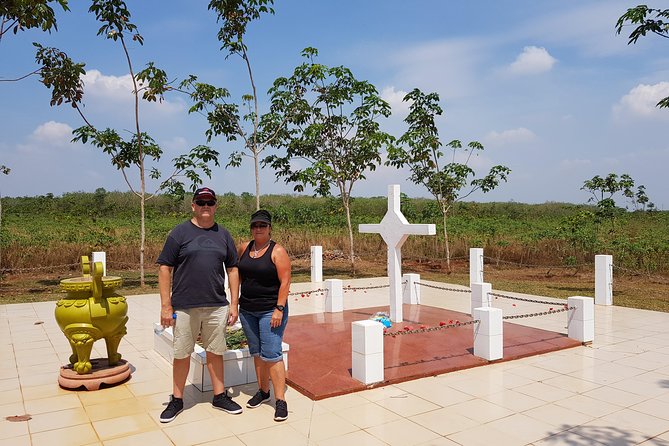
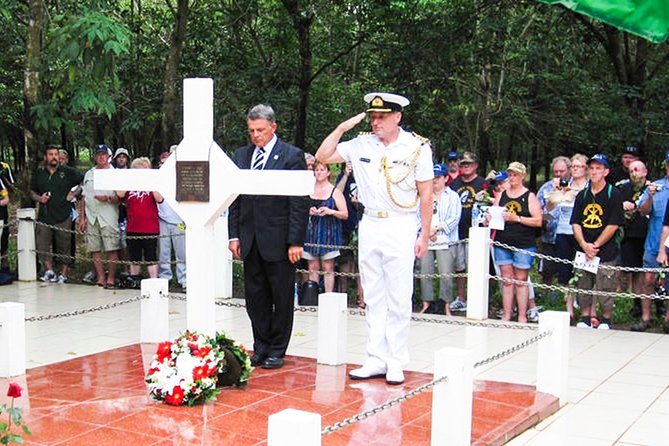
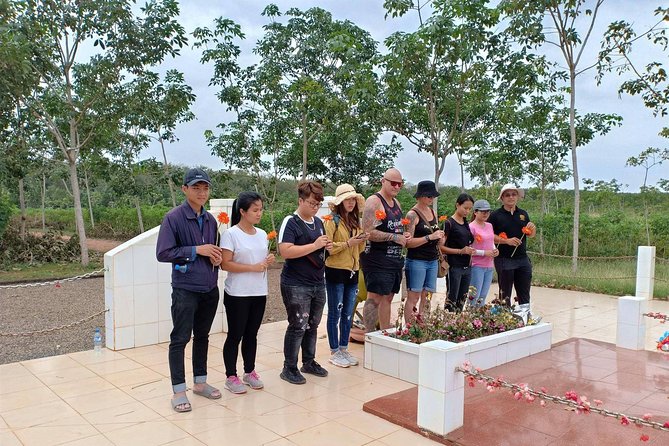
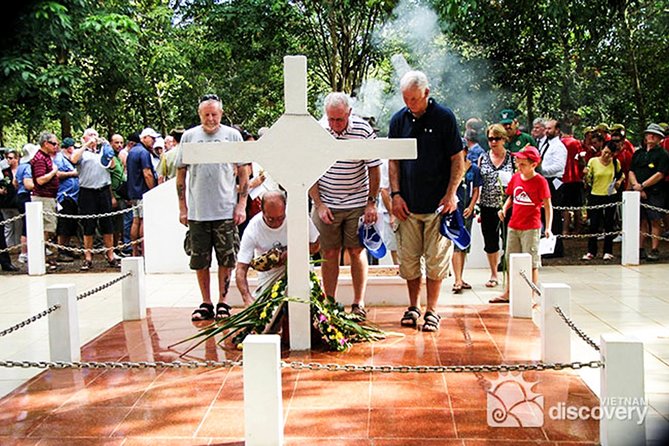
Long Tan Cross is the emotional anchor of the day. It commemorates members of the 1st Australian Task Force (1 ATF) who died in the Battle of Long Tan on August 18, 1966. That date matters, because it frames the whole tour as more than a story about distant history.
What makes this stop valuable is how straightforward it is. You visit the memorial, then walk and spend time in the battlefield area with your guide explaining details behind what you’re looking at. You’re not just reading from a sign; you’re getting guided context that helps you understand why the site is remembered the way it is.
From the tour description and feedback, the Long Tan Cross moment often feels moving in a very personal way. One reason: it gives you a focal point before the day gets more technical. You first grasp remembrance, then you move to the tactical landscape.
A small but important planning note: the day is about walking and standing outdoors at multiple locations. Wear shoes you’re comfortable in for a few hours, because you’ll want your legs ready.
Long Phuoc Tunnels and Horseshoe FSB: Understanding How Terrain Shapes Fighting
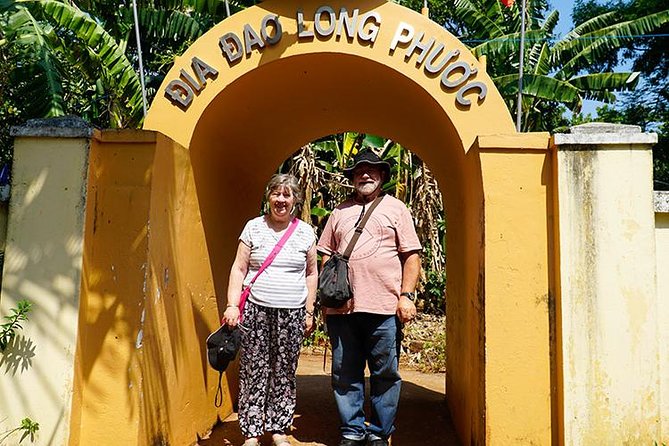
After the memorial start, you transition into a more “how it worked” phase with stops that focus on positions and underground infrastructure. Two of the most notable are Long Phuoc tunnels and Horseshoe FSB.
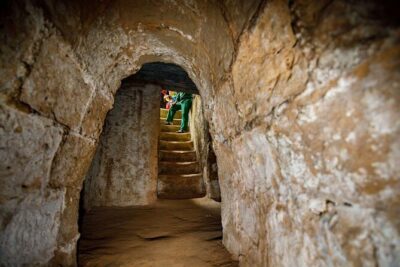
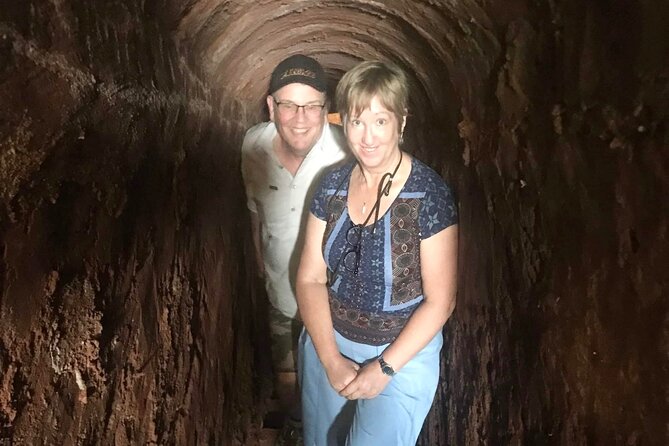
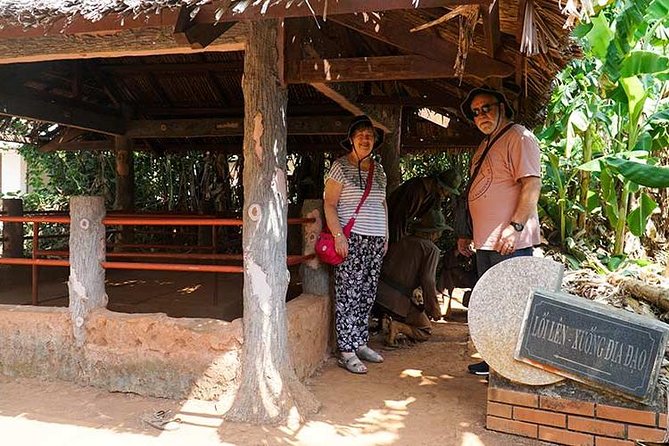
Long Phuoc tunnels help you visualize what’s often missing from history-at-a-distance: the role of shelter, movement, and concealment. Even if you don’t go into detailed mechanics of combat, seeing tunnel systems gives you a better sense of how forces could survive and reposition.
Then you move to Horseshoe FSB. FSB is a military term for a forward support base, and Horseshoe refers to the shape and position of the area. The key value here is that your guide ties the terrain to the battle’s flow. You start to see how a “place” is also a “problem” that troops had to solve under pressure—cover, visibility, and lines of approach all matter.
This is where the tour earns its worth for history-minded travelers. It’s not only about remembering names; it’s about connecting those names to real geography. If you love war history, you’ll likely appreciate how the tour stays grounded in physical locations rather than staying abstract.
If you don’t love military detail, it can still be manageable because the guide’s goal is to explain in plain language how both Australian forces and Viet Cong forces fought during the engagement.
Nui Dat (SAS Hill): Bringing the Battle’s Bigger Picture Together
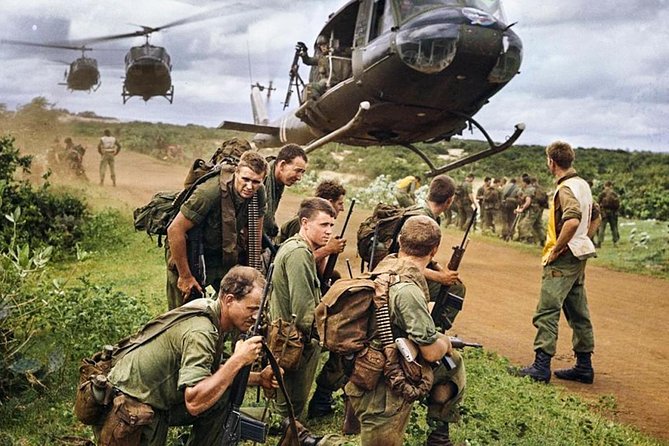
The final major viewpoint comes at Nui Dat, also known as SAS hill in the context of the tour. This is where the day shifts from specific sites to a wider understanding of how the engagement fits into the broader operational picture.
Nui Dat matters because it ties into the idea of what came before and after a major battle. The tour frames the battle of Long Tan as one of the best-known Australian engagements of the Vietnam War, and visiting Nui Dat helps you see why it’s remembered and how it connected to the region’s military presence.
Your guide will likely help you connect dots you didn’t know you had—how memorial sites, tunnel areas, and defensive positions relate to each other. It’s also a good place to ask questions, because by now you’ve seen enough “pieces” that your questions will make sense.
The day remains flexible. You may spend a little more time where your interests pull you most—memorial focus, tactical terrain, or the human side of the conflict.



The Guide Factor: When a First-Hand Veteran Perspective Shapes the Experience
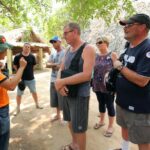
One of the tour’s strongest points is the role of the guide. You’ll have an English-speaking guide, and at least some departures include a guide with first-hand veteran connection.
One standout comment specifically credited an ex serviceman guide named Tuan with helping make the day extra special. That kind of perspective changes the tone. Instead of learning history only from documents, you get a voice that can explain what certain decisions meant in real life—without turning the day into a lecture.
Even if you don’t get a guide with that same personal connection, the consistent promise is that your guide provides historical context and practical explanations as you move between sites. That’s a big deal for a tour like this because the places can be emotionally heavy. Good guidance keeps you oriented and helps you understand what you’re looking at without overwhelming you.
Lunch, Timing, and How Long You’ll Be on Your Feet
The day is built as a full-day experience, listed at about 7 hours. The flow is roughly morning travel and memorial-focused time, then mid-afternoon battlefield sites, and then return to Ho Chi Minh City.
Lunch is included, which helps a lot on a day where you’re spending time outside and away from the city. It’s also easier on your schedule: you can focus on the sites rather than hunting for a meal between stops.
A useful expectation to set: you’re likely back around 3:00pm, based on the day’s described schedule. That gives you the rest of the afternoon in Ho Chi Minh City for lighter plans—just don’t schedule anything too ambitious right after, since the day is both informative and emotionally intense.
Price and Value: Is $98.10 a Fair Deal?
At $98.10 per person, this tour sits in a category where you’re paying for more than just transportation. You’re paying for a private experience with a guide, plus a full day’s structure that typically includes entrance fees, lunch, and hotel pickup and drop-off.
Here’s the value logic I think matters most:
- You’re not sharing a bus with strangers. Private vehicle and private group time means you can ask questions at memorials without feeling rushed.
- You get site-by-site guidance. Entrance fees and guided stops help avoid the common problem of “we went, but I didn’t really understand what I was seeing.”
- You get the whole day organized. The permit stop and the route structure reduce friction so you can focus on learning and remembering.
Is it cheap? No. But it’s also not inflated if you compare it to the total cost of getting to Long Tan on your own, hiring a guide separately, paying entrance fees, and still trying to cover multiple sites in one coherent day.
If you’re visiting for a specific reason—Australian Vietnam War history, ANZAC memorials, or a careful remembrance experience—this price starts to look like good value.
Who This Tour Is Best For (and Who Might Want Something Else)
This tour is a good match if you:
- care about ANZAC history and the battle of Long Tan
- want to see more than one site, including Long Phuoc tunnels, Horseshoe FSB, and Nui Dat
- like tours that explain context while you’re standing where history happened
You might choose something different if you:
- prefer casual sightseeing with minimal walking and minimal emotional weight
- don’t want a day focused on the Vietnam War in a grounded, memorial-to-terrain way
Should You Book the Long Tan and Nui Dat Private Tour?
If you want an organized, private day focused on Battle of Long Tan remembrance plus the terrain that shaped the fighting, I’d say booking makes sense. The combination of hotel pickup, private transport, and guided access to key memorial and former base sites is exactly what you want for a trip like this.
My main decision rule: if you’re the type of traveler who reads carefully, asks questions, and appreciates where the story is tied to physical places, this tour will feel worth it. And if you’re hoping for a truly moving experience, the guide factor—especially when a guide has first-hand veteran perspective—seems to be the ingredient that many people remember most.
FAQ
How long is the private tour to Long Tan and Nui Dat?
It’s listed as about 7 hours.
What time does the tour start from Ho Chi Minh City?
Pickup and start time are around 8:00am.
Do you get hotel pickup and drop-off?
Yes. Hotel pickup & drop-off in Ho Chi Minh City are included.
What sites does the tour include?
Key stops include the Long Tan Cross memorial, Long Phuoc tunnels, Horseshoe FSB, and Nui Dat (SAS hill).
Is lunch included?
Yes, lunch is included.
Is there transportation included?
Yes. You’ll travel by air-conditioned car/van as part of the tour.
How much does the tour cost?
The price is $98.10 per person.
What’s the cancellation policy?
You can cancel for a full refund up to 24 hours before the experience starts.
Is it a private tour only for your group?
Yes. It’s described as a private tour/activity, with only your group participating.