REVIEW · HO CHI MINH CITY
Ho Chi Minh City: Stained Glass Art Workshop in Saigon
Book on GetYourGuide →Operated by VIVA VIETNAM · Bookable on GetYourGuide
Color meets craft in Saigon. In Ho Chi Minh City, this stained glass art workshop is a peaceful 3–3.5 hour session where you learn how light, color, and design work together, then create a take-home ornament, coaster, or mini panel. I especially like that the souvenir is something you actually made, not a mass-produced trinket.
You also get hands-on teaching from an English-speaking local artist, with guidance on glass cutting, shaping, and assembling. One thing to consider: depending on the group and how clearly the instruction lands, you may spend more time working on your own than you expect—so ask questions early and don’t be shy about getting help mid-step.
In This Review
- Key Things I’d Watch For Before You Book
- Entering Saigon’s Studio Light: What This Workshop Really Is
- The 210-Minute Flow: How Your Session Typically Unfolds
- 1) Welcome and the stained-glass story
- 2) Choose your pattern from traditional and modern options
- 3) Learn safe glass handling, then start cutting
- 4) Assemble your pieces into your ornament/coaster/mini panel
- 5) Finish and take your stained glass home
- What You’ll Learn: Cutting, Shaping, and Assembling (Without Prior Experience)
- Picking the Right Design: Patterns That Tie Into Vietnamese Architecture
- The Workshop’s “Relaxed” Promise: Calm Guidance vs. Needing to Ask
- Value Check: Is $35 Worth It in Ho Chi Minh City?
- Who This Workshop Fits Best (And Who Might Want to Skip)
- Practical Tips So Your Glass Project Goes Smooth
- Come ready to learn, not to perform
- Plan how you’ll carry your finished piece
- If your English needs extra clarity, ask early
- Pick a design you can finish calmly
- Final Verdict: Should You Book This Saigon Stained Glass Workshop?
- FAQ
- How long is the stained glass workshop in Ho Chi Minh City?
- How much does the workshop cost?
- Is prior experience needed to join?
- What language is the instructor?
- What will I make during the class?
- Is anything included besides the instruction?
- Is this workshop suitable for children?
Key Things I’d Watch For Before You Book
- A take-home piece you made yourself: ornament, coaster, or mini panel in the style you choose
- Beginner-friendly basics: cutting, shaping, and assembling taught step-by-step
- Vietnam-focused context: how stained glass shows up in colonial and modern buildings, plus symbolism tied to design
- Pattern choice matters: traditional and modern options inspired by local architecture
- Peaceful studio pace: relaxing creative time in Ho Chi Minh City, typically around 3–3.5 hours
- English support can vary by session: the instructor is listed as English-speaking, but clarity may depend on the moment
Entering Saigon’s Studio Light: What This Workshop Really Is
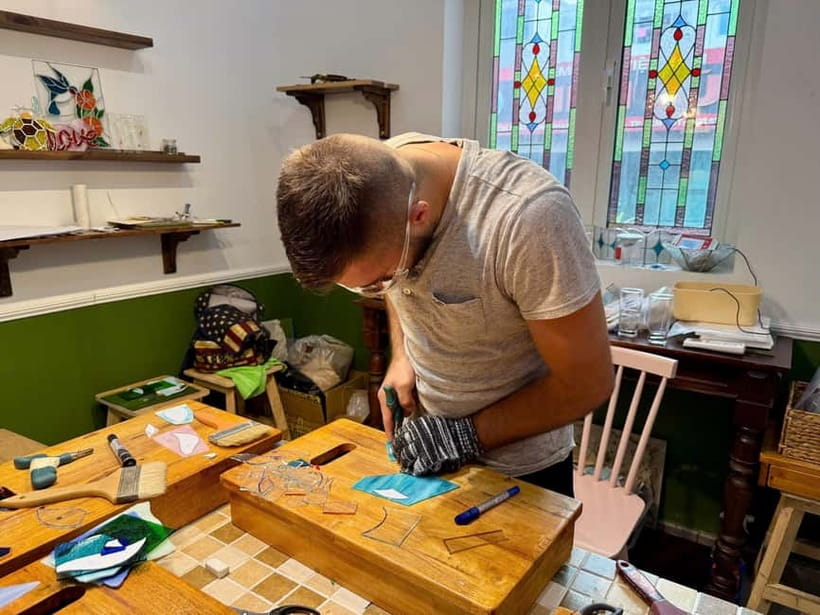
Stained glass can look fancy from far away. Up close, it’s mostly careful work, good tools, and patience. This workshop gives you the chance to do that careful work yourself, in a quiet Ho Chi Minh City studio, without needing any prior experience.
The real appeal here is not just the craft. It’s the way the class connects the technique to place. You’re not only learning how to cut and assemble glass pieces—you’re also hearing how stained glass relates to Vietnamese architecture, including its role in colonial and modern buildings. That means when you choose a pattern, you’re not treating it like random decoration. You’re choosing a design with meaning and local inspiration behind it.
And yes, you’ll go home with something physical. Not a photo. Not a paper certificate. A finished stained glass piece made by your hands.
You can also read our reviews of more city tours in Ho Chi Minh City



The 210-Minute Flow: How Your Session Typically Unfolds
This is a 3–3.5 hour hands-on class, and the timing matters. In that window, you get enough structure to learn the basics but still have time to finish something you can be proud of.
Here’s the practical rhythm you can expect, based on what the workshop is built around:
1) Welcome and the stained-glass story
The session starts with context. You’ll learn about the history and symbolism of stained glass in Vietnamese architecture—especially how it appears in colonial and modern buildings. This early piece of story is useful because it frames what you’re doing next: pattern choice, layout, and the final look.
If you like culture that connects directly to your hands, this part is a plus. If you just want to start cutting immediately, you’ll still get there soon enough.
2) Choose your pattern from traditional and modern options
Next comes the design. You’ll pick from a range of traditional and modern patterns inspired by local architecture. This choice is more important than it sounds. A pattern affects how many pieces you’ll need to cut, how your assembly will sit, and how the light will move through your finished work.
Go with something that matches your skill comfort. If you’re new, simpler shapes can save frustration. If you’re feeling bold, a more detailed design can still work—you just want to stay relaxed and take your time.
3) Learn safe glass handling, then start cutting
Then you get into the technique: the basics of glass cutting, shaping, and assembling. You’ll be shown how to handle tools and materials safely, and you’ll work through the steps needed to turn your selected pattern into real glass pieces.
This is where the session can feel “worth it fast.” You’re not just watching. You’re making.
You can also read our reviews of more tours and experiences in Ho Chi Minh City






4) Assemble your pieces into your ornament/coaster/mini panel
Once your glass pieces are prepared, you’ll assemble them into your final form. The goal is a cohesive finished panel you can take home. You’ll get guidance on putting everything together correctly, so you’re not guessing how the final work is supposed to look.
5) Finish and take your stained glass home
At the end, you’ll have a completed stained glass item ready to pack. Since the workshop includes all tools and materials, your main job at the end is to plan for safe transport.
If you love souvenirs, this is one of those experiences where the “I made this” feeling is genuinely the point.
What You’ll Learn: Cutting, Shaping, and Assembling (Without Prior Experience)
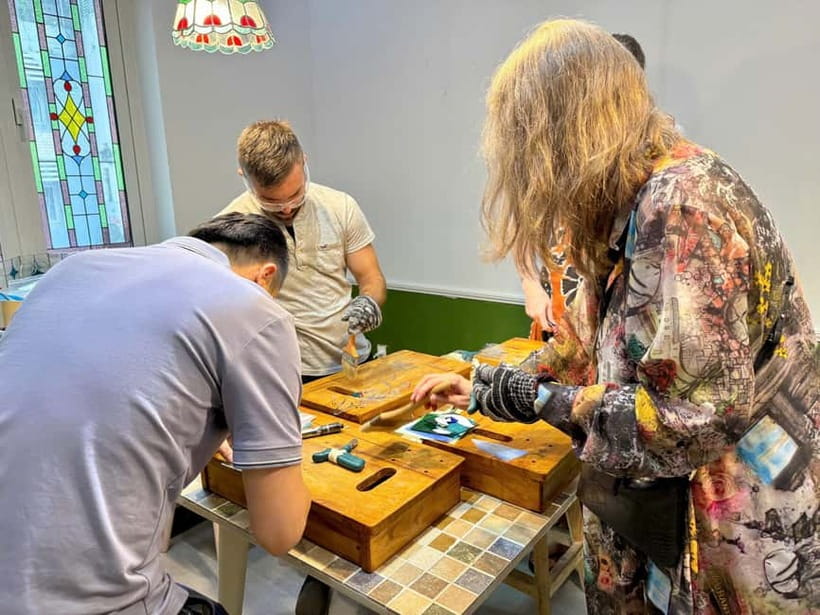
The class is designed for beginners and art lovers. That matters because stained glass can look intimidating online. In practice, you’re taught the basics you need to succeed inside the workshop time.
You learn three core skills:
- Glass cutting: turning your pattern into workable pieces
- Shaping: refining pieces so they fit cleanly
- Assembling: putting everything together into a readable, finished design
You also learn safety basics for handling the tools and materials. Even if you’ve done crafts before, this is the part where the instructor’s guidance is valuable. Working with glass isn’t the place to wing it.
A small but important practical note: stained glass work is not “set and forget.” If the instructor isn’t right next to you at every step, you may need to check in. In at least some sessions, learners reported that instruction and explanation were not always as clear as expected, and that they were left to handle parts of the process more independently. That doesn’t mean the workshop isn’t good—it just means you should be proactive: ask early, confirm the next step, and request help if you feel stuck.
Picking the Right Design: Patterns That Tie Into Vietnamese Architecture
You don’t just pick a pretty picture. You choose from traditional and modern patterns inspired by local architecture, and you’ll hear how stained glass connects to Vietnamese buildings in both colonial and modern contexts.
That’s why the design portion is worth paying attention to. Your pattern choice influences the visual outcome in three ways:
- Piece count: more complex designs often mean more cuts and smaller segments
- Light effect: stained glass gets its character from how it reads through color and light
- Clarity of the final picture: some designs naturally form stronger shapes as a finished panel
If you’re new, you’ll likely have an easier time with designs that are bold in outline. If you’re an experienced crafter, you can probably handle more detail—but you’ll still want to move with calm focus. The session is meant to feel relaxing, not like a race.
The Workshop’s “Relaxed” Promise: Calm Guidance vs. Needing to Ask
The workshop is pitched as a relaxing creative experience in a peaceful studio. That matches the overall flow: you’re given structure, time to work, and support while learning a craft.
In many cases, the English instruction is described as clear and the instructors are calm and ready to help when needed. That combination—calm plus support—makes it easier to stay comfortable while you learn tool technique.
Still, there’s a real-world consideration: English instruction quality and how much step-by-step explanation you receive can vary depending on the moment and how the session runs. If you need clear guidance to move confidently, treat this like a hands-on workshop where you should speak up fast. Ask what the next step looks like. Ask how you’ll know if a piece is ready. Don’t wait until you’ve already finished something you want to redo.
In other words: assume you’ll get help when you request it, and you’ll feel great about the experience.
Value Check: Is $35 Worth It in Ho Chi Minh City?
For $35 per person, you’re buying more than “a class.” You’re getting:
- An English-speaking local instructor
- All tools and materials
- A finished stained glass piece to take home
That’s the key value equation. Workshops can be expensive when you’re paying mostly for time and not for materials. Here, you’re paying for instruction plus the actual supplies used to create your souvenir.
You also get 210 minutes of focused, hands-on craft. That’s not just a quick activity to fill an afternoon. It’s long enough for a real learning curve—cutting, shaping, assembling—plus the satisfaction of completion.
Is it the cheapest thing in Saigon? Probably not. But for a handmade souvenir that represents effort, not just money, the value is strong.
One more practical value point: transportation is not included. So if you’re far from the studio, factor in the ride. If the studio is convenient to your day, the $35 feels even more reasonable.
Who This Workshop Fits Best (And Who Might Want to Skip)
This is a great match if you want something more meaningful than sightseeing photos. It works well for:
- Beginner crafters who want a guided start
- Art lovers who enjoy learning technique
- Travelers who like a relaxing, peaceful studio break
- People who want a souvenir with a story: made with your own hands, informed by Vietnamese design context
There are also clear limits. The workshop is not suitable for children under 12, and it’s not suitable for people with mobility impairments. If you fall into either category, you’ll likely have a tougher time with the working setup and tool safety requirements.
If you want an activity where you mostly watch and don’t touch, this might feel like too much work. This one is for doing.
Practical Tips So Your Glass Project Goes Smooth
No one wants the stress of a souvenir that cracks, misaligns, or feels unfinished. You can reduce risk and improve the experience with a few simple moves.
Come ready to learn, not to perform
This is a teaching class. Your job is to follow the steps and ask questions when you’re unsure. If you’re too focused on perfection, you’ll lose the relaxed vibe the workshop is designed to offer.
Plan how you’ll carry your finished piece
You’ll take your finished stained glass home, so think about how you’ll pack it. Even with careful handling during the session, you’ll be moving it after class.
If your English needs extra clarity, ask early
The workshop is offered in English with an English-speaking instructor. In some sessions, communication may be easier than others. If you’re not catching a step, ask for the explanation again in simpler terms. If you’re unsure how to proceed, ask what good progress looks like.
Pick a design you can finish calmly
Newer makers often do better with patterns that don’t require heroic levels of detail. If you’re unsure, choose something that still looks impressive but won’t overwhelm your time.
Final Verdict: Should You Book This Saigon Stained Glass Workshop?
I’d book this workshop if you want a hands-on cultural activity in Ho Chi Minh City and you care about taking home something genuinely personal. The combination of technique (cutting, shaping, assembling) plus Vietnamese architectural context (colonial and modern references, symbolism, patterns inspired by local buildings) makes it more than a craft demo. It’s a mini creative project with meaning.
I’d pause before booking if you need very detailed, slow explanations to feel confident in the process, because instruction clarity can vary depending on the session. The fix is easy: ask early, confirm each step, and don’t wait until you’re stuck.
If you’re the kind of traveler who likes learning one real skill and leaving with an object that proves you did it, this is a strong choice.
FAQ
How long is the stained glass workshop in Ho Chi Minh City?
The duration is 210 minutes, which is about 3 to 3.5 hours.
How much does the workshop cost?
It costs $35 per person.
Is prior experience needed to join?
No prior experience is needed. It’s designed for beginners and art lovers.
What language is the instructor?
The workshop includes an English-speaking local instructor.
What will I make during the class?
You’ll create your own stained glass piece, such as an ornament, coaster, or a mini panel.
Is anything included besides the instruction?
Yes. All tools and materials are included, and you take your finished piece home.
Is this workshop suitable for children?
No, it’s not suitable for children under 12 years.