REVIEW · HO CHI MINH CITY
Ho Chi Minh City: Private Walking Tour with a Guide
Book on GetYourGuide →Operated by Công Ty TNHH Hoangvan Walking Travel · Bookable on GetYourGuide
Street scenes, river history, and quick photo stops. This 3-hour Ho Chi Minh City walking tour threads together Old Saigon sights like Notre Dame Cathedral and the Saigon Post Office without wasting time on transit.
I loved how the guide made each location feel connected to everyday life, from the Hindu Temple area to the trading energy at Ben Thanh Market. And my guide Hoanf stood out for real-world help: he explained in detail, kept an eye on safety, and took plenty of photos even for a solo traveler, with extra attention to things like puddles and trip hazards.
One drawback to consider: it’s a solid walking route. If you’re dealing with mobility limits or you need wheelchair access, this one likely won’t work for you.
In This Review
- Key highlights worth planning for
- Tao Dan Park: a smart place to begin your Old Saigon walk
- Hindu Temple and the feeling of cultural layers
- Ben Thanh Market: watching trade happen up close
- Nguyen Hue Square and the People’s Committee: where history meets the street
- Saigon River and Nha Rong Wharf: a river story with real historical weight
- The landmark corridor: Opera House, Notre Dame Cathedral, and the Saigon Post Office
- Book Street next to the Saigon Post Office: the calm reward for book people
- Turtle Lake in past and present, then the Pink Church
- Guide Hoanf and what “good guiding” actually looks like
- How the pace and small-group size work for your comfort
- Price and value: why $15 can make sense here
- What to bring so the walk feels easy, not annoying
- Who should book this tour, and who should skip it
- Should you book this Ho Chi Minh City private walking tour?
- FAQ
- FAQ
- How long is the Ho Chi Minh City private walking tour?
- Where does the tour start?
- How large is the group?
- Is the tour guide available in English?
- What are some of the main stops included?
- Does the tour include meals?
- What should I bring for the walk?
- Where do we end the tour?
Key highlights worth planning for
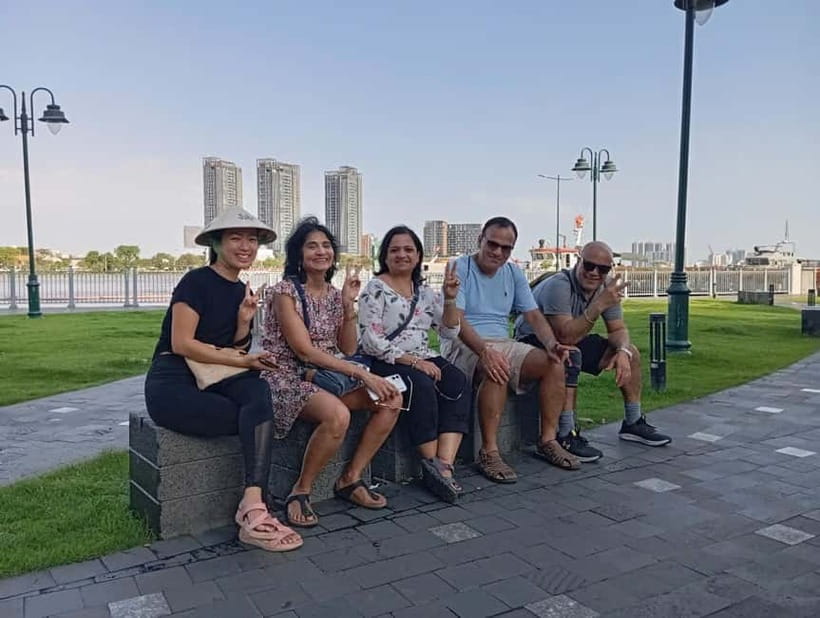
- Tao Dan Park start gives you a calm baseline before the city speeds up
- Hindu Temple and Ben Thanh Market show how many cultures share the same streets
- Nguyen Hue Square and the People’s Committee add context beyond photo ops
- Saigon River and Nha Rong Wharf connect the story of the city to President Ho Chi Minh’s departure
- Opera House, Notre Dame Cathedral, and the Saigon Post Office hit the classic landmark corridor in one go
- Book Street, Turtle Lake, and the Pink Church round out the tour with variety
Tao Dan Park: a smart place to begin your Old Saigon walk
I like starting tours where you can breathe for a minute, and Tao Dan Park does that. It’s a natural launch point for a route that then moves into the denser center, where you’ll be crossing streets, weaving around stalls, and getting your bearings fast.
This tour starts there and stays on foot for about two hours through the core area. That mix matters: you’ll see a lot, but you won’t feel like you’re in a sprint from one bus stop to another.
If you’re meeting up and you’re the type who likes clarity, you’ll be glad the meeting point is handled with a photo reference. That sounds small, but in a big city it can save you stress at the start.
You can also read our reviews of more walking tours in Ho Chi Minh City



Hindu Temple and the feeling of cultural layers
The first major stop after the park is a Hindu Temple visit. I like this opening because it nudges you to look at Ho Chi Minh City as a layered city, not just a list of landmarks.
From there, the walking route gradually builds toward the commercial heart. The temple stop gives you a reminder that religion and daily life sit side-by-side here, so later places don’t feel random. You’re building a mental map while you walk.
One practical note: even though the tour focuses on key sights, you should still expect sidewalk navigation. Wear shoes you can rely on, since the route is active and you’ll be moving for most of the time.
Ben Thanh Market: watching trade happen up close
Then comes Ben Thanh Market, where the tour focuses on the trading activities and the way Vietnamese people move through the market day-to-day. This is the part of the tour I’d call most “alive” in a practical, not just scenic way.
What to do here is simple: don’t rush. I’d give yourself permission to pause and watch how people negotiate space, browse, and exchange. Your guide can point out what’s going on, and that’s where a guided walk beats solo wandering. You’ll understand what you’re seeing instead of just filming it.
Also, markets can be overwhelming if you’re hungry or tired. You’re on a guided timeline, so you don’t need to shop hard to get value. Think of Ben Thanh as a living lesson in local rhythm.
Nguyen Hue Square and the People’s Committee: where history meets the street
Next you reach Nguyen Hue Square, and the tour includes a moment to pay respects to President Ho Chi Minh. This isn’t just sightseeing. It’s a chance to understand how the city frames national identity in its public spaces.
From there, you continue to the Ho Chi Minh City People’s Committee area. Even if architecture isn’t your main reason for traveling, this stop helps you read the city. It shows you where authority sits in the urban layout, and why certain areas feel like civic anchors.
I also appreciate that the tour doesn’t rush past this section. You’re walking through meaningful space, and with a guide you can connect the dots between what you see and why it matters.
Saigon River and Nha Rong Wharf: a river story with real historical weight
After the civic center, the route moves toward the Saigon River and the Nha Rong Wharf. This part hits differently because the tour connects the location directly to President Ho Chi Minh’s departure, described as leaving from here to find a way to save the country.
That framing changes how you experience the waterfront. Instead of seeing it as a scenic edge of the city, you start thinking of it as a gateway in the historical imagination. It helps you understand why wharfs and river crossings tend to carry emotional weight in many cities.
Bring your camera, but also take a moment to just stand and look. River light can shift fast, and the guide’s context helps you notice details you might otherwise skip.
You can also read our reviews of more guided tours in Ho Chi Minh City





The landmark corridor: Opera House, Notre Dame Cathedral, and the Saigon Post Office
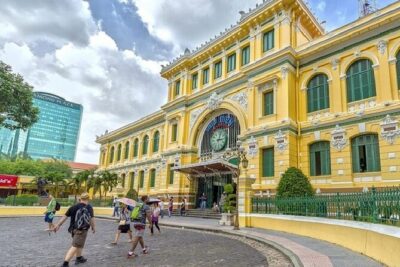
One reason I like walking tours is that they let you experience “corridors” of the city. Here, the tour naturally flows from the Opera House area to Notre Dame Cathedral, and then to the Saigon Post Office.
The Notre Dame Cathedral stop is classic Ho Chi Minh City. It’s a strong visual marker, and it’s also a useful contrast point after the political square and the river. You get to see the city’s different eras in a single sequence.
Then you reach the old Saigon Post Office, built during the French period. This is the stop where I’d slow down the most. Postal buildings have a way of showing how everyday systems once worked, not just how power looked. Since the tour explicitly ties this building to the French period, you can ask your guide about what that means in the city’s timeline and street design.
Book Street next to the Saigon Post Office: the calm reward for book people
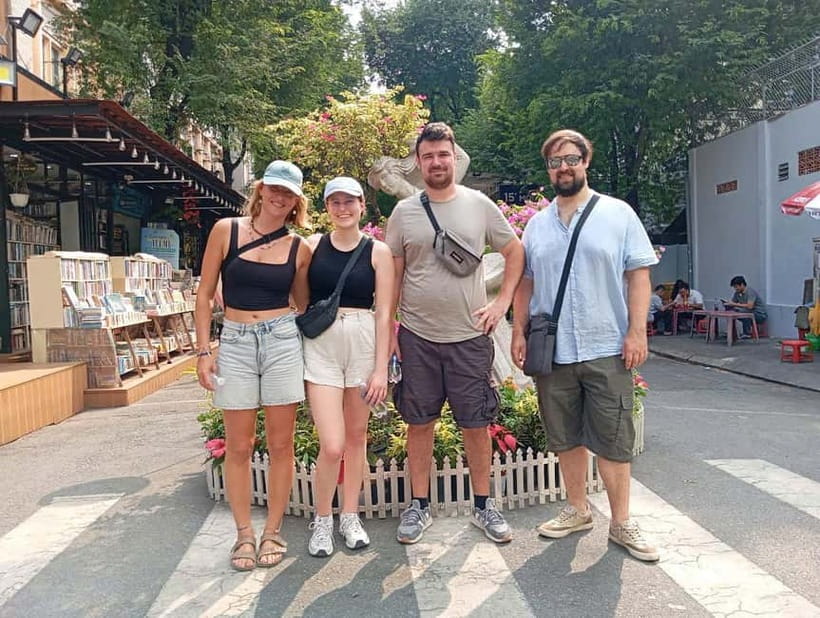
Right by the Saigon Post Office, the tour includes a Culinary Book / Book Street experience. The idea is simple: after big visual landmarks, you get a human-scale, book-lover corner of the city.
This is a good place to reset. Even if you’re not the type who shops for souvenirs, a book street offers a different kind of travel pleasure: it makes the city feel personal. And because it’s near the post office, it doesn’t feel like a random detour.
If you like reading local stories or finding small keepsakes, this is a satisfying stop. If you don’t, you can still enjoy it as a break from crowds and traffic stress.
Turtle Lake in past and present, then the Pink Church
The route continues to Turtle Lake, described as meaningful in both past and present. I like that wording because it tells you to look at the place twice: as something with history, and as something you can see and experience now.
After that, you visit the Pink Church. It’s the kind of stop that gives the tour a playful edge. The tour’s overall flow is a neat blend of solemn, scenic, and just plain interesting.
This sequence matters because it rounds out the experience. You don’t leave the city feeling like you only saw the obvious monuments. You get at least a couple of places that help the city feel odd in the best way.
Guide Hoanf and what “good guiding” actually looks like
A walking tour lives and dies by its guide. And the best part of this experience for me is how the guide handles practical reality, not just facts.
My guide Hoanf explained things in detail, and he also took plenty of photos, even for a solo traveler. That matters. If you’re traveling alone, getting usable pictures is often harder than you think. Having someone help with framing and timing saves you effort.
Safety also stood out. Hoanf didn’t only mention street crossings in a general way. He kept checking your path and pointed out hazards like puddles and obstacles. That’s the kind of small attention that makes the whole walk feel smoother.
For value, that kind of guidance is huge. You’re paying for route logic and local know-how, and Hoanf delivered on both.
How the pace and small-group size work for your comfort
This is a small group, limited to 5 participants, and it runs for about 3 hours total. That’s a sweet spot. Big groups can turn you into a spectator. Here, you’re close enough to ask questions and keep up, without feeling trapped behind a crowd.
Because it’s a walking route, the timing matters. You’ll spend a lot of the time moving between stops, and the guide’s job is to keep the day flowing. A small group helps because you don’t lose time every time the group slows or splits.
You should plan for weather too. The tour is outdoors for most of the experience, so light clothing helps, and it’s smart to have sunscreen and a hat ready.
Price and value: why $15 can make sense here
At $15 per person for a 3-hour English-language guided walking tour, the value is in the density. You’re not just paying for a lecture. You’re getting a route that covers multiple categories of sights: civic space, river history, landmark architecture, and market life.
Also, most of the included stops are the kind you’d otherwise need multiple tickets, taxis, or extra half-days to piece together. Here, the guide does the stitching.
What you should think about is your own travel style:
- If you like structure and a clear route, this price can feel like a bargain.
- If you prefer slow browsing and you don’t like walking, you might feel time-pressure.
For most visitors, though, the combination of guidance plus site variety is the reason the cost works.
What to bring so the walk feels easy, not annoying
This is where you win or lose the day. Bring:
- Comfortable shoes (non-negotiable for a walking tour)
- A hat and sunscreen
- A camera if you want photos at the main landmarks
- Water so you don’t get sluggish midway
You’ll also want to keep your head up for the street conditions. Even with a guide watching, you’re still walking in an active urban environment.
And one rule: no smoking during the tour.
Who should book this tour, and who should skip it
This tour makes sense if you want:
- A guided way to see the classic center highlights like Notre Dame Cathedral and the Saigon Post Office
- A market stop that’s about local trading, not just browsing for photos
- Context for the city’s history, including a stop tied to President Ho Chi Minh at Nha Rong Wharf and Nguyen Hue Square
It’s less suitable if:
- You have mobility impairments or use a wheelchair
- You’re not comfortable with a continuous walking route and uneven city sidewalks
- You’re expecting a restaurant meal included day. Meals are not included.
Should you book this Ho Chi Minh City private walking tour?
If you want a focused, organized 3-hour walk that hits major sites and adds a few fun, local-feeling stops, I’d say this is a strong pick. The best reason to book is the human factor: Hoan(g)van’s guiding style (especially with Hoanf) clearly aims to keep you informed and safe, and to make sure you get photos even when you’re traveling solo.
Book it if you:
- Like walking tours with a clear route
- Want English explanations as you move through the city
- Enjoy mixing landmark photos with market and book-street variety
Skip it if you need extensive accessibility support or if you want a mostly seated itinerary.
FAQ
FAQ
How long is the Ho Chi Minh City private walking tour?
It runs for about 3 hours.
Where does the tour start?
The tour starts at Tao Dan Park.
How large is the group?
The group is limited to up to 5 participants.
Is the tour guide available in English?
Yes. The live tour guide speaks English.
What are some of the main stops included?
You’ll visit the Hindu Temple, Ben Thanh Market, Nguyen Hue Square, Ho Chi Minh City People’s Committee, Saigon River and Nha Rong Wharf, Opera House, Notre Dame Cathedral, the old Saigon Post Office, Book Street, Turtle Lake, and the Pink Church.
Does the tour include meals?
No. Meals are not included.
What should I bring for the walk?
Bring comfortable shoes, a hat, camera, sunscreen, and water.
Where do we end the tour?
The tour ends at your hotel or wherever you want.