REVIEW · HO CHI MINH CITY
Hands-on making 3 Iconic Coffees of South Central North Vietnam
Book on Viator →Operated by Quynh - Vietnam Coffee Journey · Bookable on Viator
A good cup of coffee can carry a whole country. In this hands-on session, I love how Quynh uses Vietnam’s three coffee regions to teach you brewing skills through four iconic drinks you’ll actually make yourself. You’ll practice the classics and the newer styles, while getting the stories behind why South, Central, and North taste so different.
Two things I really like: you get real hands-on practice (not just watching), and Quynh’s teaching style is built around clear comparisons, including showing you a wrong brew so you can taste the difference. The setup is also small enough that you can adjust your drinks toward your own preferences without feeling rushed.
One consideration: it’s only about 1.5 hours, so you’ll leave knowing the how and the why for the four coffees, but you won’t get a long, farm-to-roaster kind of deep background. If you want a lot of sightseeing or a full coffee journey, this is more of a focused workshop than an all-day tour.
In This Review
- Key takeaways before you go
- Vietnam coffee in one workshop: South, Central, North in your cup
- Meeting Quynh in District 1: small-group, hands-on, and easy to find
- Brewing pure PHIN coffee: the right way and the wrong way
- Saigon iced coffee with condensed milk: a South Vietnam taste story
- Central Vietnam salted cream coffee: modern flavor with ingredient tricks
- Hanoi egg coffee: when the capital shows up in the cup
- Snacks, timing, and how to keep the experience enjoyable
- The value question: what $21.69 buys you in Saigon
- Who should book this Vietnam coffee workshop—and who might not
- Should you book Vietnam Coffee Journey with Quynh?
- FAQ
- What is the duration of the Hands-on Making 3 Iconic Coffees of South Central North Vietnam experience?
- How much does the tour cost?
- What drinks will I make during the class?
- What is included in the price?
- Where is the meeting point?
- How many people are in each group?
- Do I get a mobile ticket?
- When will I get confirmation?
- Is there free cancellation?
- Are service animals allowed?
Key takeaways before you go
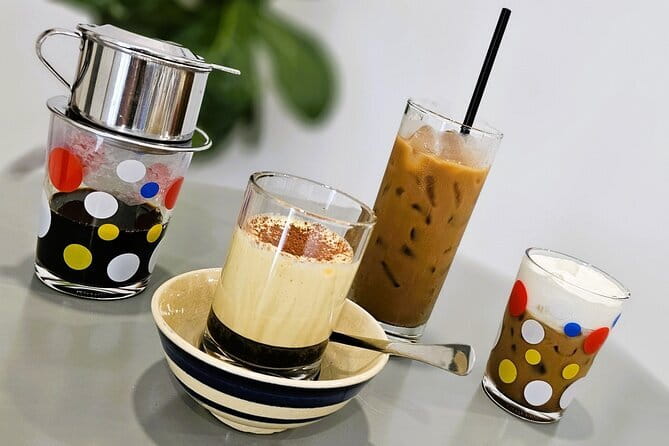
- Four famous coffees, made by you: PHIN coffee, condensed milk coffee, salted cream coffee, and egg coffee
- Taste comparisons: Quynh intentionally shows a wrong method so you learn what changes the flavor
- Vietnam’s north-south split explained in coffee terms using the idea of Vietnam’s 1,650 km length
- Small group with a max of 6 people, so the pace stays personal
- City-center convenience at 27 Ngô Đức Kế, Bến Nghé, Quận 1, with a mobile ticket
- Included snacks like cashews to keep your energy up while you sip
Vietnam coffee in one workshop: South, Central, North in your cup
This experience is built on a simple idea: coffee isn’t just a drink in Vietnam, it’s a way of expressing regional life. Quynh frames the session around three main coffee regions—South, Central, and North—then connects each drink to the kind of people and situations those regions represent. Vietnam is long (1,650 km), and the coffee culture shifts across that distance in ways you can taste quickly.
What makes this workshop practical is that you don’t only hear about differences. You make the coffees, and you get prompted to adjust the results toward your own taste or mood. That means the lesson sticks better than a lecture, because your hands learn the steps and your tongue learns the outcomes.
Also, the class doesn’t treat coffee history like a list of dates. It’s more like a set of clues. Each drink has ingredients and techniques that point to how Vietnamese coffee habits developed—then you get to experience those connections directly.
You can also read our reviews of more tours and experiences in Ho Chi Minh City



Meeting Quynh in District 1: small-group, hands-on, and easy to find
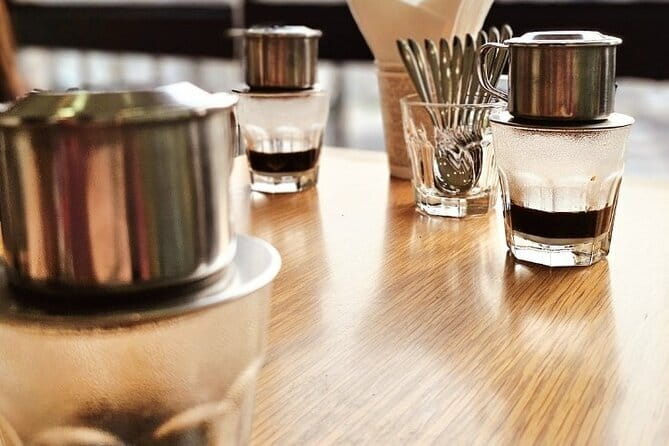
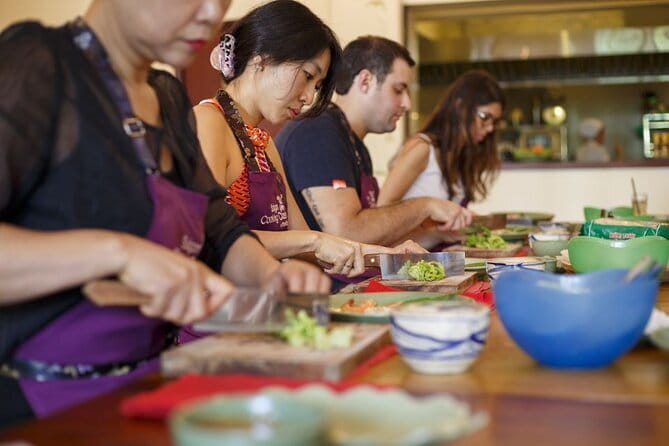
The session meets at 27 Ngô Đức Kế, Bến Nghé, Quận 1 and ends back at the same spot. It’s designed for a small group (max 6 people), which matters more than you might think. With a group that size, Quynh can watch what you’re doing and correct technique while the coffee is still in progress.
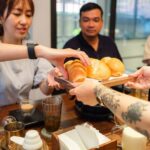
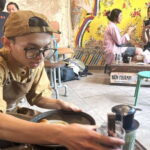
You’ll get a mobile ticket, and the meeting point is near public transportation, so it’s not a stressful “how do I get there?” situation. The workshop space is set up like an intimate food-and-drink classroom. Based on how the room is described, it feels like a compact attic-style setup where the tables and tools are ready for each person.
If you’re the type who likes structured learning, you’ll probably appreciate that the pacing is tight: you start with one key method, then you build from there into the famous condensed milk drink, a Central-style salted cream version, and finally Hanoi’s egg coffee. You’re not waiting around while other people hold the line.
Brewing pure PHIN coffee: the right way and the wrong way

The first big skill is how to brew PHIN coffee properly. In Vietnam, the PHIN filter is iconic because it controls flow—slow, steady, and often stronger than drip coffee. Quynh sets you up to practice the real method, and he also makes a wrong sample at the same time so you can compare.
I like this approach because it’s not abstract. If the coffee is too bitter, too weak, or tastes “off,” you can link the problem to what changed in the process. Quynh’s teaching is set up so you learn the difference between doing it calmly versus doing it casually.
Here’s why this matters for the rest of the session: PHIN brewing is the foundation. When you understand what “good” looks and tastes like in a simple PHIN cup, the later drinks make more sense. Condensed milk changes sweetness and body. Salted cream changes texture and balance. Egg coffee changes richness and mouthfeel. But all of them still depend on a base brew you can trust.
Practical tip: pay attention to the moment when the brew starts. That’s usually where timing and technique show up fast. Even if your first cup isn’t perfect, your second drink will benefit from what you learned from the comparison.
Saigon iced coffee with condensed milk: a South Vietnam taste story
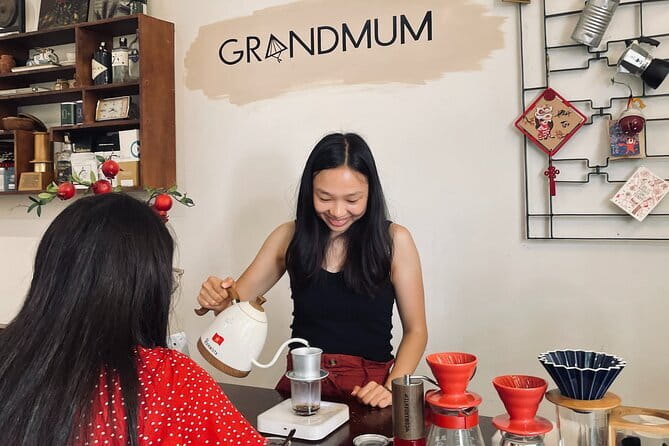
Next up is the classic Vietnamese coffee with condensed milk—the kind that many people associate with Saigon-style enjoyment. Quynh doesn’t treat it as just a recipe. He links the drink to stories about South Vietnam people and how their coffee habits reflect their preferences and daily rhythm.
In this part, you’re not only mixing sweetness into coffee. You’re learning how condensed milk affects the flavor profile you get from PHIN brewing. It softens sharp edges, rounds out bitterness, and creates that thicker, slower-sipping cup that works especially well as an iced drink.
What I appreciate is that you’re encouraged to make adjustments for your taste and mood. That’s useful if you prefer stronger coffee or if you like it more smooth and creamy. Instead of having one “official” way to drink it, you’ll understand what you can change.
Also, the drink is famous for a reason: it’s approachable. If you’re new to Vietnamese coffee, this is a strong entry point, because the condensed milk makes the cup friendly even if you’re sensitive to darker coffee flavors.
Central Vietnam salted cream coffee: modern flavor with ingredient tricks
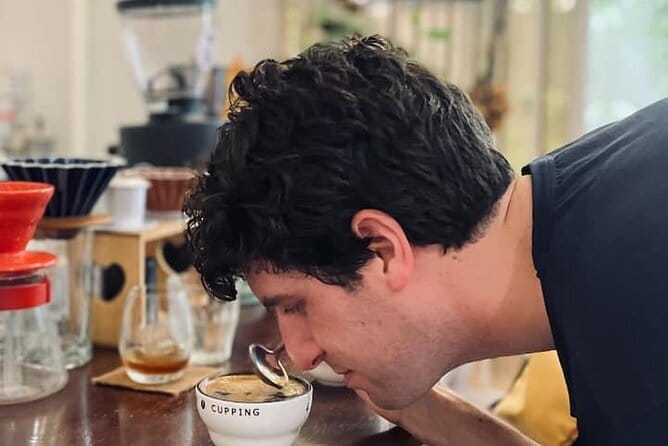
Then you move into something newer: salted cream coffee from Central Vietnam. Quynh explains the tricks and ingredient combinations, which is where this workshop feels current rather than stuck in “old-school only.”
Salted cream coffee is all about balance. The salted element helps the sweetness feel less flat and can bring out coffee notes that might otherwise seem hidden. The creaminess changes the mouthfeel, so even if you already like Vietnamese iced coffee, this can feel like a different category of drink.
The best part for you is that the session doesn’t leave you guessing. You’ll learn how the components work together and what to watch for while you assemble the drink. That way, you can reproduce the style later instead of relying on memory.
If you’re the type who enjoys café-style drinks, this section is likely to be the most fun. It has that “wait, this is coffee and dessert-ish at the same time” feel that people love in trendy coffee shops, but you’re learning the method in a calm, practical way.



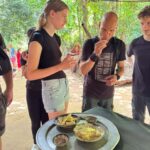
Hanoi egg coffee: when the capital shows up in the cup
Finally, you make egg coffee, often linked with Hanoi. This drink stands out because it’s not just about sweetness or milk texture—it has that distinctive richness from egg components, which creates a thicker, more velvety style.
Quynh ties the drink to the characteristics of the capital, framing egg coffee as something that reflects a particular Hanoi personality—more detail, more technique, and a cup that feels like a treat. The session is designed so you don’t just memorize steps. You learn what changes the final texture and why egg-based coffee feels different from condensed-milk versions.
From a learning point of view, egg coffee is a great finale. After PHIN and the two milk-driven drinks, this one forces you to think about the role of ingredients beyond sweetness. It’s the kind of experience that makes you understand Vietnamese coffee as a whole system, not just a single drink trend.
If you like custard-like textures or richer coffee desserts, this is the one you’ll probably remember longest.
Snacks, timing, and how to keep the experience enjoyable
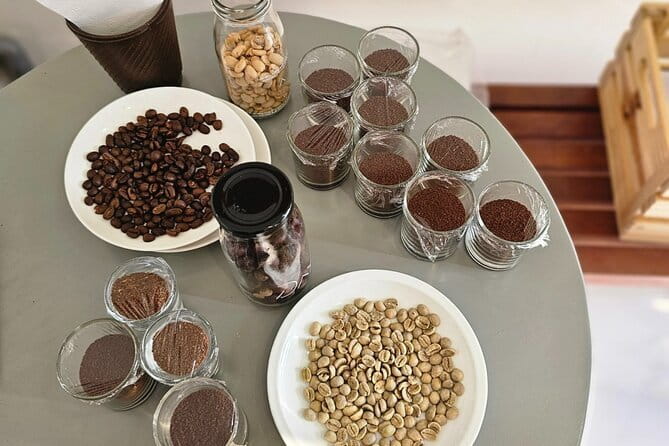
The class runs about 1 hour 30 minutes and includes cashew nuts as a snack. Cashews are a classic Vietnam snack, and they’re a simple way to keep energy steady while you taste four drinks back-to-back.
Since the session includes coffee and/or tea, you might be able to choose lighter options depending on what’s available and what you prefer. If you know you’re sensitive to caffeine, it’s smart to speak up at the start so Quynh can guide you to what works best.
Also, this is a “watch your own palate” kind of workshop. After the first PHIN cup, your taste can shift as sweetness and texture build across the next three drinks. Pace yourself, take small sips, and let your tongue reset between styles.
One more thing: the workshop is friendly and social, and Quynh’s background in food and beverage (16 years) shows in how the session flows. You’re not stuck waiting for someone else—your tools are ready and your instructions are clear.
The value question: what $21.69 buys you in Saigon
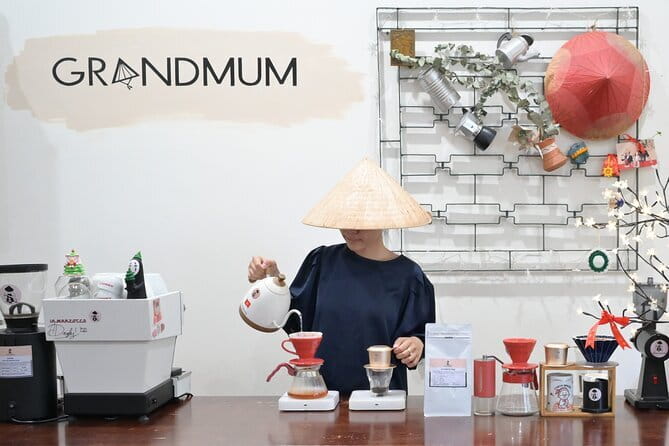
At $21.69 per person for about 1.5 hours, you’re paying for more than coffee. You’re paying for ingredients, equipment, guided method, and four drinks you’ll make yourself. That’s the core value here: the class is built around doing.
A big advantage is the small group limit (max 6 people). In a larger class, technique feedback often drops. Here, Quynh can correct your method while you’re still brewing, which directly affects your results.
If you’re comparing this to paying for four drinks in cafés, consider that you’re also getting context—history, ingredient logic, and the why behind each regional style. You walk away with a mental map of what South, Central, and North coffee taste like and what to do to reproduce the basics later.
Booking-wise, it’s commonly reserved about 14 days in advance on average. If you have a tight plan, I’d treat it as something to schedule early rather than hope it’s easy last-minute.
Who should book this Vietnam coffee workshop—and who might not
This workshop is a great fit if you want:
- A hands-on Ho Chi Minh City experience tied to real local culture
- Practical brewing skills with a built-in “compare the mistake” teaching method
- An easy way to taste four iconic Vietnamese coffee styles in one sitting
It might be less ideal if you:
- Want a big sightseeing itinerary or lots of time outdoors
- Don’t like strong coffee flavors, because even with adjustments, PHIN and coffee-based drinks are at the center of the class
- Expect a long, behind-the-scenes coffee-farm or roaster tour, because this is specifically a workshop format
Should you book Vietnam Coffee Journey with Quynh?
If you like food experiences that teach you skills you can reuse at home, I’d say yes. This class is priced fairly for what you get: four drinks, equipment, and a story-driven explanation that actually helps you taste the differences between regions. Quynh’s method of showing what to do—and what not to do—gives you a faster learning curve than most “coffee tastings.”
Book it especially if you’re spending time in Quận 1 and want something that feels local, not like a generic tourist activity. You’ll leave with a clearer understanding of Vietnamese coffee culture across South, Central, and North, and you’ll know how to make at least the core versions yourself.
FAQ
What is the duration of the Hands-on Making 3 Iconic Coffees of South Central North Vietnam experience?
It lasts about 1 hour 30 minutes.
How much does the tour cost?
The price is $21.69 per person.
What drinks will I make during the class?
You’ll practice making PHIN coffee, Vietnamese coffee with condensed milk, salted cream coffee, and egg coffee.
What is included in the price?
Coffee and/or tea for four drinks are included, along with ingredients and equipment ready for hands-on making. Snacks like cashew nuts are also included.
Where is the meeting point?
The start location is 27 Ngô Đức Kế, Bến Nghé, Quận 1, Thành phố Hồ Chí Minh 70000, Vietnam. It ends back at the meeting point.
How many people are in each group?
The maximum group size is 6 travelers.
Do I get a mobile ticket?
Yes, it includes a mobile ticket.
When will I get confirmation?
Confirmation is received at the time of booking.
Is there free cancellation?
Yes, you can cancel up to 24 hours in advance for a full refund. Cancellation changes less than 24 hours before the start time aren’t refunded.
Are service animals allowed?
Yes, service animals are allowed.