REVIEW · HO CHI MINH CITY
Cooking Class: 3 Course Traditional Meal by local Chef HCM
Book on Viator →Operated by The Provincial Table Cooking Class · Bookable on Viator
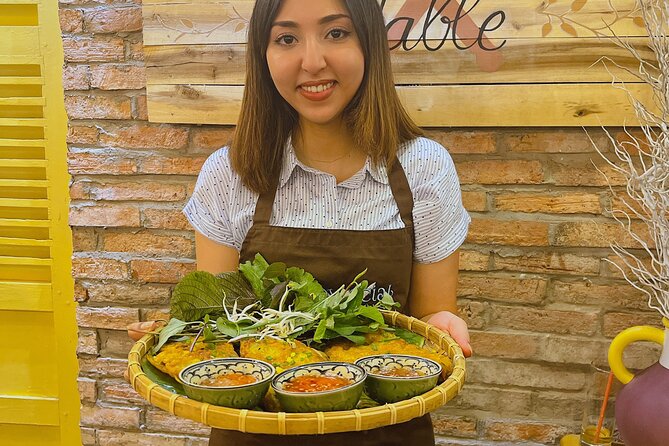
Cooking Vietnamese food at your own station is the quickest way to learn. Pho, pancakes, and spring rolls—made by you. In Ho Chi Minh City, this chef-led class brings you a hands-on 3-course meal where you actually assemble the dishes, not just watch.
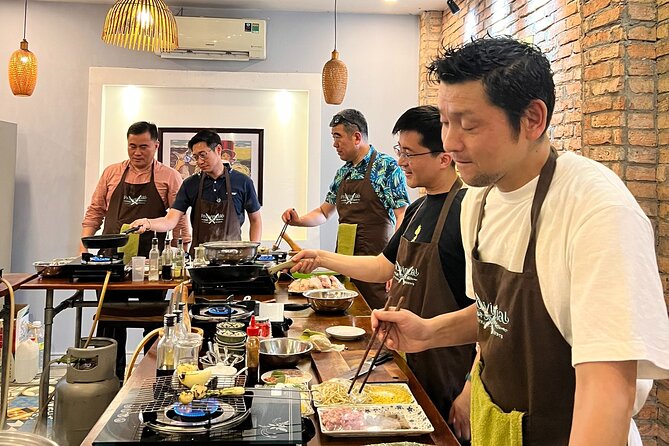
I like the setup most: private cook stations that keep you close to the action and make it easier to ask questions. I also love that the instructor-led flow is practical, and you finish with a small recipe book so the flavors don’t disappear the moment you leave.
One thing to consider is space. The cooking area can feel tight, so wear comfortable clothes and be ready to work shoulder-to-shoulder with your station neighbors.
In This Review
- Key Highlights You Should Know
- Where the Class Starts in District 1
- Your 3.5-Hour Rhythm: Cook, Taste, Adjust
- Course One: Spring Rolls That Actually Make Sense
- Course Two: Vietnamese Pancakes and the Flavor Balance
- Course Three: Pho at Your Own Station
- The Instructor Style: Why It Feels Fun Instead of Lecture-Heavy
- Space, Comfort, and What to Wear
- Price and Value: Is $30 a Fair Deal?
- Who Should Book This Cooking Class
- Who Might Want to Skip or Reconsider
- Before You Go: Small Practical Tips
- Should You Book It?
- FAQ
- What is the duration of the cooking class?
- How much does the class cost?
- Where do I meet for the class in Ho Chi Minh City?
- Is there a private cooking station?
- What dishes will I cook?
- How large is the group?
- What do I get at the end of the class?
- How do I get my ticket?
- What is the cancellation policy?
- Is it easy to get to the meeting point?
Key Highlights You Should Know
- Private cook station for each person: You cook, chop, and assemble instead of standing at the edge.
- Three-course traditional menu: You learn classic Vietnamese dishes and the techniques behind them.
- Beginner-friendly pacing: Ingredients are mostly handled already, so you focus on core skills.
- Small group size (max 20): More attention from the chef, less waiting for help.
- Chef-led, hands-on instruction: Expect tips on flavors, spices, and how to troubleshoot as you cook.
- Take-home recipe book: You leave with a usable guide for making the dishes later.
Where the Class Starts in District 1
The meeting point is in Quận 1, a good home base for a Saigon food day. You’ll start at 131/3 Nguyễn Thị Minh Khai, Phường Phạm Ngũ Lão, Quận 1, Hồ Chí Minh 711106, Vietnam, and the experience ends back at the same spot.
Because it’s listed as near public transportation, it’s easy to pair with other District 1 plans—think coffee, a walk through nearby streets, or a casual meal afterward. You’ll get a mobile ticket, so keep it handy on your phone.
Also, the class limits the group to a maximum of 20 travelers, which matters more than it sounds. In bigger classes, you spend half your time waiting for the next step. Here, the smaller size helps keep the chef close when you need clarification.
You can also read our reviews of more cooking classes in Ho Chi Minh City

Your 3.5-Hour Rhythm: Cook, Taste, Adjust
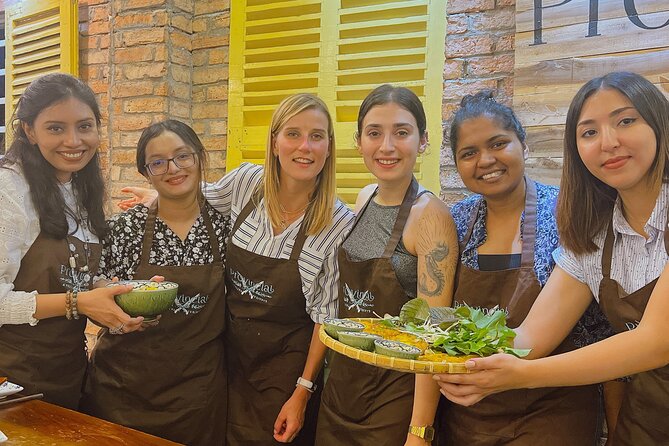
The whole experience runs about 3 hours 30 minutes, which is a sweet spot. Long enough to learn three dishes, short enough that you won’t feel like your whole day got swallowed.
Here’s the rhythm you should expect:
- You’re guided by the chef as you prep and cook each course at your own station.
- You learn by doing: assembling, cooking, and tasting as you go.
- Between dishes, you adjust. Vietnamese cooking is about balance, and the class format gives you the chance to correct seasonings before you move on.
Even if you’re brand-new to Vietnamese flavors, the format helps you get momentum fast. One theme from participant feedback is that the basics are taught in a manageable way, with ingredients often partly prepared so you aren’t stuck doing heavy prep for hours.
Course One: Spring Rolls That Actually Make Sense
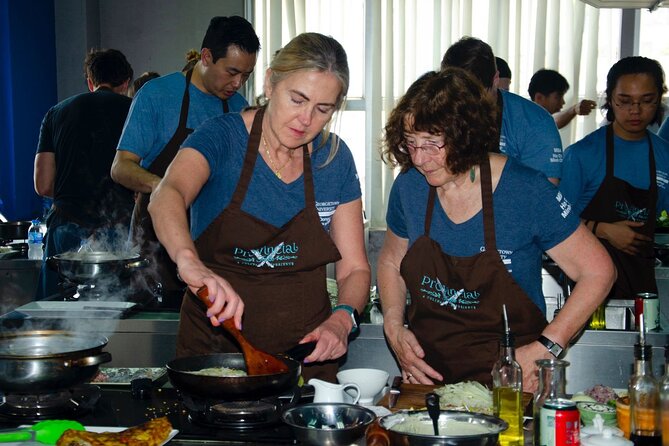
Spring rolls are a great first course because they teach technique without demanding advanced knife work. In this class format, you learn how to assemble the roll, handle the filling, and cook or finish it so it tastes fresh rather than heavy.
What I think makes this course valuable is that it’s not just about the final roll. The chef-led approach focuses on the parts that usually go wrong at home:
- Portioning so your roll isn’t too tight or too loose
- How to manage filling so it stays flavorful, not soggy
- Timing so the texture holds up
If you’re the type who wants to understand the why, this is where it clicks. Vietnamese spring rolls rely on balance—salt, sweetness, and aromatics need to work together, and the class gives you that hands-on feedback.
Course Two: Vietnamese Pancakes and the Flavor Balance
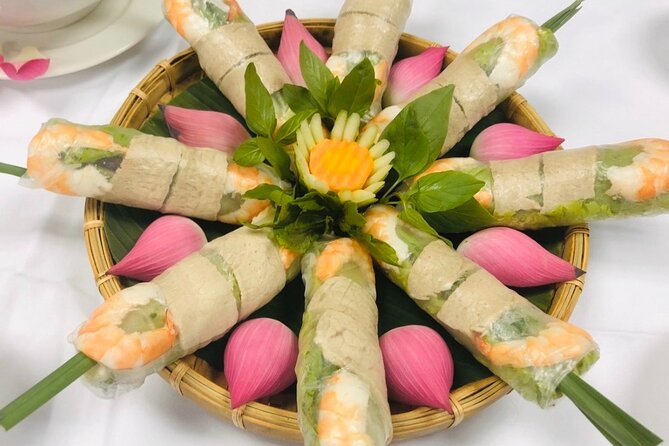
A second course often takes you into Vietnamese pancake territory (and yes, participants commonly mention Vietnamese pancakes as one of the dishes). Pancakes can feel intimidating if you’ve only had them as takeout. In a cooking class, they become a technique lesson: heat control, batter consistency, and how toppings and seasonings interact.
You’ll likely spend time building flavor into the pancake itself, then cooking it with the right approach so it tastes like food, not like batter. In feedback from beginners, the class approach is framed as manageable: some ingredients are already handled for you, so you can focus on cooking skills that transfer to your own kitchen.
This is also a good course if you care about texture. Vietnamese pancakes are often about the contrast—soft where you want it, crisp where you need it. When you cook it yourself, you start to understand that texture is seasoning in disguise.
Course Three: Pho at Your Own Station
Pho is the dish that makes this class feel like a real food moment, not just a workshop. Participants have specifically highlighted learning pho as one of the courses, and that makes sense. Pho is deeply Vietnamese, and it’s also the kind of dish that rewards careful attention.
In a chef-led 3-course format, pho usually serves as your payoff dish. Even if your pho isn’t a full-day, slow-burn project, you’ll still learn the fundamentals that shape taste:
- How aromatics and seasoning work together
- How to approach cooking so the final bowl tastes coherent
- How to balance what you add so the soup doesn’t become one-note
If you’re thinking, I don’t have time to learn pho from scratch on my own, this class is exactly the kind of shortcut you want. You get the key techniques and a clear path to recreate it later.
You can also read our reviews of more tours and experiences in Ho Chi Minh City

The Instructor Style: Why It Feels Fun Instead of Lecture-Heavy
A major reason this class gets strong ratings is the energy from the chef-instructor. One featured instructor name you’ll see is Alice, and her style is described as warm, knowledgeable, and genuinely fun. That matters because Vietnamese cooking has a lot of flavor components, and you need a teacher who can explain them without turning it into homework.
You should expect guidance that’s practical and fast-moving—like how to handle a task, what to watch for while cooking, and how to make small adjustments when something is off. In other words, it’s the difference between reading a recipe and being able to fix your own food while it’s still cooking.
There’s also a social element. The class size is small, and the chef-led format encourages questions, so even if you’re traveling solo, you’re not stuck silently performing in a corner.
Space, Comfort, and What to Wear
Because the group max is 20 and stations are set up close together, the working space can feel snug. One participant noted that the space is very small, so treat this like a kitchen studio, not a showroom.
Bring:
- Comfortable shoes (you’ll be standing and moving a bit)
- Something with sleeves you’re okay getting splashed
- A small towel if you’re sensitive about mess (not required, but you might appreciate it)
Also, if you’re visiting with a birthday or a special occasion, this format can work well. People have mentioned doing it on a birthday while in Saigon, and the class vibe is part of the appeal.
Price and Value: Is $30 a Fair Deal?
At $30 per person, this is one of the more straightforward values for a Saigon food experience. Here’s why the price makes sense:
- You get a chef-led lesson plus ingredients for a full 3-course meal
- You cook at a private station, not from the sidelines
- The duration is long enough to learn multiple techniques, about 3.5 hours
- You get a recipe book afterward, which extends the value beyond the class itself
Cooking classes can be overpriced when they’re basically a demo with snacks. This one is priced like a true hands-on workshop. If you’re the kind of traveler who likes leaving with practical skills, $30 feels reasonable—especially in a city where dining costs can add up quickly.
Who Should Book This Cooking Class
This experience fits best if you:
- Want a hands-on way to learn Vietnamese flavors, not just eat them
- Prefer a structured class with a chef guiding each step
- Are traveling with a partner or small group and want something interactive
- Feel intimidated by cooking but still want a beginner-friendly route into the cuisine
It’s also a good choice if you’re the type who likes taking home a plan. The recipe book helps you reproduce at least the basics later.
Who Might Want to Skip or Reconsider
If you hate close quarters, you may find the compact kitchen setup uncomfortable. The class also doesn’t present itself as a full kitchen marathon; it’s focused on core skills within a 3.5-hour window. If you’re looking for a deep, long technical course, you may find the pace brisk.
Before You Go: Small Practical Tips
To get the most out of your 3 courses:
- Bring curiosity. Vietnamese cooking uses flavor layering, and the chef’s explanations help you understand what’s happening.
- Don’t over-plan your schedule afterward. You’ll likely leave with food in your system and a few sticky fingers worth washing.
- Keep the mobile ticket accessible so you can check in quickly.
- If you have dietary needs, ask in advance when booking, since the menu can vary daily.
Should You Book It?
I’d book this if you want a memorable Saigon food moment that turns into real kitchen skills. The best part is the combination: private station cooking plus a chef who guides you through classic dishes across three courses, finishing with a recipe book you can use at home.
Skip it only if tight kitchen space would stress you out, or if you want a slow, ultra-detailed cooking journey. Otherwise, $30 for a structured, chef-led Vietnamese cooking class in District 1 is a smart, practical choice.
FAQ
What is the duration of the cooking class?
It runs about 3 hours 30 minutes (approx.).
How much does the class cost?
The price is $30.00 per person.
Where do I meet for the class in Ho Chi Minh City?
The start location is 131/3 Nguyễn Thị Minh Khai, Phường Phạm Ngũ Lão, Quận 1, Hồ Chí Minh 711106, Vietnam.
Is there a private cooking station?
Yes. Each guest is provided a private cook station.
What dishes will I cook?
The class focuses on a daily menu of classic Vietnamese dishes. Some examples mentioned include spring rolls, Vietnamese pancakes, and pho.
How large is the group?
The activity has a maximum of 20 travelers.
What do I get at the end of the class?
You receive a small recipe book with instructions for the dishes.
How do I get my ticket?
You receive a mobile ticket.
What is the cancellation policy?
You can cancel for free up to 24 hours in advance for a full refund. If you cancel within 24 hours, you won’t get a refund.
Is it easy to get to the meeting point?
The meeting point is listed as near public transportation.