REVIEW · HO CHI MINH CITY
City Sightseeing Saigon Bus Tour
Book on Viator →Operated by City Sightseeing Ltd - USA and Middle East · Bookable on Viator
Saigon can feel big, fast, and loud. This hop-on hop-off bus is a smart way to get your bearings fast while you tick off key sights. I especially like the flexible routing that lets you join and leave at designated stops, plus the open-top deck views over streets you’d otherwise need a taxi to reach. One thing to consider: the upstairs option can be exposed to changing weather, so plan your deck choice if it rains or gets too hot.
The tour also gives you a practical base plan with two routes and an audio guide in several languages, which helps you understand what you’re seeing without doing homework first. You’ll also get a free guidebook with maps, recommendations, timetables, and coupons, which is handy for building the rest of your day. My main caution is the audio commentary can feel slow or uneven, so treat it like a useful background, not a must-follow lecture.
If you want quick city coverage without overplanning, this is a solid pick. Just be ready for a bit of stop-finding at the start, especially because bus stops for different lines can look similar from a distance.
In This Review
- Key things to know before you ride
- A fast way to map Saigon’s must-sees
- Getting on: Red vs Blue routes, timing, and where the buses actually start
- The Red Route: Opera House to War Remnants Museum to Ben Thanh
- Why the Central District stops feel worth the time
- Switching lines: how the Red and Blue routes connect
- The Blue Route: markets and pagodas for a more local second loop
- Choosing the deck: open-top views, weather, and comfort
- The audio guide: useful context, but don’t expect a perfect soundtrack
- Price and value: does about $21 make sense?
- Stop-by-stop: how to plan your day so you don’t miss the good stuff
- Practical tips that save time in Ho Chi Minh City
- Who this bus tour fits best
- Should you book this Saigon hop-on hop-off bus?
- FAQ
- How long is the Red Route tour?
- How often do buses run on the Red Route?
- What are the first and last departure times on the Red Route?
- How long is the Blue Route tour?
- Where do I start the Blue Route?
- Where is the ticket exchange counter for the Red Route?
- Can I use a mobile ticket or voucher?
- Are 1-day and 2-day tickets available?
- Is Wi‑Fi included on the tour?
- What does the price include, and what doesn’t?
Key things to know before you ride
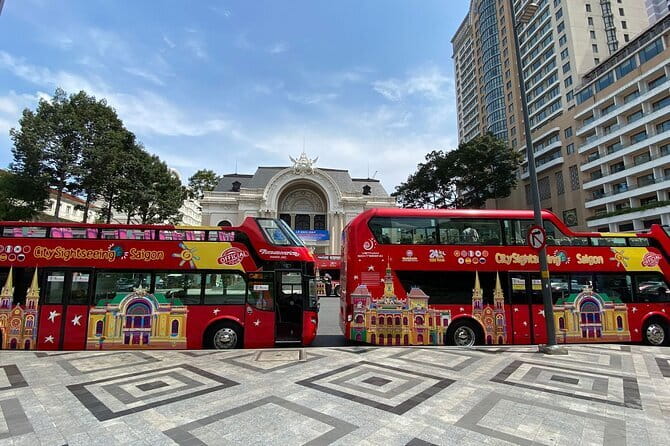
- Two route options cover major sights and extra local areas, with line-switching built in
- Frequent buses give you flexibility, with set running times on both the Red and Blue Routes
- Open-top sightseeing is the main draw, but the weather can change quickly
- Free Wi‑Fi and a guidebook make it easier to plan the next stop
- Audio guides are multilingual, but you may not love every segment of the commentary
- War Remnants Museum is one of the standout add-on moments when you hop off
A fast way to map Saigon’s must-sees
This is the kind of tour that works when you have limited time and zero patience for transit puzzles. You ride a loop, then hop off when something matters to you—whether that’s a landmark, a museum, or a market you want to browse without feeling rushed. The total ride time is about 75 minutes on the Red Route and about 80 minutes on the Blue Route, and buses keep moving often enough that you’re not stuck waiting for long.
What I like most is how the route design helps you see multiple “layers” of the city. You get big, iconic spots in the central districts, plus a second loop that reaches markets and pagodas that feel more local than just photos outside famous buildings. It’s not a deep cultural workshop. It is a practical orientation tool that can save you money and time.
You can also read our reviews of more city tours in Ho Chi Minh City



Getting on: Red vs Blue routes, timing, and where the buses actually start
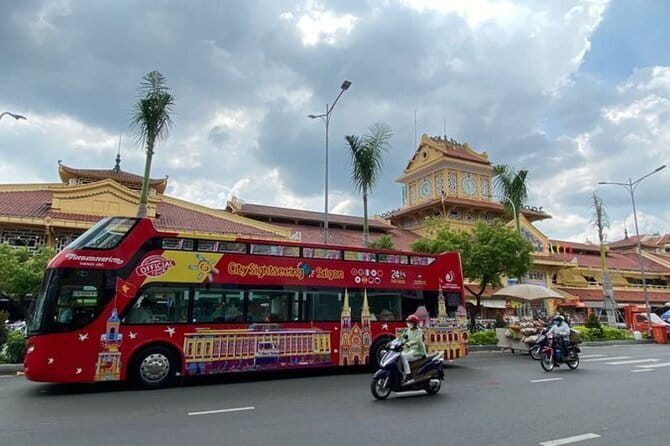
You’ll see a Red Route and a Blue Route, and the biggest “make it easy” trick is knowing where each one begins.
On the Red Route, the first departure from Stop 1 (Saigon Opera House) is at 9:00am, and the last departure is at 4:00pm. The tour takes about 75 minutes, and buses run every 30 minutes. When you need to exchange a ticket, the exchange counter is on the side of the Saigon Opera House, facing the Continental Hotel.
On the Blue Route, the first departure from Stop 1 is at 9:00am, and the last departure is at 3:45pm. The tour takes about 80 minutes, and buses run every 45 minutes. The starting point is 187 Pham Ngu Lao Street, with the bus stop in front of the Liberty Hotel.
Here’s the practical reality: the routes can be confusing at the beginning. Two tips help a lot:
- Give yourself a few extra minutes at the start so you can double-check you’re at the right line.
- Bring your voucher and confirm which route you’re boarding, because the bus color can look similar across lines at street level.
If it helps, there’s also an advisory note that you’ll need to switch lines at specific stops—more on that next.
The Red Route: Opera House to War Remnants Museum to Ben Thanh
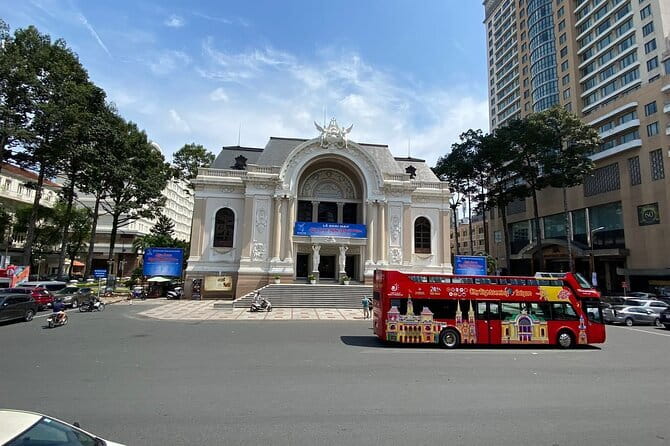
The Red Route is your “classic Saigon” loop, built around major landmarks you’ll want on your first day. It’s also a good choice if you’re trying to squeeze sightseeing into a tight schedule.
Stop 1: Saigon Opera House
This is a great starting anchor because it’s a central, recognizable landmark. If you’re building your day from scratch, you can hop off here to set a direction before you continue.
Stop 2: Nguyen Hue Street
This is the kind of city street that gives you energy fast. Even if you don’t stay long, it’s useful for getting a feel for the central grid and the flow of pedestrian life.
Stop 3: Nha Rong Wharf
The wharf area is one of those spots where you see how the city relates to water and history. It’s a good hop-off moment if you like photographing edges—streets meeting rivers, boats, and the working-city vibe.
Stop 4: Tran Hung Dao Statue area (near major hotels)
This stop puts you near transit-friendly streets, which can make it easier to plan a short walk or a quick detour to grab a drink or snack.
Stop 5: Ho Chi Minh Campaign Museum / Museum of Vietnamese History
If you’re curious about how Vietnam tells its own story, this stop is a natural pause. Even when you don’t go inside right away, the area is a strong signal that you’re moving beyond postcard sightseeing.
Stop 6: War Remnants Museum (near 28 Vo Van Tan)
This is one of the most important stops on the Red Route for most people. I’d plan extra time here because the museum is often the “one I’m glad I didn’t skip” moment on these kinds of tours. Also, if you’re pairing this with other stops, hop off when you still have time to breathe after.
Stop 7: Pham Ngu Lao Street (Beer Street area)
This is where the trip becomes more about the street scene—busy, social, and easy to explore on foot. If you want a later evening plan, this area can be your base.
Stop 8: Ben Thanh Market
Ben Thanh is a top destination for a reason: it’s a focal point where you can browse, snack, and people-watch without a long transit trip. This is also a great stop for shopping and souvenirs if you prefer doing it while you’re already in the sightseeing core.
Stop 9: Independent Palace
This stop fits perfectly if you want a shift from museums and markets into a single iconic building experience. It’s the kind of place that makes the city feel more understandable as a whole.
Stop 10: Saigon Notre-Dame Cathedral / Central Post Office (Lê Duẩn area)
This is the endcap you’ll recognize right away. The Cathedral and Central Post Office area is one of those “pause and look around” moments, because you’ll likely want photos and time to wander the surroundings at street level.
The Red Route can carry you through some of the most famous names in Ho Chi Minh City without making you hop through complicated transit.
Why the Central District stops feel worth the time

The Red Route’s central cluster is valuable because it concentrates major landmarks into a walkable set of neighborhoods. In practical terms, this reduces your number of one-way rides and helps you avoid the “taxi roulette” feeling when traffic is heavy.
Two places I’d especially prioritize if you’re short on time:
- War Remnants Museum for museum time that really changes how you understand the city
- Ben Thanh Market because it’s both a destination and a gateway into surrounding streets
Even if you don’t go inside every attraction, the stop spacing helps you build a day that feels structured without being rigid.
Switching lines: how the Red and Blue routes connect

The tour is designed so you don’t have to pick only one personality of Saigon. There’s an explicit instruction to switch lines at certain points.
You’re advised to switch lines at Stops 6, 7, and 8 on the Red Route, which corresponds to Stops 1, 2, and 3 on the Blue Route. In other words, the Red Route can drop you into the central activity zones, and then the Blue Route can carry you toward additional local stops.
This is useful if you want:
- one “big sights” block (Red Route)
- followed by a more market-and-pagoda feel (Blue Route)
Just build in a little margin for the switch. You’re in a busy area, and street navigation happens at speed in Ho Chi Minh City.



The Blue Route: markets and pagodas for a more local second loop

The Blue Route is a different vibe. Instead of ending only with big landmark buildings, it leans into neighborhood flavor—flowers, markets, and religious sites. This is where your “second half of the day” energy can turn into exploring without feeling like you’re wandering blindly.
Here are the Blue Route stops you’ll see:
- Stop 1: Beer Street – Pham Ngu Lao Street area (near start)
- Stop 2: Ben Thanh Market
- Stop 3: War Remnants Museum
- Stop 4: Ho Thi Ky Flower Market
- Stop 5: Phuoc An society’s premises
- Stop 6: Ong Bon Pagoda
- Stop 7: Binh Tay Market
- Stop 8: Thien Hau Pagoda
- Stop 9: Van Phat Pagoda
A couple of notes on value here. Flower Market and Binh Tay Market are the kind of stops where you can spend time without needing tickets or a formal plan—just look, smell, and watch what people are buying and doing. The pagodas are also a nice way to balance the heavier tone of the museum stops.
Also, remember: the tour includes stops near sights, but entry to attractions is not included. So if you hop off expecting a museum ticket to be already handled, you’ll need to pay separately at the attraction.
Choosing the deck: open-top views, weather, and comfort
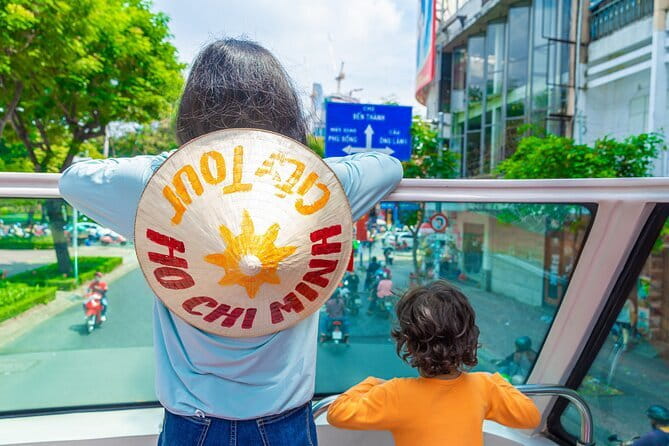
The tour’s biggest visual payoff is the open-top experience. Sitting upstairs is a great way to get broad views while the bus rolls through central streets. The tradeoff is simple: the upstairs area can be exposed to changing weather.
A helpful comfort note is that there is an air-conditioned option inside on the bus. When heat is intense or rain shows up, being flexible about where you sit can make the experience smoother. Think of the open deck as your photo time, and the interior as your reset time.
The audio guide: useful context, but don’t expect a perfect soundtrack

The audio guide provides commentary in several languages, which is a real advantage if you don’t want to rely on reading every sign. It can help you connect landmarks you pass quickly—especially if you’re doing multiple stops in a short time.
That said, the commentary quality isn’t guaranteed to be your favorite. Some segments can feel slow or repetitive, so I’d use it like a GPS for history: listen when it catches your interest, then tune out when you’d rather enjoy the street view.
One practical approach: pick 1 or 2 stops you’ll really focus on (like War Remnants Museum), then use the audio as a light primer rather than the whole experience.
Price and value: does about $21 make sense?
The listed price is $21.00 per person, and the tour offers 1-day or 2-day tickets. That pricing structure is important because it affects how you plan your day.
This kind of hop-on hop-off tour usually makes the most sense when:
- you’re spending time across multiple neighborhoods
- you want to avoid multiple taxi rides
- you’re flexible about timing and routes
You’re not just paying for transport. You’re also getting free Wi‑Fi and a free guidebook with maps, recommendations, timetables, and coupons. That can lower the mental cost of planning, especially on a first visit when you’re trying to figure out what to do next.
If you’re only in the city for a short window, a 1-day ticket can help you build a smart itinerary quickly. If you want a slower rhythm—museum earlier, market later, pagoda in the afternoon—then the 2-day option can feel more economical even at the same base price level, because you’ll actually get multiple rides rather than just one loop.
Also remember what’s not included: food and drink and entry to attractions. So treat it as transportation plus context, not as an all-in-one day ticket.
Stop-by-stop: how to plan your day so you don’t miss the good stuff
Here’s how I’d use the schedule in a realistic way, based on how the route timing is built.
- If War Remnants Museum is on your list, treat it as a centerpiece. Hop off at the museum stop early enough that you still have energy afterward.
- Use Ben Thanh Market as a flexible stop. Even if you only spend 30–45 minutes there, you’ll get value from seeing how the market works and grabbing a quick bite (food itself isn’t included, so plan to pay on-site).
- If you’re heading to the Cathedral / Central Post Office area, save it for when you want slower strolling. That area is great for photos and a relaxed wander.
Because buses run often—every 30 minutes on the Red Route and about every 45 minutes on the Blue Route—you can adjust your plan mid-day without feeling like you’ll miss your ride.
Practical tips that save time in Ho Chi Minh City
Saigon rewards smart pacing. The route helps, but a few habits make a big difference.
First, keep your mobile ticket handy. This tour accepts both mobile and printed vouchers, so you don’t need to hunt for a specific format once you’re out in the city.
Second, if you’re trying to find the starting point quickly, look for the official anchor spots:
- Saigon Opera House for the Red Route exchange counter
- Liberty Hotel area for the Blue Route starting point
Third, build a little patience into the first 10 minutes. Start points are central and busy, and it’s easy to walk up to the wrong side or assume one line is the other. A quick check now prevents frustration later.
Who this bus tour fits best
This tour is a strong match if you:
- want a quick city orientation without committing to a strict guided walk
- like jumping on, then choosing your pace at each stop
- want an easy way to reach top sights like the War Remnants Museum, Ben Thanh Market, and the Notre-Dame Cathedral / Central Post Office area
It’s also a good option if you’re traveling independently and you value downtime between sights. You can rest on the bus, then step off when you feel ready to explore.
If you prefer very guided, lecture-style sightseeing, this might not fully satisfy you, because the audio commentary can be hit-or-miss. Think of it as a moving map with stops, not a guided history class.
Should you book this Saigon hop-on hop-off bus?
I’d book it if you want efficient sightseeing with two routes, frequent buses, and a plan that still lets you change your mind on the fly. The value is strongest when War Remnants Museum and a market stop like Ben Thanh are on your list, because the route puts you close to those anchors without exhausting you with transit.
Skip it only if you already know exactly which neighborhoods you’ll explore and you’re confident navigating by taxi or rideshare. In that case, you may feel the hop-on hop-off format is more structured than you need.
Overall: for a first visit or a time-crunched trip, this is one of the simplest ways to see a lot of Saigon without overthinking your day.
FAQ
How long is the Red Route tour?
The Red Route takes about 75 minutes.
How often do buses run on the Red Route?
Buses on the Red Route run every 30 minutes.
What are the first and last departure times on the Red Route?
The first departure from Stop 1 is at 9:00am, and the last departure is at 4:00pm.
How long is the Blue Route tour?
The Blue Route takes about 80 minutes.
Where do I start the Blue Route?
The Blue Route starts at 187 Pham Ngu Lao Street, with the bus stop in front of the Liberty Hotel.
Where is the ticket exchange counter for the Red Route?
The ticket exchange counter is located on the side of the Saigon Opera House, facing the Continental Hotel.
Can I use a mobile ticket or voucher?
Yes. Mobile and printed paper vouchers are both accepted.
Are 1-day and 2-day tickets available?
Yes. You can choose between 1-day and 2-day tickets.
Is Wi‑Fi included on the tour?
Yes, free Wi‑Fi is included.
What does the price include, and what doesn’t?
Included features include the hop-on hop-off bus tour with stops near major sights, free Wi‑Fi, and a free guidebook. Not included are food and drink, tips, and entry to attractions.