Saigon can feel overwhelming at first. This walking tour keeps it manageable with a small group and guide-led stories that connect the city’s sights to everyday life. I like that it’s not just facts on a page, it’s conversation-driven, and you get time to ask questions.
Two highlights for me are the student guide perspective and the mix of landmark stops with places that explain the war’s impact, like the Secret Weapons Cellar. One thing to consider: it relies on good weather, and you’ll do a solid amount of walking in the central districts.
In This Review
- Key reasons this Saigon walk works so well
- A student-guided Saigon, not a rushed sightseeing checklist
- Timing and pace: what 3 hours 15 minutes feels like
- Stop 1: Notre-Dame Cathedral and the city’s colonial-era footprint
- Stop 2: The Central Post Office, where Vietnam’s logistics become a story
- Stop 3: Vincom Center and the Last Helicopter sculpture
- Stop 4: Independence Palace and the political heart of South Vietnam
- Stop 5: Thich Quang Duc Monument and a moment of protest
- Stop 6: The Secret Weapons Cellar (45 minutes, and included)
- The coffee and water stop: small comfort, smart pacing
- Guides: why this tour feels personal instead of generic
- Value check: $14 for landmarks, a paid attraction, and coffee
- Who this tour suits best
- A quick note on weather and expectations
- Should you book the Saigon Walking Tour with Joy Journeys?
- FAQ
- How long is the Saigon Walking Tour?
- What’s the price per person?
- How many people are in the group?
- What are the main stops on the route?
- Is admission included for the stops?
- What’s included in the tour cost?
- What’s not included?
- Where do you meet, and where does the tour end?
- What’s the cancellation rule if weather is bad or plans change?
- Are service animals allowed?
Key reasons this Saigon walk works so well
- Max 6-person feel: Small enough that your questions don’t get lost in a crowd
- University-student energy: Guides share personal context and local recommendations, not just dates
- Landmarks + meaning: Cathedral, post office, Independence Palace, and more, tied to story
- War history with context: The Secret Weapons Cellar visit adds perspective beyond the headlines
- Comfort extras included: Bottled water and Ca Phe Sua Da (Vietnamese coffee) help you keep going
A student-guided Saigon, not a rushed sightseeing checklist
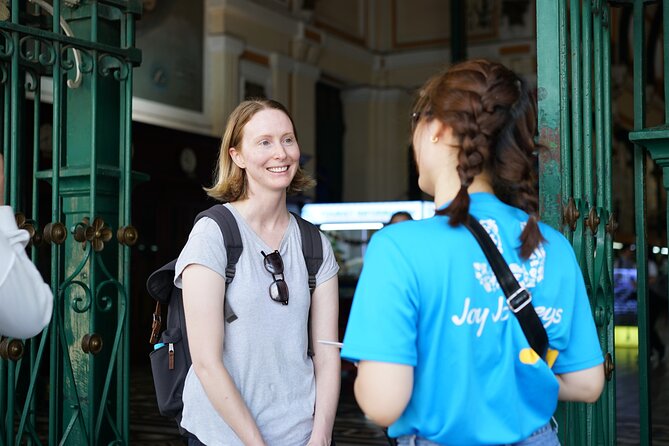
Joy Journeys runs this as a walking tour through Ho Chi Minh City’s central area, built for interaction more than lectures. The big idea is that you’re with young local university students who are training to become professional guides, so the tone stays friendly and human. You’re encouraged to talk casually, ask questions, and get local insights alongside the official landmark descriptions.
You’ll also notice the group size. The tour is designed for no more than 6 travelers, which is rare in a city full of big-bus energy. At the same time, the overall activity listing allows up to 20 travelers across the schedule, so if you prefer a truly small-day experience, aim for a time slot that looks less packed.
At 3 hours 15 minutes total, it’s long enough to feel like you saw more than the usual highlights, but not so long you’re wiped out. The price is $14 per person, which is low for a guided walking experience that includes a paid attraction and a coffee stop.
You can also read our reviews of more walking tours in Ho Chi Minh City



Timing and pace: what 3 hours 15 minutes feels like
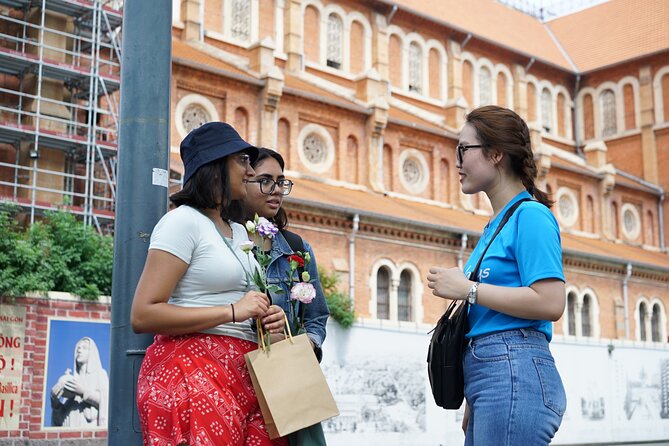
This tour is paced by scheduled stops across the center, with time for both walking and explanation. You’ll move through classic central landmarks, then shift into more serious context as the day goes on.
Here’s the basic rhythm:
- Stop 1: Notre-Dame Cathedral Basilica of Saigon (20 minutes)
- Stop 2: Saigon Central Post Office (30 minutes)
- Stop 3: Vincom Center area, plus a war-era sculpture (20 minutes)
- Stop 4: Independence Palace (30 minutes)
- Stop 5: Thich Quang Duc Monument (30 minutes)
- Stop 6: The Secret Weapons Cellar (45 minutes, included)
Between stops, the guide keeps you oriented on what to notice. That matters in Saigon because lots of the city’s meaning is in small details: street life, design choices, and how different eras are layered together.
Stop 1: Notre-Dame Cathedral and the city’s colonial-era footprint
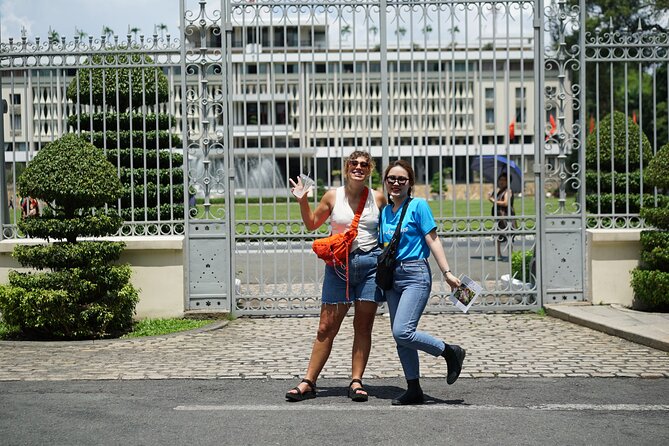
You start at the Notre-Dame Cathedral Basilica of Saigon, in the heart of the city. It’s a Catholic cathedral built in the late 19th century, so the architecture alone tells you the city once sat under a very different set of influences.
What I like about starting here is how quickly it sets a visual baseline. You get your bearings fast: scale, stonework, and the way the building anchors the surrounding streets. With a student guide, you’ll also get the personal-style context you might not get if you just read a plaque. The tour notes say there’s no admission fee for this stop, so you can focus on the experience.
Practical note: churches can mean dress expectations, and the tour doesn’t list any specific dress rule. If you’re planning conservative coverage, you’ll reduce the chance of being asked to adjust.
Stop 2: The Central Post Office, where Vietnam’s logistics become a story
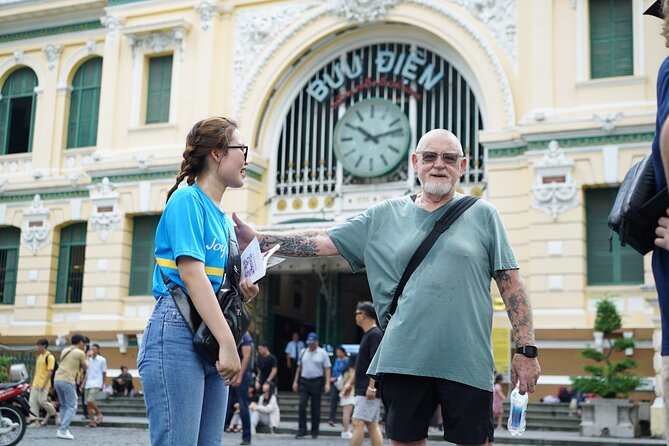
Next is the Saigon Central Post Office, a historic building from the late 19th century, built during the French colonial period. The timing here is a relaxed 30 minutes, which gives you space to look around instead of speed-reading the building.
This is one of those stops that can be purely visual, but the value is in how your guide explains function and era. A post office isn’t just architecture; it’s communications, routes, and how people expected the world to connect. Since this stop is also listed as free for admission, you’re paying mainly for the guide’s interpretation and your time.
If you like taking photos, this is a good place to slow down. Try to check your framing for both the façade and interior angles, because the building’s geometry makes for more interesting pictures than you might expect.
Stop 3: Vincom Center and the Last Helicopter sculpture
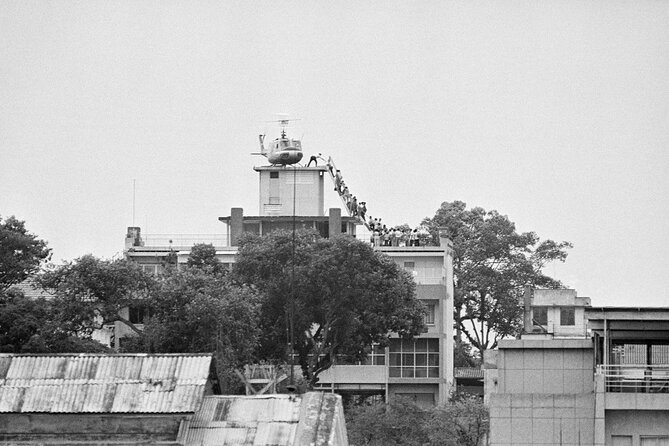
Stop three is at Vincom Center, with a visit to the Last Helicopter sculpture. The sculpture commemorates the end of the Vietnam War and depicts a Huey helicopter as it takes off. Even if you don’t know every detail of the war’s timeline, the visual metaphor is easy to read: movement, departure, and a final chapter people still reference today.
This stop is only 20 minutes, so treat it like a short but meaningful pause. Your guide’s job here is to connect the artwork to what it represents, without letting the tour drift into a history lesson that steals time from the rest of your walk.



Stop 4: Independence Palace and the political heart of South Vietnam
Then you head to the Independence Palace, also known as the Reunification Palace. It was built in the 1960s and served as the home and workplace of the President of South Vietnam. This is a core landmark stop with 30 minutes, and it’s the kind of place where your guide’s tone matters.
What I appreciate in a tour like this is how the explanation can make you notice what buildings are designed to do: host meetings, manage decisions, and project authority. If you want more than headline-level context, this stop is a good place to ask questions, because the guide is set up for discussion rather than a monologue.
Also, being in a walking format helps. You’re not just dropping in; you’re arriving as part of a route, which makes the area’s history feel less like a sealed-off museum moment.
Stop 5: Thich Quang Duc Monument and a moment of protest
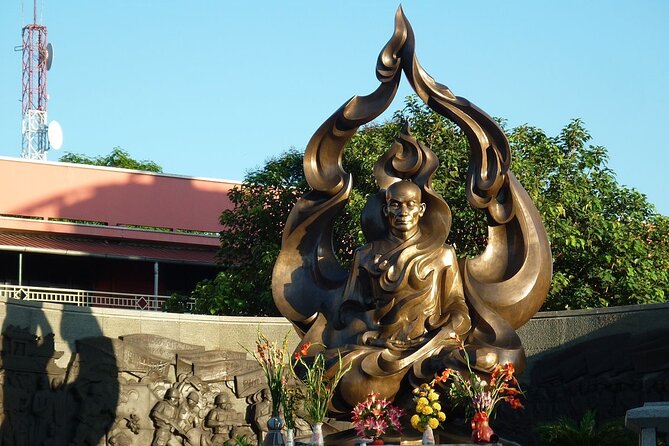
Next is the Venerable Thich Quang Duc Monument, a statue that commemorates Thich Quang Duc’s self-immolation in 1963. The tour description frames it as a protest against persecution, which places the monument in a specific moral and political context rather than treating it like a neutral statue.
You get 30 minutes here, which is long enough to step back and take in how the monument sits within the city. Guides can often make these memorials harder to understand by over-explaining or oversimplifying. A student guide format tends to keep it grounded in what the moment meant and how people remember it now.
This is also a good stop to slow down mentally. It’s not just sightseeing; it’s a pause for reflection as the tour shifts from buildings into deeper historical memory.
Stop 6: The Secret Weapons Cellar (45 minutes, and included)
The last stop is the Secret Weapons Cellar, with 45 minutes and admission included. It’s described as tunnels originally built by the Viet Cong during the Vietnam War, used as a base for guerrilla warfare and to transport supplies and weapons undetected by American and South Vietnamese forces.
This is the stop that tends to stick with people. In the reviews and the overall tone of the tour, the cellar comes across as practical and eye-opening, especially if you’ve only ever heard war stories in broad strokes. Seeing a space designed for movement and secrecy changes how you picture the conflict.
One tip: go in ready to use your senses, not just your phone. The tour doesn’t promise a specific script, but a good guide will point out what the space was meant to accomplish—shelter, passage, and protection. When you leave, you’ll probably look at the city differently, because underground history feels closer once you’ve seen where it happened.
The coffee and water stop: small comfort, smart pacing
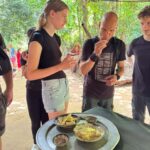
You’re not just walking and waiting. This tour includes bottled water and a Vietnamese coffee (Ca Phe Sua Da), plus coffee or tea. That matters because in Saigon, energy drains quickly once you’re in motion.
The Ca Phe Sua Da stop is also a chance to reset and talk. Guides are set up for casual Q&A, so you can ask about neighborhoods, food, or what you should do after your tour. It’s also a nice equalizer if your group has different interests—war history one person’s thing, architecture another’s.
Guides: why this tour feels personal instead of generic
The big strength here is the human factor. Guides like Lucy and Lily come through in the reviews as kind, generous with time, and genuinely excited about sharing their country. You’ll likely feel the difference between a guide who recites and a guide who explains.
You might also meet guides such as Tyson and Andrea, who are described as giving lots of information people wouldn’t find on their own and doing a solid job explaining everything clearly. One common thread is that the explanations feel targeted to the group, especially when the group is very small.
Even if you’re traveling solo, a small-group setup can mean you get more direct attention. One review even highlighted that when the group was just a couple, the guide’s focus stayed tight. That’s exactly what you want from a walking tour: less waiting, more understanding.
Value check: $14 for landmarks, a paid attraction, and coffee
At $14 per person, this tour is priced like a budget-friendly city walk. The value comes from what’s included:
- Admission included for the Secret Weapons Cellar
- Bottled water
- Vietnamese coffee (Ca Phe Sua Da)
- All fees and taxes
And it’s not missing core landmarks. You get a standard trio of central icons (cathedral, post office, major palace) and then a more thoughtful layer (Thich Quang Duc Monument and the war-era cellar).
What’s not included is also straightforward: tips and gratitude. That means you’re not paying extra for every step, which is a big deal in a city where smaller add-ons can snowball.
If you’re trying to see Saigon without building an itinerary from scratch, this tour does a lot of planning work for you.
Who this tour suits best
This is a great fit if you want:
- a small-group walking experience in central Saigon
- conversation time with a guide instead of a strict script
- landmarks plus war-era context, not only pretty buildings
It also works well early in your sightseeing rhythm because it helps you understand how different parts of the city connect. One review specifically mentioned a morning walk before it gets too hot, and that matches the reality of Saigon weather.
If you prefer silent tours or museum-style pacing, you might find the discussion element less your speed. But if you’re the type who asks questions at street corners, you’ll probably enjoy the format.
A quick note on weather and expectations
The tour requires good weather. If the forecast looks shaky, you might want to keep it flexible and avoid scheduling this as your only big plan for the day. When the weather is right, the pacing works smoothly for a 3-hour 15-minute walk.
Also, the tour ends back at the meeting point, which keeps your day simple. You don’t have to solve transport at the finish line.
Should you book the Saigon Walking Tour with Joy Journeys?
I’d book it if you want a low-cost, small-group way to see central Saigon and understand the city’s story through a local student guide. The combination of cathedral/post office/palace landmarks with the Secret Weapons Cellar gives you both the visible city and the harder context people still carry.
Skip it (or at least think twice) if you don’t like walking in the heat or if you want strict, quiet, textbook-style history only. This tour is built for conversation, and the emotional weight of places like the monument and the cellar is part of the package.
If you’re happy to talk to your guide and walk with purpose, this is a smart way to get oriented fast and leave with a clearer sense of what Saigon is made of.
FAQ
How long is the Saigon Walking Tour?
It’s about 3 hours 15 minutes.
What’s the price per person?
The tour costs $14.00 per person.
How many people are in the group?
The experience is designed for a maximum of 6 travelers. The activity listing also notes a maximum of 20 travelers.
What are the main stops on the route?
You’ll visit the Notre-Dame Cathedral Basilica of Saigon, Saigon Central Post Office, Vincom Center area (for the Last Helicopter sculpture), Independence Palace, the Thich Quang Duc Monument, and the Secret Weapons Cellar.
Is admission included for the stops?
Admission is listed as free for the first five stops, and the Secret Weapons Cellar admission is included.
What’s included in the tour cost?
Included items are bottled water, all fees and taxes, and a coffee or tea (Ca Phe Sua Da).
What’s not included?
Gratitude and Tips are not included.
Where do you meet, and where does the tour end?
You start at Joy Journeys, 30A Hồ Hảo Hớn, Street, Quận 1, Thành phố Hồ Chí Minh 700000, Vietnam, and the tour ends back at the meeting point.
What’s the cancellation rule if weather is bad or plans change?
You can cancel for a full refund up to 24 hours in advance. The tour also requires good weather, and if it’s canceled due to poor weather, you’ll be offered another date or a full refund.
Are service animals allowed?
Yes, service animals are allowed.