REVIEW · HO CHI MINH CITY
Saigon US Army Jeep Tours: History, Culture & Street Food
Book on Viator →Operated by Saigon Foody Tour · Bookable on Viator
Saigon is a city of layers, and this US Army jeep route helps you see them fast without feeling rushed. I like the combo of big landmarks with real context, plus the photo-friendly pace that makes the city easy to understand. You’ll also get a professional English-speaking guide and a memorable open-air jeep ride. One thing to consider: the route includes several drive-by photo stops, so if you’re expecting to enter every skyline spot, you’ll want to match your expectations (and ask early).
The history mix is the point here: you start at the Independence Palace, then move through French-era architecture, wartime learning, and even a couple of hands-on culture stops like lacquer craft. Guides I’ve seen associated with this tour include Luc, Khoa, and Jerry, and the common thread is they tend to be talkative about what you’re looking at. If timing is tight, keep a little buffer—there can be occasional starts that run later than you’d like.
In This Review
- Key things to know before you go
- A Four-Hour Saigon Snapshot in an Open-Air Jeep
- Independence Palace First: Reunification, Architecture, and Meaning
- French-Era Marvels: Central Post Office and the Opera House Feeling
- Jade Emperor Pagoda: Taoist Calm in the Middle of Noise
- Wartime Learning That Actually Stays With You
- Lacquer Craft and a Workshop Moment You’ll Remember
- Cholon Pagodas: Thien Hau and Chinese-Vietnamese Culture
- District 1 Drive-By Photos: Nguyen Hue, Dong Khoi, Bitexco, Rex, and More
- Price and Value: What $69 Buys You (and What It Doesn’t)
- Comfort, Timing, and How to Get the Best Day
- Who Should Book This Jeep Tour?
- Should You Book It?
- FAQ
- How long is the Saigon US Army Jeep Tour?
- Where does the tour start and end?
- What’s included in the tour price?
- Are there photo stops, or do you enter everything?
- What if my guide isn’t English-speaking?
- Are you required to pay extra during Lunar New Year?
Key things to know before you go
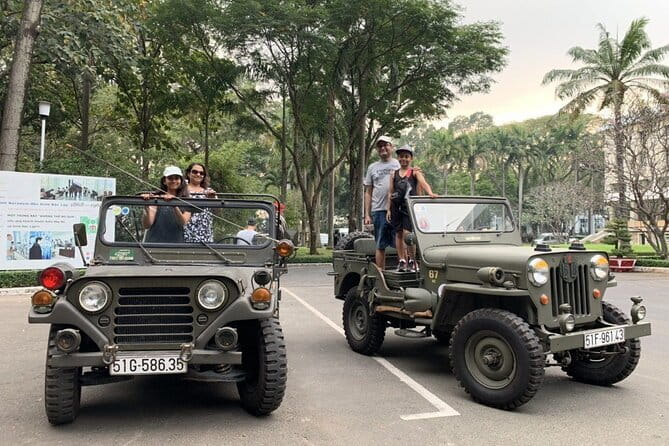
- Open-air jeep rides make it feel like you’re exploring, not just sightseeing.
- Entrance fees are generally included on key stops (as long as you’re on the private option).
- War + memory sites are built into the route, not tacked on at the end.
- Craft time matters: you’ll stop at a lacquer workshop, not just stare at buildings.
- Drive-by photo stops are part of the plan (like Bitexco), so confirm anything you’re trying to enter.
A Four-Hour Saigon Snapshot in an Open-Air Jeep
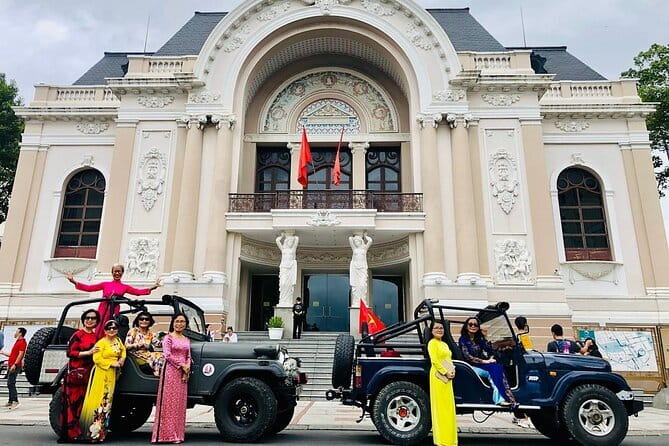
This is a classic “get your bearings fast” tour, but with enough stops to actually teach you something. A private US Army jeep means you’re not stuck with strangers, and you’re also not stuck waiting for a long chain of group arrivals. Pickup is offered, and you’ll have a mobile ticket, which helps when you’re trying to coordinate in busy District 4 before rolling toward the center.
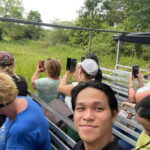
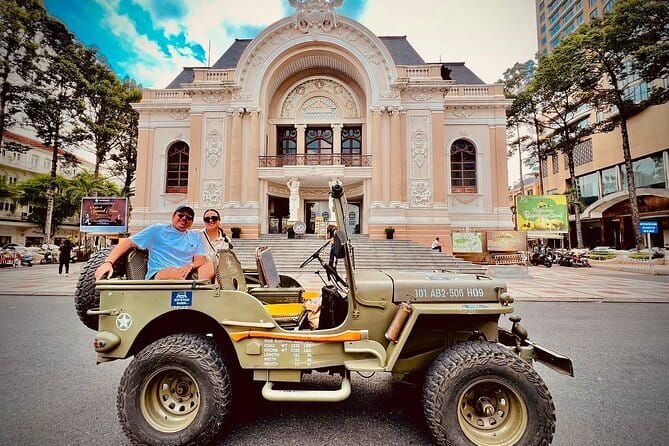
The jeep itself is the fun part: it’s open-air, so you’ll feel the city moving around you. That’s great for photos and for that slightly old-school Saigon vibe, but it also means sun and street dust are real. Bring sunscreen, and if you’re sensitive to heat, plan to drink plenty of water—cold bottled water is included, which is a nice touch when you’re moving between neighborhoods.
You also get an English-speaking guide, and that matters more than it sounds. With this kind of route—palaces, temples, museums, workshops—you don’t just want locations. You want the “why this place exists” explanation while you’re standing right there, looking at it.
You can also read our reviews of more food & drink experiences in Ho Chi Minh City



Independence Palace First: Reunification, Architecture, and Meaning

The tour starts at the Independence Palace, also called the Reunification Palace, in the city’s central area. It’s a powerful starting point because it frames what comes next: colonial influences, wartime trauma, and the way Saigon rebuilt itself. You get about 45 minutes and the admission ticket is included, so you’re not stuck doing a quick peek.
What you’ll notice is the building’s scale and its official look—this isn’t a small museum room. Even if you’ve read about the era before, seeing it in person gives you a better sense of how politics can be tied to walls, doors, and layouts. If you’re a detail person, use your guide time here to ask what to look for inside.
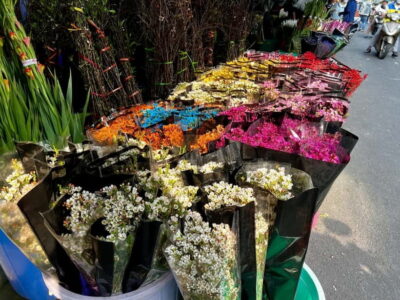
One practical consideration: there can be closures. In at least one case you might see the tour pivot to a nearby alternative (like a flower market). That’s not something you control, but it’s a good reason to stay flexible and not schedule a second major commitment right after your tour ends.
French-Era Marvels: Central Post Office and the Opera House Feeling
After the palace, the route shifts to French colonial-era architecture. The Saigon Central Post Office is a highlight for first-timers because it looks “important” in a very visual way—tall, structured, and built to handle movement and communication. You’ll have about 15 minutes here with an admission ticket included, which is enough to appreciate the interior layout without turning it into a whole half-day detour.
If you love old architecture, this stop sets the tone for the rest of the day. The city’s French-era design shows up in the way buildings sit on streets, in their symmetry, and in how the spaces were meant to funnel people through. Even if you’re not an architecture nerd, it helps you see Saigon as more than traffic and motorbikes.
Later, you also pass by the Saigon Opera House, built in 1897 by French architect Eugène Ferret. The format here is mainly a drive-by/photo stop, so you don’t get a long interior visit. Still, it’s worth slowing your breathing down for a minute when you see it—because that corner of the city looks like someone planted a slice of 1800s Europe into modern Vietnam.
Jade Emperor Pagoda: Taoist Calm in the Middle of Noise

Then you move from civic history into spiritual space at the Jade Emperor Pagoda (Chua Ngoc Hoang). This Taoist temple, built in 1909, is known for its intricate carvings and a quieter atmosphere compared with the streets outside. You get around 20 minutes and the admission ticket is included.
What I like about this stop is the contrast. After museums and political buildings, it’s a reset for your brain. The guide’s job here is to help you understand the symbols and the purpose of what you’re seeing, so you don’t just walk through colorful halls without context. If you go at the wrong pace, temples can feel like checkboxes; if you go slowly, it feels like you’re watching a living belief system at work.
Practical note: wear respectful clothing, and keep your camera behavior mindful. These are active religious spaces, not just photo sets.
Wartime Learning That Actually Stays With You

If you want one reason this jeep tour is worth your time, it’s how it handles the Vietnam War story without hiding it behind vague wording. The War Remnants Museum is included with about 40 minutes and the admission ticket included. This stop is emotionally heavy in a way that’s hard to fake with a quick glance, so plan to be mentally present.
You’ll see powerful exhibits meant to explain the impacts of war—what happened, what it did, and how that history shapes the country today. I’d treat this as a “listen with your eyes” museum stop. Let your guide point out the themes instead of trying to read everything at speed.
After that, you may also visit the Secret Weapon Cellar of the Saigon Rangers (around 20 minutes with admission included). This is the kind of place that feels like a time capsule tucked into an alley in District 3. It’s not just another room; it’s a chance to understand how people tried to survive, adapt, and operate during conflict.
If museums are your thing, this pairing works well because it compares “formal presentation” (War Remnants Museum) with “survival story” (the cellar). If you’re not into heavy topics, you can still do it, but don’t stack another intense activity immediately afterward—you’ll need a breather.
You can also read our reviews of more tours and experiences in Ho Chi Minh City




Lacquer Craft and a Workshop Moment You’ll Remember
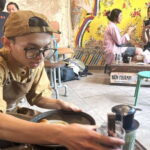
Next comes the craft stop: Phuong Nam Lacquerware (about 30 minutes, admission included). This is where the tour shifts from understanding history to seeing how Vietnamese artistry is made in real life. Lacquerware is one of those crafts that feels simple until you watch the process and realize how many steps are involved.
Why this matters for you: it gives you a hands-on appreciation, even if you’re not buying anything. You’ll see craftsmanship that doesn’t rely on English explanation to be impressive, and your guide can connect it to Vietnamese cultural continuity—making something carefully and repeatedly over time.
This is also a moment where you can decide how much shopping you want. Keep your budget in mind. You’re on a private tour, and the workshop stop often comes with a chance to purchase directly.
Cholon Pagodas: Thien Hau and Chinese-Vietnamese Culture

You’ll also spend time in Cholon, Ho Chi Minh City’s Chinatown area, at the Ba Thien Hau Temple (Thien Hau Pagoda). You get around 30 minutes and admission included. This is one of the oldest Chinese temples in the city, built around 1760 by the Cantonese congregation.
What you’ll notice here is how different the spiritual vibe feels from the Jade Emperor Pagoda. Instead of a quick “look at the colors,” this is about understanding community roots—temples as anchors for immigrant heritage. If you’re interested in how cultures blend in one city, this stop helps you see it without needing a textbook.
Again, go with respect and patience. Temples are busy places, and your guide’s timing matters because you’re sharing space with worshippers and visitors.
District 1 Drive-By Photos: Nguyen Hue, Dong Khoi, Bitexco, Rex, and More

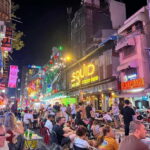
The jeep route includes scenic drives with photo stops across key corridors. You’ll pass areas like Nguyen Hue Street and Dong Khoi Street, and you’ll also get viewpoints of modern landmarks like Bitexco Financial Tower.
Here’s the practical point: Bitexco is listed as a drive-by/photo stop, not an admission entry. That can disappoint people who expect to go inside, so set expectations early. If climbing or entering is a must for you, ask your guide before the day starts so you’re not left thinking your time was shortchanged.
The route also includes symbolic and historic buildings in the city’s core, including the Rex Hotel and the Saigon People’s Committee building. You’ll also pass Ba Son Bridge (Thu Thiem 2 Bridge), connecting District 1 with the Thu Thiem New Urban Area in District 2, and you’ll see the former U.S. Embassy site on Le Duan Boulevard.
Two things you’ll get from these photo stops:
1) A clearer map in your head—where the city’s power, administration, and memory are located.
2) A better sense of how Saigon has moved from war-era flashpoints into a modern skyline.
You won’t spend long inside these places, but you’re not meant to. This is how you get the big picture within four hours.
Price and Value: What $69 Buys You (and What It Doesn’t)
At $69 per person for about four hours, the value comes from bundling. You’re paying for private transportation in an American jeep, a guide, cold bottled water, and admission tickets for the main stops. That’s different from a DIY plan where you’d pay for taxis, then separately buy museum tickets, then spend time negotiating entry times.
You should know what’s not included: tips/gratuities and personal expenses. Also, there’s mention of entrance fees not applying for the group option, so if you’re comparing versions of the tour, double-check which format you booked.
Language note: if you get a non-English-speaking guide, there’s a $50 USD cash surcharge collected on tour. If English is a must for you (and on a history-heavy itinerary, it usually is), it’s smart to be sure your language preference is confirmed before you go.
One more value thought: this tour is private, so it’s easier to ask questions. If you’re the type who likes to steer the pace—asking what’s important, where to stand for photos, what details matter—this format helps.
Comfort, Timing, and How to Get the Best Day
Expect a lot of movement in a short window. Even with admissions included, you’ll still be walking, waiting briefly, and riding between neighborhoods. Wear shoes you can handle on museum floors and temple grounds. Bring a hat. If it rains, the open jeep ride means you’ll feel it—ponchos can be worth it, if you already travel with them.
Timing can matter. The tour reviews included examples of late starts and occasional operational glitches. That doesn’t mean it’s the norm, but it’s why I tell you to plan the rest of your day with a buffer—especially if you’ve booked dinner far away or you’re catching a late flight.
Also: treat guide engagement as a variable you can influence. If your guide seems quiet, ask a question early. On a route this packed, you’ll get more out of the time if you prompt the story you want to hear. In the good experiences, guides like Luc, Khoa, and Jerry came across as upbeat, informative, and energetic, which changes the whole feel of the day.
Who Should Book This Jeep Tour?
This tour fits best if you want:
- A fast, structured introduction to Ho Chi Minh City’s key history and culture.
- A memorable transport style that makes photo stops fun instead of tiring.
- A private guide who can explain what you’re seeing, not just drop you at gates.
It may not be ideal if you:
- Need lots of time inside every major attraction.
- Are strict about entering towers or specific interiors that are drive-by only.
- Want a strong street-food focus, since the provided stop list is mainly history, temples, museums, and craft.
If you want street food, you may enjoy this more when paired with your own dinner plan afterward.
Should You Book It?
I think you should book this if you’re trying to understand the city in one half-day and you like learning by seeing. The route does a good job connecting Independence-era symbolism, French-era design, wartime memory, and everyday craftsmanship, all from the perspective of a fun vehicle ride.
Skip it—or plan carefully—if you’re expecting a long list of tower entries or a food-heavy itinerary. And if your top goal is one specific building you want to enter, ask your guide about what’s drive-by versus admission before the tour starts.
If you pick it, go in with the right mindset: four hours, lots of stops, guided context, and photo moments that help the city click into place.
FAQ
How long is the Saigon US Army Jeep Tour?
The tour runs for about 4 hours.
Where does the tour start and end?
It starts at the Saigon Port Maritime Service Center in District 4 and ends back at the same meeting point.
What’s included in the tour price?
The package includes a private American US Army jeep, a professional English-speaking guide, cold bottled water, and admission fees on the included stops (with an exception noted for group option pricing). Tips and personal expenses are not included.
Are there photo stops, or do you enter everything?
There are both admission stops and drive-by/photo stops. For example, Bitexco Financial Tower is handled as a drive-by/photo stop rather than an entry.
What if my guide isn’t English-speaking?
A surcharge of $50 USD is collected on tour if you’re assigned a non-English-speaking guide.
Are you required to pay extra during Lunar New Year?
Yes. A 35% extra charge fee is applied during the Lunar New Year period described by the operator.