REVIEW · HO CHI MINH CITY
Saigon Then & Now: A Bygone Cyclo Adventure
Book on Viator →Operated by Vietnam Tours VIP · Bookable on Viator
Saigon changes every few blocks, and this cyclo tour reads it fast. I like the street-level cyclo ride that keeps you close to daily life, and I also love the mix of big landmark history plus hands-on craft and local food. One drawback to plan for: some market stops are short, so you’ll get looks more than long shopping time.
This is a guided “then and now” walk through Ho Chi Minh City, built around quick admissions and photo stops, then ending with a sit-down noodle break. You’re picked up if you choose that option, you ride in a pedicab-style cyclo, and the pacing is designed to get you across districts without feeling like you’re sprinting.
If you’re the type who enjoys learning while you move—especially when the guide can explain what you’re seeing—this tour is a good fit. Guides Luc and Cici stood out for their history talk and friendly, patient answers to questions, which matters when you’re hopping between very different parts of the city.
In This Review
- Key highlights you’ll feel immediately
- Why a cyclo is the smartest way to read Ho Chi Minh City
- Meeting at Saigon Opera House and how the 4-hour loop works
- Saigon Central Post Office: French colonial angles you can actually see
- Reunification Palace: where history feels physical
- Dai Viet Lacquerworks: craft that takes patience, not selfies
- Ho Thi Ky Flower Market and the art of early-morning color
- Markets across Districts 10 and 5: electronics, motorbike parts, fabric, and Cholon energy
- PHỞ 24: an included meal that resets the day
- Ba Thien Hau Temple in District 5: a Chinese-built spiritual stop
- Guides Luc and Cici: where the tour turns from sights into meaning
- Price and value: what $74.11 buys you (and why it’s not just transport)
- Who should book this cyclo “then and now” tour
- Should you book Saigon Then & Now?
- FAQ
- FAQ
- How long is the Saigon Then & Now cyclo tour?
- Where does the tour start?
- Is pickup available?
- What’s included in the price?
- Do I need to pay for admission tickets separately?
- Are there food stops during the tour?
- Is this tour private?
- Is free cancellation available?
Key highlights you’ll feel immediately
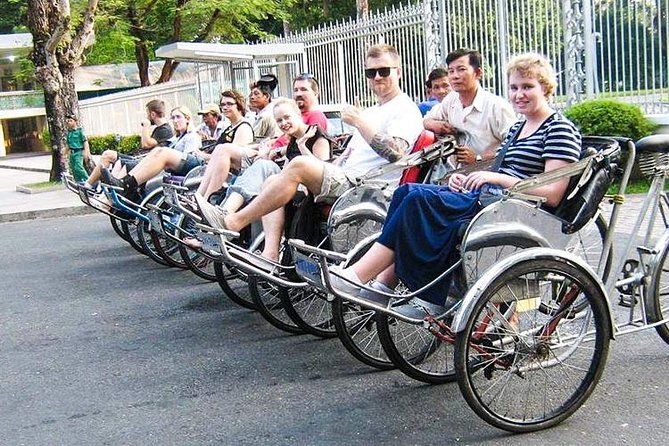
- Cyclo ride with local streets instead of bus views, so you get real street rhythm
- French colonial landmarks with admissions, handled in a tight, efficient route
- Dai Viet lacquer craft stop where the art isn’t just a photo background
- Market photo-walks across districts, including flowers, electronics, motorbike parts, and fabric
- Included pho break at PHỞ 24 that turns the tour into an actual meal, not just snacks
Why a cyclo is the smartest way to read Ho Chi Minh City
Ho Chi Minh City can feel like a blur from a car window. A cyclo flips that. You travel at human pace, you can hear the street, and you notice small details you would miss at speed—how people shop, where goods are displayed, and how neighborhoods feel different block to block.
I also like that the cyclo format forces a gentler rhythm for photos. When your transport is slow and close to the curb, you naturally pause at the right spots without needing to stop traffic or fight for a sidewalk gap. It’s a practical way to see a lot while still feeling grounded in the city.
You can also read our reviews of more tours and experiences in Ho Chi Minh City.

Meeting at Saigon Opera House and how the 4-hour loop works
You start at Saigon Opera House in District 1 (07 Công trường Lam Sơn). The tour runs about 4 hours, and it ends back at the meeting point.
If you opted for pickup, your guide may meet you at your hotel—Luc was noted for arriving on time for guests. Either way, you’ll start together, get your bearings, and move as a group with an English-speaking guide.
You’ll also use a mobile ticket, and the tour includes entrance fees plus bottled water and pho noodle soup. That matters because it reduces the “find the ticket office” hassle that can chew up time in a schedule like this.
Saigon Central Post Office: French colonial angles you can actually see
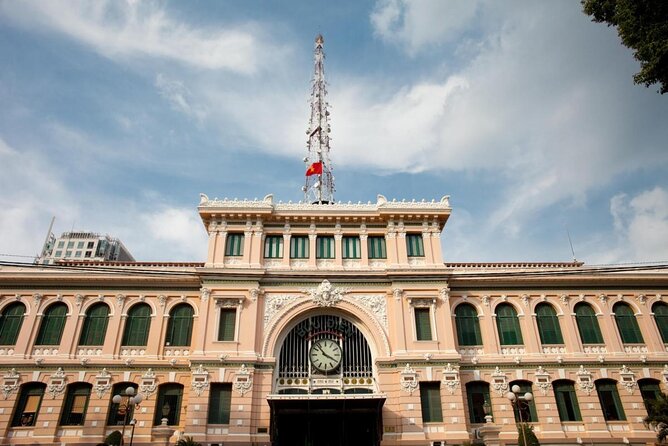
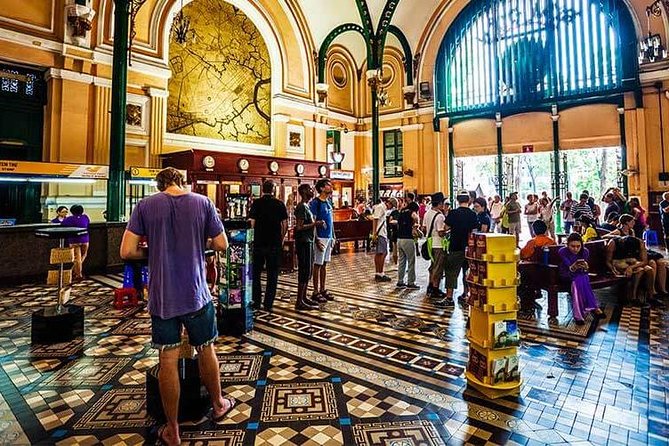
The first big stop is the Saigon Central Post Office. It’s the kind of building where the architecture does half the explaining: French colonial influence mixed with Gothic-style details, right in the middle of the city.
Admission is included, so you’re not just peeking from outside. With a guided stop, you can spend those minutes looking at the building’s structure and function, not just taking a quick snapshot and moving on.
Short time here is normal for a route like this, but the payoff is that you get a clear anchor point. After this, everything else you see feels more connected—especially when the tour jumps from colonial-era design to later history.
Reunification Palace: where history feels physical
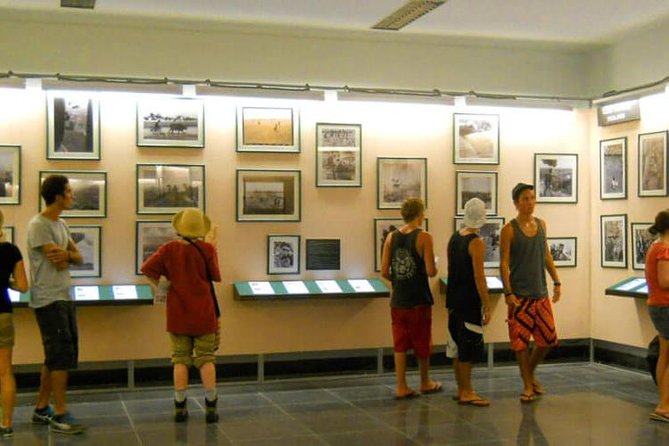
Next comes Reunification Palace (also called Independence Palace). This is one of those places where you don’t need extra imagination. The rooms, the layout, and the spaces used during major turning points in Vietnam’s modern era make the story easier to grasp.
Admission is included, and the stop is brief by design (about 5 minutes listed for the stop). The guide’s role is key here: even in a short visit, you want help connecting what you’re looking at to what it meant.
If you like architecture and political history, this is a strong pairing with the Central Post Office. One shows the imported style of the colonial period; the other shows a country’s later struggle and transformation, in a way you can see in the building itself.
Dai Viet Lacquerworks: craft that takes patience, not selfies
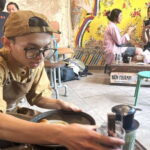
Then you move into the Minh Phuong Lacquerware area, where you can see how Vietnamese lacquer artistry is made and why it’s respected. This is not just a photo stop. You’re spending around 30 minutes at the workshop/gallery space, which gives your eyes time to adjust from street scenes to handcraft details.
Lacquer is slow work by nature, and the stop helps you notice that Vietnamese culture isn’t only expressed through landmarks. It’s also stored in techniques—materials, finishing methods, and careful decoration—that take time to learn and even longer to perfect.
A good guide here makes the visit easier. Luc and Cici were praised for thoughtful, clear explanations, and that kind of narration helps when a workshop is more about process than spectacle.


Ho Thi Ky Flower Market and the art of early-morning color
The route includes Ho Thi Ky Flower Market. It’s listed with admission included, and it’s a short stop (about 10 minutes), so treat it like a quick burst of sensory input rather than a slow wander.
Still, even in limited time, flower markets do something important: they show the city’s daily logistics. You see how people buy and sell, what’s seasonal, and how color works as commerce—not just decoration.
If you care about photography, this is one of the places where the city looks its best fast. And if you’re shopping later in the trip, you’ll have a better sense of what you’re actually looking for.
Markets across Districts 10 and 5: electronics, motorbike parts, fabric, and Cholon energy

After the flower stop, the tour shifts into the market world. You’ll pass by and stop at key hubs, including:
- Nhat Tao Electronics Market (District 10 and into parts of District 5)
- Tan Motorbike Spare Parts Market (District 5)
- Soai Kinh Lam Fabric Market (on Trần Hưng Đạo Street, District 5)
- Bình Tây Market (Chợ Lớn area), known for its long market tradition
The tour also includes photo-stops for famous market areas like the clothes, chicken, fish, fruit, and dog markets, plus the flower market and other specialties. Even when you’re not spending a long time inside every place, the route stitches together a clear picture: Saigon’s economy is layered, local, and built around what people need right now.
One practical note: markets can be loud, crowded, and visually intense. Your best move is to keep your camera ready but your feet steady. Look first, shoot second, and give the group time to regroup.
Also, don’t feel pressured to buy anything. These stops are about seeing how the city functions—especially if you don’t have time for a separate market tour later.
PHỞ 24: an included meal that resets the day
You’ll take a longer break for lunch at PHỞ 24 at 158D Pasteur. The time listed is about 45 minutes, and the tour includes pho noodle soup, plus bottled water.
This is a smart inclusion because it solves a common problem on half-day tours. When food isn’t included, you’re constantly weighing “Do we eat now or later?” Here, you know you’ll sit down and recover your energy.
Also, pho gives you a real taste of Vietnam that fits the tour theme: not just sightseeing, but living culture. You go from colonial buildings and craft rooms to a bowl of something that’s comfort food for people who live there.
If you’re picky or have dietary needs, keep it simple: eat what’s served, and if you have a restriction, ask ahead of time when booking.
Ba Thien Hau Temple in District 5: a Chinese-built spiritual stop
The final major cultural stop is Bà Thiên Hậu Temple in District 5. The tour describes it as a sanctuary dedicated to Mazu, and it notes the temple was built in the early 19th century by Chinese immigrants.
You’ll spend about 30 minutes here, with admission included. For me, this stop balances the rest of the day. After markets, engines, and street-level commerce, you get a calmer pace and a more formal place of worship.
It’s also a chance to see how different communities shaped Ho Chi Minh City. This is the “then and now” idea in action: the city keeps layers, and you can still see them in temples, not only museums.
Guides Luc and Cici: where the tour turns from sights into meaning
The strongest part of this experience isn’t just the route—it’s the guiding. Luc was described as professional, friendly, courteous, and very knowledgeable, with the kind of local understanding that makes short stops feel worth it. Cici also stood out for brilliant knowledge and helpful support.
One useful detail from the feedback: guides were able to handle questions, including those from kids. That’s a sign the explanations aren’t vague. You’re getting answers tailored to what you’re actually looking at, not a memorized script.
If you want the city to make sense as you move, choose this style of tour. It’s built for someone who wants context—especially when the day jumps from colonial architecture to craft and marketplaces.
Price and value: what $74.11 buys you (and why it’s not just transport)
At $74.11 per person for about 4 hours, the value depends on what’s included. You’re getting:
- Cyclo ride (one per person)
- English-speaking guide
- Entrance fees
- Bottled water
- Pho noodle soup
When a tour like this includes both a meal and admissions, it’s easier to compare honestly. If you were to replicate the day on your own, you’d still pay for entry tickets, likely spend more on transport than you expect, and you’d still have to plan lunch.
Private tour status also matters. It says only your group will participate, which usually means less waiting and a better chance to ask questions without rushing the guide.
That said, if you’re someone who wants deep time at every museum or wants long market browsing, this route may feel tight. It’s designed to cover a lot, not to linger for hours.
Who should book this cyclo “then and now” tour
This is a great choice if you:
- Want an efficient half-day route without taking separate day trips
- Like a mix of landmarks, craft, temple culture, and markets
- Appreciate explanations while you walk and ride
- Don’t want to figure out lunch and entry stops on your own
It may be less ideal if you:
- Need lots of free time to shop or wander without structure
- Prefer longer museum time over quick architectural stops
- Have mobility concerns that make short market navigation uncomfortable (some areas can be tight and crowded)
Should you book Saigon Then & Now?
I’d book it if you want a guided way to connect Ho Chi Minh City’s key layers in a single day: colonial-era architecture, postwar history, craft tradition, and everyday commerce. The included pho is a real plus, and the cyclo ride is the kind of transport that changes how the city feels.
Skip it only if you want slow travel and deep standalone time at each place. This tour is built like a smart sampler—full of variety, with just enough time to leave you curious for a return trip.
FAQ
FAQ
How long is the Saigon Then & Now cyclo tour?
It runs for about 4 hours.
Where does the tour start?
It starts at Saigon Opera House on Công trường Lam Sơn in District 1. The tour ends back at the same meeting point.
Is pickup available?
Yes, pickup is offered.
What’s included in the price?
The tour includes an English-speaking guide, one cyclo/richshow per person, bottled water, pho noodle soup, entrance fees, and a mobile ticket.
Do I need to pay for admission tickets separately?
No. Entrance fees are included.
Are there food stops during the tour?
Yes. You’ll enjoy pho noodle soup at PHỞ 24, and bottled water is included.
Is this tour private?
Yes. It’s listed as private, with only your group participating.
Is free cancellation available?
Yes, you can cancel for a full refund up to 24 hours in advance of the experience start time.