REVIEW · HO CHI MINH CITY
Saigon: City Sightseeing Hop-On Hop-Off Bus Tour
Book on GetYourGuide →Operated by City Sightseeing Worldwide · Bookable on GetYourGuide
If Saigon feels chaotic, this bus makes it manageable. You get an easy, top-deck viewpoint plus audio in 9 languages and two routes (red and blue) to cover more ground than you’d walk in a day or two. It’s a practical way to orient yourself in Ho Chi Minh City fast.
What I like most is how you can choose what to explore and then hop back on later, and how the headphone audio helps you make sense of the French-colonial center and the city’s wider districts. The one thing to watch: audio quality and timing can be inconsistent on some buses, so you may need to rely on your eyes more than the narration during a few moments.
In This Review
- Key highlights to look for
- Saigon from the top deck: what this hop-on hop-off setup does best
- Picking your 1-day vs 2-day pass and how timing works
- Red Route: French-colonial Saigon from the Opera House to Notre Dame
- Saigon Opera House
- Nguyen Hue Street
- Nha Rong Wharf
- Tran Hung Dao Statue
- Museum of Vietnamese History
- War Remnants Museum
- Pham Ngu Lao Street
- Ben Thanh Market
- Independent Palace
- Saigon Notre Dame Cathedral / Central Post Office
- Switch point tip for Red Route
- Blue Route: flowers, pagodas, and the markets locals actually use
- Beer Street – Pham Ngu Lao Street
- Ben Thanh Market
- War Remnants Museum
- Ho Thi Ky Flower Market
- Phuoc An society’s premises
- Ong Bon Pagoda
- Binh Tay Market
- Thien Hau Pagoda
- Van Phat Pagoda
- Swapping between routes without losing your day
- Audio in 9 languages, plus Wi-Fi and the guidebook you’ll actually use
- Stops that reward your time (and stops you can treat as photo breaks)
- Price and value: is $21 a bargain or just another bus?
- Who should book this Saigon hop-on hop-off route?
- Should you book this tour?
- FAQ
- How long are the tours on the red and blue routes?
- What are the first and last departures for each route?
- How often do the buses run?
- Which stops are on the red route?
- Which stops are on the blue route?
- Is the audio guide included, and what languages are available?
- Do I need to buy attraction tickets separately?
- Can I use a mobile voucher or a paper voucher?
- Where can I exchange tickets?
- What do I need to bring, and what’s not allowed?
Key highlights to look for

- Two route choices so you can mix District 1 sights with a broader swing into markets and pagodas
- Hop-on hop-off flexibility with set departures and frequent buses, so you’re not stuck waiting long
- Headphones + multilingual audio that turns landmark spotting into something you can actually follow
- Free Wi-Fi and a free guidebook to help you plan what comes next
- Staff support when it’s hot or rainy, with compliments for ponchos and hat-type sun protection
Saigon from the top deck: what this hop-on hop-off setup does best
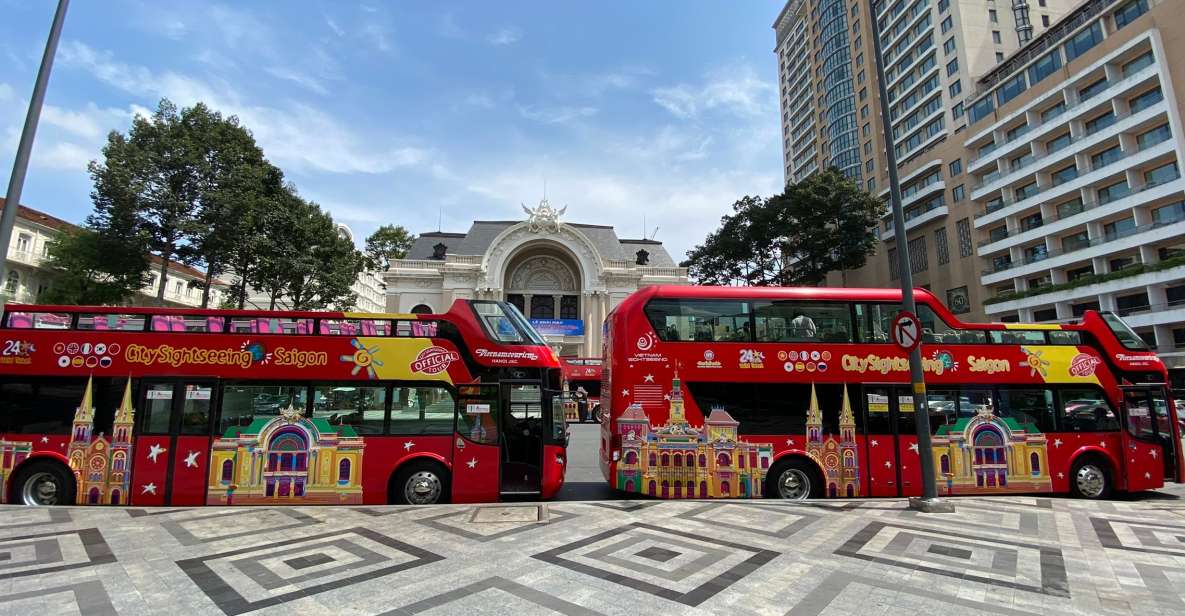
Saigon is one of those cities where you’ll feel lost for a few hours unless you have a plan. This tour gives you that plan on rails: you ride, you spot, you hop off when something grabs your attention, and you get back on the next bus that comes along.
The big win is the height. From the open-air or upper viewing spots, you can read the city’s layout—broad roads, changing neighborhoods, and big landmark silhouettes—without needing to cross-town on foot in heat or traffic. If you want comfort, some people like sitting downstairs with air-conditioning when the sun gets intense or the day turns wet.
Also, the route design is meant for real sightseeing, not just bus-window cruising. You’ll pass major icons, then have stops close enough to actually step into the day—like the area around the War Remnants Museum and the shopping punch of Ben Thanh Market.
You can also read our reviews of more city tours in Ho Chi Minh City



Picking your 1-day vs 2-day pass and how timing works
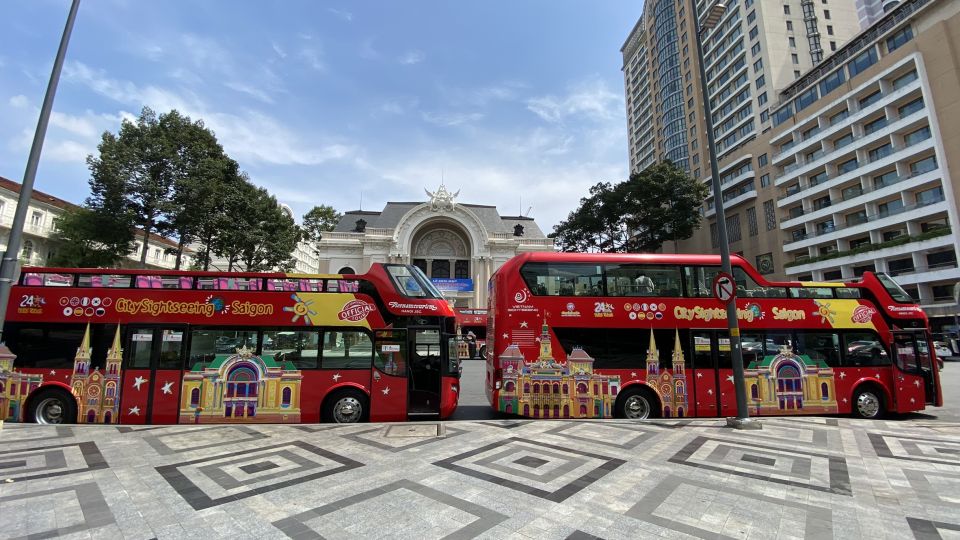
You can choose a 1-day or 2-day pass, and that choice matters because the routes are long enough to explore slowly. The red route runs about 75 minutes per loop and the blue route about 80 minutes, so even one full circuit can feel like a proper sightseeing day.
Here’s how departures generally run:
- Red Route: first departure 9:00 from Stop 1, last departure 4:00 from Stop 1, roughly every 30 minutes
- Blue Route: first departure 9:00 from Stop 1, last departure 3:45 from Stop 1, roughly every 45 minutes
That means you can build a day like this: do one loop to get your bearings, then spend your second loop going deeper at the stops you actually cared about. Many people find that strategy works better than trying to commit to every single place in one go.
One practical note for planning: since you’re hopping on and off, give yourself time between stops for short walks, photos, and the occasional detour into a market lane or museum queue.
Red Route: French-colonial Saigon from the Opera House to Notre Dame
The Red Route is the one that most people use for a first pass at Saigon’s classic sights. It threads through the city’s core, including the grand, photogenic architecture that makes people fall in love with this place.
Here’s what you’ll run into along the way:
Saigon Opera House
This is a strong starting landmark because it sits in the heart of the action. You get a sense of the city’s formal streetscape right away, and it also matters logistically since the ticket counter is near here.
Nguyen Hue Street
This is your “big city boulevard” moment. It’s a good spot for orientation photos—wide views, heavy foot traffic, and the feeling that you’re in the central grid.



Nha Rong Wharf
If you want a peek at the city’s connection to waterways and older trade patterns, this stop sets the tone. It’s also useful for photos where you can catch light and skyline angles.
Tran Hung Dao Statue
This is one of those stops that feels like a quick pause rather than a destination you linger at. Still, it helps break up the route and gives you a clean landmark to photograph from the bus or from ground level.
Museum of Vietnamese History
This is a solid mid-route stop if you’re the type who wants deeper context beyond exterior sightseeing. If you’re short on time, you can use it as a “decide later” stop and hop off only if you’re energized to go inside.
War Remnants Museum
This is one of the most important stops on both routes. People choose this area when they want history that hits hard and sticks with you. Even if you don’t go in immediately, hopping off here means you’ll be near a cluster of related sights.
Pham Ngu Lao Street
Think of this as the travel-and-easy-food area. It’s useful for people who want a quick meal break or want to see where many budget-friendly travelers spend evenings.
Ben Thanh Market
This is where the tour becomes practical shopping. You’ll find souvenir shopping and plenty of casual bites nearby, and it’s also a simple way to observe local street-level life without needing a long trek.
Independent Palace
This stop works well if you want a political history anchor in the middle of District 1 sightseeing. It also tends to be a place where you might plan a longer block of time, depending on how deep you go.
Saigon Notre Dame Cathedral / Central Post Office
This is the “architecture payoff” pair. Even if you keep your visit short, the exterior photo opportunities are excellent, and the Central Post Office area makes a nice break between other big-ticket sights.
One small consideration: a few stops may require a short walk from the curb depending on street layout. If you’re hauling a bag or moving with kids, keep that in mind as you plan your hop-off time.
Switch point tip for Red Route
You’ll also want to note where you can transfer to the blue line, because it changes what parts of the city you can reach efficiently.
Blue Route: flowers, pagodas, and the markets locals actually use
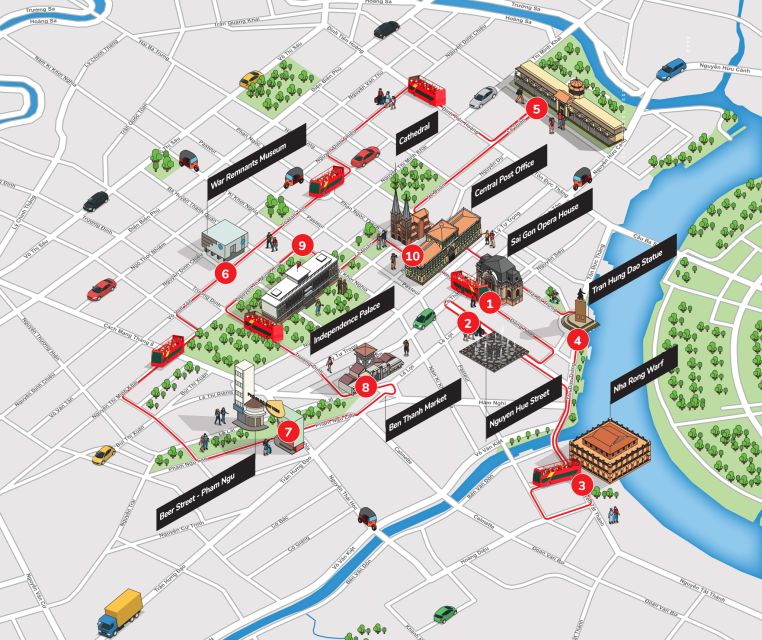
If the red route is “core Saigon,” the Blue Route gives you a broader slice of daily city life. It’s especially appealing when you want more than just photo stops around District 1.
The blue loop includes:
Beer Street – Pham Ngu Lao Street
This is the fun, nightlife-leaning version of the same neighborhood energy. It’s a good place to hop off if you’re planning an evening meal or just want to see how the area feels after dusk (daytime also works for photos).
Ben Thanh Market
Yes, it repeats here, and that’s a good thing. Ben Thanh is so central that looping through it makes transfers and planning easier.
War Remnants Museum
Again, you get the key historical stop. Having it on both routes makes it simpler to fit this into your schedule without forcing a whole-route commitment.
Ho Thi Ky Flower Market
This adds color and local rhythm to your day. It’s the kind of stop where you’ll probably slow down because you’ll see variety and activity beyond what you get from the bus view.
Phuoc An society’s premises
This is a more specific community-oriented stop. Even if you don’t spend lots of time there, it signals that the blue route isn’t only about big monuments.
Ong Bon Pagoda
This gives you a religious and architectural change of pace. If you’re the type who enjoys stepping into quiet spaces, it’s a smart hop-off point even for a short visit.
Binh Tay Market
This feels more like a working market than a souvenir-only stop. It’s a great choice if you want everyday commerce and real local crowds.
Thien Hau Pagoda
Another spiritual stop with a strong sense of place. It’s useful for comparing how different pagodas feel, not just what they look like from outside.
Van Phat Pagoda
This final stop leans into the pagoda theme. If you want a day where religious landmarks are the main event, this part of the route delivers.
From the way people talk about the blue line, it’s often the one that makes visitors feel like they actually left the main tourist lane. If you only have time for one route, a strong strategy is to let the red route handle the headline sights, then use the blue route for the city’s texture.
Swapping between routes without losing your day

One of the smartest parts of this system is how you can combine routes. The tour advises switching at specific points: Red Route Stops 6, 7, and 8 line up with Blue Route Stops 1, 2, and 3. That means you can change your plan mid-day without treating the bus like a one-and-done ride.
There’s also a simple mental trick that helps: build your day around the War Remnants Museum area and Ben Thanh Market. Those show up repeatedly on both routes, so if you’re short on time, you can keep your schedule flexible and still hit the most memorable stops.
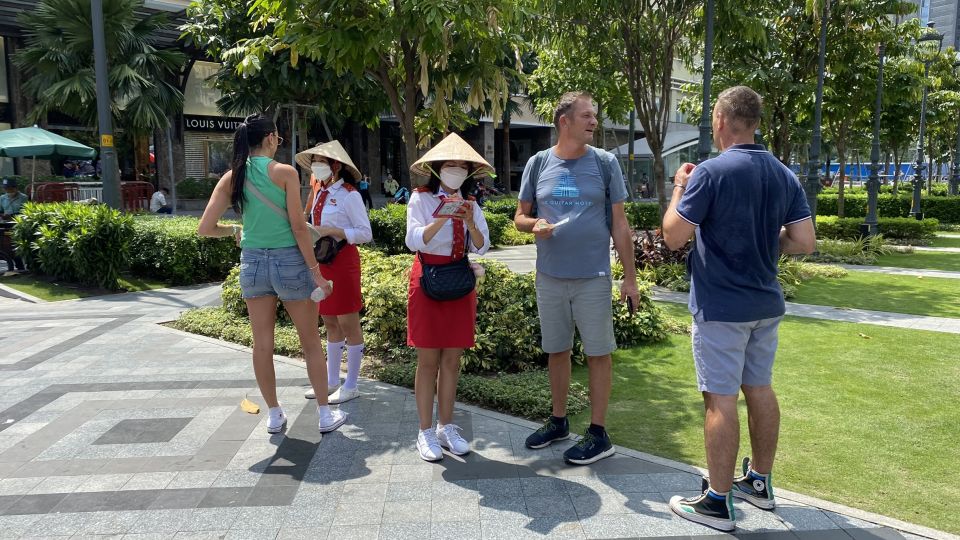
If you’re struggling to find the exact spot to wait, don’t panic. Staff can help you get onto the right bus, and the starting point around the Saigon Opera House is a useful reference.
Audio in 9 languages, plus Wi-Fi and the guidebook you’ll actually use

This is a “listen while you look” kind of tour. You get audio commentary in 9 languages with headphones, and you can switch between red and blue routes to hear different tracks as you pass different neighborhoods.
People praise the audio experience, especially when guides and staff add humor and context on the ground. Names that come up include Lockie, Tom, Mr Tuon, and Pham, with multiple mentions of strong explanations and entertaining delivery.
That said, audio isn’t perfect. Some buses have had issues like headphone sound cutting out or commentary not matching what you can see at that moment. Also, a few visitors noted that volume can be an issue in a noisy city, so if you’re sensitive to audio, keep your headphones secure and expect that traffic sounds may interfere.
The tour also includes free Wi-Fi, plus a free guidebook with maps, recommendations, timetables, and coupons (as described in the tour highlights). That’s not just nice—it helps you decide where to hop next instead of spending your time Googling in every neighborhood.
One extra comfort tip from real-world use: when the weather turns, staff have provided ponchos, and hats for sun protection have been mentioned as helpful for people sitting up top.
Stops that reward your time (and stops you can treat as photo breaks)

Not every stop should get the same amount of your day. A smart way to use this tour is to treat some places as quick photo/assessment moments and others as time blocks.
Good “time block” candidates:
- War Remnants Museum area: plan more than five minutes if you care about history and meaningful context
- Ben Thanh Market: worth more time if you’re shopping or just want to wander and snack
- Independent Palace and the Notre Dame Cathedral / Central Post Office area: these tend to reward a longer stop for photos and atmosphere
Good “photo or quick walk” candidates:
- Nguyen Hue Street, major statues, and certain wharf/monument stops: you’ll often get the best value from a quick hop-off for a few minutes, then return to the bus when you’re ready to move
Also, note what’s not included: entry fees to attractions are not included. So even if a stop is the highlight of your day, you may still need to plan for ticket costs once you hop off.
Price and value: is $21 a bargain or just another bus?
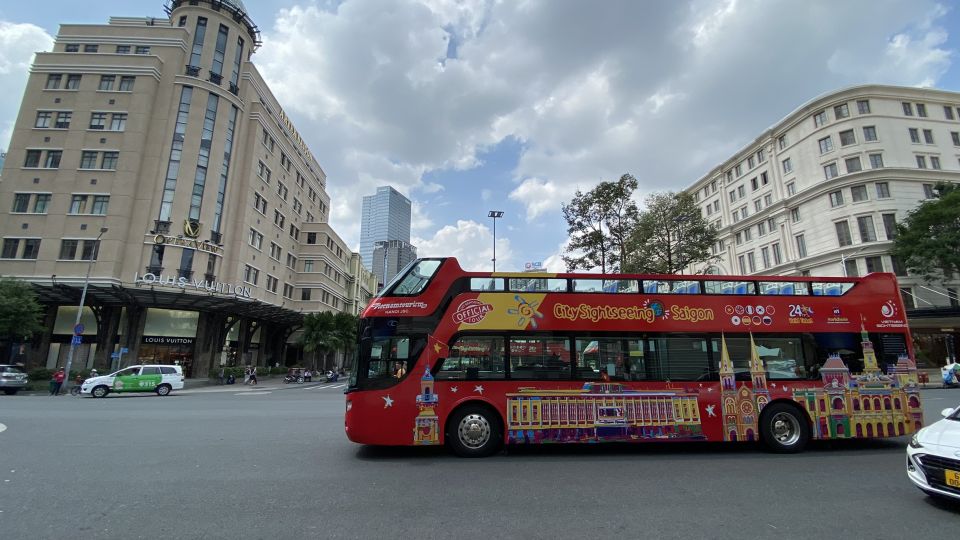
At around $21 per person for a 1- or 2-day pass, this tour can be a strong deal when you want flexibility and you’re planning multiple hops. The value comes from three things: frequent departures, close stop locations to big sights, and the ability to replay the city without negotiating traffic every time.
That said, not everyone agrees on value. Some people pointed out that it could be cheaper to use taxis or ride-hailing (like Grab) if you’re only visiting a small number of stops. If your plan is just one museum and one market, a taxi might make more sense.
Where the bus tends to win:
- You want a city overview on day one
- You plan to do at least several hops across different neighborhoods
- You’re trying to avoid decision fatigue and transport hassles
Where other transport might win:
- You have only one or two must-sees
- You prefer direct point-to-point travel with minimal waiting
I’d treat the bus as your backbone and taxis as your shortcut. Do the full loop for orientation, then pay for direct rides only when you’ve chosen a destination you’ll spend real time at.
Who should book this Saigon hop-on hop-off route?
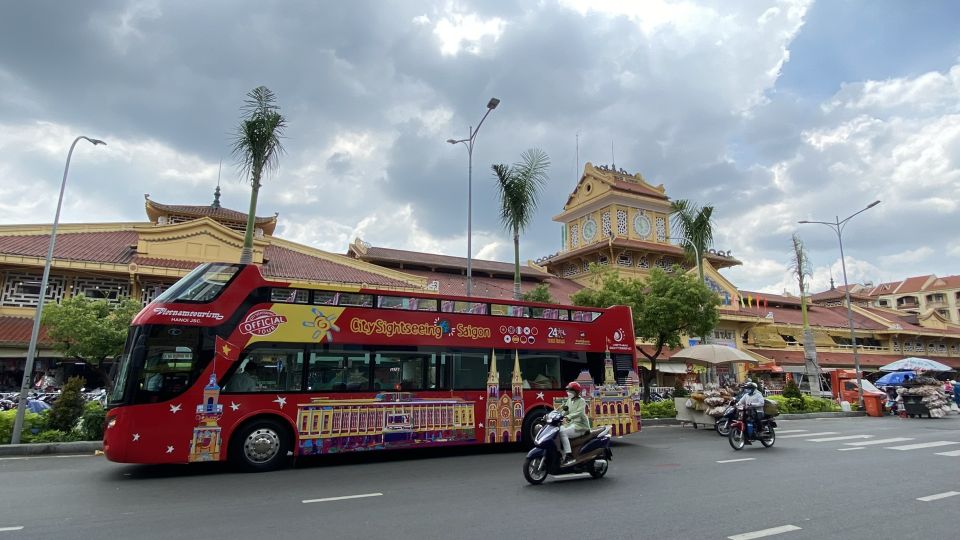
This tour fits best when you want structure but not rigidity. It’s a great option for first-timers who need to understand where landmarks sit, and it also works well for families because you can hop off at intervals and get back on without worrying about re-tracing routes.
It’s especially helpful if:
- you’ll be dealing with heat, sun, or occasional rain
- you want skyline-style views from higher vantage points
- you like the idea of planning your day after you learn what’s nearby
If you’re the kind of traveler who hates waiting for departures, you might feel the time between buses. Still, the frequency is designed to reduce that problem, especially on the red route.
Should you book this tour?
Book it if you want an easy way to map Saigon, hit major sights, and keep your plans flexible without expensive back-and-forth transportation. The combination of two routes, headphone audio in 9 languages, and close landmark access makes it a sensible “first-to-know” activity.
Skip it only if you’re very limited on time and plan to visit just one or two places, because taxis or direct transport could cost less. If you’re aiming for several neighborhoods, though, this pass style usually makes your day smoother.
FAQ
How long are the tours on the red and blue routes?
The red route takes about 75 minutes per loop, and the blue route takes about 80 minutes per loop.
What are the first and last departures for each route?
For the red route, the first departure is 9:00 from Stop 1 and the last departure is 4:00. For the blue route, the first departure is 9:00 from Stop 1 and the last departure is 3:45.
How often do the buses run?
The red route runs about every 30 minutes. The blue route runs about every 45 minutes.
Which stops are on the red route?
The red route includes stops at Saigon Opera House, Nguyen Hue Street, Nha Rong Wharf, Tran Hung Dao Statue, Museum of Vietnamese History, War Remnants Museum, Pham Ngu Lao Street, Ben Thanh Market, Independent Palace, and Saigon Notre Dame Cathedral / Central Post Office.
Which stops are on the blue route?
The blue route includes stops at Beer Street – Pham Ngu Lao Street, Ben Thanh Market, War Remnants Museum, Ho Thi Ky Flower Market, Phuoc An society’s premises, Ong Bon Pagoda, Binh Tay Market, Thien Hau Pagoda, and Van Phat Pagoda.
Is the audio guide included, and what languages are available?
Yes. The tour includes an audio guide in 9 languages, with headphones. The languages listed are English, Spanish, German, French, Chinese, Japanese, Korean, Vietnamese, and Russian.
Do I need to buy attraction tickets separately?
Yes. Entry to attractions is not included in the tour ticket.
Can I use a mobile voucher or a paper voucher?
Yes. Both mobile and paper vouchers are accepted.
Where can I exchange tickets?
You can exchange tickets at the ticket counter located on the side of the Saigon Opera House, facing the Continental Hotel.
What do I need to bring, and what’s not allowed?
Bring a passport or ID card. Pets are not allowed, and smoking is not allowed.