REVIEW · HO CHI MINH CITY
Private China Town Walking Tour in Ho Chi Minh City
Book on Viator →Operated by Magic Karp tour · Bookable on Viator
Cho Lon has a way of changing your pace. This private walking tour through Ho Chi Minh City’s Chinatown is built around real neighborhood stops, from trade at Binh Tay Market to prayers at Chinese temples. I like that the guide work feels personal, with real story-sharing (the kind people described with guides like Ben and Casey).
Two things I really like: first, the route hits both sides of daily life—shopping/business and religion—so you see Cho Lon as people actually use it. Second, the stops are time-managed (about 30 to 45 minutes each), so you don’t get stuck listening for hours in one place. The one thing to watch is distance: it’s not a quick hop from the city center, and you’ll want comfortable walking shoes.
If you want a standard “photo-and-finished” city tour, this isn’t that. If you want a slower, street-level look at how Vietnamese Chinese communities shape Ho Chi Minh City, it’s a smart use of a half-day.
In This Review
- Key highlights before you go
- Why this Cho Lon walk is better than another city tour
- Starting at Binh Tay Market: business first, stories second
- St Francis Xavier Church: the faith mix in the Big Market area
- Ong Bon Pagoda: the God of the Sky and architectural cues
- Ba Thien Hau Temple: Ms. Thien Hau and the sea goddess connection
- Nghia An Temple: Quan Cong, money stories, and a meaningful finish
- How private touring works here (and why it matters)
- Price and value: is $31.63 worth it?
- Practical tips that make the walk easier
- Should you book this Cho Lon Chinatown walking tour?
- FAQ
- How long is the Private China Town Walking Tour in Ho Chi Minh City?
- Where does the tour start and end?
- Is this a private tour?
- Is pickup offered?
- What’s included in the tour price?
- Are admission tickets required for the stops?
- What stops are included in the walking route?
- What languages are the guides available in?
- Is lunch included?
- Is the tour suitable for everyone?
Key highlights before you go
- Binh Tay Market first stop with guide-led explanations of how Vietnamese Chinese people do business there
- Church stop for mixed faith context at St Francis Xavier Church in the Big Market area
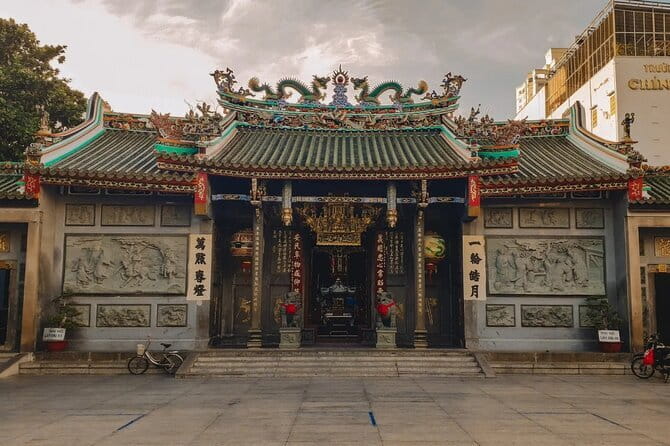
- Ong Bon Pagoda and temple architecture cues including the God of the Sky
- Thien Hau Temple mythology focus with stories about Ms. Thien Hau and the sea goddess
- Nghia An Temple finish visiting Quan Cong and hearing context behind the temple’s role for worship
- Private, group-only format with pickup offered and coffee/tea included
Why this Cho Lon walk is better than another city tour
Ho Chi Minh City can be loud, fast, and easy to skim. This tour slows you down on purpose, in Cho Lon, the Chinatown area where you’ll see a blend of community life and religious spaces that feel tied to the neighborhood’s rhythm.
What makes it practical (not just scenic) is the structure. You’re not bouncing randomly around town. You start at the market edge of daily commerce, then move through religious sites that each have their own theme: sky gods and temple style, sea goddess worship, and the Quan Cong connection at the end. The guide stitches it together so you know what you’re looking at, not just where you’re going.
And because it’s private, you’re not trapped in a one-size-fits-all script. People specifically praised guides who tailored the experience to interests, including Ben and Casey, which matches what you’ll actually want on a walk like this. You can ask questions without shouting over a crowd.
You can also read our reviews of more walking tours in Ho Chi Minh City



Starting at Binh Tay Market: business first, stories second
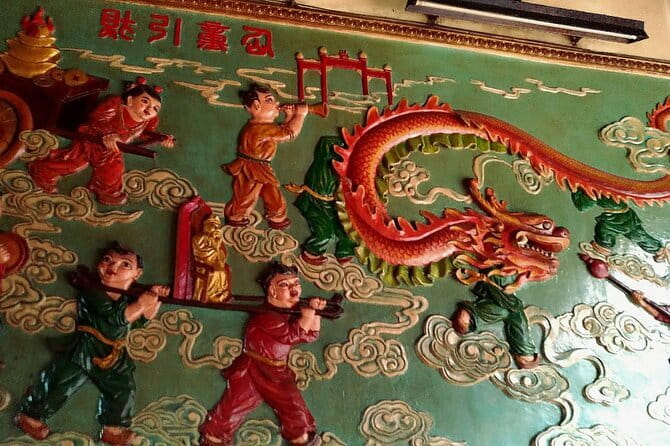
You begin at Binh Tay Market (57A Tháp Mười, Quận 6). The tour starts inside the market with your guide walking you through how Vietnamese Chinese people handle trade day to day. This is the kind of context that’s hard to pick up alone because you don’t know what to notice.
A big plus here: the guide takes you through the stalls and then brings you to the center to hear about the man who created the market. That’s not just trivia. It gives you a human anchor for what you’re seeing—why the market exists, why it grew, and how it became a focal point.
Plan for around 30 minutes at this first stop. That timing works because you get a meaningful taste of the market without the tour turning into a shopping marathon. Also, admission is free for this stop, so you’re not juggling extra costs.
Small drawback: markets mean crowds, noise, and strong smells. If you’re sensitive, take your time, breathe, and remember this is the trade-life part of the route, not a calm museum corridor.
St Francis Xavier Church: the faith mix in the Big Market area
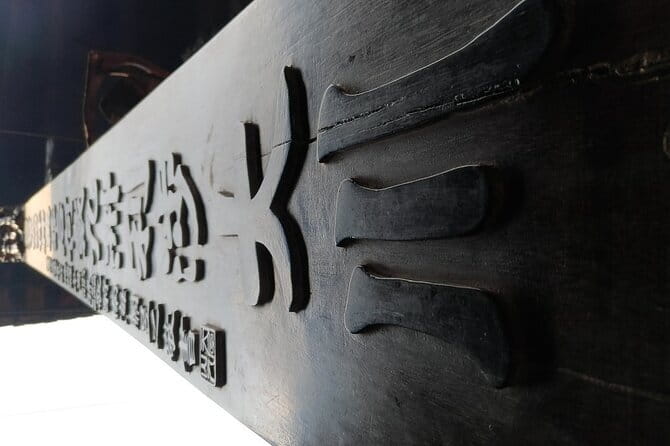
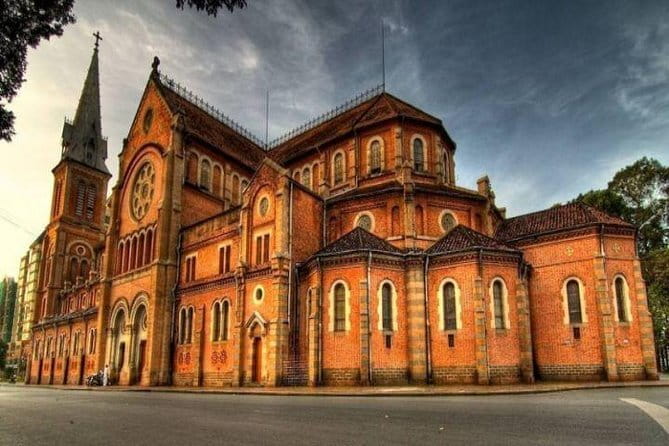
From the market, you head to St Francis Xavier Church. Your guide uses this stop to explain the variety of religions and how faith shows up in the wider “Big market” area.
What I find useful is that this church visit isn’t treated like a quick photo stop. The guide shares context about why it’s an important link in the neighborhood area and you’ll hear an “untold” style story of the church—basically, details that don’t usually appear on a standard sign.
You’ll spend about 30 minutes here, with free admission. The short timing matters because it keeps the tour moving while still giving you a real sense that Cho Lon’s identity includes more than one religious tradition.
Practical note: church stops usually come with quieter behavior. If you’re the type who needs to talk constantly while walking, switch gears. You’ll enjoy the stop more if you slow down for the atmosphere.
Ong Bon Pagoda: the God of the Sky and architectural cues
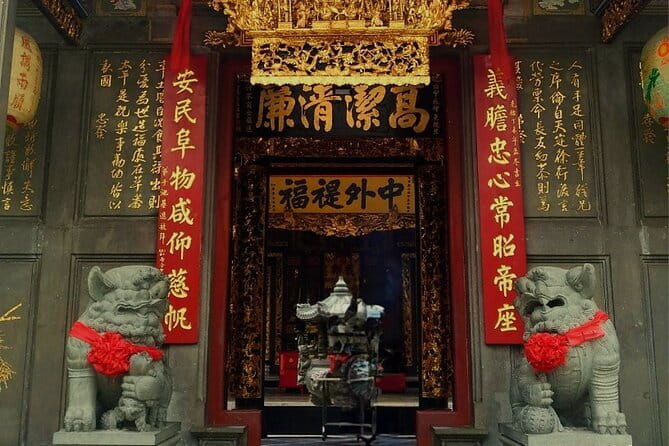
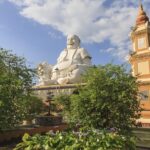
Next comes Ong Bon Pagoda, known for its ambiance and intricate architecture tied to the Phuc Kien people in Ho Chi Minh City. This stop is where you start reading the city’s religious design language—what different temple spaces mean and how communities express beliefs through structures.
About 30 minutes here is enough time to see the “big idea” and not just the surface details. Your guide points you toward the God of the Sky and also explains differences in temple architecture in the “Big market” area. That last piece is the kind of thing you’ll remember because it turns what might look like decorative complexity into actual meaning.
Admission is free, so the value is in interpretation. You’ll leave with a better sense of what makes each temple feel distinct, even when they’re all part of the same broader neighborhood.
If you’re short on time, this is one of the stops you shouldn’t rush, because the architecture context is what makes it click.
Ba Thien Hau Temple: Ms. Thien Hau and the sea goddess connection
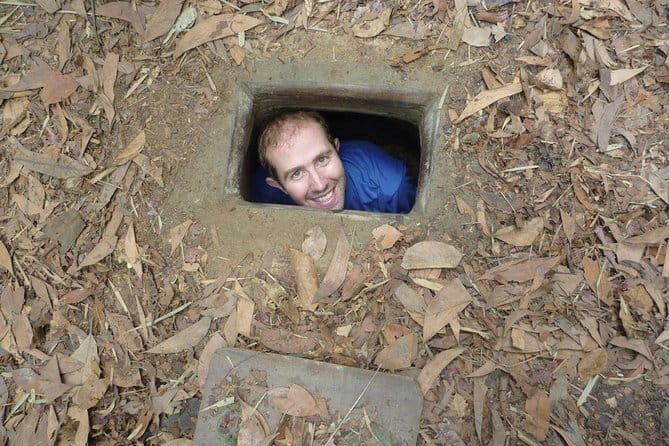
The tour then shifts into one of the strongest narrative stops: Ba Thien Hau Temple, devoted to the sea goddess Thien Hau. If you like mythology that connects to real worship practice (and not just a story you forget), this is where the tour leans into that.
Your guide shares the mythology of Ms. Thien Hau—framed as the sea goddess for the Chinese community in the “Big market” area. Then you meet the other gods in the temple with the guide steering you through the symbolism.
Plan about 45 minutes. That extra time compared to earlier stops makes sense because this is both story time and observation time. You’re hearing the mythology and also looking at the temple layout and figures so the story has somewhere to land in your mind.
A plus: this stop is free entry, so you’re not paying extra for the cultural learning portion. It’s also a good reset point in the route, because temples tend to give you a calmer sense of space compared to the market lanes.
You can also read our reviews of more city tours in Ho Chi Minh City


Nghia An Temple: Quan Cong, money stories, and a meaningful finish
The final stop is Nghia An Temple (ending at Hội Quán Nghĩa An, 678 Nguyễn Trãi, Phường 11, Quận 5). This is a fun conclusion because it ties together worship themes that feel more practical than you might expect.
Your guide brings you to visit Quan Cong, described as a general from the Three Kingdoms period (184–280), including his famous horse. You’ll also hear context about Quan Cong in terms of worship and the theme of the money god.
This stop runs about 45 minutes, with free admission. The route ends here, so you can treat it as the tour’s “final lesson”—closing the loop on what you learned at earlier stops about gods, community roles, and architectural differences.
One small consideration: the tour is themed around worship and legends, so if you prefer purely secular sightseeing, you might want to mentally switch expectations. For most people, though, that’s exactly why the walk feels more authentic than another checklist tour.
How private touring works here (and why it matters)

Even with a walking route, the experience isn’t just you wandering streets and hoping for the best. Private transportation is included, and pickup is offered, which helps cut down the friction of getting from one cluster of sights to the next.
Because it’s private, your group moves as one. That means you can ask follow-up questions, pause for a view, or spend extra time at a detail your guide highlights—like differences in temple architecture between sites in the Big Market area—without feeling rushed by strangers.
Reviews also hint at what you should expect from the guide style: Ben was praised as super funny and talented, and Casey was praised for tailoring the tour to interests and keeping the pace engaging. That’s a strong signal that you’ll get more than a memorized script.
Duration is about 3 to 4 hours, which is ideal for a half-day plan in Ho Chi Minh City. It’s not too long to tire you out, and not too short to feel like you only skimmed the highlights.
Price and value: is $31.63 worth it?
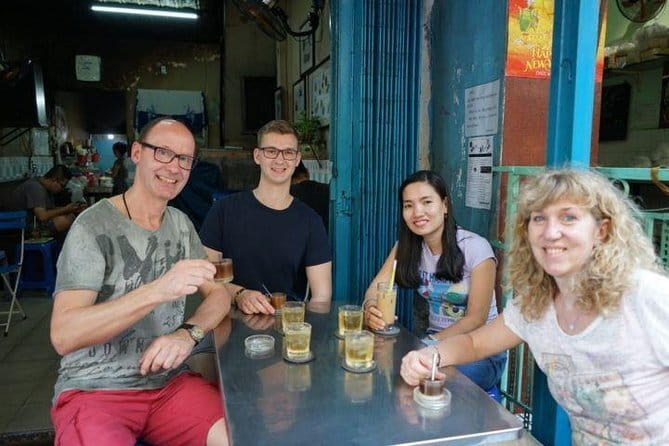
At $31.63 per person, you’re paying for a private guide experience across multiple major stops—market plus several temples—along with coffee and/or tea, plus private transportation. Admission is included for each listed stop (free), so your spending is mostly contained.
The big value question isn’t the ticket cost. It’s whether you want someone to translate the street-level visuals into context. For Chinatown-type districts, that context is the whole point. Without a guide, you can see temples, sure. With a guide, you learn what the guide calls out: specific gods, architectural differences, and the way the neighborhood organizes itself around commerce and faith.
Also, the private format reduces wasted time. You’re not waiting for a group that’s stuck in the wrong lane. You’re moving with intention, which is what you’re really buying for this price.
If you’re traveling solo or as a couple, $31.63 can feel like a deal compared to piecing together market wandering, temple visits, and guide translation yourself. If you’re traveling with multiple people, ask about group discounts since that’s part of the offer.
Practical tips that make the walk easier
A few things will help you enjoy this more from minute one.
First, wear shoes that can handle uneven surfaces and crowds. The experience is a walking tour, and one review noted it’s a bit of a walk from the city center. That’s exactly why comfortable footwear is key.
Second, plan your timing for good weather. The experience requires good weather, and if it can’t run due to weather, you’ll be offered a different date or a full refund. So check the forecast and don’t book this as a last-second gamble.
Third, be ready for a mix of places with different vibes: market lanes (busy, sensory) and temple interiors (quieter, more respectful). Switching modes is easy when you know what to expect.
For pickup: pickup is offered, but if your pickup location is outside 1 km from Ben Thanh market, there’s an extra $10 per customer charge. If you’re planning your hotel stay, map your location relative to Ben Thanh.
Finally, since the tour includes coffee and/or tea, you can treat it like a half-day meal break for your brain and body. You’re out long enough to appreciate the small reset.
Should you book this Cho Lon Chinatown walking tour?
Book it if you want a real neighborhood feel in Ho Chi Minh City, not just a few icons on a checklist. This route is a strong fit when you like street-level context—markets, community worship, and the stories that explain why the architecture looks the way it does.
Don’t book it if you hate walking, you’re expecting big landmark-style sightseeing, or you prefer fully guided indoor museum stops only. Also, if you need a very quiet experience, the market start may be a sensory wake-up call.
If you’re open to learning—especially about Chinese community worship and how faith shows up in the Big Market area—this tour is one of the more efficient ways to spend a half-day. And if you get a guide like Ben or Casey, you’ll likely come away with stories you actually want to repeat at dinner.
FAQ
How long is the Private China Town Walking Tour in Ho Chi Minh City?
The tour runs about 3 to 4 hours.
Where does the tour start and end?
It starts at Binh Tay Market (57A Tháp Mười, Phường 2, Quận 6) and ends at Hội Quán Nghĩa An (678 Nguyễn Trãi, Phường 11, Quận 5).
Is this a private tour?
Yes. It’s private, and only your group participates.
Is pickup offered?
Pickup is offered. However, if your pickup location is outside 1 km from Ben Thanh market, there is a $10 per customer charge.
What’s included in the tour price?
Coffee and/or tea, private transportation, and an in-person tour guide in English or Japanese are included.
Are admission tickets required for the stops?
Admission tickets are free for each listed stop.
What stops are included in the walking route?
The tour includes Binh Tay Market, St Francis Xavier Church, Ong Bon Pagoda, Ba Thien Hau Temple, and Nghia An Temple.
What languages are the guides available in?
The guide is available in English and Japanese.
Is lunch included?
No, lunch is not included.
Is the tour suitable for everyone?
Most travelers can participate, and service animals are allowed. The experience requires good weather to run.