REVIEW · HO CHI MINH CITY
Lotus Experience
Book on Viator →Operated by WEAW EXPERIENCE TRAVEL COMPANY LIMITED · Bookable on Viator
Lotus in Saigon, but make it meaningful. This private evening experience connects Ho Thi Ky Flower Market to a Buddhist pagoda lesson and ends with a lotus-themed art stop. It’s a small, focused way to understand why this flower matters in everyday Vietnamese life, not just in poems.
I especially like how the tour follows the lotus from flower to meaning to food. You don’t just look at the lotus, you learn how it’s cherished, transformed, and used on a plate. The other big win for me is the lotus-only vegetarian dinner, where dishes such as lotus rice and lotus milk feel like the point, not an afterthought.
One thing to consider: it starts at 3:30 pm and runs about 4 hours 30 minutes, so you’ll want your evening free—and it does require good weather for the plan to work smoothly.
In This Review
- Key points worth your attention
- A 3:30 pm lotus walk with real purpose
- Ho Thi Ky Flower Market: seeing lotus like a local
- Quoc Tu Pagoda: lotus offerings and Buddhist symbolism
- B/S Art Studio: where lotus turns into art and ideas
- Lotus-only vegetarian dinner: what you actually eat
- Live Vietnamese folk music and the welcome gift set
- How long is it, and why the timing matters
- Price and value: does $93 make sense?
- Who this is best for (and who should skip it)
- Should you book the Lotus Experience in Ho Chi Minh City?
- FAQ
- What time does the Lotus Experience start?
- Where does the tour take place?
- Is pickup offered?
- Is the tour private?
- What is included in the dinner?
- Is bottled water included?
- Do you get live music during the tour?
- What if the weather is bad?
Key points worth your attention
- Ho Thi Ky Flower Market: get a close look at lotus flowers and understand what you’re seeing, not just passing through
- Quoc Tu Pagoda lotus symbolism: learn how Buddhists use the lotus as an offering and a spiritual metaphor
- Lotus used day to night: the story shifts from visuals in the market to ritual and reflection at night
- Lotus dinner with many courses: you’ll eat multiple lotus-based dishes at a vegetarian restaurant
- Live Vietnamese folk music and lotus tea: the mood stays calm and local through the final stops
- Private transport and a welcome gift set: easy logistics for a short, efficient evening
A 3:30 pm lotus walk with real purpose
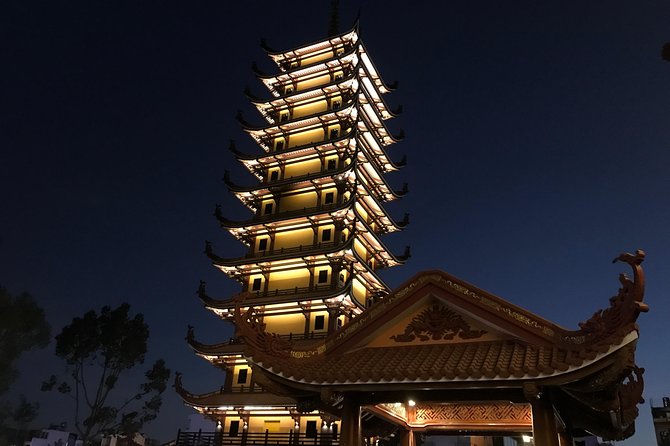
If you only have one evening in Ho Chi Minh City, this tour gives you a tight route with a strong theme. Starting at 3:30 pm is smart: you catch the lotus scene in the light, then you move into a more reflective setting after dusk. That change in atmosphere is the whole idea—lotus symbolism shows up differently as the day turns to night.
You also get a private setup: private transportation and a private guide and driver. That matters in a city like this, where time evaporates fast once you’re navigating alone. Here, you can concentrate on the learning and the food instead of worrying about routes or timing.
And yes, the lotus is the star. The tour frames it as a symbol of purity and vitality, and it keeps coming back to a simple message: the lotus blooms beautifully even though it grows in muddy conditions. That theme runs through the market lessons, the pagoda rituals, and the vegetarian dinner.
You can also read our reviews of more tours and experiences in Ho Chi Minh City.


Ho Thi Ky Flower Market: seeing lotus like a local
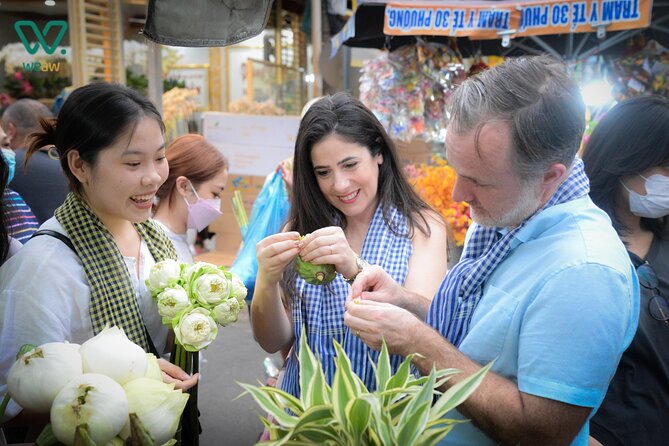
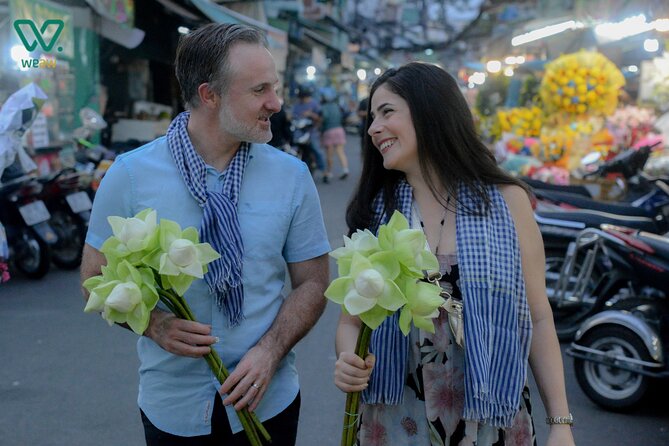
Ho Thi Ky Flower Market is where the lotus becomes more than decoration. This is the moment you look closely—at the flower structure, the way it’s cared for, and what makes lotus feel so culturally important in Vietnam. Instead of treating flowers like a pretty background, you’re invited to read them.
Here’s what I find useful for you: the guide doesn’t just point. You learn how people treat the lotus as something meaningful and useful. You’ll hear about lotus as a living symbol tied to Vietnamese identity—rising from dirt, staying pure, reaching outward. That’s the kind of explanation that actually sticks, because you’re seeing the flowers right in front of you.
You can also expect the tour to connect the lotus to practical life. Lotus flowers aren’t only for looks. The experience explains how lotus can be transformed into decoration and used in cooking. That sets you up for what comes next—because when you later taste lotus-based dishes, you’ll understand the link instead of guessing.
Potential drawback: flower markets can be visually intense. If you don’t enjoy sensory-heavy places, you may want to pace yourself and take short breaks during the flower-focused time. Still, it’s brief enough that most people can handle it.
Quoc Tu Pagoda: lotus offerings and Buddhist symbolism
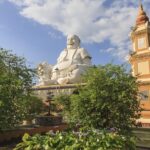
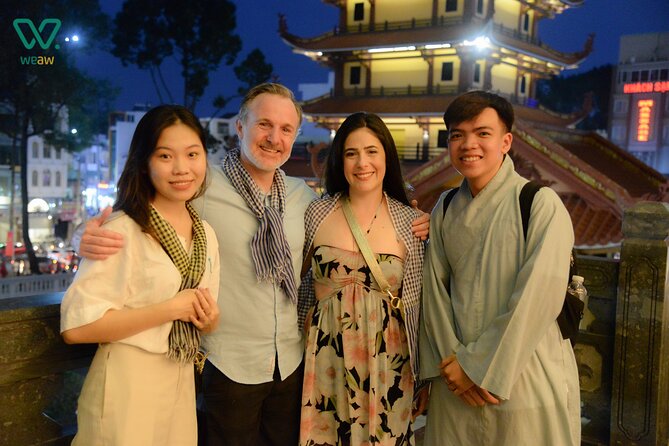
After the market, the tour slows down. At Quoc Tu Pagoda, lotus becomes spiritual. The focus shifts from visual admiration to symbolic meaning in Buddhism, and you’ll learn how lotus flowers are used as offerings.
This part works best if you approach it with curiosity rather than needing it to be a religious performance you already understand. The lotus is a language here: purity, growth, and the idea of rising above difficult conditions. Seeing that metaphor explained—then watching how offerings fit into the setting—helps you connect what you saw at the flower market with what the flower represents in faith.
What I like is the “day to night” pacing. The tour is timed to move you from the market’s daytime energy to a nighttime atmosphere where meaning matters more than movement. If you’ve ever felt that temples are hard to appreciate without context, this is exactly the kind of guided framing that makes it easier.
One more consideration: evening pagoda visits can mean quieter surroundings. If you’re hoping for constant action or shopping, manage expectations. This stop is for reflection and understanding.
B/S Art Studio: where lotus turns into art and ideas
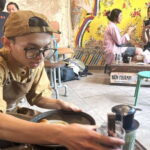
The last third of the experience leans creative. You’ll head to B/S Art Studio, described as a special art gallery stop where the lotus theme continues. This isn’t just a food-and-temple route that ends abruptly. It transitions into how lotus shows up in Vietnamese culture through design, objects, and conversation.
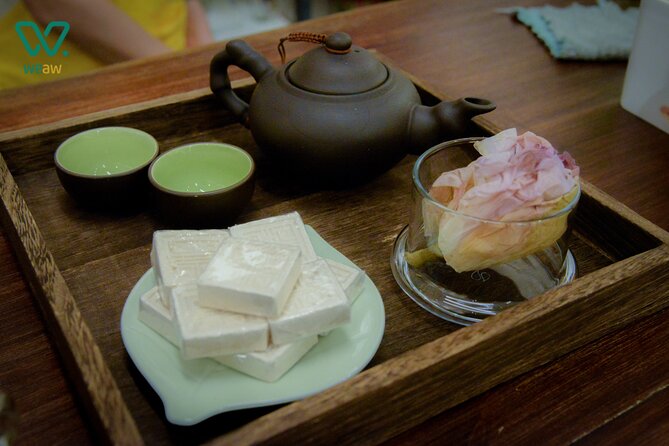
During this final portion, you’ll be drinking lotus tea and snacking on dessert. Live Vietnamese folk music also plays a role here, which helps keep the mood warm instead of formal. It’s an enjoyable way to connect the lotus symbol to art and everyday culture, without making the tour feel like a lecture that runs out of steam.
I also appreciate the way the tour’s storytelling seems to connect the past, present, and future. Even if you don’t consider yourself a “history person,” the lotus symbolism gives you a thread. You’re not juggling unrelated facts. You’re learning one idea from multiple angles—market, pagoda, art, and then food.
Small caution: this part is more about atmosphere than hands-on making. If you wanted a workshop where you physically create lotus items, this might feel less hands-on than you hoped. But the tea, dessert, music, and guided interpretation tend to satisfy people looking for a calm, meaningful ending.
Lotus-only vegetarian dinner: what you actually eat
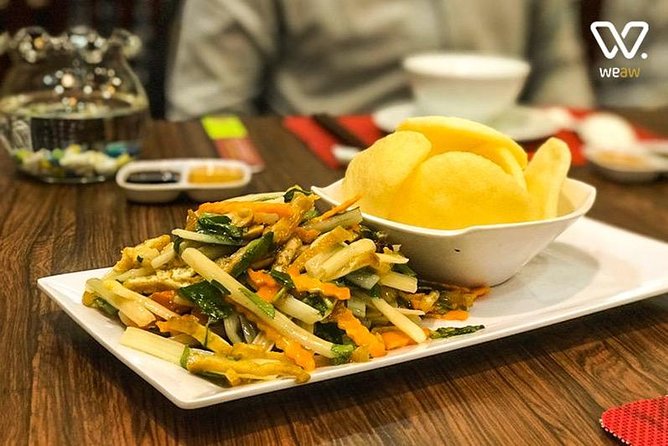
The centerpiece meal is a Vietnamese vegetarian dinner where many dishes are made with lotus. The dinner is described as a special meal with ingredients made from lotus, including lotus rice, lotus salad, and lotus milk. Bottled water is included, so you’re not scrambling for hydration mid-evening.
This is more than “try the local food.” The tour ties the meal to earlier lessons. When you’ve been thinking about lotus structure and symbolism, you’ll notice how the lotus shows up in flavor and texture: sweet lotus seeds in soup-style preparations (the tour messaging points this direction), cool lotus roots, and lotus leaves used with rice. Even if the dishes vary slightly, the theme remains consistent—lotus as a culinary ingredient, not a garnish.
Here’s the value angle for you: at $93 for about 4.5 hours, you’re not just paying for dinner. You’re paying for guided experiences at multiple cultural points plus private transportation, bottled water, and the entertainment element of live folk music. The meal is included as part of the story, not something you’d have to plan yourself.
One practical tip: because this is a vegetarian lotus-forward menu, you might not get a “standard” meat-and-rice dinner. If you’re someone who needs familiar comfort foods, you’ll likely still enjoy it, but go in expecting creative vegetarian dishes with lotus as the ingredient focus.


Live Vietnamese folk music and the welcome gift set
This tour leans into mood. Live Vietnamese folk music runs as part of the experience, and the gallery stop includes lotus tea and dessert. The goal is simple: you finish the tour feeling like you experienced something uniquely Vietnamese, not just checked off a list.
You also get a welcome gift set. It’s a small detail, but it contributes to that “someone planned this for you” feeling. One of the reviews also mentions surprises after the trip, which suggests the experience tries to leave you with a little extra memory beyond the last cup of tea.
For a short, private outing, those touches matter. They make the evening feel like a guided cultural program with care, instead of a standard transport-and-drop-off format.
How long is it, and why the timing matters
The tour runs about 4 hours 30 minutes, starting at 3:30 pm. That timing is a big part of the design. Lotus shows up in two modes in Vietnam: visual, daytime market beauty, and symbolic, evening pagoda reflection.
If you’re planning your Ho Chi Minh City schedule, this fits well as an early evening anchor. You can do a late lunch or early coffee, then head out. It also pairs nicely with other nearby evening activities, as long as you don’t plan something that requires you to be elsewhere right at the end of the tour window.
Also keep in mind weather. The experience notes it requires good weather. If it’s rainy or stormy, you might be offered a different date or a full refund. So don’t schedule something critical right after the tour on the same day unless you’re comfortable with slight changes.
Price and value: does $93 make sense?
$93 for a private, guided evening experience in Ho Chi Minh City is not a bargain-basement price, but it can feel fair when you look at what you receive. You’re getting:
- private transportation plus a private guide and driver
- bottled water
- entrance fees and taxes
- dinner where ingredients are lotus-based (multiple dishes)
- live Vietnamese folk music
- lotus tea and dessert as part of the final art stop
- a welcome gift set
For me, the value comes from the theme staying consistent end-to-end. Many city tours give you a mix of unrelated stops and call it culture. Here, the lotus is the thread tying the whole route together—from market meaning to pagoda symbolism to food and art.
If you’re traveling with someone who also likes thoughtful cultural experiences and local food, this can be a strong use of your time. If you prefer very self-directed wandering, you may question paying for a private format. But if you want clarity, pacing, and context, the cost is easier to justify.
Who this is best for (and who should skip it)
I’d steer you toward this tour if you:
- want a focused introduction to Vietnamese lotus symbolism in both daily life and Buddhism
- like vegetarian food and are curious how lotus changes dishes and flavor
- prefer a private guide for context, especially around temples and cultural meaning
- want a smooth, timed evening that doesn’t require you to map everything yourself
You might skip it if:
- you want a heavy shopping focus or long free time
- you dislike quiet, reflective moments at religious sites
- you’re not interested in lotus as a theme and ingredient
Should you book the Lotus Experience in Ho Chi Minh City?
Book it if you want an evening with a clear story line and a strong sensory payoff. The standout advantages are the market-to-pagoda-to-art flow, the symbolism explained in plain terms, and the lotus-forward vegetarian dinner that feels like part of the cultural lesson. Add live Vietnamese folk music, lotus tea, and dessert, and you get a complete, cohesive experience.
If your schedule allows an early start at 3:30 pm and you’re open to a vegetarian menu built around lotus, this is a smart booking. You’re paying for guided context, private comfort, and a themed meal that actually follows the cultural thread instead of interrupting it.
FAQ
What time does the Lotus Experience start?
It starts at 3:30 pm and runs for about 4 hours 30 minutes.
Where does the tour take place?
The tour is in Ho Chi Minh City, Vietnam.
Is pickup offered?
Yes, pickup is offered, and there is private transportation.
Is the tour private?
Yes. It’s a private tour/activity, meaning only your group participates.
What is included in the dinner?
Dinner is described as a lotus-based Vietnamese vegetarian meal, including lotus rice, lotus salad, and lotus milk, plus bottled water.
Is bottled water included?
Yes, bottled water is provided for the trip.
Do you get live music during the tour?
Yes, live Vietnamese folk music is included.
What if the weather is bad?
The experience requires good weather. If it’s canceled due to poor weather, you’ll be offered a different date or a full refund.