REVIEW · HO CHI MINH CITY
Ho Chi Minh City Sightseeing Panoramic Cyclo Private Tour
Book on Viator →Operated by Vietnam - Ho Chi Minh City Package Tours · Bookable on Viator
Three wheels beat jet lag.
This private cyclo tour glides you past Ho Chi Minh City’s best-known sights at a comfortable pace, with riders who slow down for photos and you can simply hop off mentally and enjoy the ride. I especially love how the English-speaking guide gives you quick, practical context at major landmarks, so you’re not just watching buildings go by. One thing to consider: the tour price is only part of the cost, since there’s an extra cyclo rider fee of 100,000 VND per hour for each cyclo.
If you choose a longer option, you’ll also get time for the stories that make Saigon feel real, not staged—colonial architecture, neighborhood life, and even a secret war-time bunker tucked beneath a café. I like that the route is customizable so you can emphasize what you care about. The only drawback worth planning for is that longer rides mean more time (and more rider-fee hours) in traffic, even though the pace stays relaxed.
In This Review
- Key Highlights I’d Plan Around
- Price and Logistics: What You Pay For (and What You Still Need)
- How the Private Cyclo Ride Really Feels in Ho Chi Minh City
- Starting Strong: Notre-Dame Cathedral of Saigon and Photo-Stop Energy
- Nguyen Hue Boulevard: the Main Street that Helps You Orient Fast
- People’s Committee Headquarters and the Lam Son Theatre Facade
- Saigon River Views: a Slow Breather Between Big Stops
- Saigon Central Post Office: French-Era Details You’ll Want to See Up Close
- A War-Time Story Beneath a Café: the Weapons Bunker
- Independence Palace: when modern city life overlaps with war-era planning
- The Apartments Area Near Bàn Cờ Market: the 1968 US-Soldier Housing Connection
- Tan Dinh Church, the Pink Church: a Color Pop You Can Actually Enjoy
- Who This Tour Suits Best (and Who Might Want Another Option)
- What You’ll Learn Without Feeling Like It’s a Lesson
- Should You Book This Panoramic Cyclo Tour?
- FAQ
- How long is the Ho Chi Minh City panoramic cyclo tour?
- Does the tour include hotel pickup and drop-off?
- Is there an extra cost for the cyclo rider?
- What is included in the tour price?
- Is this tour private?
- What major places will I see?
Key Highlights I’d Plan Around
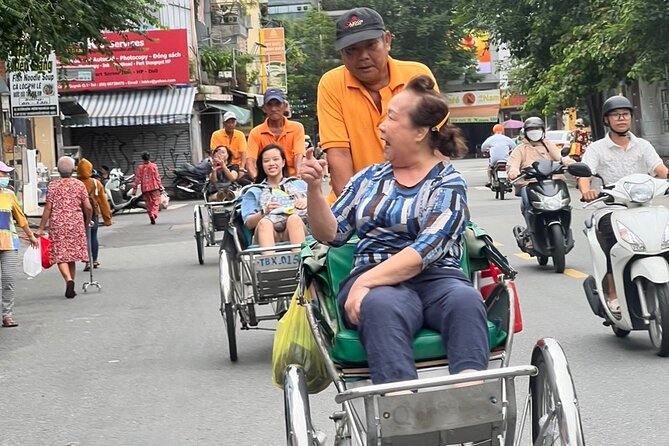
- Photo-friendly slow driving: Tell the rider when you want to pause, and you’ll get time for pictures.
- A guide who sets the scene: You’ll hear helpful explanations at the big stops, not just directions.
- Iconic architecture in one loop: Notre-Dame Cathedral, the Central Post Office, and government-era buildings.
- River views as a breather: You’ll ride along the Saigon River to catch skyline and open-air moments.
- War-era stop that feels specific: A concealed bunker site tied to the 1968 Tet Offensive.
- Flexible timing: Pick 1, 2, 3, or 4 hours so you don’t overbook your day.
Price and Logistics: What You Pay For (and What You Still Need)
At the advertised price of $31.57 per person, you’re paying for the core tour service: hotel pickup and drop-off, an English-speaking guide, a flexible route, and government tax. You’ll also receive a mobile ticket, which is handy once you’re out exploring.
The part people sometimes miss: there’s a separate cyclo rider fee of 100,000 VND per hour per cyclo. That means if you book a longer duration, your total cost rises with the number of rider-hours you choose. For a 1–2 hour outing, it often feels like a fair trade for a very relaxed way to cover central District 1 sights.
One more practical note: if you’re traveling on a tight schedule (like a cruise stop), treat the tour time like it’s sacred. If you cancel less than 24 hours before the start time, refunds aren’t available, and changes within 24 hours aren’t accepted.
You can also read our reviews of more city tours in Ho Chi Minh City


How the Private Cyclo Ride Really Feels in Ho Chi Minh City
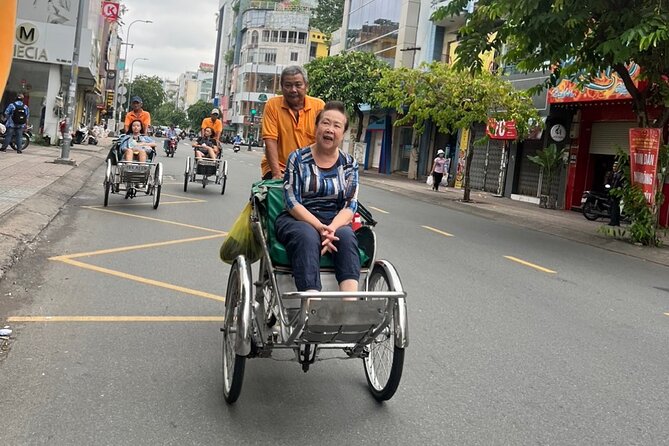
This is a private activity, so you’re not folded into someone else’s plan. Your group rides only with your own cyclo team, and the route is meant to be adjustable to what you want to see in the time you have.
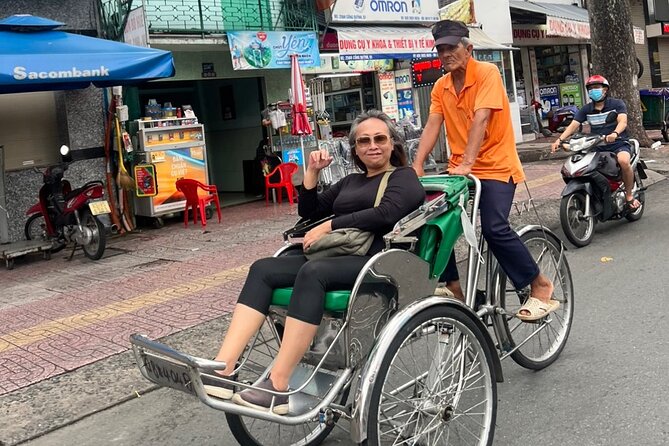
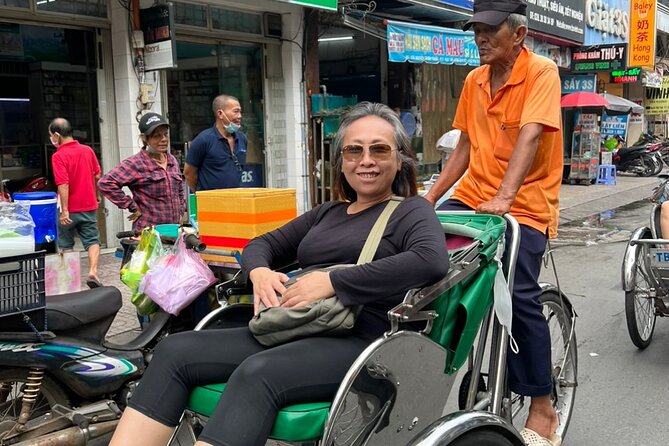
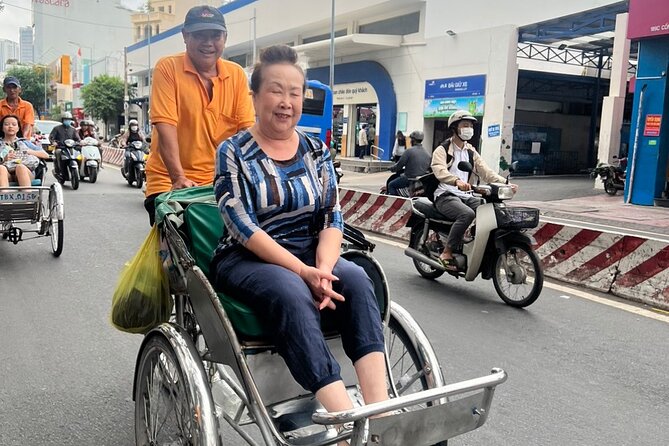
The cyclo itself is a three-wheeled rickshaw style ride. The key is the pace: it’s slow enough for photos, but smart enough to keep moving through busy streets. If you want a quick stop for pictures, you simply tell the guide or rider, and they’ll pause.
If you care about comfort, pay attention to the “private” part. You can ask for more time at a single place, or spend less time where you don’t care. That’s a big advantage versus group tours that keep you marching on someone else’s timeline.
Starting Strong: Notre-Dame Cathedral of Saigon and Photo-Stop Energy
Your tour begins with classic central-city landmarks, and one of the first heavy hitters is Notre-Dame Cathedral of Saigon. This Catholic cathedral is one of the best-known symbols of Catholicism in Vietnam, and it’s also a visual anchor for understanding how French-era architecture left a mark on Saigon.
What I like about starting here is the contrast. Ho Chi Minh City can feel loud and fast, and then you’re sitting in a cyclo that slows your eyes down. You can actually look at details instead of just snapping one quick photo and moving on.
A practical consideration: religious sites can be busy at certain times. If you want peaceful photos, plan your best shots for when the crowds thin, and don’t be shy about asking your guide when to time your walking minutes.
Nguyen Hue Boulevard: the Main Street that Helps You Orient Fast
Next up is Nguyen Hue Boulevard, a major downtown corridor in District 1. This is the kind of place that helps you orient fast, because it connects you to the city’s larger layout and gives you a clear sense of where landmarks sit relative to each other.
Why it works on a cyclo: you’re high enough to see street life glide by, but low enough that you’re not stuck staring at a screen. You can spot cafés, storefront rhythm, and the way locals move through the area.
If you’re trying to build a “mental map” on your first day in HCMC, this boulevard stop is a smart anchor. It’s also an easy win for travelers who want photos without turning the trip into a full walking day.
People’s Committee Headquarters and the Lam Son Theatre Facade
From there, you’ll pass the Ho Chi Minh City People’s Committee headquarters, a French colonial-era style building constructed from 1898 to 1908 and inaugurated in 1909. Even if you don’t know architecture terms, the building tells a story: it looks like authority made in stone, and it sits right in the center of modern city life.
Nearby, your route includes a theater with a facade facing Lam Son Square and Dong Khoi Street. It’s a central multi-purpose theater area, and it’s also a good “Saigon snapshot” stop because it shows how the city mixes old civic buildings with performance spaces and everyday traffic.
The value here isn’t only sightseeing. These stops connect the dots between colonial-era planning and the current-day city structure. From a cyclo, it’s easier to understand the streets than if you’re trying to navigate them yourself in peak traffic.
You can also read our reviews of more private tours in Ho Chi Minh City





Saigon River Views: a Slow Breather Between Big Stops
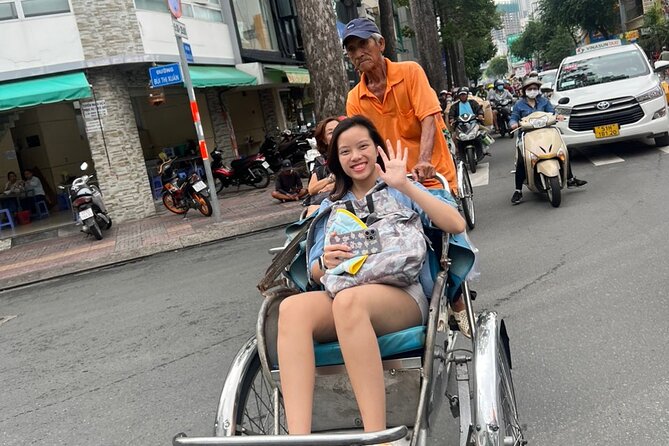
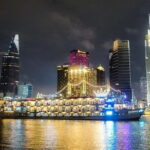
One of the more relaxing segments is the ride along the Saigon River for river views. It gives you open-air perspective and a break from the tight street walls of downtown.
This matters more than you might think. When your day is packed with landmarks, you start to feel like you’re collecting photos instead of experiencing places. A river-view stretch resets your senses and makes the next historical stops easier to take in.
If you’re the type who gets “temple fatigue” or “museum math,” this is a good point in the tour to slow down, take a few photos, and just watch.
Saigon Central Post Office: French-Era Details You’ll Want to See Up Close
Next, you’ll pass Saigon Central Post Office, located at No. 2 Paris Commune Square in District 1. It’s a French-built building completed in about five years, from 1886 to 1891.
Why it’s worth your attention: the post office isn’t just a pretty building. It’s an example of how communications infrastructure shaped city life during the French period. In other words, this isn’t only about the facade; it’s also about what the place was designed to do.
On a cyclo tour, you also get an advantage—time. Even if you only spend a short moment there, your guide’s pacing helps you look at what you might otherwise rush past.
A War-Time Story Beneath a Café: the Weapons Bunker
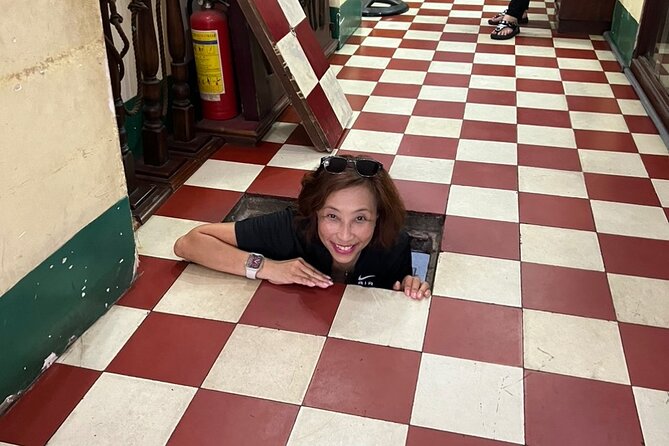
Here’s the stop that adds real emotional weight. Beneath a quaint café in downtown sits a secret bunker that served as a hiding place for nearly two tonnes of Vietcong weapons used during the 1968 Tet Offensive.
This is one of those sites where the value is in specificity. Instead of vague war talk, you’re looking at a concrete location with a clear timeline and purpose. It makes the history feel grounded in a place you can actually point to.
Because the bunker is tied to a sensitive story, you’ll get the most out of it if you listen to your guide’s explanation and take a moment before you snap photos. If you’re sensitive to heavy history, I’d still say it’s handled in a way that stays respectful—just don’t treat it like a quick “photo stop only.”
Independence Palace: when modern city life overlaps with war-era planning
Your route then takes you to Independence Palace, also publicly known as the Reunification Convention Hall. It was designed by architect Ngô Viết Thụ.
This place is important because it links planning, power, and political change in a single physical space. Even if you only get a view from the outside, it’s the kind of landmark where the building’s scale makes the story obvious.
What I’d do: if time allows, take a few minutes to look at the building from different angles. On a cyclo, you can often position yourselves for better views without needing to crowd around.
The Apartments Area Near Bàn Cờ Market: the 1968 US-Soldier Housing Connection
Next comes another historical site tied to the Vietnam War era: apartments constructed in 1968. These original homes housed soldiers serving in the US military during the Vietnam War, and they’re adjacent to Bàn Cờ Market.
Even though apartments aren’t usually on most “first day” sightseeing lists, this stop adds a dimension many visitors miss. You’re seeing how war planning affected everyday life at street level—where people lived, worked, and moved.
The good part about doing this on a cyclo is that you can keep moving after the emotional weight of the story, rather than being stuck in a long, exhausting walking segment.
Tan Dinh Church, the Pink Church: a Color Pop You Can Actually Enjoy
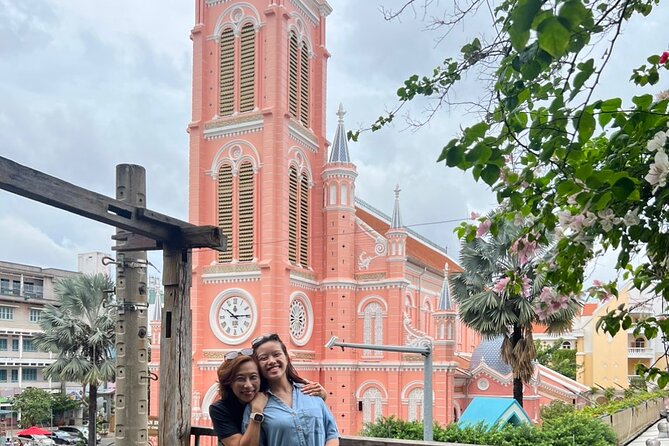
Your longer route option includes Tan Dinh Church, often called the Pink Church. It’s a Catholic church in Ho Chi Minh City, part of Tan Dinh parish.
The “pink” detail isn’t just a fun color for photos. It’s also a reminder that religion in Saigon isn’t limited to one landmark. The city has multiple faith spaces, each with its own community identity.
On a cyclo, you’re not forced to sprint between stops. That means you can slow down, take a few photos, and enjoy the visual switch from government buildings and war sites to a church that looks almost playful next to the surrounding streets.
Who This Tour Suits Best (and Who Might Want Another Option)
This cyclo tour fits best if you want a comfortable orientation to Ho Chi Minh City without turning the day into a workout. It’s also great for people who like photography, because the ride style naturally supports stop-and-shoot moments.
It’s private and meant for most travelers who can participate, so it’s also a good pick for couples or anyone wanting control over pacing. If you’re traveling with older family members or someone who prefers not to walk too much, cyclo time can be a relief.
If you’re the type who hates time spent in traffic and only wants “one big museum, then done,” you might find the ride segments less exciting. But even then, the river-view moment and the bunker stop tend to bring the day back into focus.
Also, if you’re on a very short schedule, keep it simple: choose the duration that lets you hit the core landmarks without stretching the rider-fee hours too far.
What You’ll Learn Without Feeling Like It’s a Lesson
The tour does a nice job balancing famous sights with a few places that explain why Saigon’s different eras overlap.
Here’s what I’d say you walk away with:
- You’ll understand how French-era civic buildings shaped downtown.
- You’ll see how war history isn’t only a museum story—it’s tied to locations under ordinary streets.
- You’ll get a sense of the city’s street rhythm from the comfort of a slow ride, not from a cramped bus seat.
Guide quality seems to be a core strength. In particular, I’ve seen a guide named Paul praised for being friendly, good at explaining what you’re seeing, and for taking plenty of pictures along the way. That kind of guided interaction can make a big difference on a short tour.
Should You Book This Panoramic Cyclo Tour?
I think it’s a strong “yes” if you want a relaxed, efficient way to see a lot of central Ho Chi Minh City without burning hours on navigation. The mix is smart: major landmarks, a river break, and a war-time bunker story that adds real meaning.
Be sure you choose your duration based on your total budget, because the 100,000 VND per hour rider fee can matter. If you’re comfortable factoring that in, the overall experience offers good value for time saved and comfort gained.
One more thing: if you might need to cancel last minute due to shifting travel plans, plan ahead. This is the kind of tour that’s easiest to enjoy when the schedule stays intact.
FAQ
How long is the Ho Chi Minh City panoramic cyclo tour?
You can choose options from 1 to 4 hours. The provided itinerary example includes a 2-hour tour.
Does the tour include hotel pickup and drop-off?
Yes. Pickup and drop-off at your hotel are included.
Is there an extra cost for the cyclo rider?
Yes. There is an additional cyclo rider fee of 100,000 VND per hour per cyclo.
What is included in the tour price?
The price includes an English-speaking guide, a flexible itinerary, government tax, and pickup/drop-off at your hotel.
Is this tour private?
Yes. It’s a private tour/activity, so only your group participates.
What major places will I see?
The route can include Notre-Dame Cathedral, Nguyen Hue Boulevard, the Ho Chi Minh City People’s Committee headquarters, the theater area facing Lam Son Square and Dong Khoi Street, Saigon Central Post Office, Independence Palace, Tan Dinh Church (the Pink Church), plus a ride along the Saigon River and stops connected to war-era sites and local market areas.