REVIEW · HO CHI MINH CITY
Ho Chi Minh City Shore Excursion With Local Tour Guide
Book on Viator →Operated by Saigon Tours · Bookable on Viator
A day in Saigon can feel like two cities at once. This shore trip strings together war-era history and classic colonial sights with AC comfort and an included lunch. I also like the small group size (max 15), so the guide can answer your questions without rushing you. One thing to consider: the War Remnants Museum includes very graphic images, so it’s not the lightest stop.
From the port, you get met with name signs and big smiles, then whisked in an air-conditioned vehicle. The pacing is built for a cruise day: you’ll hit major checkpoints, see how old and new Saigon sit side by side, and finish with a look at Chinatown and a Chinese temple. If you prefer a slower walk with lots of free time, you might feel a bit calendar-tight, since the day is packed into about 6 to 8 hours.
In This Review
- Key highlights worth planning for
- From the cruise port to Saigon in one smooth move
- Independence Palace: the building that changed the narrative
- Notre Dame Cathedral and the Saigon Central Post Office: a French-era pair
- Saigon Notre Dame Cathedral
- Saigon Central Post Office
- War Remnants Museum: powerful, heavy, and worth preparing for
- People’s Committee Building: French bones in Vietnamese use
- Chợ Lớn Chinatown and Ba Thien Hau Temple: a different Saigon
- Ba Thien Hau Temple
- Lunch in Ho Chi Minh City: the included meal you can plan around
- Price and value: is $69 a fair deal for this route?
- Timing and pacing: a 6 to 8 hour day that stays on track
- Who should book this shore excursion?
- Should you book this Ho Chi Minh City shore excursion?
- FAQ
- How long is the Ho Chi Minh City shore excursion?
- What’s included in the price?
- Do I need to pay for tickets at each stop?
- Is there a group size limit?
- Is lunch included, and can they handle dietary needs?
- What if the weather is poor or I need to cancel?
Key highlights worth planning for
- AC pickup from the port with clear, name-sign meeting so you don’t waste time in the crowd
- Independence Palace for a close look at Vietnam’s political shift from the Diem era to 1975
- Notre Dame Cathedral + Central Post Office as a tidy colonial-era two-stop pair
- War Remnants Museum with included entry, but bring emotional readiness for graphic visuals
- Chợ Lớn (District 5) Chinatown plus Ba Thien Hau Temple for a very different cultural feel
From the cruise port to Saigon in one smooth move
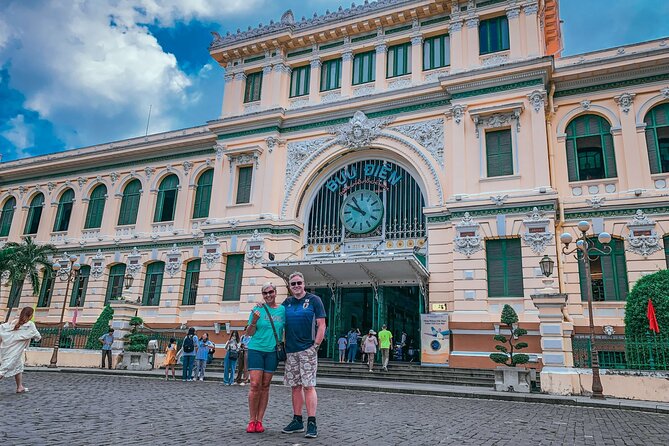
The day starts right where shore excursions should: you’re waiting at the port and your group is met with name signs. That small detail matters in Ho Chi Minh City, because moving between the harbor and the sights can be a time trap if you’re figuring it out on your own. Here, you climb into an air-conditioned car or minibus and get underway.
You also get an English-speaking guide, which I find makes a huge difference with Saigon’s history. The city isn’t just pretty buildings; it’s layers of French colonial rule, American-era war years, and today’s fast change. With a guide, you get the story threads instead of just photo stops.
Group size is kept to a maximum of 15, and in practice that tends to mean the questions actually land. In the feedback I saw, guides like Alex and Jack stood out for making a cruise day feel effortless, and for keeping communication easy (including WhatsApp message exchanges before departure). That’s the kind of practical reassurance you want when you’re on a ship schedule.
You can also read our reviews of more guided tours in Ho Chi Minh City


Independence Palace: the building that changed the narrative
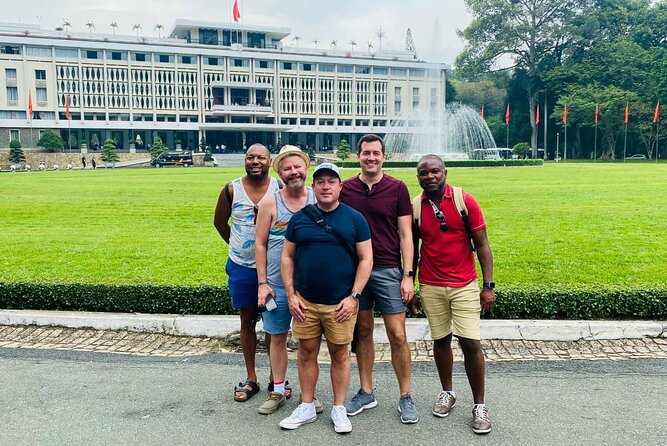
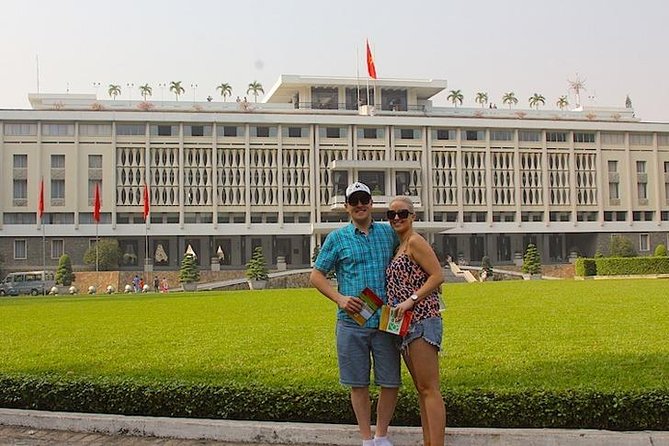
Independence Palace is the anchor for understanding modern Vietnam. It was the base of General Ngo Dinh Diem until his death in 1963, and the palace became globally known in 1975. Even if you don’t love museums, this stop tends to hit because you can see the setting where decisions were made.
Your visit is about 45 minutes with entry included. That’s enough time to get oriented and to focus on the rooms and official spaces people most associate with the palace’s historic moment. The value here is not just the name on a gate—it’s how the building layout helps you understand power and control, and how those spaces shift meaning depending on who’s in charge.
A practical note: this is one of the stops where you’ll want to listen, not just look. The guide’s job is to connect what you’re seeing to the bigger timeline, so if you want context, arrive mentally ready for it.
Notre Dame Cathedral and the Saigon Central Post Office: a French-era pair
Next up is a quick but satisfying combination: Saigon Notre Dame Cathedral and the Central Post Office, both next to each other around Paris Square.
Saigon Notre Dame Cathedral
This cathedral dates to the late 1880s, built by French colonists. It’s also one of the few remaining strongholds of Catholicism in a country that’s largely Buddhist. Your stop is about 30 minutes and admission is free, so you’re not spending your day waiting in ticket lines.
The trick with this type of sight is to look at it as more than architecture. The cathedral’s presence in Saigon speaks to the era when religion, politics, and colonial identity were intertwined. Take a few minutes to notice the exterior and the feel of the surrounding square, because that context is what makes it make sense.
Saigon Central Post Office
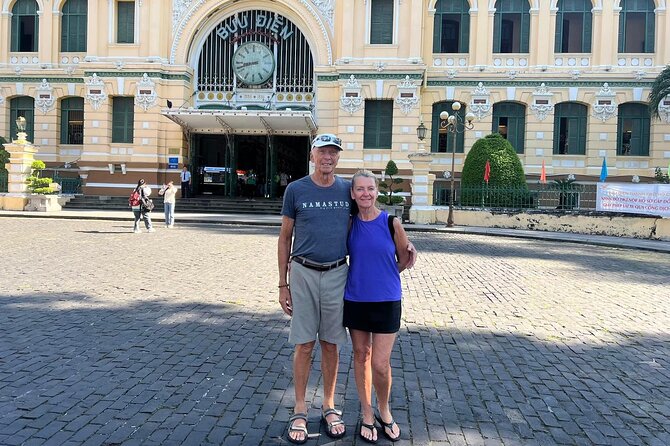
Right next door, the Central Post Office is described as one of the grandest in Southeast Asia, and it’s a beautifully preserved remnant of the French colonial period. Here too, you get about 30 minutes, with admission free.
In a normal trip, you might skip a post office. But in Saigon, this one functions like a time capsule: the building tells you how communications and administration worked in the colonial era. If you like structure and design details, you’ll enjoy this stop. If you don’t, you’ll still get the historical meaning without needing a background lecture.
You can also read our reviews of more city tours in Ho Chi Minh City




War Remnants Museum: powerful, heavy, and worth preparing for
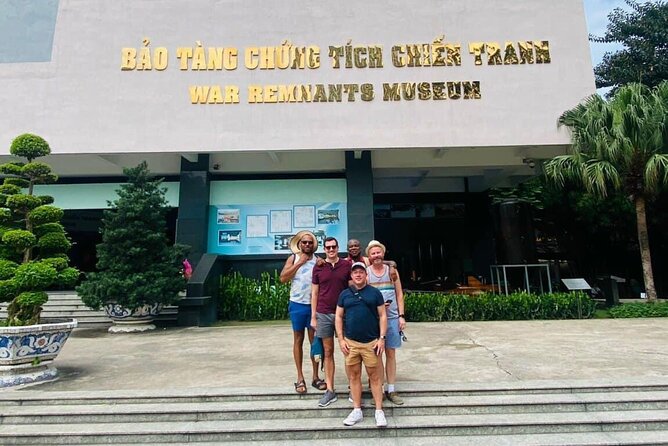
After lighter sights, the day turns serious at the War Remnants Museum. It opened to the public in 1975, and it was once known as the Museum of American War Crimes. Today, it’s still a shocking reminder of the long and brutal Vietnam War.
Your visit is about 45 minutes, and admission is included. This is the stop where you should set expectations: the museum includes graphic photographs and visuals. You don’t need to be tough for the sake of being tough, but you do need to know what you’re walking into. If you’re traveling with kids, you may want to think carefully about whether it’s appropriate for your group.
What makes the museum valuable on a shore day is the guide. You’ll get help making sense of what you’re seeing, instead of just staring at images and hoping it connects. The goal isn’t to turn your stomach into a lesson; it’s to understand the human cost and the way memory is preserved through exhibitions.
People’s Committee Building: French bones in Vietnamese use
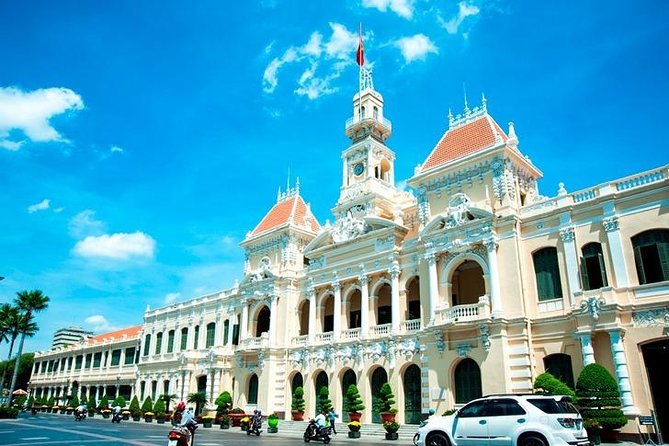
The People’s Committee Building (Saigon in particular) is a calmer, more architectural stop. It features well-preserved French colonial architecture set in a spacious garden landscape. It was originally constructed as a hotel in 1898 by French architects and later transformed into a government space.
You’ll spend about 30 minutes here, and admission is free. This stop works well if you like seeing how a city repurposes old structures instead of wiping them out. The building doesn’t just represent the past—it shows how regimes and functions change over time.
Pay attention to how the gardens shape the mood. In a city where traffic can be loud and chaotic, this kind of built-in open space gives you a breathing pause before you head to the cultural neighborhood stop.
Chợ Lớn Chinatown and Ba Thien Hau Temple: a different Saigon
Then you shift to a place that feels like another world within Ho Chi Minh City: Chợ Lớn, also known as District 5 Chinatown. Your time here is about an hour, and it’s a major cultural highlight.
Chợ Lớn has roots dating back to 1778 and is described as Vietnam’s largest Chinatown. It also has a history of Chinese communities hiding here from the Tay Son and shaping the neighborhood over generations. That’s not just trivia—it explains why the food, markets, and temple culture have such a distinct look and feel compared with central Saigon.
Ba Thien Hau Temple
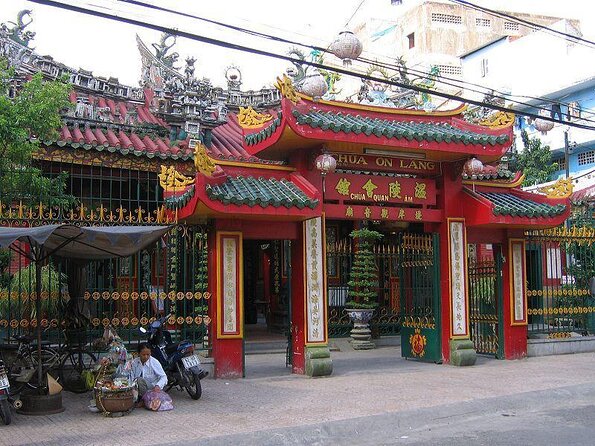
After Chợ Lớn, you visit Ba Thien Hau Temple for about 20 minutes. This is a Chinese sea goddess temple dedicated to Mazu, believed to protect and rescue ships and people at sea. The temple’s spiritual story ties directly to how coastal communities once lived and worked.
This stop is often the one people remember because it’s not just a single big monument. It’s a living place with symbols, worship practices, and a different rhythm from the political history stops earlier in the day.
Practical tip: temples are places of respect. Dress modestly if you can, and follow your guide’s cues. Even when you’re just sightseeing, it helps to remember you’re stepping into someone’s faith space.
Lunch in Ho Chi Minh City: the included meal you can plan around
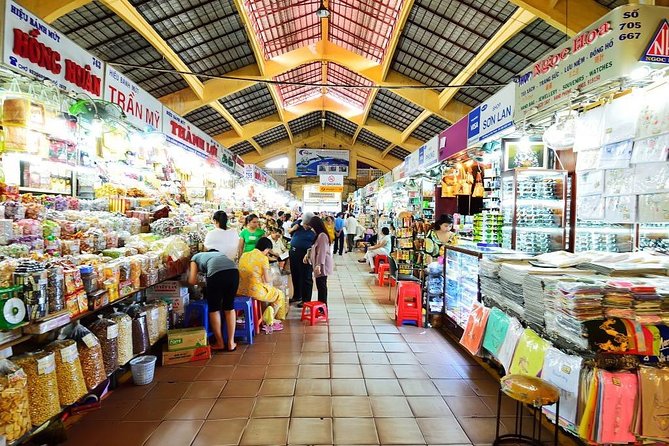
Lunch is included, and the tour notes that they can cater for dietary requirements if you get in touch beforehand. You’ll also get a bottle of mineral water during the day.
On a shore excursion, this matters more than it sounds. Ho Chi Minh City can tempt you to snack your way through a day and still end up tired and cranky. Having lunch handled keeps your energy stable, and it saves you time searching for something you can eat quickly without a language barrier.
If you have dietary needs, don’t wait. Email or message ahead so they can plan the right option. Guides who customize the itinerary often do the same for meals, and that tends to make the whole day easier.
Price and value: is $69 a fair deal for this route?
At $69 per person, this tour positions itself as a solid value for a cruise shore day. You’re paying for more than entry tickets. Included in the price are transportation (AC vehicle), an English-speaking guide, all entrance fees, lunch, and bottled water.
Here’s where the value logic really shows up for most people:
- You don’t have to figure out transport across multiple districts while sticking to a ship timeline.
- Entrance fees are handled, including the key paid stop at the War Remnants Museum and the major site at Independence Palace.
- You get a guide who can explain what you’re looking at, which saves you from turning your day into an expensive DIY scramble.
The one extra cost you should remember is gratuities for your guide and driver, which isn’t included. That’s normal in this kind of service, but I like to flag it so you’re not surprised.
If you’re traveling solo or as a couple and think you can do everything by taxi, you might spend less money—but you’ll likely spend more time and energy. For many cruise travelers, time is the real cost.
Timing and pacing: a 6 to 8 hour day that stays on track
The itinerary is designed to fit into about 6 to 8 hours, which is usually the sweet spot for a shore excursion: enough time to cover major landmarks without turning the trip into a 10-hour marathon.
The good news is the structure: the stops alternate between story-heavy sites (Independence Palace and War Remnants Museum) and visual, cultural checkpoints (cathedral, post office, Chinatown, temple). That keeps the day from feeling like one long museum slog.
The tradeoff is that each stop is fairly time-limited, so you won’t have hours to wander the way you might on a land trip. If you want deeper museum time or lots of shopping time in Chợ Lớn, you’ll have to be selective or plan a separate day on your own.
Who should book this shore excursion?
I’d point you toward this tour if you want a high-yield intro to Ho Chi Minh City without the stress of transit and ticketing. It’s a strong choice if you’re interested in Vietnam War context, French colonial-era architecture, and the cultural texture of Chợ Lớn.
It also suits cruise passengers. A big plus in the feedback I saw was how guides made cruise logistics feel manageable. People highlighted guides like Jack, Alex, and Dingo for clarity, patience, and flexible explanation styles, including customizing the day to match what their group cared about.
If your idea of a great trip is chatting with a guide, asking questions, and getting your bearings fast, this fits. If you prefer unstructured wandering and long independent breaks, you might find the schedule a bit tight.
Should you book this Ho Chi Minh City shore excursion?
Yes, if you want a well-structured overview day with air-conditioned transport, an English guide, included lunch, and major sights that cover both Saigon’s past and present. The route hits the places that most visitors remember for a reason: Independence Palace, Notre Dame Cathedral, the Central Post Office, the War Remnants Museum, and then the cultural shift into Chợ Lớn and Ba Thien Hau Temple.
Book it especially if you’re on a cruise or you only have one day in the city and you don’t want to waste time figuring things out. I’d also say it’s worth it if you appreciate guidance—because the emotional weight of the War Remnants Museum and the context of independence-era history are exactly where a good guide helps you see more than just buildings.
FAQ
How long is the Ho Chi Minh City shore excursion?
It runs about 6 to 8 hours.
What’s included in the price?
An English-speaking tour guide, air-conditioned transportation, all entrance fees, lunch, and a bottle of mineral water are included.
Do I need to pay for tickets at each stop?
Entrance fees are included overall. Some sights like Notre Dame Cathedral of Saigon and the Central Post Office are listed as free admission, while Independence Palace and the War Remnants Museum have included admission.
Is there a group size limit?
Yes. The maximum group size is 15 travelers.
Is lunch included, and can they handle dietary needs?
Lunch is included. The tour notes they can cater for dietary requirements if you contact them beforehand.
What if the weather is poor or I need to cancel?
The experience requires good weather. If it’s canceled due to poor weather, you’ll be offered a different date or a full refund. You can cancel for a full refund if you cancel at least 24 hours in advance.