REVIEW · HO CHI MINH CITY
Ho Chi Minh City Private Tour: Half Day, Full Day, Cu Chi Tunnel
Book on Viator →Operated by Saigon Foody Tour · Bookable on Viator
One great day in Saigon can cover a lot. This private tour strings together politics, faith, and daily life in Ho Chi Minh City, with an English-speaking guide and hotel-area convenience.
I like that the pace gives you solid time at the big hitters like the War Remnants Museum and the Jade Emperor Pagoda, not just quick photo stops. I also like how the route mixes major sights (Independence Palace, Central Post Office) with hands-on culture like a lacquerware factory and Cholon market areas. One thing to consider: it is packed, so the shorter stops (like Notre Dame) mean you’ll want to be ready with your camera and a quick game plan.
In This Review
- Key Highlights You’ll Actually Feel
- How This Saigon Private Tour Connects the Dots in 10 Hours
- Independence Palace: The Rooms Where History Changed Tone
- French Colonial Photos: Central Post Office and Notre Dame Cathedral
- War Remnants Museum: Photography, Memory, and the Cost of Conflict
- Jade Emperor Pagoda: Seeing Belief Through Worship, Not Just Sightseeing
- Ba Thien Hau Temple and Cholon: Two Temples, Different Energy
- Lacquerware Factory: Watching Craft Work Become Real
- The Secret Weapon Cellar: War History in a Narrow Alley Space
- Cu Chi Tunnel: What the Title Promises vs. This Route’s Stops
- Price and Logistics: Is $33.54 Good Value?
- Who This Tour Fits Best (And Who Might Want a Different Option)
- Should You Book This Private Ho Chi Minh City Tour?
- FAQ
- How long is the Ho Chi Minh City private tour?
- Is this tour private or shared?
- What’s included in the price?
- Do I need to buy tickets separately for the stops?
- Where do you pick me up and drop me off?
- Is bottled water provided?
- Do I need to tip the guide or driver?
- Do you use a mobile ticket?
- What is the cancellation policy?
- Which major sites are included in the route?
Key Highlights You’ll Actually Feel
- True private touring: only your group in an air-conditioned vehicle, with pickup and drop-off in District 1
- Major history in manageable time: Independence Palace, War Remnants Museum, and several faith sites
- A craft stop that explains what you’re looking at: lacquerware and how it’s made
- Cholon gets real: temple + Binh Tay Market contrast with more tourist-heavy areas
- War history doesn’t stay in a textbook: Secret Weapon Cellar brings it into physical space
How This Saigon Private Tour Connects the Dots in 10 Hours
This is one of those Ho Chi Minh City routes that feels like it was designed to help you understand the city, not just tick off landmarks. In about 10 hours, you move through French colonial architecture, the story of reunification-era power, Vietnam War memory, Chinese-influenced worship, and local craft work.
You’ll get plenty of guided context along the way, which matters here. Saigon’s buildings and museums can look like separate worlds until someone explains the connections: why certain architecture exists, why particular temples draw crowds, and why photography and weapon relics were chosen for display.
The comfort part is also practical. You’re in an air-conditioned vehicle, and you get pickup and drop-off within District 1 (the center of the city). For a long day in Vietnam’s heat, that alone can make the whole experience feel easier.
You can also read our reviews of more city tours in Ho Chi Minh City
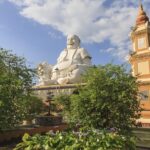

Independence Palace: The Rooms Where History Changed Tone
Your day starts at the Independence Palace, where it once functioned as the office and residence of South Vietnamese President Nguyen Van Thieu. The point isn’t just that it’s famous. It’s that you can see how leadership operated from an official compound—hallways, rooms, and the logic of decision-making space.
You get about 40 minutes here, and that’s a good length for a first pass. The challenge is that if you love every detail, you could want more time. But with only half an hour, it’s best to focus on the big story elements your guide points out—especially how the palace reflects the period it was built to serve.
Practical tip: bring your questions. This is the sort of place where even small details can become meaningful once explained.
French Colonial Photos: Central Post Office and Notre Dame Cathedral
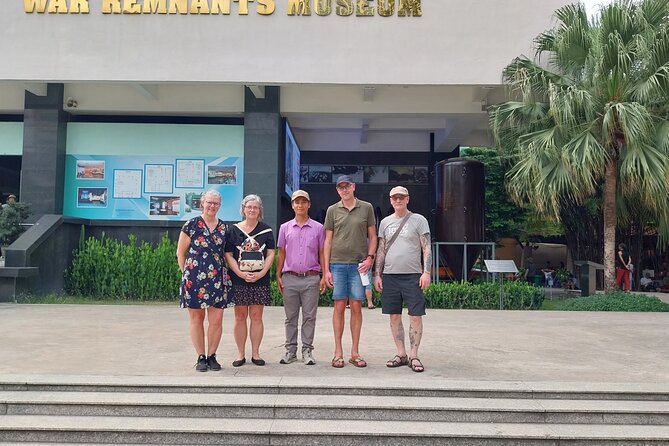
Next comes the classic Saigon photo duo: Saigon Central Post Office and Notre Dame Cathedral of Saigon.
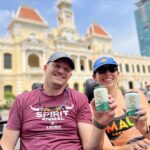
The Central Post Office has a French colonial feel, and it’s placed in the middle of the city where it’s easy to grab iconic shots. You’ll have about 15 minutes and admission is included, so you aren’t stuck guessing what’s open. The value here is not only architecture—it’s what the post office represents in the city’s colonial-era layout and communications system.
Then you get Notre Dame Cathedral of Saigon for around 5 minutes. That’s short, so think of this as a quick stop for photos and a brief look at the building in context. If you want longer time inside, you’d need to plan a separate visit. For this tour, it’s about getting the shot and moving on with momentum.
Practical tip: wear something comfortable for quick stops. These are time-efficient landmarks, not long museum sessions.
War Remnants Museum: Photography, Memory, and the Cost of Conflict
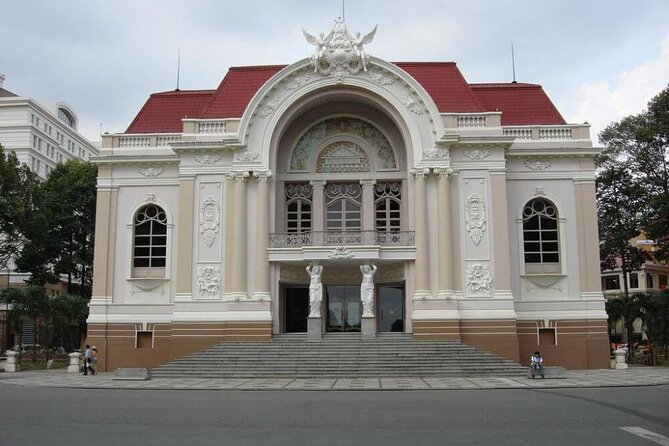
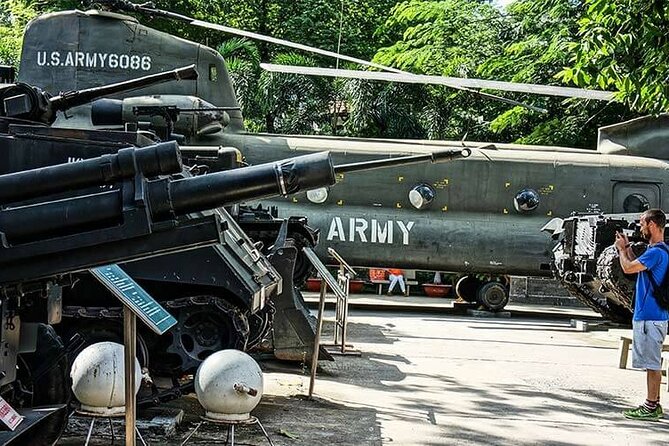
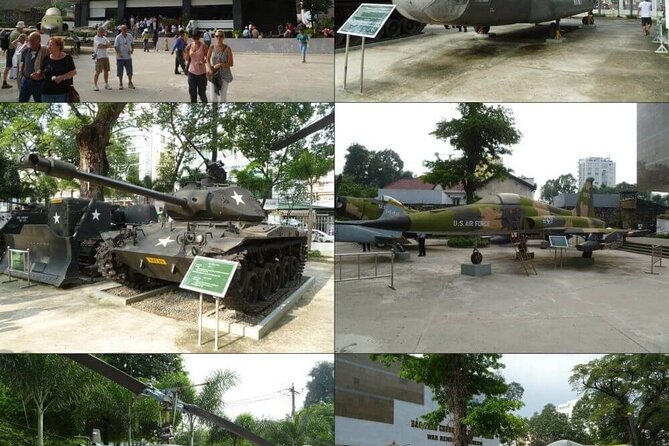
The War Remnants Museum is one of the emotional anchors of the route, and you’ll spend about 50 minutes here. Admission is included, and the museum is structured to make you face the impacts of war rather than just read facts.
A standout detail in the tour description is the museum’s emphasis on images connected to deceased American and Vietnamese photographers and journalists from French and American conflicts. That matters because it changes the feel of the visit. It’s not just about weapons and dates; it’s about the people who documented suffering and what they tried to show.
You’ll also see a vintage collection of military equipment mentioned as part of the tour flow. This gives your day balance: you move from the architecture of power to the machinery of war to the human stories carried by photographs.
Possible drawback: this stop can feel heavy. If you know you get overwhelmed easily, plan to take a moment outside or near calmer areas when you need a breather. The rest of the day still moves, so pacing your emotions is part of making the tour work for you.
Jade Emperor Pagoda: Seeing Belief Through Worship, Not Just Sightseeing
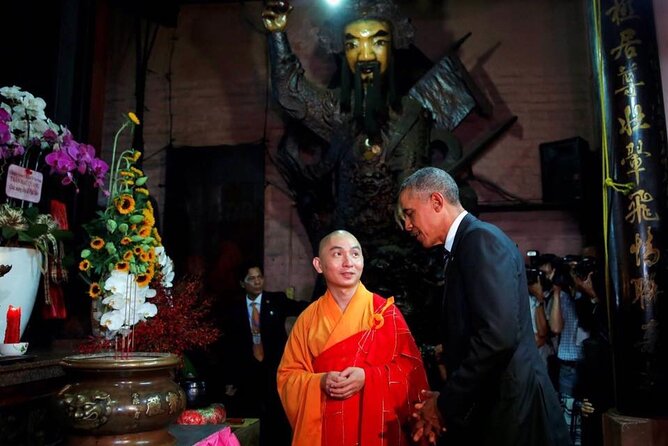
After the museum, you head to Emperor Jade Pagoda (Chùa Ngọc Hoàng), with about 30 minutes here. The background is specific: it was built from 1892 to 1900 by a Chinese man named Lưu Minh, and the tour description emphasizes the religious beliefs tied to Buddhism and Taoism.
This is a key difference from the Western-style landmarks earlier in the day. Here, you’re not just looking at architecture—you’re seeing how people worship. That’s what makes the pagoda stop more meaningful than a quick glance.
Practical tip: dress modestly and watch how locals behave. You’ll get more out of the stop if you treat it like a working place of worship instead of a pure photo set.
You can also read our reviews of more private tours in Ho Chi Minh City



Ba Thien Hau Temple and Cholon: Two Temples, Different Energy
Next is Ba Thien Hau Temple, located in Cholon (Chinatown), with about 30 minutes. The tour description calls it one of the oldest Chinese temples in Ho Chi Minh City, built around 1760 by the Cantonese congregation.
This makes the temple stop feel like a timeline in itself. You’re seeing one set of worship traditions in the Jade Emperor Pagoda (with a late 19th-century origin), then shifting to an older Cholon temple (mid-18th century). That contrast helps you understand how Chinese communities shaped different corners of the city over time.
From there, you’ll also visit Binh Tay Market for about 30 minutes. This part is designed to feel less touristy than places like Ben Thanh Market, with a more wholesale trading atmosphere. You get a rawer look at everyday exchange—goods, crowds, and movement that tends to feel more real than staged shopping streets.
Possible drawback: the market area can be a lot at once. If you prefer calm, limit how long you wander on your own inside the market and let the guide steer you through the most useful sections.
Lacquerware Factory: Watching Craft Work Become Real
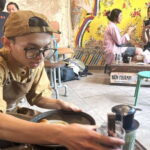
One of the most satisfying stops in the itinerary is the lacquerware factory (PHUONGNAM LACQUERWARE) with about 30 minutes. This is not a generic souvenir stop. The tour description explains that lacquerware as decoration came from China as early as the first century CE, and it notes the basics: the lacquer is resin from a tree mixed with colored pigments.
That background turns the craft from objects into process. You start seeing lacquerware as layered work—material science plus design plus time. You also get to watch daily life and the working rhythm of craftsmen, which is the kind of detail that helps you tell the difference between mass-produced items and real handmade work.
Practical tip: if you want to buy lacquerware, treat it like art, not a cheap keepsake. You’ll get more confidence from the explanation first, so you know what questions to ask.
The Secret Weapon Cellar: War History in a Narrow Alley Space
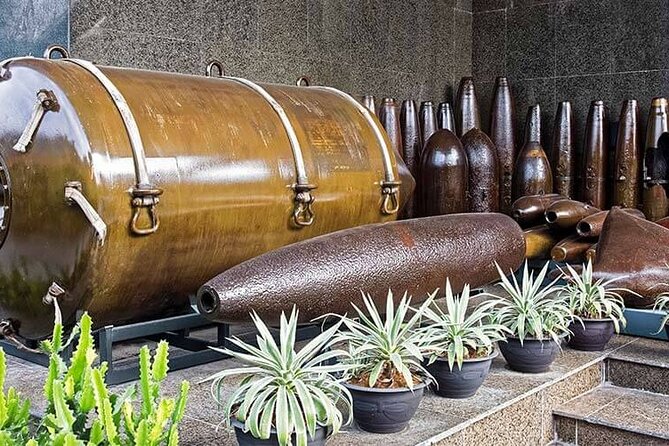
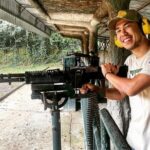
In District 3, you’ll visit the Hầm Vũ Khí Bí Mật Secret Weapon Cellar, also called the Saigon Rangers secret weapon cellar. The time is about 20 minutes, and the tour description frames it as a hidden relic in a narrow alley.
This stop is powerful because it feels like discovery. Even before you learn what’s inside, the context is strange: the building exterior looks ordinary. Then you’re guided into a space connected to Vietnam War “secret weapon” storage, adding a concrete layer to what you’ve already seen at the War Remnants Museum.
Practical tip: keep your expectations realistic about time. With 20 minutes, the goal is understanding the idea and what makes this cellar memorable—not a long walkthrough.
Cu Chi Tunnel: What the Title Promises vs. This Route’s Stops
Your experience name includes Cu Chi Tunnel, but the detailed stop list you have here focuses on central Ho Chi Minh City sights: Independence Palace, post office, Notre Dame photo stop, War Remnants Museum, Jade Emperor Pagoda, lacquerware, Cholon temple and market, and the Secret Weapon Cellar.
So here’s the smart move: confirm whether Cu Chi Tunnel is actually part of your booked schedule. If it is, it should affect the day length and travel time. If it isn’t, you may simply be looking at a central-city history and culture route with included sites and tickets.
Don’t guess—ask your provider or check your final itinerary details before you go.
Price and Logistics: Is $33.54 Good Value?
At $33.54 per person, this tour has a strong value angle, especially because it includes more than just a guide. You get:
- Air-conditioned vehicle
- English-speaking tour guide
- Pickup & drop-off within District 1 (center of city)
- Entrance fees
- Bottled water
- A mobile ticket
- It’s a private tour, meaning only your group participates
When you add up admission fees across major stops, plus transportation and a full guide day, the price starts to make sense quickly. And since you’re moving between very different parts of the city, paying for transport upfront saves mental energy.
The one cost you should plan for is tipping/gratuities and any personal expenses. If you stick to bottled water and included admissions, your budget stays predictable.
Also note the booking timing: on average, this kind of tour is booked about 58 days in advance, which suggests it’s a popular option for people trying to lock in a convenient schedule.
Who This Tour Fits Best (And Who Might Want a Different Option)
This is a great fit if you:
- Want a guided overview of Saigon that covers major history and local culture in one go
- Prefer private pacing over a crowded group schedule
- Like museum context and site explanations, especially around war memory and political space
It might be less ideal if you:
- Want lots of free time to wander independently for long stretches
- Need longer than 5 to 15 minutes at iconic architecture stops like Notre Dame
- Are sensitive to heavy subject matter and would rather split the day with lighter experiences
For many people, the sweet spot is a history-minded visit where you still get a taste of daily life through markets and craft.
Should You Book This Private Ho Chi Minh City Tour?
If you want one day that helps you make sense of Ho Chi Minh City—colonial landmarks, reunification-era power spaces, the museum’s war memory, and Chinese-influenced worship plus craft—this is a smart booking. The included entrance fees and transportation cut down the annoying parts of planning, and the private format keeps the pace comfortable for your group.
Just confirm the Cu Chi Tunnel piece tied to the tour name. If it’s not in your schedule, you’ll still get a very solid Saigon core day. If it is included, great—you’re stacking two major experiences.
FAQ
How long is the Ho Chi Minh City private tour?
It’s listed as approximately 10 hours.
Is this tour private or shared?
It’s a private tour, so only your group participates.
What’s included in the price?
The tour includes an air-conditioned vehicle, an English-speaking tour guide, pickup and drop-off within District 1 (center of city), entrance fees, and bottled water.
Do I need to buy tickets separately for the stops?
No. The stop list indicates admission ticket included for the attractions in the itinerary.
Where do you pick me up and drop me off?
Pickup and drop-off are offered within District 1 – Centre of City, as mentioned.
Is bottled water provided?
Yes. Bottled water is included.
Do I need to tip the guide or driver?
Tipping/gratuities are listed as not included, so you should plan for that.
Do you use a mobile ticket?
Yes, mobile ticket is listed as a feature.
What is the cancellation policy?
You can cancel for a full refund up to 24 hours in advance of the experience start time. If you cancel less than 24 hours before, there’s no refund.
Which major sites are included in the route?
The itinerary includes Independence Palace, Saigon Central Post Office, Notre Dame Cathedral of Saigon (photo stop), Emperor Jade Pagoda, War Remnants Museum, Ba Thien Hau Temple, Binh Tay Market, and the Secret Weapon Cellar.