REVIEW · HO CHI MINH CITY
Ho Chi Minh City Motorbike Tour with Student | Saigon Adventure
Book on Viator →Operated by Saigon Adventure · Bookable on Viator
If you want Saigon at full volume, this is it. You’ll cruise past the big landmarks and then peel into side streets where daily life happens, all while a student guide and driver handle the traffic chaos.
I especially like the mix of major icons and “you’d miss this on your own” stops, like the Thich Quang Duc Monument and the Nguyen Thien Thuat Oldest Apartment area. I also like that your tour team talks safety seriously, with helmets and scooter accident insurance up to $5,000.
One thing to consider: it’s hot, loud, and fast—so if you’re nervous about riding behind someone, choose your timing wisely and pack water. And if you’re hoping for a super deep lecture at every stop, be aware guide detail can vary.
In This Review
- Key things I’d bookmark before you go
- Scooter seat view: why Saigon clicks faster this way
- Price and what you actually get for $23
- From Saigon Cathedral to Central Post Office: the “big three” landmarks
- Independence-era passes and why the War Monument stop hits
- Chinatown, Nguyen Thien Thuat apartments, and markets that feel real
- Flower Market and Cambodian Market snack stop: the food timing matters
- The hidden pagoda moment: when the city quiets down
- How the student-driver setup works in real life
- What the 3–4 hours feels like for first-timers
- The food add-on: how to plan your lunch (or skip it)
- Tips so you feel confident on the back seat
- Who should book this Saigon motorbike tour?
- Should you book this Ho Chi Minh City Motorbike Tour?
- FAQ
- How long is the Ho Chi Minh City motorbike tour?
- What’s the price for the tour?
- Is pickup and drop-off included?
- Are helmets provided?
- Is there a snack included?
- Do they offer street food during the tour?
- Is lunch included?
- What does the safety coverage include?
- Can I cancel for a full refund?
Key things I’d bookmark before you go

- Student-led tour team: You’ll often ride with young drivers who also share their city stories and help you feel comfortable.
- Safety focus: Helmets on, and scooter accident insurance up to $5,000.
- A smart route mix: Famous sights like the Saigon Cathedral and Central Post Office plus quieter history and market stops.
- Snack included: A snack stop at the Cambodian Market, with a cold drink noted by guides on some departures.
- District 1 and 3 pickup: Free hotel pickup/drop-off if you’re staying in those areas, otherwise a small extra fee.
Scooter seat view: why Saigon clicks faster this way
Ho Chi Minh City is built for scooters. Walk two blocks and you’ll understand why a motorbike tour feels like the “normal” way locals move through the day. From the back seat, you see the rhythm of the city: storefronts opening, workers heading out, bikes weaving, and neighborhoods that don’t show up on a typical bus route.
This tour is designed as a quick city orientation: you’ll hit the headline sights first, then shift toward lesser-known corners. That pacing matters. It’s easier to connect the dots when you start with big, recognizable places, then compare them to what you find in the quieter areas afterward.
You can also read our reviews of more city tours in Ho Chi Minh City

Price and what you actually get for $23
At $23 per person for about 3–4 hours, this is priced like a value tour, not a premium private experience. The real reason it works is what’s included:
- a friendly English-speaking guide
- English-speaking drivers who do the navigating
- helmet
- free hotel pickup/drop-off in District 1 and District 3
- a snack stop at the Cambodian Market
That pickup detail is huge for value. If you’re staying inside those districts, you save time and hassle getting to the starting point. If you’re outside them, there’s an added pickup/drop-off cost, listed as an extra $3–$5. Either way, you’re not paying extra just to be chauffeured across town.
From Saigon Cathedral to Central Post Office: the “big three” landmarks

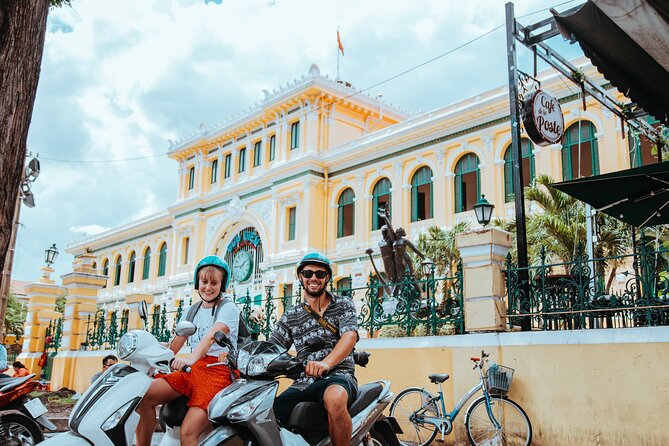
Your tour typically begins in the District 1 area, and the opening stretch often focuses on the most photo-friendly sights. Expect the Saigon Cathedral (Notre-Dame Basilica area) and the Central Post Office. These places are famous for a reason: they’re crisp examples of French-era architecture, and they make a good anchor for what came before modern Saigon.
Here’s the practical value: when you later pass neighborhoods that feel more local and everyday, you’ll better understand how the city layers time. The guide’s job is to connect what you’re seeing—buildings, streets, and passing landmarks—so it doesn’t feel like random stops from a checklist.
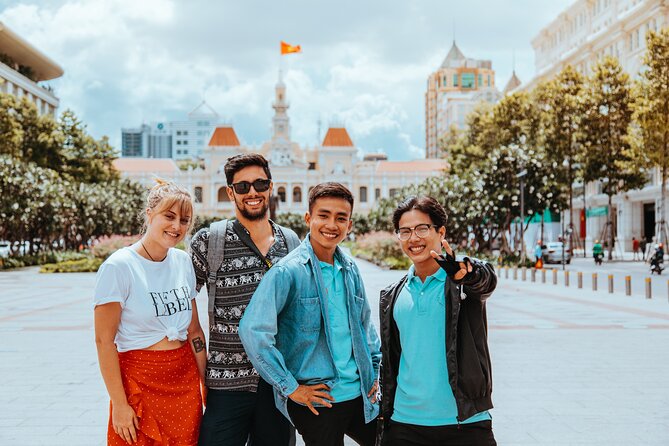
Next, the route generally moves through other District 1 highlights like the Opera House and City Hall area, plus views that include pass-bys for the War Museum and Reunification Palace. You may not spend long inside every building, but you get the quick “I know where I am now” effect, which is perfect for your first half-day.
Independence-era passes and why the War Monument stop hits
The tour doesn’t only cover happy, postcard Saigon. One of the most moving stops is the Thich Quang Duc Monument, tied to the story of the monk whose act during the Vietnam War became a powerful symbol. It’s not just a photo stop. Guides usually explain the events and what followed, and it lands differently when you’ve just been riding through the city’s daily traffic.
In a short tour, this is a smart choice: it adds context without draining your whole day. If you want a city tour that stays human—scared, sad, resilient—this is one of the moments that gives it weight.
Chinatown, Nguyen Thien Thuat apartments, and markets that feel real
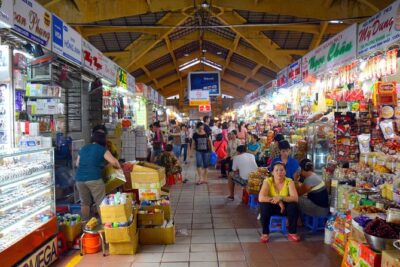
After the main landmarks, the tour shifts into “live here” territory. You’ll spend time around local markets and pass through China Town. This is where you start seeing the city’s surfaces: shopfront chatter, quick purchases, the smell of food, and small signs of what people do every day.
One of the more interesting stops is the Nguyen Thien Thuat Oldest Apartment area. Instead of treating apartments like background, your guide helps you understand how the city’s housing and community life evolved. Even if you don’t know much about Saigon’s history, you’ll still get something practical: what daily living looks like in a dense city that never stopped adapting.
This part also gives you a slower rhythm. Yes, you’re still riding, but you’ll get the brief breaks where you can look around and actually process.


Flower Market and Cambodian Market snack stop: the food timing matters
Midway, you’ll hit a colorful Flower Market area and then the Cambodian Market, where a snack is included. The tour specifically notes a cold drink and snack here, and some guides also point out what to try so you don’t feel stuck guessing.
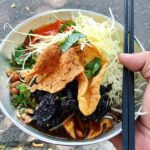
This is one of those “small inclusion, big payoff” choices. In Saigon, food isn’t just about taste. It’s a shortcut to understanding how locals shop, eat, and build routines around short breaks. A snack stop makes the tour feel like part of the day, not an activity stuck on the edge of your trip.
If you choose the optional street food tasting and sightseeing, note how it works: it focuses on the unseen parts, not the highlight section. In other words, you’re adding extra local flavor to the market and side-street portion rather than extending the big landmark segment.
The hidden pagoda moment: when the city quiets down
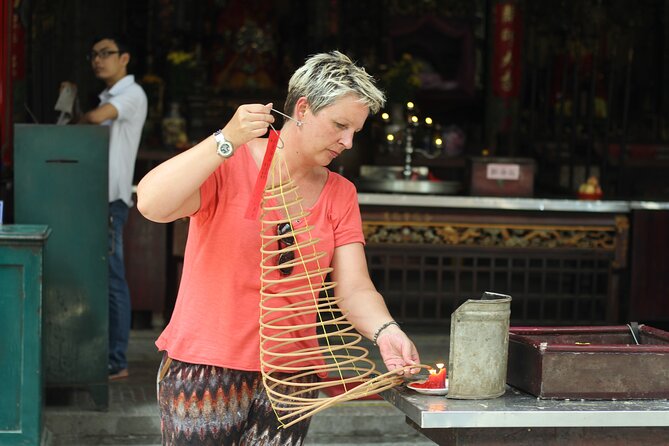
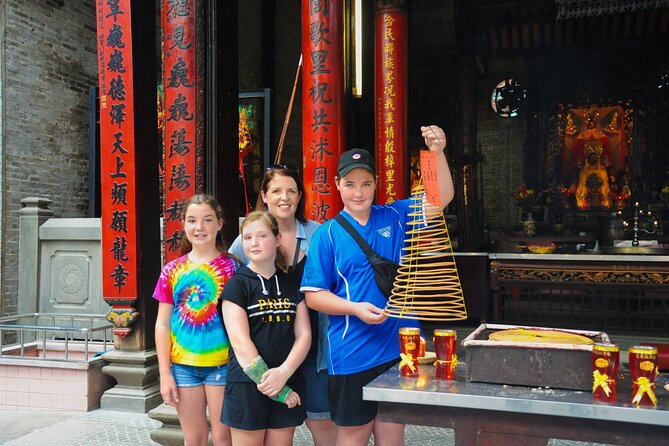
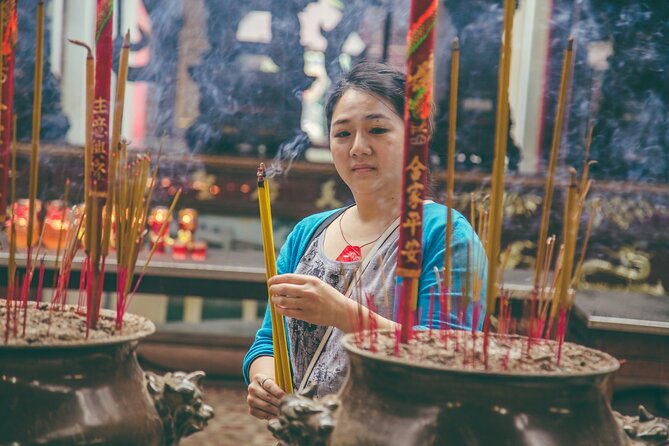
A standout item in the “unseen” list is a pagoda described as hidden. This matters because a motorbike tour can feel all motion and noise. A temple stop creates a contrast, even if you’re only there for a short visit.
You’ll likely get a calm pocket to look up, notice details, and take a breath between busier streets. It’s also a useful reminder that Saigon isn’t only politics and commerce. It’s faith, neighborhood life, and spaces where people pause.
How the student-driver setup works in real life
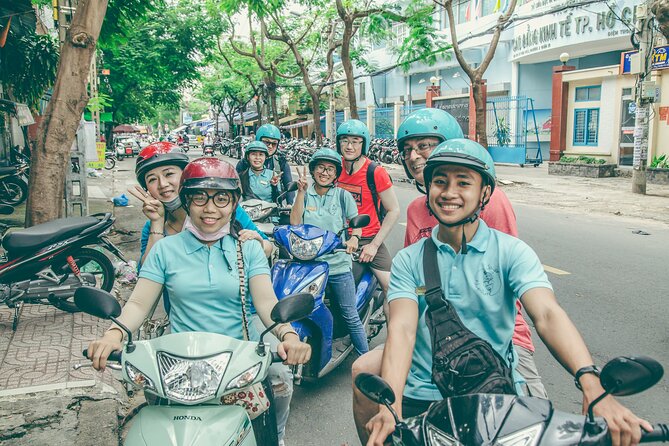
This is one of the most praised aspects of the experience: you’re driven by English-speaking staff, and the drivers are often students. Names that pop up in the guide lineups include Finn, Thi, Helen, Anna, Ellie, Kai, Katherine, Stella, Ken, and others. You might also ride with drivers mentioned in reviews like Mikah, Doris, Quien, Lam, Rizzi, and Jenny.
What’s consistent is the safety framing. Helmets are provided, and the tour explicitly includes scooter accident insurance up to $5,000. In plain terms: you’re not just hoping for the best. The company is building safety into the structure.
On top of that, the guide plays traffic psychologist. They help you feel less like you’re bracing for impact and more like you’re just part of the flow. If you’ve never ridden pillion before, this support can be the difference between enjoying the ride and spending the whole time tense.
What the 3–4 hours feels like for first-timers
You’re not doing a full day of sitting in a vehicle. It’s half-day sized, so you get your orientation fast. The tour caps group size at up to 100 travelers, which helps keep it organized for a meeting-point style pickup.
Still, it’s not a private glide. You’ll ride in real city conditions, and that’s the point. Expect stop-and-go traffic, lots of scooters around you, and frequent turns that require your attention. If you’re prone to motion sickness, bring a calm mindset and take slow breaths during transitions.
One more reality check: it can be very hot. A review mentioned a very hot day, and you should plan accordingly. Choose a time when the sun is less punishing, bring water, and wear breathable clothes. Your comfort directly affects how much you enjoy the landmarks and market stops.
The food add-on: how to plan your lunch (or skip it)
The base tour includes a snack at the Cambodian Market. There’s also an option for food and sightseeing that covers the unseen side rather than repeating the highlight route.
If you want to do the street food option, I’d follow the practical advice that shows up repeatedly: consider skipping lunch so the snack and tasting hits properly. One review mentioned up to 8+ local food items with the food add-on, but don’t treat that as guaranteed. What is reliable is that you’ll get local bites rather than just sweet treats or tourist snacks.
Lunch is not included, so you’ll want a plan after the tour. Many people time this so they can eat a proper meal afterward without scrambling for something quickly.
Tips so you feel confident on the back seat
A scooter tour is fun, but preparation makes it smoother.
- Wear closed-toe shoes and secure clothing. You don’t want straps flapping or loose items in the wind.
- Bring sunscreen and water. Even if you’re only out for 3–4 hours, Saigon sun adds up fast.
- Keep your phone secure. You’ll be stopping near busy areas and turning in traffic.
- If you’re nervous, tell your guide early. One review noted the sense of safety improved once everyone was set and briefed.
- Use the ride time to look, not to posture for photos. It’s safer and you’ll get better shots when you stop.
And one more small trick: if you’re sensitive to crowds, the market portion is where you’ll feel most people. Stay calm, walk when the guide says walk, and keep your group compact.
Who should book this Saigon motorbike tour?
I’d book it if you’re:
- in Ho Chi Minh City for a short trip and want fast orientation
- a first-timer who still wants the scooter experience without handling route stress
- interested in a mix of famous French-era landmarks and the local-market side of the city
- looking for value: English-speaking guide, helmet, safety insurance, pickup (District 1/3), and a snack included
I might skip it if you strongly dislike traffic noise, heat, or riding pillion. Also, if you need a very lecture-heavy history tour at every stop, you might find the pacing a bit short. One review did note that a guide gave less detail than expected, so choose based on your style.
Should you book this Ho Chi Minh City Motorbike Tour?
Yes, if your goal is a fast, real-feeling Saigon introduction and you’re okay with scooter traffic. The best part is that it’s not only landmarks. You get the story layer at places like the Thich Quang Duc Monument and you get the everyday texture at markets and older apartment areas, with a snack stop that makes the whole thing feel like a day out, not just transportation.
If you’re riding for the first time, go in with the right mindset: it’s chaotic-looking from outside, but safety systems are built in with helmets and insurance. And if you can, pick timing that avoids the worst heat. Do that, and this tour can be one of the most memorable half-days in your whole Vietnam trip.
FAQ
How long is the Ho Chi Minh City motorbike tour?
The tour is about 3 to 4 hours.
What’s the price for the tour?
It costs $23.00 per person.
Is pickup and drop-off included?
Free pickup and drop-off is included for hotels in District 1 and District 3. Pickup outside those districts has an extra fee of about $3–$5.
Are helmets provided?
Yes. Helmets are included.
Is there a snack included?
Yes. A snack is included at the Cambodian Market.
Do they offer street food during the tour?
There is an option for food and sightseeing. The food option is described as visiting the unseen part (not the highlight part).
Is lunch included?
No. Lunch is not included.
What does the safety coverage include?
The tour includes scooter accident insurance up to $5,000, and you’re driven by English-speaking drivers using helmets.
Can I cancel for a full refund?
Yes, you can cancel up to 24 hours in advance for a full refund.