Saigon’s story starts with a walk. This half-day route strings together colonial-era architecture, war-era context, and a couple of local hangout spots so you get the city’s meaning, not just its photos. You’ll cover key sights in District 1 with a local English-speaking guide, plus a War Museum stop as part of the plan.
I love how the guide ties the timeline together, from the old riverside city roots to French-era Saigon and the changes that followed. I also love the detour for people-watching at places like the Nguyễn Huệ café apartment at 42 Nguyễn Huệ St., where you can see how locals actually socialize and work.
One possible drawback: it’s priced very low, but it runs on a tips-only basis. Even though tipping is normal on walking tours, a couple of reviews mention the ask can feel high, so go in prepared to tip fairly.
In This Review
- Key things I’d bank on
- Entering Saigon on Foot: Why This Tour Works
- Meeting at Bitexco: The Start Point and How to Prepare
- Price and Tips: What You’re Actually Paying For
- Saigon River: The Old City Frame and the Café Vibe
- Nguyen Hue Street and 42 Nguyễn Huệ: Where the City Socializes
- Opera House Area: Colonial Style and Big-Name Hotels
- People’s Committee Building and the Ho Chi Minh Statue
- Pittman Apartments: A Photo Story With Real Human Weight
- Notre Dame Cathedral: Admission Not Included, but Don’t Skip the Context
- Central Post Office: French Colonial Architecture in Plain View
- Book Street Ending: A Low-Key Close You’ll Appreciate
- War Museum on This Half-Day Plan: What to Expect
- Small Details That Matter: Pace, Group Size, and Hearing the Guide
- Who Should Book This Tour (and Who Might Not)
- Should You Book This Ho Chi Minh City Free Walking Tour?
- FAQ
- How long is the Ho Chi Minh City highlights and hidden gems walking tour?
- Where do I meet the guide?
- Is the tour really free?
- What is included in the price?
- Is coffee or tea included?
- Which places will I visit during the walk?
- How many people are in the group?
- Can I get a full refund if I cancel?
Key things I’d bank on
- Tips-only tour with a very low posted price, so your real cost is your tip
- District 1 route built around French-colonial landmarks and political symbols
- Nguyễn Huệ stop at 42 Nguyễn Huệ St. for café apartment vibes and good people-watching
- Photographic history connection at the Pittman apartments story (Hubert van Es / UPI)
- Walking-first plan with flexibility (cabs or motorbikes can be arranged) if needed
- Short time at each stop means you learn fast, then keep moving
Entering Saigon on Foot: Why This Tour Works
Ho Chi Minh City can feel like a blur on day one. Fast scooters, quick glances at landmarks, and heat that makes you want to rush. This tour slows you down in the right places, so you understand what you’re looking at before you move on.
You’re also not stuck in one kind of sightseeing. The route mixes river-era context, French-colonial architecture, political monuments, and a War Museum visit. That mix is the whole point: it helps you connect the city’s buildings to the events that shaped them.
And because it’s a walking tour in central areas, you get the side effect that matters most: you start to find your way around. Even if you go back later on your own, you’ll know where things are and why they’re there.
You can also read our reviews of more walking tours in Ho Chi Minh City



Meeting at Bitexco: The Start Point and How to Prepare
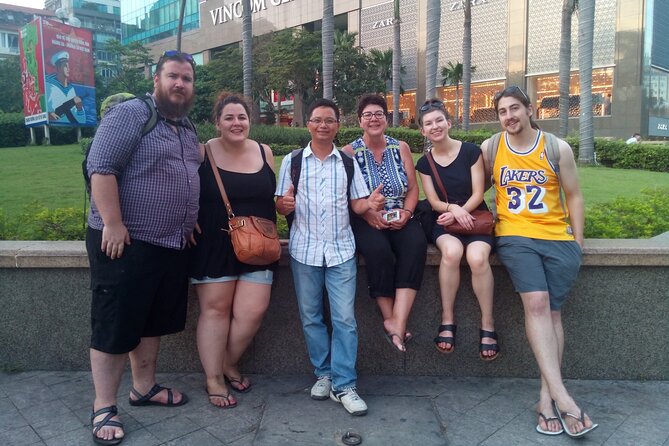
The meeting point is outside the main entrance of Starbucks Coffee at the Bitexco Financial Tower (2 Đ. Hải Triều, Bến Nghé, Quận 1). It’s a handy landmark if you arrive by Grab or taxi, and it makes the meetup easy to spot.
The tour runs about 2 hours 30 minutes. That time frame matters because you’ll do multiple short stops (many are around 10–20 minutes). Bring comfortable walking shoes and something for sun protection. The city can change from shaded to blazing fast, and reviews mention guides finding shaded spots or breaks for heat.
You’ll also get a mobile ticket, so have that ready on your phone. And since the tour is near public transportation, it’s easy to slot into a first-day plan after you land.
Price and Tips: What You’re Actually Paying For
The posted price is extremely low (listed as $0.71 per person), but the included info says it operates on a tips-only basis. That means the “real” transaction is the tip, not the listing price.
So here’s the practical way I’d think about value: you’re paying for an English-speaking local to translate the city’s layers while you walk, plus a War Museum visit and several major landmarks. If you treat it like a paid guided experience and tip accordingly, you’re likely to feel you got your money’s worth.
The trade-off is simple. If you show up expecting something that functions like a truly free tour, you might feel annoyed. At least a couple of reviews say the tipping talk can feel like an expectation rather than a suggestion, which is where the experience can wobble for some people.
My advice: decide your tip budget before you meet the guide. Then you can enjoy the walk without worrying about what comes next.
Saigon River: The Old City Frame and the Café Vibe
The tour begins by heading toward Saigon’s colonial quarter, walking past everyday scenes on the way. That first stretch is useful because it sets your sense of pace. You’re not just marching from landmark to landmark; you’re getting a feel for what the neighborhood looks like in real life.
Stop 1 is the Saigon River area, with about 30 minutes here. The guide focuses on the long arc of the city: its establishment in the late 17th century, then the arrival of the French. Even if you don’t memorize every date, you’ll start seeing the city as a sequence of changes rather than a random collection of attractions.
Then you get a short pause for the trendy café vibe. Coffee isn’t included, but the point is more than caffeine. It shows how the same city layers old and new. You’ll feel it here before you reach the big architecture stops.
If you’re a photo person: this is a good stop to practice slowing down. Stand where you can capture both people and buildings, not just buildings alone.
Nguyen Hue Street and 42 Nguyễn Huệ: Where the City Socializes
Stop 2 is Nguyễn Huệ Street, with about 20 minutes at the café apartment located at 42 Nguyễn Huệ St. This is one of the most “local life” moments on the route.
That place is described as a packed indoor-outdoor mix where people come to hang out, meet, socialize, bring a date, or even do work. It’s the kind of stop that helps you get the city’s rhythm. You see how people choose spots to gather, not just what monuments they visit.
This is also a smart time to ask questions. Short stops work best when you use them actively. Ask your guide what this area looked like in past decades, or where locals go when they want a break from the noise.
Also, because the tour is walking-and-talking heavy, a café apartment break helps you reset before the next architectural run.
You can also read our reviews of more city tours in Ho Chi Minh City





Opera House Area: Colonial Style and Big-Name Hotels
Stop 3 brings you to the Saigon Opera House (Ho Chi Minh Municipal Theater). The time here is about 10 minutes, so treat it like a “look closely, then listen” moment.
The guide’s job in this spot is to connect architectural style to the era that created it. You’ll also pass references tied to the French-era hotel landscape, including the Continental Hotel and Caravelle Hotel nearby in the story.
Why this matters: architecture in Saigon isn’t just pretty. It’s part of how power and culture were displayed. Even a quick stop can help you read the city better later, especially when you compare the official styles with what you saw at street level earlier.
If the group is large, you might not hear every detail clearly from far back. If that happens, angle yourself closer to the guide so you catch the main points.
People’s Committee Building and the Ho Chi Minh Statue
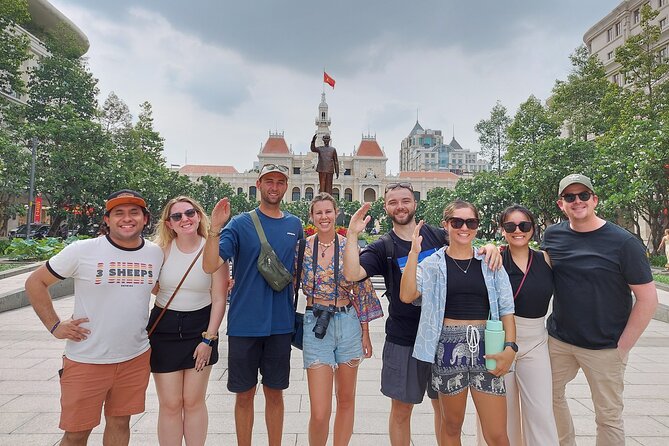
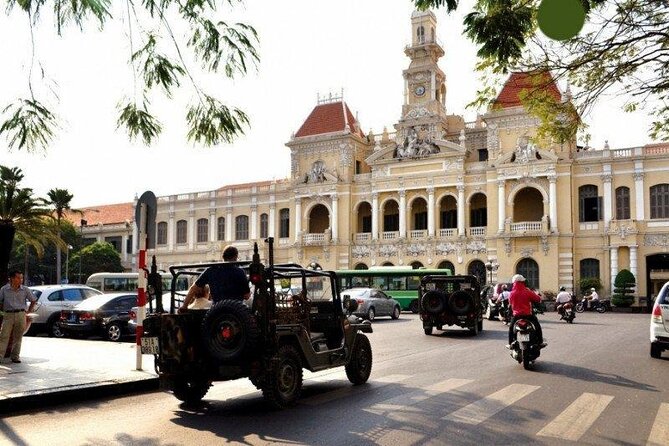
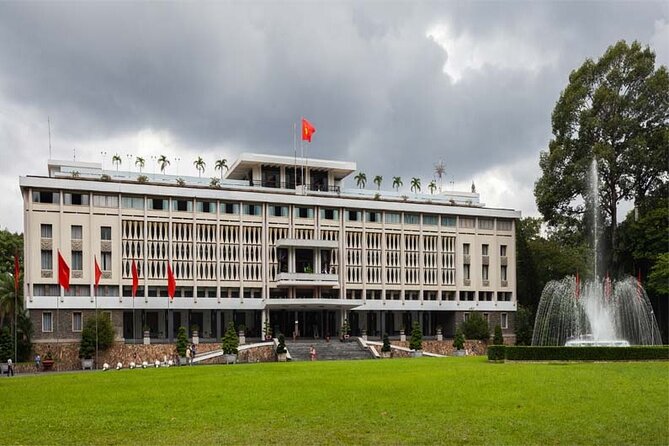
Stop 4 is the People’s Committee Building area, with a 10-minute window. You’ll see the President Ho Chi Minh Statue located in front along Nguyen Hue walking street.
This is a quick stop, but it’s a meaningful one because it flips the mood from French-era aesthetics to modern political symbolism. The guide’s commentary is what turns a statue into context. You start to understand why certain scenes are staged where they are, and what the city wants to signal to visitors.
Practical note: Nguyen Hue is a busy axis. Expect people flowing past and plenty of visual noise. That’s not a problem if you’re using the guide’s explanation as your anchor.
Pittman Apartments: A Photo Story With Real Human Weight
Stop 5 is the Pittman apartments story, again around 10 minutes. This is where the tour connects a specific Vietnam War image to the city’s landscape.
The key name here is photojournalist Hubert van Es, who worked for UPI. The story involves U.S. government employees evacuating by helicopter during the Fall of Saigon, captured in an iconic photo.
Even in ten minutes, this stop can hit hard because it reframes war as specific moments, not just broad history. It also shows why certain places feel loaded even when they don’t look dramatic on the street today.
If you’re sensitive to war imagery or heavy topics, this is the moment to flag it to yourself. You’ll be okay, but you might want to slow down and give your brain a second to process.
Notre Dame Cathedral: Admission Not Included, but Don’t Skip the Context
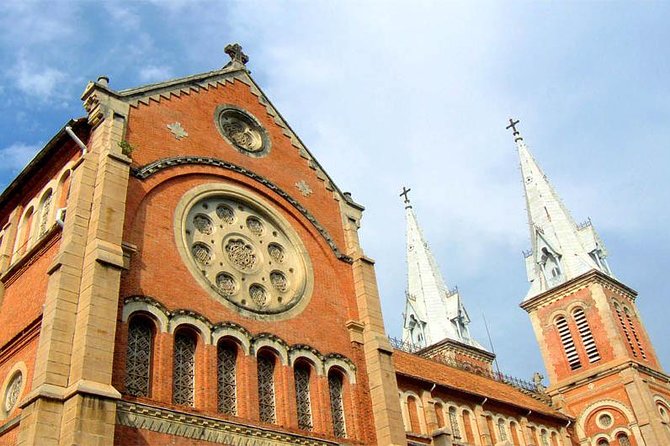
Stop 6 is Saigon Notre Dame Cathedral. The time shown is about 10 minutes, and importantly, admission is not included.
The itinerary notes that it’s one of the world’s 19 most majestic cathedrals and the only representative from Southeast Asia. Whether you care about that ranking or not, it’s still a useful signpost. It tells you the city wanted this level of church architecture, and that ambition traveled across oceans with the French era.
Because you don’t get admission included, expect the stop to be more about exterior viewing and the guide’s narration around its place in the colonial-era picture.
Central Post Office: French Colonial Architecture in Plain View
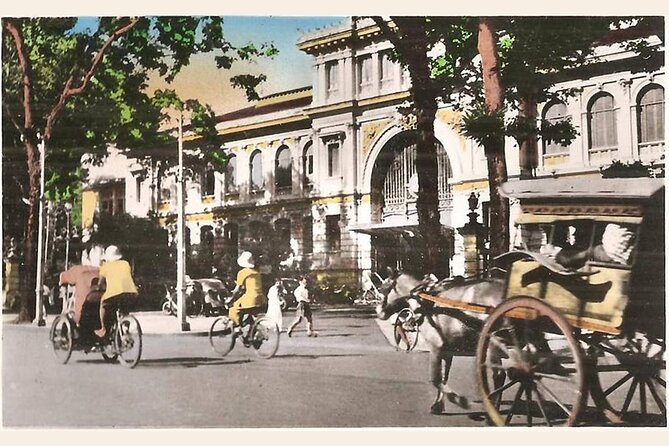
Stop 7 is the Central Post Office, also around 10 minutes. The tour highlights the idea that French colonial architecture appears in both the Notre Dame Cathedral and the Central Post Office.
This is a good “wrap” moment for the French-era thread. If your brain has been buzzing from multiple stops, the post office gives you a chance to step back and see the bigger design language in the city.
Tip for timing: if you’re taking photos, try one wide shot for context and one closer shot for details. With short stops, it’s easy to burn time and end up with only one kind of picture.
Book Street Ending: A Low-Key Close You’ll Appreciate
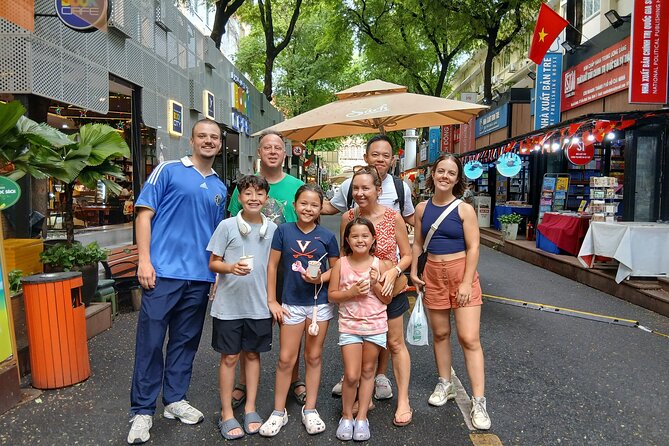
Stop 8 is Ho Chi Minh City’s Book Street, with about 10 minutes. Instead of a monument, you get something calmer and more personal: browsing.
The description points out the wide range of books, from literature and politics to science and foreign languages, plus comics and novels. The value here is simple: you’re in the center of a tourist route, and then you end with a local-style activity.
If you like picking up a book you’ll actually read, this is an easy place to grab one. If you don’t, it’s still a nice reset before you head to your next plan.
The tour ends at 216 Lê Duẩn, Bến Nghé, Quận 1. That’s a central drop-off, useful for continuing your day.
War Museum on This Half-Day Plan: What to Expect
The tour description says you’ll visit the War Museum as part of the experience. That’s the heavy anchor in an otherwise mixed walk.
In practical terms, plan for this to be the part of the day that sticks with you. Even if you’re not a museum person, the War Museum visit helps connect the landmarks you’ve just seen to the conflict that shaped the city.
Because the itinerary stops list doesn’t show exact War Museum timing, treat the visit as a “scheduled inside the half-day, not optional.” If you’re planning a tight second activity afterward, give yourself some breathing room.
Also, if you want to make the museum part more useful, keep one question in mind while you walk: How does the city’s built environment reflect what happened? Then you’ll get more from the museum visit when it comes.
Small Details That Matter: Pace, Group Size, and Hearing the Guide
This tour caps at 50 travelers. That limit is helpful, but not magic. One review mentions that when the group is too large, it can be hard to hear the guide at times.
Here’s what you can do: stay toward the front or near the guide when you can. Short stops get compressed quickly, and your best chance to catch every story is to be close enough to hear without leaning.
Reviews also mention a comfortable pacing style, with breaks that help you deal with heat (shaded listening spots and even air-conditioned time). And in some runs, guides add small touches like guiding word-learning in Vietnamese or keeping things interactive with quizzes.
Not every guide will do every extra thing. But if your guide is the kind of storyteller who makes people laugh and think, you’ll notice it.
Who Should Book This Tour (and Who Might Not)
This is a strong fit if you:
- Want a first-night orientation to District 1
- Like history, but also want the walk to feel human, not lecturish
- Enjoy architecture and want context fast
- Like café stops and cultural side streets, not only big sights
- Prefer a guide over trying to piece the story together alone
You might think twice if you:
- Hate tipping and prefer tours with a fixed paid price
- Want lots of museum time (this is short-stop walking style)
- Have trouble hearing in groups (the tour can run up to 50)
If you’re traveling with kids, this can also work because the pace includes breaks and the tour description mentions cabs or motorbikes can be arranged.
Should You Book This Ho Chi Minh City Free Walking Tour?
Yes, if you go in with the right mindset. Treat it like a bargain guided intro, not a no-cost freebie. With the War Museum stop and the District 1 route, you’re getting a lot of context for your time.
Book it early in your trip if you can. That’s when you’ll benefit most from the orientation and the ability to navigate later. And once you’re there, focus on asking questions during the café and street stops, not only during landmark photos.
Just decide your tip budget ahead of time. Do that, and the experience tends to land in the sweet spot: cheap enough to feel smart, structured enough to feel confident, and personal enough to make the city’s story click.
FAQ
How long is the Ho Chi Minh City highlights and hidden gems walking tour?
It runs for about 2 hours 30 minutes.
Where do I meet the guide?
Meet outside the main entrance of Starbucks Coffee at the Bitexco Financial Tower in District 1.
Is the tour really free?
The tour is priced very low, and it operates on a tips-only basis.
What is included in the price?
A local expert fluent in English is included. The tour operates tips-only.
Is coffee or tea included?
No. Coffee and/or tea are not included.
Which places will I visit during the walk?
You’ll pass through stops including the Saigon River, Nguyễn Huệ Street (including 42 Nguyễn Huệ St.), the Saigon Opera House area, the People’s Committee Building/Ho Chi Minh Statue area, the Pittman apartments story, Notre Dame Cathedral, the Central Post Office, and Book Street.
How many people are in the group?
The tour has a maximum of 50 travelers.
Can I get a full refund if I cancel?
Yes. You can cancel up to 24 hours in advance for a full refund.
If you want, tell me your travel dates and whether you want more food stops or more museum time. I’ll suggest a tight first-day plan around this route.