REVIEW · HO CHI MINH CITY
Daily Small Group Tour to Saigon City and Cu Chi Tunnels
Book on Viator →Operated by TNK Travel · Bookable on Viator
War history comes to life on this trip. I love that this is a small-group outing (max 12), so your English-speaking guide can actually answer your questions. I also love that the War Remnants Museum uses photo exhibits to give you a clearer Vietnam War timeline, not just a list of dates.
You’ll start with major landmark stops in the morning, then shift to the story behind what you’re seeing. You also get hotel transfers (for centrally located District 1 hotels), bottled water, and a included lunch that keeps the day moving without constant detours for food.
One possible drawback: the tour is about 10 hours, and the material is intense. If you’re after relaxed sightseeing only, this one may feel heavy, and the operator notes it is not suitable for people with heart problems.
In This Review
- Key things to know before you go
- The Vietnam War story is the point, and a guide makes it click
- Independence Palace in the morning: the political drama behind the walls
- French colonial landmarks: Central Post Office, plus outside-only due to restoration
- War Remnants Museum: photo exhibits that make dates feel real
- Cu Chi Tunnels: the survival logic gets explained before you go underground
- Lunch and transport: included value that makes a long day easier
- Price and booking: what you’re paying for (and how to plan)
- Who this tour fits best (and who should rethink it)
- Should you book this day tour?
- FAQ
- How long is the Daily Small Group Tour to Saigon City and Cu Chi Tunnels?
- What time does the tour start?
- Where is the meeting point?
- What is the group size limit?
- Are hotel pickups included?
- What does the tour include for meals?
- Which attractions have admission tickets included?
- Do I get to go inside the Notre Dame Cathedral?
- Is the tour guide English-speaking?
- Who should avoid this tour?
- FAQ
- What if I have dietary requirements?
- Is bottled water provided?
- Are tips included?
- What’s the cancellation policy?
- Is the tour dependent on weather?
Key things to know before you go
- Max 12 people means a more personal rhythm and easier questions along the way.
- War Remnants Museum with photo exhibits helps you connect the city sights to the 1955–1975 war story.
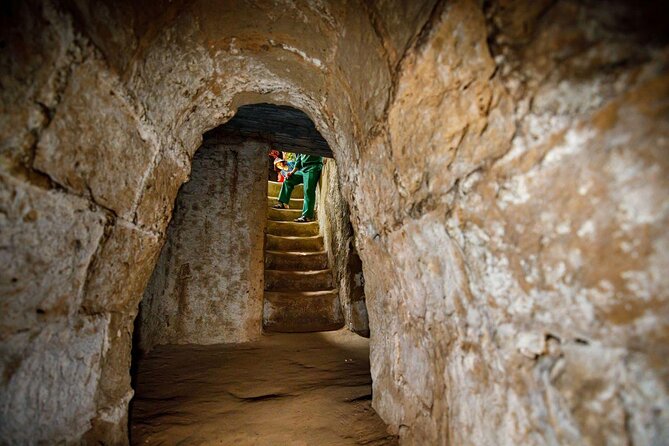
- Cu Chi Tunnels includes intro video + practical layout (living areas, storage, command spaces) so you understand how survival worked.
- Colonial-era landmarks, but some are outside-only due to restoration work, including the Notre Dame Cathedral area.
- Hotel transfers and lunch are included, which is where this tour often feels like good value.
The Vietnam War story is the point, and a guide makes it click
Ho Chi Minh City holds traces of multiple eras at once—French colonial architecture, post-war government buildings, and memorial spaces tied directly to the Vietnam War. The catch is that without context, the stops can feel like random famous locations.
This tour is built to avoid that problem. It focuses on the Vietnam War period from 1955 to 1975, and your guide’s job is to connect what you see to what was happening then. That matters especially at places like the War Remnants Museum and the Cu Chi Tunnels, where details can easily be missed if you’re just walking and snapping photos.
The best part is the pacing: you start above ground with major landmarks, then move into museums and underground realities. By the time you reach Cu Chi, you’re not only seeing war relics—you’re understanding the logic behind them.
You can also read our reviews of more city tours in Ho Chi Minh City

Independence Palace in the morning: the political drama behind the walls
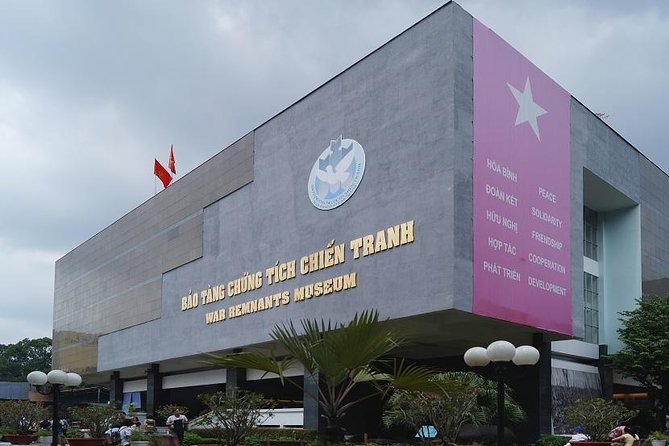
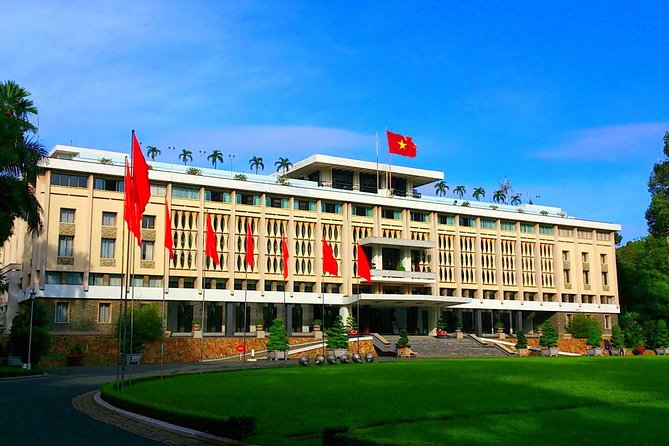
The tour begins with hotel pickup and a visit to Independence Palace, also called the Reunification Palace. This is one of Ho Chi Minh City’s most recognizable landmarks, and it’s especially meaningful because of what it represents in Vietnam’s 20th-century history.
You’ll have about 1 hour 30 minutes with an admission ticket included. That time is important. Independence Palace isn’t just photo-worthy from the outside; it’s a place where you can better picture how power operated—rooms, layouts, and the sense of a government center built for a specific moment in history.
If you like architecture and political history together, this stop usually does a great job of setting the tone for the rest of the day. It’s also a strong “starter” site because many people recognize the palace name, even if they don’t know the full story.
French colonial landmarks: Central Post Office, plus outside-only due to restoration
After the palace, the tour continues through French colonial-era sights. You’ll pass the area around the Notre Dame Cathedral and then move on to the historic Central Post Office.
The Central Post Office area is a classic photo stop—big spaces, a recognizable landmark shape, and that French-era city planning vibe. It also pairs well with the war-focused parts later, because it visually reminds you that the city’s layers didn’t disappear when the war period began.
One practical note: you won’t be going inside the Notre Dame Cathedral. The tour indicates it’s been under restoration (noted as until 2020), so you visit outside. If you were hoping for full interior access, adjust expectations here and focus on the exterior views and the post office itself.
You’ll spend about 30 minutes at this stop set, and the post office portion is listed as free.
War Remnants Museum: photo exhibits that make dates feel real
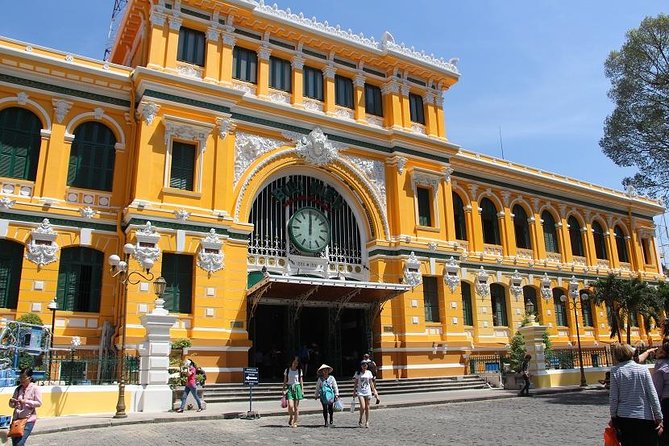
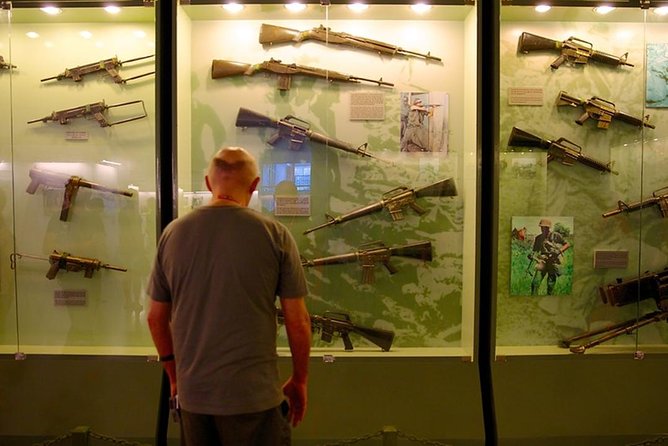
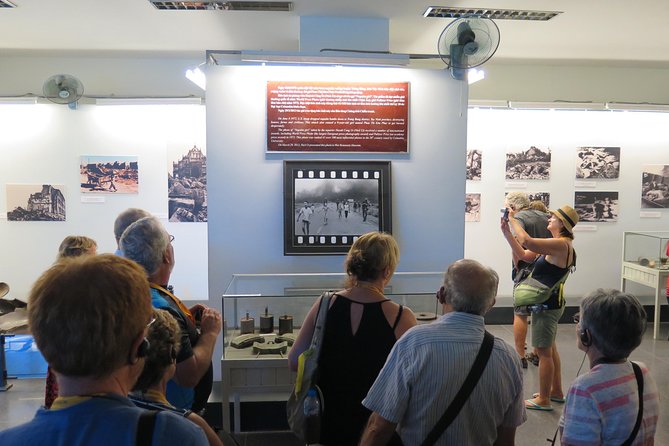
Next comes the War Remnants Museum, one of the most important stops on this type of itinerary. The museum has a large display covering both Indochina wars, and it’s designed to show not only events, but also how those events were experienced and remembered.
You’re allocated about 1 hour, with the admission ticket included. One hour isn’t long enough to read everything in depth, so your guide’s storytelling becomes extra valuable. I like when a guide helps you see the chronology and the cause-and-effect—otherwise the museum can feel like a lot of panels at once.
This is also where guides can really steer the experience. Based on what I’ve heard about guides leading this route (names like John and Slim come up), some are especially strong at explaining things in clear English while keeping the tone grounded and human. If that’s your preference, this tour’s guide-led structure is a solid match.
Expect serious content. Even if you’re not a history nerd, the photo exhibits and war-room context help you understand why the Cu Chi Tunnels were more than a rumor—they were part of a survival strategy shaped by time, geography, and pursuit.
Cu Chi Tunnels: the survival logic gets explained before you go underground
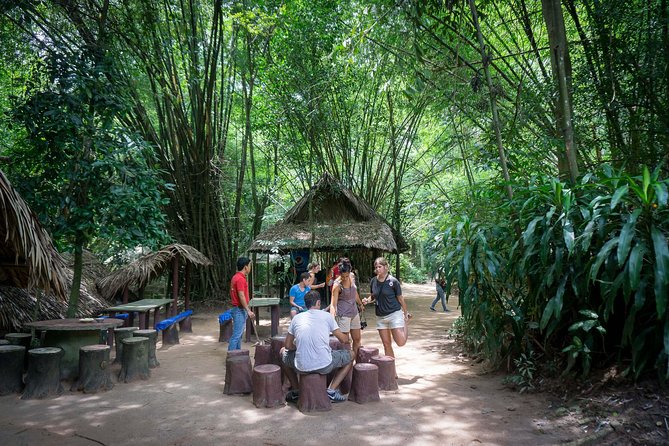
The day’s big shift happens with the move to Cu Chi. After lunch, you travel by bus for about 1.5 hours each way to reach the tunnel area.
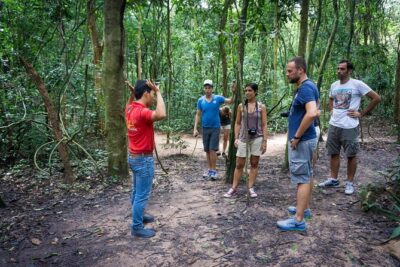
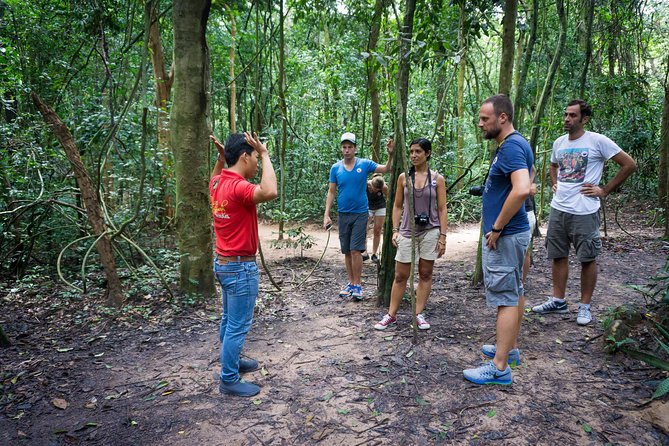
You’ll get a short introduction and then an introductory video about tunnel construction and how people survived under harsh conditions during wartime. Then the main visit focuses on exploring the remaining area and tunnel systems, including spaces built to support daily life.
This isn’t just walking through a dark hole in the ground. The tour description highlights that you can see:
- living areas and kitchens
- sleeping spaces side by side with other functions
- storage and weapons-factory spaces
- field hospital areas and command centers
That “how it all fit together” approach is key. It turns the tunnels from a spooky idea into an organized system. You also learn that there are hidden trap doors and dangerous traps in the area—so you understand why the tunnels were both protection and hazard.
Practical tip: go in knowing this portion is more physically and mentally intense than the city stops. Even if you don’t do every activity that some sites offer (and some options may fall under personal expenses), you’ll still be dealing with confined, low-light spaces and the weight of what the place represents.
You’re scheduled for about 2 hours at Cu Chi, with an admission ticket included. Two hours is enough to absorb the explanation and walk a meaningful route without turning the visit into a rushed checklist.


Lunch and transport: included value that makes a long day easier
For a tour around $50, what makes it feel like a fair deal is what’s bundled. You get:
- air-conditioned transport with pickup/drop-off for centrally located District 1 hotels
- bottled water
- lunch at a local Vietnamese restaurant
- key admission tickets (Independence Palace, War Remnants Museum, Cu Chi Tunnels)
On a full-day program, the difference between paying separately for admissions and transport versus having them handled for you is real. It saves time and reduces decision fatigue—especially when you’re dealing with an early start.
Timing matters too. The start time is 7:45 am, and the return time depends on traffic. The tour notes you’ll end back at the meeting point, and pickup is centered around District 1 hotels, with extra surcharge possibly applying if you’re farther out.
If you want a day that feels structured rather than improvised, this is one of those itineraries where “included” is more than a marketing word.
Price and booking: what you’re paying for (and how to plan)
At $50.15 per person, this tour sits in a middle range for Ho Chi Minh City day trips, but the inclusions help justify it. You’re paying for a guide, a small-group cap, transport, and multiple entry tickets across the city and then outside the city.
It’s also worth booking thoughtfully. The tour data says it’s commonly booked around 21 days in advance. If you travel in a busy season or have a fixed travel window, I’d secure it earlier rather than later so you don’t end up improvising a history day.
One more planning point: it’s weather-dependent. The operator notes you need good weather, and if it’s canceled due to poor weather, you’re offered another date or a full refund.
Who this tour fits best (and who should rethink it)
This tour is ideal if you want your day to have a clear theme: the Vietnam War era and how it connects to what’s visible in the city and at Cu Chi.
You’ll likely enjoy it if:
- you appreciate guide-led context more than self-guided reading
- you want to see major landmarks plus the war story in one day
- you like small-group experiences (max 12)
You might want to skip it or choose something gentler if:
- you’re sensitive to intense historical material
- you have heart problems (the tour states it’s not available for anyone with heart problems)
- you’re looking for a light, casual day with lots of free time
Also note the tour is not available for the handicapped, so check your needs early.
Should you book this day tour?
I’d book this tour if you want a guided Vietnam War overview that actually connects the dots: colonial-era landmarks and government history in the city, then the War Remnants Museum, and finally Cu Chi Tunnels with an intro video and a structured walkthrough.
Skip it if your idea of a great day in Ho Chi Minh City is mostly casual strolling, long café breaks, and minimal emotional weight. This one is built for meaning, not fluff—and it does that job well while keeping the group small and the logistics handled.
FAQ
How long is the Daily Small Group Tour to Saigon City and Cu Chi Tunnels?
The tour runs for about 10 hours (approx.).
What time does the tour start?
The start time is 7:45 am.
Where is the meeting point?
The meeting point is Rạp Hưng Đạo – 112 Trần Hưng Đạo Cô Giang, District 1, Ho Chi Minh City, Vietnam.
What is the group size limit?
The tour is limited to a maximum of 12 travelers, described as a group of 2–12.
Are hotel pickups included?
Yes, pickup and drop-off are included for centrally located hotels in District 1. If your hotel is outside District 1, an extra surcharge may apply.
What does the tour include for meals?
A local lunch is included (Vietnamese cuisine).
Which attractions have admission tickets included?
Admission tickets are included for Independence Palace, the War Remnants Museum, and Cu Chi Tunnels. The Central Post Office stop is listed as free.
Do I get to go inside the Notre Dame Cathedral?
No. The tour indicates Notre Dame Cathedral has been under restoration, so guests just visit outside.
Is the tour guide English-speaking?
Yes, the tour includes an English-speaking tour guide.
Who should avoid this tour?
The tour is not available for people with heart problems. It also states it’s not available for the handicapped.
FAQ
What if I have dietary requirements?
You should advise any specific dietary requirements at the time of booking.
Is bottled water provided?
Yes, pure bottled water is included.
Are tips included?
No, tips are not included, and personal expenses (such as shooting gun or telephone calls) are not included.
What’s the cancellation policy?
Free cancellation is available up to 24 hours in advance for a full refund.
Is the tour dependent on weather?
Yes. The tour requires good weather, and if it’s canceled due to poor weather, you’ll be offered a different date or a full refund.