REVIEW · HO CHI MINH CITY
3D2N Mekong – Floating Market – Chau Doc – Boat To Phnom Penh
Book on Viator →Operated by SST TRAVEL · Bookable on Viator
Mekong Delta days can blur together fast, but this one gives you boats, craft stops, and real river neighborhoods instead of just a single scenic stop. I like the way the route times the Cai Rang floating market for the busiest morning energy, then keeps you moving through small canals and villages.
A second highlight for me is the variety of hands-on culture breaks packed into short stops: Vinh Trang Pagoda, island gardens, a bee-farm with honey tea, coconut candy, and even a small-canal rowing boat moment. You’ll also get a professional English-speaking guide (names you might hear include Quyen, Lily, Le Linh, Mikey, and Travis), and the tone from guide to guide seems consistent: friendly, organized, and willing to explain what you’re seeing.
One consideration: you need to budget for the Cambodia visa fee ($40 per person) since it’s not included, and the day structure involves a lot of transit and border procedures.
In This Review
- Key highlights you should care about
- Why this Mekong route feels more like river life than sightseeing
- From Ho Chi Minh City to My Tho: Vinh Trang Pagoda and the first boat day
- Islands, orchard gardens, honey tea, and the coconut candy workshop
- Rowing through small canals, then Cai Rang’s busiest morning market
- Chau Doc: floating villages, fish farms, and the Cham weaving visit
- Crossing toward Cambodia: border procedures and your boat to Phnom Penh
- Price and value: does $200 really cover a meaningful Mekong circuit?
- Logistics you’ll feel: timing, buses, boats, and group size
- Who should book this Mekong Delta and boat-to-Phnom-Penh route?
- Should you book it? My call
- FAQ
- What time does the tour start in Ho Chi Minh City?
- Where does the tour end?
- Is pickup and drop-off included?
- How many hotel nights are included?
- What meals are included?
- Do I need to pay for a Cambodia visa?
- Is the Cai Rang floating market included?
- Is there an English-speaking guide?
- How big is the group?
- Is there a single supplement charge?
Key highlights you should care about
- Cai Rang Floating Market in peak morning hours for the most action on the water
- Chau Doc floating fish farms and a boat ride through the floating village vibe
- Cham weaving village visit as a cultural contrast to the river-tour stops
- Honey tea and coconut candy workshop breaks that feel more local than touristy
- English guides with strong communication (Quyen, Lily, Le Linh, Mikey, Travis are mentioned in past experiences)
Why this Mekong route feels more like river life than sightseeing
If you’re coming from Ho Chi Minh City and hoping to get the Mekong Delta experience in one go, this trip hits the right balance. You’ll spend meaningful time on the water—first through the canal systems around My Tho and then on the river scenes that lead to Chau Doc. It’s not just watching from a dock; you’re actually pulled into the flow of daily activity.
I also like the rhythm: religious stop, river cruising, garden-and-food stops, a big market, then a cultural minority stop. That order matters because it keeps the day from feeling like a checklist. By the time you reach Cai Rang, you already understand how these communities use the water for food, transport, and commerce.
The trip is built for a guided group of up to 20 people, which helps. Big enough to feel social, small enough that the guide can manage timing without everyone getting lost.
You can also read our reviews of more boat tours in Ho Chi Minh City
From Ho Chi Minh City to My Tho: Vinh Trang Pagoda and the first boat day
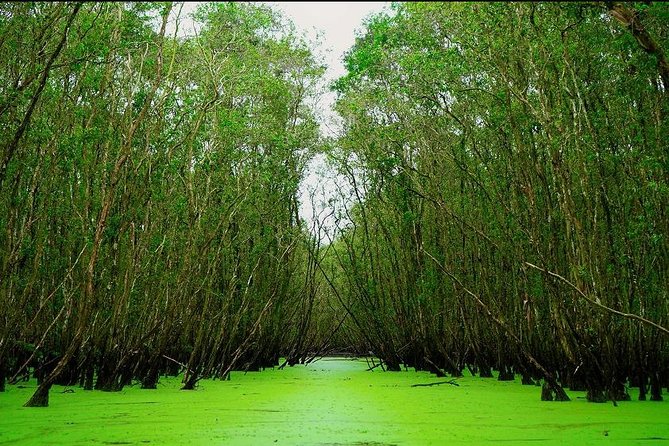
You start at 7:30 am from the Bùi Viện area (Bùi Viện, Phạm Ngũ Lão, Quận 1). That early departure is the trade-off for a good market visit later, when Cai Rang is busiest.
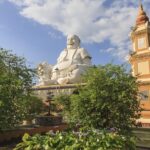
The drive is about 1.5 hours and you’ll pass rice fields, plus a stop on the national highway route. Then it’s straight into the first culture anchor: Vinh Trang Pagoda, built in 1849. This isn’t just a quick photo stop. It sets context for what you’ll see across Southern Vietnam: a blend of daily life, belief, and community spaces that are still used.
After Vinh Trang, you move into the river part. You’ll take motorboat time to join the area’s daily rhythm and then cruise toward the islands on the Upper River—often described by the island set names you’ll hear on the water: Unicorn, Dragon, Phoenix, and Turtle islands. Those names help the experience feel playful, but what matters more is the change in scenery as you head away from the main city-and-road world and into orchard-and-water country.
Islands, orchard gardens, honey tea, and the coconut candy workshop
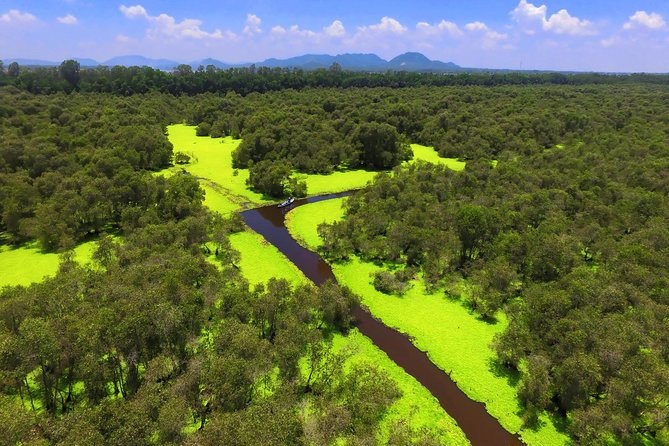
This is where the trip starts feeling like “Mekong tasting tour,” but with real context. You’re not only eating; you’re seeing how the region turns what grows there into what locals drink and share.
Expect stops tied to local production and small food traditions:
- an orchard garden visit
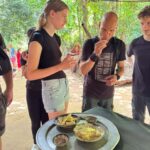
- a bee-farm experience with honey tea
- a chance to take a photo with a python (only if you’re comfortable with animal interaction)
- coconut candy workshop time
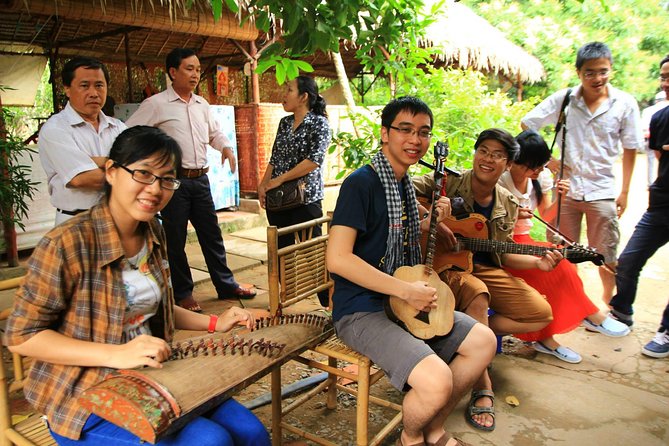
- fruits and Southern Vietnamese folk music as part of the break
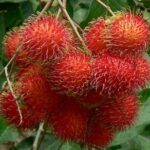
The honey tea and coconut candy stops are especially useful for first-timers because they translate Mekong Delta agriculture into something tangible. Honey and coconut are big here for a reason: they’re shelf-friendly, giftable, and easy to process into products that travel well. If you like bringing home food souvenirs that have a story behind them, this portion delivers.
The one thing to consider: if you’d rather avoid animal handling or photo ops, you can steer your expectations accordingly. Your guide is there to keep the timing moving, but you can still opt out of anything that feels too hands-on for your comfort level.
Rowing through small canals, then Cai Rang’s busiest morning market
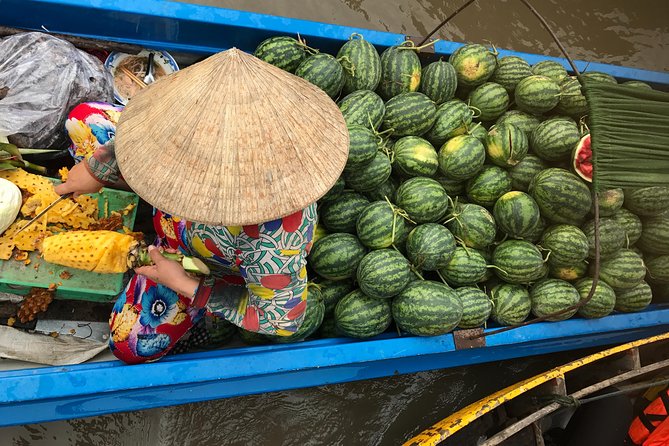
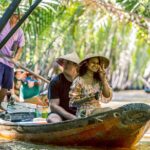
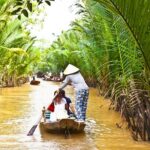
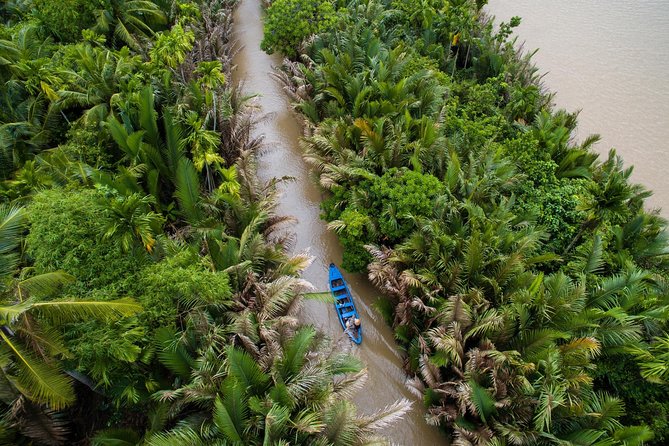
After the island and garden breaks, you get a classic Mekong-style transport change: a rowing boat trip on small canals. It’s a slower pace than the motorboats, and it’s a good moment to notice details that speedier rides often skip—how houses sit close to the water, how channel width changes what people do, and how the day’s activity starts to build.
Then you move to the main event: Cai Rang Floating Market. The timing is the key advantage here. This trip aims to reach it when the market is at its busiest in the morning, so you’re more likely to see the full bustle—boats moving, goods being handled, and the market feeling like a working system rather than a quiet photo set.
From Cai Rang, you keep cruising through the small channel system and you’ll visit a rice noodle making village. That pairing makes sense. Floating markets show you the demand; noodle making shows you the supply chain. You’ll come away with the sense that these boats aren’t just for selling snacks—they connect food production to daily consumption across the region.
Practical tip: bring a light layer. Early boat days can feel cooler than you expect, especially in morning shade and on open water.
Chau Doc: floating villages, fish farms, and the Cham weaving visit
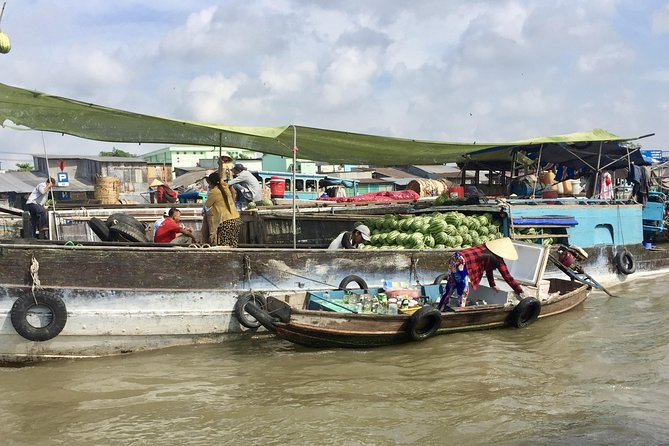
Chau Doc is a shift in feel. The river here looks different, the floating settlements read differently, and the food-and-craft stops broaden into culture.
You’ll start with a boat trip through the floating village, including a visit to a fish farm where Mekong Delta people raise fish in floating houses. This isn’t just scenic. The fish farming setup explains the logic of the region: water isn’t only a road; it’s also a resource you can build homes and livelihoods around.
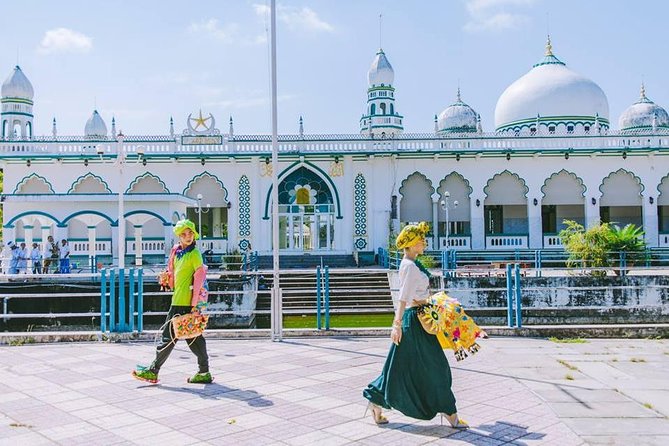
Next comes a cultural contrast that I really appreciate on this route: a visit to the Cham minority weaving village. The Cham community is known for textile traditions, and seeing weaving in a village context gives you something beyond “river food.” It adds a human skill element—craft as identity, not just as souvenir.
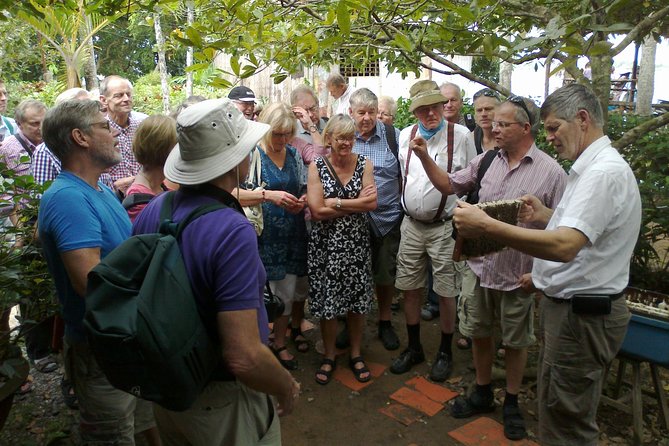
This part also tends to be where good guides make a difference. In past experiences tied to this tour, English guides like Lily and Le Linh are praised for explaining daily life and history clearly. If you’re the type who likes questions—How do they sell? What do they use? Why this style?—you’ll likely enjoy this segment.
You can also read our reviews of more shopping tours in Ho Chi Minh City



Crossing toward Cambodia: border procedures and your boat to Phnom Penh
The route includes a transfer to the Vĩnh Xương border gate so you can complete Cambodian entry procedures. This matters for planning because it’s a structured day transition, not a casual “just walk across” moment.
Also, remember the Cambodia visa fee ($40 per person) is not included. That’s the big cost line you should handle before you go, so nothing slows you down when it’s time to process.
After the border steps, you’ll take a boat departing for Phnom Penh around 1:00 pm. Your tour then ends. Depending on your schedule expectations, this is worth knowing upfront: you’re building a full day and then shifting countries mid-trip, so your energy management matters more than usual.
Price and value: does $200 really cover a meaningful Mekong circuit?
At $200 per person, this package isn’t trying to be cheap. It’s priced like a guided circuit with real transport and overnight support, and that’s the right framing.
Here’s what you get that justifies the cost:
- Pick up and drop off by modern air-conditioned bus
- 2 nights hotel with A/C room (double or twin)
- Meals included: 1 breakfast and 2 lunches
- Guided experiences plus multiple activity types: boat trips, biking, fruits, honey tea, candy-making time
- Professional English-speaking guide
- Mobile ticket
- Group capped at 20 people
The costs that are not included are also clear:
- Single supplement if you need your own room: ₫800,000 per person
- Cambodia visa fee: $40 per person
- Tips and anything not listed
So how do you judge value? If you’re the kind of traveler who wants to avoid piecing together boats, market timing, and multi-stop transfers yourself, this price makes sense. You’re paying for coordination, timing (especially for Cai Rang), and an English-speaking guide who helps make the stops readable.
If you’re traveling ultra-budget and you don’t care about a guided schedule, you could find cheaper independent options. But for a first Mekong Delta trip, the “everything connected” feel is usually worth it.
Logistics you’ll feel: timing, buses, boats, and group size
A trip like this runs on timing. You start early in Ho Chi Minh City, then move through a long chain of moving parts: bus travel, boat travel, canal time, village visits, market time, and border procedures.
Two practical things to keep in mind:
- You’ll spend a lot of time on transport. Boats and buses are part of the experience here, not add-ons.
- The group is small enough to manage, but still a group. With a max of 20 people, things generally move smoothly, yet you should expect pauses and waiting for the next segment.
Comfort-wise, the included A/C hotel nights help you reset. The tour also includes a break rhythm via food stops—honey tea, candy workshop time, fruits, and lunch—so it doesn’t feel like you’re only “moving and watching.”
One human detail I really like: in past experiences linked to this tour, people mention guides being friendly and communication being easy, with named guides like Quyen and Lily called out for energy and clarity. There’s also an example of strong support when something went wrong: a guest reportedly left a bag behind at a restaurant, and the operator Mikey contacted the place to have the bag packed safely. That’s not a guarantee, but it suggests the operation takes care seriously when issues happen.
Who should book this Mekong Delta and boat-to-Phnom-Penh route?
This tour fits best if you want:
- a guided first-timer Mekong Delta experience with multiple highlights in one circuit
- Cai Rang Floating Market at a good time of day, not a random late arrival
- a mix of food, crafts, and culture, including the Cham weaving visit
- a trip structure that handles the multi-step change from Vietnam into Cambodia
It may feel less ideal if you hate early starts, dislike long transit days, or want a lot of downtime between activities. Also, if animal photos are a hard no for you, be ready to politely pass on the python photo moment and focus on the garden/food craft side instead.
Should you book it? My call
I’d book this if you’re doing the Mekong Delta for the first time and you want a high-organization route that hits Cai Rang and Chau Doc without you having to plan boat timing or stitching together stops. The mix of Vinh Trang Pagoda, island orchards and honey tea, coconut candy, a small-canal rowing ride, Cai Rang at peak morning, then Chau Doc fish farms and Cham weaving feels like a full day of “how Mekong life works,” not just scenery.
I’d pause if you’re strict about keeping Cambodia costs out of your budget, since the visa fee ($40) is on you. And if you want lots of free time, you might feel the packed schedule.
If your travel style is guided, curious, and okay with being on the move, this one is a strong match.
FAQ
What time does the tour start in Ho Chi Minh City?
It starts at 7:30 am, meeting at Bùi Viện, Phạm Ngũ Lão, Quận 1.
Where does the tour end?
The activity ends back at the original meeting point in the Bùi Viện area.
Is pickup and drop-off included?
Yes. The package includes pick up and drop off by modern air-conditioned bus.
How many hotel nights are included?
Two night in hotel are included, with an A/C room (double or twin).
What meals are included?
The tour includes 1 breakfast and 2 lunches.
Do I need to pay for a Cambodia visa?
Yes. The Cambodia visa fee is not included and is listed as $40 per person.
Is the Cai Rang floating market included?
Yes. You’ll visit Cai Rang floating market by morning boat trip, and admission is included.
Is there an English-speaking guide?
Yes. The tour includes a professional English speaking guide.
How big is the group?
This experience has a maximum of 20 travelers.
Is there a single supplement charge?
Yes. A single supplement of ₫800,000 per person is listed if you need a single room.